
Leeham News and Analysis
There's more to real news than a news release.



The Abundance Problem: Why the FAA Has Spent 40 Years Modernizing Air Traffic Control—and Still Isn’t Done
By Vincent E. Bianco III
FAA Veteran and Senior Aviation Safety Consultant
Guest Column
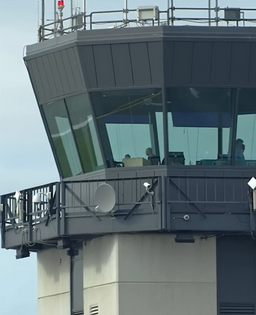
Credit: Federal Aviation Administration.
Jan. 13, 2026, © Leeham News: Presidential administrations and Congresses dating to the formation of the Federal Aviation Administration (FAA) in  1957 have failed to adequately fund the agency and modernize the Air Traffic Control (ATC) system. An insider examines why.—Editor.
Introduction: A Crisis of Process Over Progress
In their book Abundance: What America Gets Wrong About Capitalism and What We Can Do to Fix It, Ezra Klein and Derek Thompson describe a phenomenon in which institutions become paralyzed by process—where layers of well-intentioned rules accumulate, each logical in isolation, but together quietly stifling the very progress they intend to nurture.
This scenario is not theoretical for the Federal Aviation Administration (FAA); it is a reality for anyone involved in its modernization programs. The FAA’s experience over the past four decades serves as a case study in how process can overwhelm purpose.
Four Decades Observed: From Control Tower to Congress
Over a 35-year career, I have witnessed the FAA’s modernization struggles from nearly every vantage point: as a controller in the tower, an operator in the radar room, a staffer at FAA Headquarters, and an advocate in the halls of Congress. I have seen four major modernization efforts stall or collapse. Billions of dollars have been absorbed not by system deployment, but by compliance with ever-multiplying processes.
Too often, technology becomes obsolete before the procurement cycle even finishes. The thesis of Klein and Thompson does not simply apply to FAA acquisition; it explains why so many modernization efforts languish or fail.
The Acquisition Graveyard: Case Studies in Paralysis
- Advanced Automation System (1981-1994): Envisioned as a complete overhaul of the National Airspace System’s automation backbone, this program was ultimately canceled after $2.6bn spent, with little to show for it. Stakeholder requirements were all included, each safety concern triggered a separate review process, and every congressional district wanted a share. The result was a system designed by committee, reviewed by committee, and ultimately undone by the overwhelming weight of process requirements.
- Standard Terminal Automation Replacement System (STARS): Launched in the 1990s with expectations of rapid deployment, STARS instead took decades to roll out. Each facility required its own environmental review, each union local conducted its own negotiations, and every regional office raised separate issues. By the time STARS reached many sites, the technology was already outdated.
- NextGen—The Perpetual Tomorrow: Announced with great enthusiasm in the mid-2000s as the transformative modernization of American aviation, NextGen remains, decades later, a work in progress. It continues to face the same old battles over spectrum allocation, equipage mandates, airline cost-sharing, environmental reviews, and labor agreements. Each procedural box must be checked before any operational change can occur.
- En Route Automation Modernization (ERAM): This initiative arrived years late and billions of dollars over budget. Software that was considered state-of-the-art when specified was already legacy by the time it was fielded. The deployment process outlasted the technology’s own lifecycle.
The Accumulated Weight: Navigating a Labyrinth of Requirements
Every FAA modernization program must traverse a complex maze of process requirements:
- National Environmental Policy Act (NEPA) environmental reviews for every facility upgrade, which are reasonable in theory but often result in multi-year delays in practice.
- Congressional oversight demanding endless justification, intended for accountability, but frequently shaping programs for optics rather than operational efficiency.
- National Air Traffic Controllers Association (NATCA) labor negotiations, essential for worker voice and safety, yet turning each system change into a separate negotiation.
- Federal Acquisition Regulation procurement rules, crafted to prevent abuse, but leading to 18-month Request for Proposal (RFP) cycles before any work even starts.
- DO-178C software certification (a federal compliance and certification standard), necessary for safety-critical systems, but it adds years to the certification timeline before deployment.
- Post-9/11 security requirements, crucial for critical infrastructure, but piling on additional layers of review.
- General Accounting Office (GAO) and Department of Transportation (DOT) Inspector General oversight, aimed at preventing waste and fraud but causing programs to be managed with audit avoidance rather than optimization in mind.
- Interoperability mandates, vital for system continuity but requiring new technology to interface with infrastructure dating back to the 1960s.
Each of these requirements is justifiable on its own. They address legitimate safety, accountability, and operational concerns. But as Klein and Thompson observe, the cumulative effect is a labyrinthine process that few, if any, programs can survive unscathed.
The Bitter Irony: Progress Deferred
The National Airspace System aspires to deliver safer skies, greater efficiency, reduced delays, and modern infrastructure. Yet, the very processes designed to ensure these outcomes instead make them nearly unattainable. We mistake process for progress, celebrating completed reviews instead of completed deployments. Compliance is measured, but not actual capability. As a result, the FAA continues to operate with decades-old COBOL code, because upgrading requires navigating a procedural maze that outlasts the technology itself.
The latest attempt to break this cycle is the Brand New Air Traffic Control System (BNATCS), projected to cost $31.5bn. Congress has approved an initial $12.5bn. However, without fundamental reform to address the cumulative burden of process, BNATCS could face the same challenges that doomed its predecessors.
A Way Forward: Distinguishing Essential from Excess
The answer is not to abandon oversight or safety standards. Rather, as Klein and Thompson urge, we must weigh the combined effect of our accumulated rules against their individual intentions. Some requirements are essential and truly load-bearing; others are bureaucratic rituals that add cost and delay without improving safety or accountability.
After 35 years inside this system, I can discern the difference. The pressing question is whether our institutions have the courage and wisdom to do the same—to act before another $31.5bn is lost to the process labyrinth.
Conclusion: The Promise of Abundance
The flying public deserves an air traffic control system built for the 21st century. They have been waiting since the 20th century began. The Abundance framework makes clear why they are still waiting and what must be changed to finally deliver on that promise.
Vincent E. Bianco III is a 35-year FAA veteran who served as Certified Professional Controller, Air Traffic Manager, and Legislative Director. He has worked on aviation safety initiatives with the International Civil Aviation Organization (ICAO) and currently consults on safety management and organizational transformation for aviation organizations. He resides in Santa Rosa, California. He may be reached at vbianco3@marivinconsulting.com.
To put this in scope:
How does US ATC compare to other domains for example Europe/EU?
Germany has a massive and looming problem in going from defining demand to actual execution of infrastructure measures.
ATC here does not get much media attention but other projects do:
like closing the A20 gap : 2+decades in the running.
start with bat loving NIMBYs over lack of planning capacity to intricately convoluted ways of handing out construction contracts ( EU wide : cheapest/worst offer taken)
An interesting and timely article- thank you.
Very interesting case study that is an example of a well-known problem for (semi-)public organizations and bureaucratized large enterprises. Of course, under the surface there will be a bit more to delve into than only the surplus of rules.
For those interested the link below leads to a report on the maintenance problems at Schiphol airport that we were commissioned for. In Dutch, but it shows the multilayering of reasons that lead to this kind of problems.
https://assets.ctfassets.net/biom0eqyyi6b/5N6P9bfuyFJKuqVLGebwmU/ba411c22812c4a50e8e183f838dba333/Samenvattende-bevindingen-onderhoudsachterstand.pdf
As late as the 1980s one could engage a large industrial firm or systems company to carry out a project and they would do their best with management and technical competence. Not to say the executives/partners in charge wouldn’t bill enough to buy themselves a nice lakeside home in the Adirondacks or Sierra Nevadas, but their organizations were trained and motivated to execute complex projects and systems to completion (including developing the ongoing operational system).
Starting around 1990 the focus of all fee-for-service and project-based organizations became two things only: (1) billings (2) stretching out the job as long as humanly possible through delays, change orders, “offerings”, and, when it came time to deliver, strategic default and lawsuits. And much of the United States’ complex industrial capacity was shut down and outsourced overseas.
Meanwhile the libertarian project of destroying the ability of government agencies to have departments that did project-based work came to fruition and essentially all in-house capabilities were dismantled – because private sector efficiencies or something.
I can’t help but note that Mr. Bianco’s review of stakeholder inefficiencies does not discuss either of these two Grand Canyon-sized obstacles to achievement.
So I have to doubt that there will ever be a full rebuild of the FAA air traffic system. It will continue to be patches upon patches, until some political actor gets the momentum to privatize the whole thing – which will be a disaster beyond counting (and will destroy general aviation, the seed corn of commercial aviation, in the process).
Not necessarily in the same vein, but a nice comparison here is where some countries/municipalities develop public/semi-public entities that become really competent at a specific scope of infrastructure development (motorways, rail, metro, etc.) and the accumulated lessons learned and institutional knowledge mean they are effective at delivering incremental projects with reasonable budgets and timelines (e.g. specific entities in Europe, S. Korean rail/metro development, etc.). Compare this to efforts say in North America with Toronto/Ontario’s Line 5 Eglinton or efforts like California HSR where lack of discipline in scope up front, no institutional knowledge to navigate bureaucracy and pitfalls, and finally the ever present NIMBY element means those projects are all over budget and late.
The FAA will never successfully modernise as long as NATCA continues to point-blank oppose (mostly) standardised Combined Control Facilities. Without these there will continue to be hundreds of different requirements with thousands of different opinions on what is workable and what isn’t. Remote towers too need to be pursued wherever possible. NATCA’s mandate to protect their employees against any and all impact to their work lives is unfortunately incompatible with what the system needs to be successful.
The articlew did mention the other big issue.
Techncogly is chaing rapidly. Far faster than in the past.
And its on two fronts.
1. The tech itselfg, if you take 10 years to build a system, then you are 10 years out of date by the time its on line. Then its the issue of the old parts being produced in economic numbers.
2. With more advanced stuff, more becomes possible. And of course you want the best in safety (a prediction that voice radio is the next item out, most conflicts occur on landing and runway incursions, all made worse by one radio frequency)
And you don’t know when something comes out of left field. In the Case of ADS-X, that started in Alaska (Capstone) to solved not an Alaska Problem but a part of Alaska (West Coast Region). Alaska Airlines saw that and we want in. Our routes into the South Eastern area of Alaska cry out for that system.
They changed the name to ADS-X, but it blew out of no where by FAA trying to solved a regional problem (Alaska has 5 regions, each as big as most states).
Capstone was not for LCA originally, it was for piston and turbo prop small aircraft that kept getting into bad weather and crashing in Western Alaska. Yea same problem in a lot of places, but Western Alaska has one way to get in and out and that is aircraft.
Some are on board with AI Pilots or AI pilot assist. That is more tech if it came to be, you have to be able to direct the AI as you will have pilots get incapacitated.
The best way I have seen is re-capitalization, each program and project is not an end but when done, a new beginning has to be funded (designed and ready to go).
That means funding and as long as ATC is run by the FAA, not going to happen.
Back in the 70s a big celebration was on for paying off the bonds of the Golden Gate Bridge. Then it came out, no, the fares are not going down! Why? As soon as its paid off we have a massive maintenance activity we have to do or it degrades. Its old and its going to take more and more maintenance. Costs have gone up and the fares are still the same. So, consider yourself lucky we did not build it last year and it was $10 to get across and not the 50 cents you are paying now!
We have all seen what happens when you don’t keep it up. In this case the tech is an issue and in 20 years it big and in 30 its getting huge. The Chips are based on the most economical but those same chips are not selected for longevity of mfg.