
Leeham News and Analysis
There's more to real news than a news release.



BWB hopefuls: JetZero aims for MOM sector; Natilus raises $28m for heart of the market
By Scott Hamilton
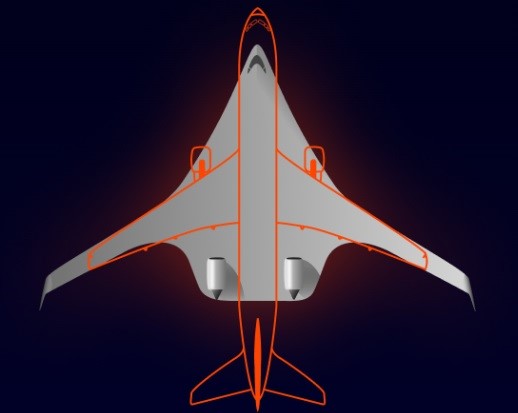
JetZero’s Z4 BWB for the Middle of the Market has a larger wingspan than the Boeing 767. JetZero compares its economics against the out-of-production, 1980s designed 767-200ER, not the current generation of wide-body aircraft. Credit: JetZero.
Feb. 11, 2026, © Leeham News: JetZero, a start-up company based in Long Beach (CA), is developing a Blended Wing Body (BWB) aircraft for the so-called Middle of the Market (MOM). MOM is now occupied by the remaining Boeing 767-300ERs and 757s, the older and current generation Airbus A321 and the forthcoming Boeing 737-10. The older generation Airbus A330s and the current generation Boeing 787, Airbus A330neo and the A350-900 also serve the MOM sector.
The design is a 250-passenger airliner, the same size as the larger NMAs that were cancelled. JetZero says the BWB will be 30% more aerodynamically efficient than the aircraft it replaces. The company compares the Z4 economics against the Boeing 767-200ER. It has not compared the Z4 with the current generation aircraft the BWB actually to compete against for sales and costs.
Michel Merluzeau, Sales Engineering and Market Development for JetZero, said the MOM has an “addressable market” is 12,000 aircraft. However, he said this does not reflect the anticipated share that might be captured by the Z4, a figure he did not disclose. Merluzeau was speaking at the annual Pacific Northwest Aerospace Alliance conference today in suburban Seattle.
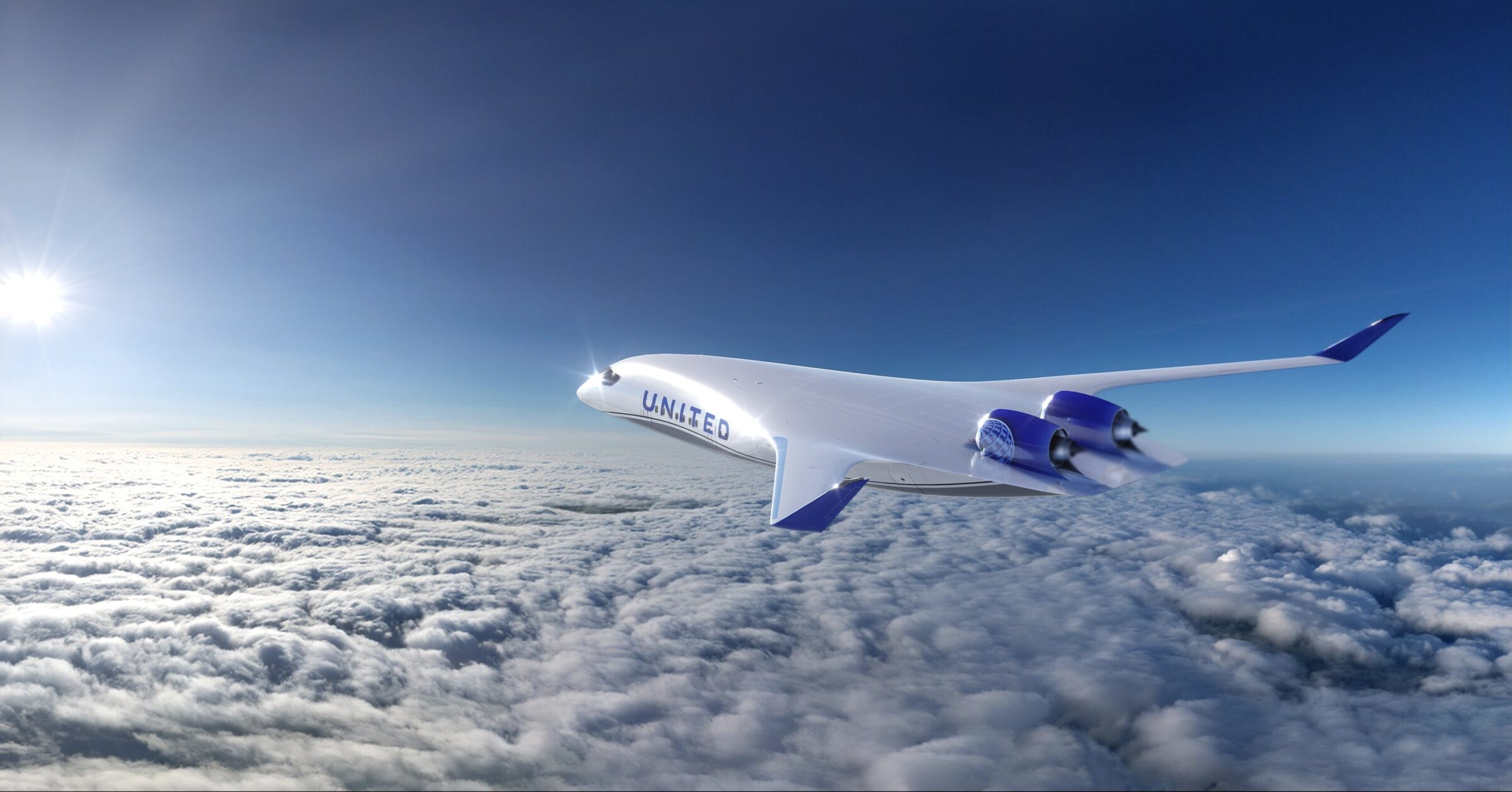
The JetZero 250-seat BWB in United’s colors. Source: JetZero
Engine challenges
An analysis by LNA reveals that the problem for JetZero is that the wing’s large size requires it to fly at over 41,000 ft to reduce parasitic drag, which is the maximum altitude of an A321neo or 737 MAX. At such high altitudes, high-bypass engines such as CFM LEAP and Pratt & Whitney GTF experience thrust loss. The plus 40,000 feet area is for the superlong-range Business jets with their low-bypass engines.
Unfortunately, these engines are too small for JetZero’s project, so the three-generation-old Pratt & Whitney PW2040 is used instead, as it’s a lower bypass engine like the Business jet engines. The PW2040 meets JetZero’s altitude thrust-decline requirements; however, its fuel consumption is not comparable to that of modern engines. JetZero and Pratt & Whitney said this can be improved. Typically, even major updates to existing engines keep product improvements to less than 5%.
Compared with today’s GE9X, the most modern engine in flight test, the PW2040 would deliver 25% higher fuel consumption, so the project is dangerously close to delivering only marginal improvement on a new, unproven technological airframe without showing a significant operational fuel cost gain at this stage.
Natilus raises $28m

Start-up company Natilus is designing two BWB airplanes: the small Kona freighter, a turboprop designed to compete with the Cessna SkyCourier and Caravan, the ATR-72F and the De Havilland Canada Otter; and the Horizon A320/737 competitor. Credit: Natilus.
Another company pursuing a BWB concept is Natilus of San Diego (CA). It announced yesterday that it raised $28m from private sources. This fledgling company has now raised $33m, a fraction of the $250m it says it needs to bring its first BWB model, the Kona freighter, to market. A 200-passenger BWB, the Horizon, will follow.
The Kona is a small BWB powered by Pratt & Whitney Canada turboprop engines. The larger Horizon concept intends to be powered by the Pratt & Witney GTF or CFM LEAP engines. Kona is designed to have 50% lower operating costs and burn 30% less fuel than similar freighters. Its payload is 3.8 metric tons with a range of 900nm.
Horizon will compete with the Airbus A32neo and Boeing 737 MAX families. Natilus claims the Horizon will have 40% more capacity than the equivalent Airbus and Boeing airplanes, 50% lower operating costs, and burn 25% less fuel. Unlike Jet Zero, which compares its Z4 with the long out-of-production 767-200ER, Natilus compares the Horizon with today’s neo and MAX. The Horizon will have a range of 3,500nm, which is far less than the 4,700nm Airbus advertises for the A321XLR. Airbus advertises a range of 3,400nm for the A320neo. The proposed Airbus A220-500, with up to 180 passengers in high density, is expected to have a range of around 2,800nm to 2,900nm.
Boeing’s 737-8 MAX, -9, and -10 have advertised ranges of 3,500nm, 3,300nm, and 3,100nm, respectively.
Kona
Aleksey Matyushev, the company’s president, said he smaller, turboprop Kona freighter will lay the foundation for the development of the larger passenger Horizon. This autonomous airplane will compete with the Cessna SkyCourier and Caravan, ATR-72F, and De Havilland Canada Otter.
How much will Natilus need to bring the Kona to service? The amount Matyushev says is surprisingly small.
“We believe $250m from pencil through certification is what it will take to bring it to market. I’ve led a lot of Part 23 programs in the business jet world and turboprop world,” Matyushev said. “If they’re billions of dollars, then Cessna and Cirrus would be out of business.”
The timeline to entry into service (EIS) is short. “Kona’s first flight will be in 24 months, so that’ll be 2028. Market entry will be in 2029,” Matyushev says.
Natilus doesn’t have a production plant yet. The company expects to announce its site selection by the end of this year. However, it has a plant in San Diego to produce the first Kona. It’s about 250,000 sf. When the Horizon is developed, Natilus plans a 3.5m sf production plant. For comparison, Boeing’s 787 plant expansion at Charleston is 1.5m sf, about the same size as its current plant. Boeing’s Everett factory is 4.3m sf.
At full production, Natilus projects building 350 Horizons per year, or 29/mo. Airbus is currently building 50 A320 family members at four sites, with plans to increase production to 75/mo. Boeing’s Renton factory had the capacity to build 63 737s a month on three lines before the MAX crisis began in 2019. Under its recovery plan, Renton will be capped at 47/mo. A new North Line’s capacity hasn’t been announced by Boeing, but the single line may have the ability to produce 15 737s a month.
Horizon
Natilus’ mainline BWB, the Horizon, differs from JetZero’s in a number of ways. JetZero’s Z4 BWB is for the Middle of the Market, 250-300 passengers. The Horizon concept competes with the A320 and 737, the sector that has far more market potential than the MOM sector. It’s also a size that doesn’t lend itself to a BWB design, says Airbus. A BWB is better suited the larger it is, Airbus CEO Guillaume Faury said last year.
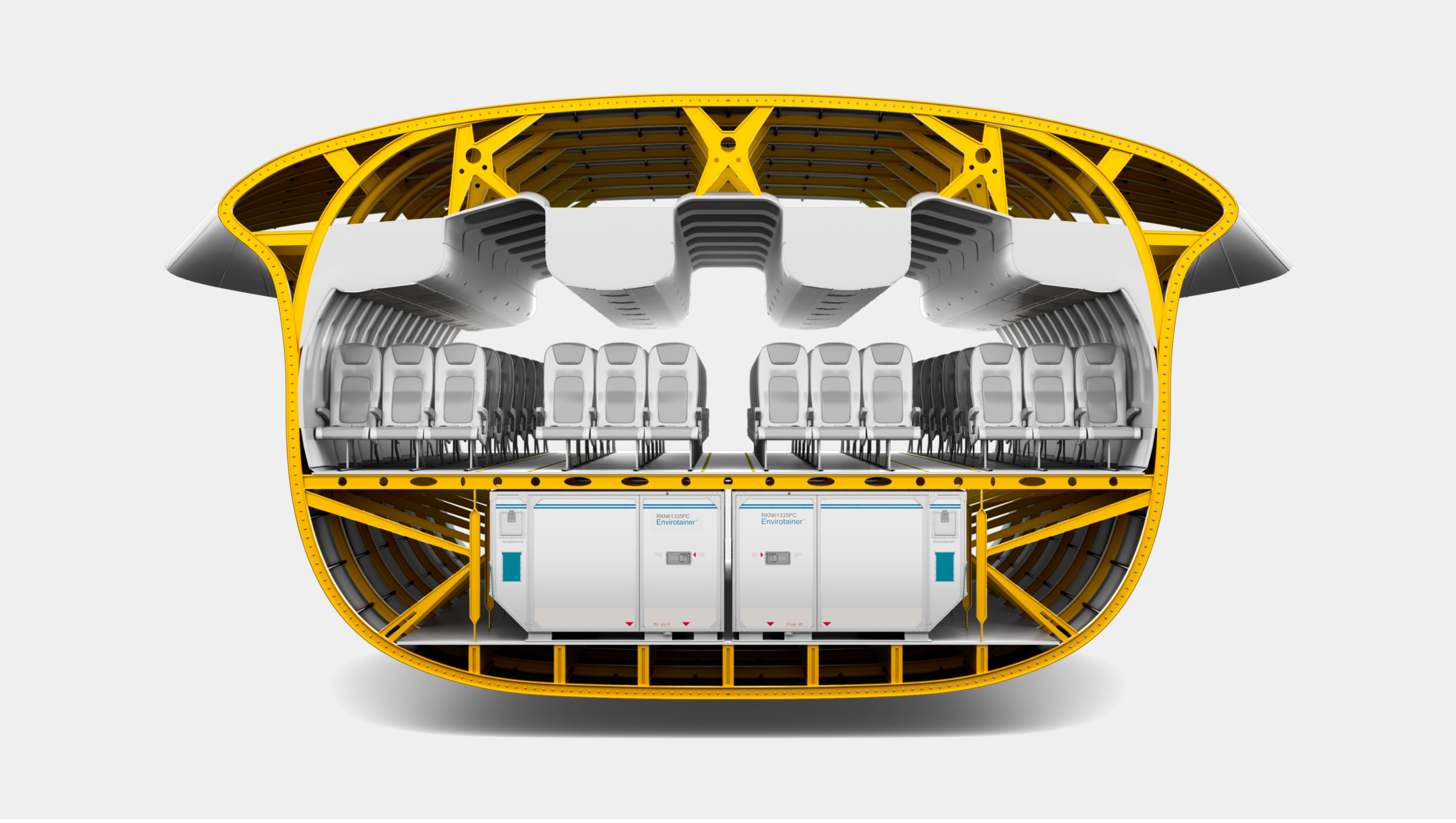
Natilus’ passenger BWB concept includes lower deck cargo space, unlike the JetZero Z4, which doesn’t have this capability. Credit: Natilus.
Regardless, Horizon is also a dual-deck design in contrast to the Z4. JetZero’s concept doesn’t allow meaningful cargo space below the passenger deck; Horizon can take LD3 containers.
The Z4 has few passenger windows. Natilus’ Horizon has a window line for passengers, due to its high wing design vs JertZero’s traditional low wing concept.
Horizon’s planned use of the GTF or LEAP engine with the higher bypass ratio contrasts with the Z4’s planned use of the 1970s technology Pratt & Whitney PW2040 used on the Boeing 757 and military Boeing C-17 cargo transport. The lower-bypass PW2040 is better suited for cruising at 41,000 ft, says JetZero.
Matyushev says the GTF and LEAP work on the smaller Horizon, which is designed to cruise at 35,000 ft.
Leadership and Advisory Board
Natilus’ website doesn’t list its leadership or advisory board, unlike JetZero, which outlines dozens of people. Natilus provided this list to LNA.
- Leadership Team:
- Aleksey Matyushev, Co-Founder & CEO
- Anatoly Star, Co-Founder & Head of Operations
- Nolan Giblin, Head of Business Development
- Advisory Board:
- Dennis Muilenburg, Ex-President and CEO of Boeing and Co-Founder, Chairman and CEO of New Vista Capital
- Brent Wouters, Ex-President and CEO of Cirrus Aircraft
- Kory Matthews, Former VP of Phantom Works and VP and Chief Engineer of Boeing Military Aircraft
- Chris Stewart, Former Member of Congress
- Carl Schaefer, Retired Lt. General, USAF
- Mark Camere, Retired Major Gen, USAF
- Steve Bleymaier, Retired Brigadier Gen, USAF
Money needed
Matyushev says the Kona needs $250m for development, certification, and EIS. LNA estimates that upwards $900m is a closer figure. Matyushev says the Horizon needs $3bn to $5bn, a figure LNA estimates is significantly under-estimated. JetZero says it needs $7bn to $10bn for the Z4. LNA also believes this number is way too low.
Bjorn Fehrm contributed to this article.
Thanks LNA and Bjorn
On the Nautilus board, lots of name dropping, do not see how they will make this fly!
If Michel and colleagues can fix the wing issue, I wouldn’t be surprised if Boeing comes in , scoop the the Jet zero and pushes for new engines
Remember the sonic cruiser ? Boeings been there done that with a thick delta wing
What exactly did Boeing do? Release a bunch of cool pictures in an attempt to distract from the A380 (temporarily successfully, to their credit)? I say this as someone who worked on that charade as a Boeing engineer.
@Bigfoot:
Not my take. Boeing was serious. There were indications and desire for speed and to get a program moving, you cater to what the customer wants not what you think they need.
What happened was wants vs what they needed were two different things. Some speed would sell but you had a major cost and had to fill all those high cost seats. Concord never made money. It might have been revenue neutral at best. What was being offered was a slow Concord, high costs but not the speed either, sub sonic fast.
But that is part of the process. When Boeing realized what the airlines needed, you take the advance elements and convert it into a tube and frame setup., Uber common taken to the Nth degree.
Not earth shaking whiz bang cool but a solid market with approach that was whiz bang (composites and almost all electrical).
My surprise is they did not get more benefit out of it. I suspect they were conservative (they never did break the wing in testing – gave up as it was getting nuts for bend and huge motion swings never seen).
The 777 started off as 3 engines. At that time Airbus has pushed the boundaries on ETOPs in Asia and working the design around, yes you could do it in that size with 2 engines.
Boeing then took ETOPs the next step and we are now rid of 4 or 3 engine requirements.
I know of one instance that an multi engine jet skated by though it was on one engine not two intended.
Forlget who but out of Miami a mcheanic turned plugs around (or some such) and lost all the oil out of tghe wing engines. DC-10 I believe.
The only reason he did not do the tail engine was he could not get to it and it was on a different check list when they did have a platform scheduled to be up there.
All the other failures have been fuel taking out all engines regardless. Gimli Glider was fuel starvation, Airbus into Azores (?) was fuel loss, a 747 going into Narita was trying to draw from empty tanks (they had the fuel). Two or Four, they don’t run if out of fuel.
@Duke:
My memory is it was fuel use that was the killer problem. They went for high sub soncis speeds (aka Gulfstream/BBD) that saved a bit of time but used a lot more fuel.
I did not follow the Boeing wing design as that was all about speed and the airlines don’t see a small speed increase offsetting higher costs.
Overstating the obvio9us, the whole cabin goes at the same speed. Cattle class and the ultra luxury. Like the Titanic, they needed cattle class to make it pay.
Do you have a link into the wing of the Sonic Cruiser? Interesting tech stuff though I don’t think that was relevant.
Or as they told us in ground school, double the speed and 4x the power (for a given air frame, of course if its ultra slippy then its the power needed for low speed vs power needed for double.
JetZero seems aptly named; we’ll see how it goes.
Wonder how Boom™ is doing these days.
We agree on that. The rotation issue is an interesting one.
Will the JetZero’s Z4 with PW2040 engines meet IACO requirements?
JetZero and PW say it can be brought to ICAO standards–but at what cost? They don’t say.
Hamilton
Mr Hamilton
Respectfully….
If the engine could be made to meet ICAO requirements, what then actually forced the 767 out of production. Would it have been the threat to the USAF of having a split fleet engine wise on future KC46s…. Something doesnt seem right.
Military airplanes are exempt from ICAO rules. The commercial 767 is not.
@PNW
Anectodotally, there may be a secondary reason to bring back the PW2000. There is untapped cargo market on the C17; the aircraft was probably killed off too early.
That aside, there has been chatter to re-engine the aircraft. Rather than convince an OEM to create a 40K engine from scratch, this would be a way to offer that possibility for any re-engining that the USAF may want to pursue.
It does bring up the point that regardless of the KC-46A, the 767 out of production is directly due to the engine issue.
Maybe not worth the cost due to build numbers of 767 vs the hundreds a year for Jet Zero (right) but…….
USAF is finally realizing fuel savings has a huge return over the life of a single air frame let alone a fleet.
Doing some obvious rounding, say Boeing delivers 400 x KC-46A program, that is 800 engines. That ignores all the other 767s that could be retrofitted. Maybe worth converting on PW x 767s to PW.
And a small but steady new build of 767F (and possibly more Pax for those routes 787-8 is way too much for.
If they could keep the engine enough the same they could fit in packages to upgrade to ICAO, then its off to the races.
It certainly was worth it to CFM the DC-8 let alone a big group of the KC-135s.
So yea, I doubt it can be done. If it could be done PW would be fishing in all the use waters.
@TW
The tanker already uses PW4000. The freighter was CF6. Either way, they are not ICAO compliant.
Having said that. in 20 years there will functionally be no commercial PW4000 business left. The B52 is going through a re-engine presently. The primary concern is a collapse of the spare parts stream
@TW
The B767 is in a pickle. The tanker line probably concludes early 2030s (with PW4000). The CF6 on the freighter is also non-ICAO compliant. The only engine that would make sense for a re-engine is the GENX.
That has some interesting opportunities. It is oversized compared to the historical needs of the B767…maybe a major boost in MTOW is on the table?
By comparing Natilus’ cross section with the original A300 cross section
https://upload.wikimedia.org/wikipedia/commons/e/e8/Airbus_A300_cross_section.jpg
it looks like this thing is going to by heavy and expensive to build. Sure they can use “advanced” building solutions like robots but so can the traditional aircraft manufacturers with their traditional designs.
I also miss some columns in the center of the aircraft to keep its shape.
Boeing did not do well with the Mother of All Assemblers, so maybe situational but not a whole old airframe (new one yes)
The Pillars were for a double bubble width dosing not the BWB.
It would be more logical to limit Z4 MTOW so a PW1135G Advance could lift it even if range is down to 2 hrs. As experience is gained and P&W willing to increase core size and have it optimized for cruising at 45 000 ft with 45k thrust to get +4000nm range. Congress have a history of being lenient on PWA so money for a USAF stealth tanker/transport paying for the new engine is somewhat probable.
Any idea of what happened to P&W? Last time I checked, it struggles to deliver what it promised for the engine core upgrade of the F135. The program got delayed for years. Bite off more than it can chew?
Well you really should tell the whole background, otherwise you wind up with a distorted picture that is wrong.
P&W met the specs for the F135. No iffs ands or butts. The program office in their infinite wisdom, failed to address future growth.
Added power was not for performance but to meet the electrical needs of the electronics advances the F-35 itself incurred for adding more capability.
P&W has indeed upped the power while maintaining the reliability and economics of the F135 engine.
Like a Double A Fuel Dragster, you can only ask 17,000 hp out of an 800 hp engine for so long – very spectacular blow ups as they work the edge limits (good news there is you only need it for 8 seconds).
The choice was to max the F135 engine out well above its original design, or go with Adaptive Engine with its huge risk (not like they don’t have enough maint issues on the F35)
Pretty wild to blame PW for something they had no input on. F35 was a design choice on engines and what they wanted and PW delivered. Its one of the few items that has been reliable.
Its not a CFM-56 by any stretch. You are playing on Formula 1 type area and there is a trade off in power vs longevity and reliability. You can give up longevity to get reliability which is the most important aspect. Single engine aircraft don’t fly well on no engines (note see Miracle on the Hudson – same thing applies to two engine aircraft and both engines out)
While I think the Adaptive engine concept is a longer term answer, short term no, F-35 already has too many maint issues (granted its a spare parts failure to supply). Germany had that problem in WWII with the Panther, probably one of the best tanks of all time (peer to peer). But the parts all went to build and no spares. Something breaks and you now have no tank, top notch tank and just a pile of metal. Better a Pzkw IV in the formation than a broken down Panther. Panther much like the F-35 had relaibiltiy issues (SOP, new stuff is like that, you make lots of spare parts to deal with it while making your existing parts reliable)
The answer for the F-35 of course is LM whiz bang super F-35 D that has twin engines!
Eurofighter and Rafale were smart to go with twin engines. You not only have more combined power, you only need a bit more to get a boost out of two engines vs all of it out of one.
I hope that puts it in correct context.
ps: The issue is the system cooling that decisions have to be made on maximizing existing vs an all new one that has its own its new and developmental issues.
What do a double A fuel dragster, Panter tanks, Eurofighter and Rafale have to do with commercial aviation…?
@Abalone
I will answer your question indirectly.
In this very specific question…this is an installation that needs a bigger engine. It is not that you cannot crank the RPM to meet thrust, but that will have a very severe effect on TOW.
You need an engine with a fundamentally larger core.
I have made this point before, but when everyone points out the TOW difference between current 737/320 vs the NG/ceo…everyone forgets that also included a large number of A319 and 737-700. The whole market shifted and now the preponderance of sales are all on the high side. If the engine makers were given a mulligan, they would have likely designed in a larger core to give their engines a fighting chance rather than flying at the end of the operating envelope.
Sigh. Totally misguided. You better do your own research first
Contrary to what you said:
“Pretty wild to blame PW for something they had no input on.”
> P&W actively bid on the contract for the engine core upgrade of the F135, put on a whole all-singing all-dancing show to push out GE
If P&W is not responsible, who is??
Not sure whether it’s LM or P&W who cut corners, with an engine just good enough but lacks room for further improvements, though that was supposedly a major selling point of the aircraft project in the first place. Haha. Well, it appears others have noticed and well-prepared, they are rolling out new one that are massively ugraded. I’m telling you, it’s over.
We don’t know what’s actually causing the years long delay, yet. Now there’s no engine good enough and LM has been pushing out aircraft without radars to the USAF since last summer. Funny, isn’t it? Shouldn’t delivery be stopped to hold LM’s foot on fire? Why not?
P&W has had service entry problems since the TF-30, F-100, PW2000, PW4000, PW1100G-series and others. They normally solve most of them after +400 Service Bulletins. RR is different, either pretty good almost directly T-XWB or a mess that even BA gives up on RB-211-524H and maybe even the T-1000.
classic late stage capitalism. only do research when someone else is paying for it (usually the government), cut your engineering staff to the bone, underpay the rockstars and lose them to startups, coasting on rep and political bribery to get contracts….
milk those contracts as revenue production rather than product creation.
While this reads as an interesting concepts, i have plentyfull doubts.
We’ll see an increasing no. of gently improving A321XLR and B737-10 coming off production lines into airlines fleets, which will gently push up widebodies to longer routes.
Also A&B will for sure bring their own NB successors to the market –
while possibly more “traditional” they know how to fit into the system well and build at scale – yet offer benefits beyond the current gen planes.
I have questions on the not optimize engines for the frame, possibly airport infra incomparability, Spare part and Support globally, ability to produce at scale –
Yep
Frank may not speak for earth but he accurately reflects my take on this.
Do not get me wrong, I think exploring the possibles is needed, but like all things aircraft, it has its own set of issues and how it fits, what it cost etc is when the chickens come home to roost (maybe roast?)
While the concept is visually striking, the engineering hurdles are formidable. Beyond the massive $20–30 billion development cost and a 15-year certification timeline, several critical technical blockers remain:
** Structural Efficiency: A non-circular fuselage creates immense pressure-loading challenges, likely leading to a heavy, over-engineered airframe.
** Scalability: The design lacks ‘stretch’ potential for capacity variants.
** Propulsion: There are currently no engines optimized for this specific configuration.
** Passenger Experience: Outboard seats would face high g-loads during rolls, and the ‘theatre-style’ seating creates a issue for emergency egress from middle rows.
+ Betting on this requires assuming the competition stays stagnant for over a decade—a risky gamble in this market segment.
I think the paper A322 prevented Boeing from moving for over a decade.
https://groups.google.com/group/aviation_innovation/attach/16bb07e6671fcb/Airbus%20A322%20NEO%20Fake%20keesje%20NMA%201.jpg?part=0.1&view=1
a couple years ago I did some fiddling based on a side by side double bubble A-320 fuselage for a 10 wide twin aisle that could use LD-3s. the “keel” where the 2 bubbles met was designed around composite tension members to keep the open feel for passengers.
for giggles I made it a canard with overwing engine mounts a-la the hondajet, extremely short (and therefore light) landing gear enabled by the rear mounted main wing.
the body provided significant lift and the “grooves” on top and bottom where the twin fuselages meet provided considerable unpressurized volume for systems inside lightweight composite, non-structural skins.
ended up with a 10 wide 25 row 250 seater that was compatible with C Gate compatible, transcon range with excellent turn times due to the short twin aisles, and no need for exotic materials to make the structure work.
something like this is much more feasible from a manufacturing perspective and allows for the “simple stretch”.
not sure why any of the legacy manufacturers have not considered this type of approach.
this is one of the early sketches I put together as I was exploring feasibility
https://photos.app.goo.gl/bYku5e4Ga1NbY11T7
I believe Boeing did have that as one of the candidates for MAX replacement.
If memory is right it was a cost to build issue and freight wanted by Asian operators and petty much Baggie only by others (Freight on single aisle is not a big mover in many ops). Some yes but not the way it is on Wide Body
I am not on board with mixing MOM with single aisel and twin aisle.
A 737/A320 is not a 767. The capacity is vastly different. The -10 and A321 stretch the absolute limits of things.
The 757-300 was a failure.
MOM would be the economics of a single aisle with the carry capacity of 275 (plus or minus some)
Few airlines dense pack maximum, so a in theory 240 seater is reality no more than 210-220 seat.
Too long means a slow turn around (which is a factor as it flies at least some hot turn segments). It also means longer wings and gate issues (and then folding wings on a single aisle, hmmm)
So, its got to be a twin at the cost/economies of a single.
And do not forget, you get into what works across an entire world. Asia wanted more F capability in the Boeing MOM. The rest of the world did not.
The A380 would have had much better economics if it had better F capacity. 787/A330/A330/A350/777 all take that into consideration and build it in.
First complaint on the A380 was it did not have F capability (really, you did not know that going in?) Could Airbus have done more F there. I do not know, given the criteria of a double stack maybe not. But its all about generating revenue and if a 777 make more money they the bigger bird is deficient in competition.
So it goes.
Boeing proposed a -3 x 787 variant for Japan. There actually is a lot more routes a -3 would work on, 787 is being used as a 767 on a number of routes including trans con US which was the 767 bread and butter.
The problem is a single aisle beats a twin on those kind of routes all hollow. Downside is you have a pax limit and if you gots more Pax than carry, you have to balance a higher cost vs getting more people where they want to be when they want to be.
Gate restriction is bound to come into play going forward. I think when Boeing (and also Airbus) come into replacing NBs – Boeing will have a 757 / 767 type of offering. What type of new technology? Who knows for sure… Airbus will do a 321 / A330 airframe offering. But with so many orders to fill, all this in reality is quite out in the future – despite what they may say.
I think as a Mom the A321 XLR MTOW/ wing is maxed out. A simple stretch, trading capacity for range seems possible: A322 NEO
If Airbus chooses to go serious on this segment (270 passengers, 4500NM) a new wing would be required. In the past I looked at a A322/A323 NEO subseries with 20% bigger wings and 40k lbs+ engines.
A significant investment using fuselage,systems that are NEO compatible but requiring a new TC, because of it’s new wings, engines, landing gear, dynamics (just like the 777x should have had..)
https://lh3.googleusercontent.com/-w0yvq58-h2M/WVuATjJFU0I/AAAAAAAABK4/RKFBEiw4WT83RjRqZa3UdwaP8kURPFHOQCLcBGAs/s1600/Airbus%2BBoeing%2BA322%2BMoM%2BConcept%2Bkeesje%2B737%2BMAX%2BA320NEO.jpg
The old metric is irrelevant:
WB and NB are at the opposite ends of spectrum in the MOM segment, they don’t compete against each other. At least the airline customers won’t consider the two are interchangeable. Each has a different positioning in the market for an airline — what airline it want to play and what products the airline want to offer.
As the K-shape economy continues to emerge, (some) airlines continue to go down the path of premiumization, more options for those willing to pay top dollar, more seats at the front at the expense of fewer seats at the back.
Taking a page out of the likes of Emirates and Qatar Airways’ playbook, United debuted its own Studio suite.
Witness the upcoming United’s 787-9 (which btw was previously expected to be delivered before the end of 2025 but didn’t), total seats go down from 257 to 222, but economy seats fall by a whopping 35%. Even the total number of seats is fewer than what Ryanair is going to squeeze into their 737-10!
At the end of the day, everyone, presumably, is going to pay more. Globalization goes into reverse!
Carbon tax may become more acceptable when the populus can’t afford to fly anymore. 😅
I cannot understand the marriage of a bwb with old engine tech because nothing is available in the thrust range.
Surely 3x rise based engines would be perfect on top of a Bwb? – if their thrust is sized for 737/320 planes.
The high bypass ratio of the RISE doesn’t work well at 41,000 ft