
Leeham News and Analysis
There's more to real news than a news release.



Boeing seeks ICAO exemption for 777-200LRF to offset 777-8F delays, MD-11F grounding
Dec. 19, 4:15pm CST: Updated with Boeing comment.
By Scott Hamilton
Dec. 19, 2025, © Leeham News: Boeing has asked the Federal Aviation Administration (FAA) to grant an exemption to the 2017 ICAO fuel efficiency rules that mean an end to production of the 777-200LRF freighter on Dec. 31, 2027.
Boeing seeks approval by May 1 next year.
“The requested relief will allow Boeing to meet anticipated customer demand and support the substantial public interest in the sustained transportation of air cargo prior to the 777-8F entering service. This petition therefore requests exemption of a total quantity of 35 777F airplanes until achievement of 777-8F first delivery and entry into service,” Boeing wrote in its filing today with the FAA.
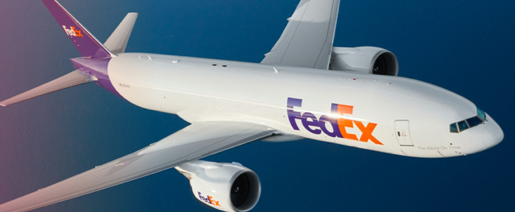
FedEx is among the large users of the Boeing 777F. The airplane is scheduled to go out of production on Dec. 31, 2027, due to international regulations. Boeing has asked for an exemption to continue production. Credit: Fed Ex.
“Additional 777Fs are needed after January 1, 2028, to maintain an uninterrupted supply of large freighters to the market prior to the introduction of the 777-8F,” Boeing wrote. The company asked the FAA to extend the exemption outside the US.
Continued certification delays for the new generation 777X, including the 777-8F freighter, are the reason. Certification has been moved to a goal of 2026. Entry into service (EIS) of the passenger 777-9, the lead of the family, is now planned for 2027. EIS for the 777-8F has a goal of 2029, but some customers already believe this won’t happen until 2030. EIS of the passenger 777-8 follows the freighter by a year.
The 777-9 was supposed to enter service in 1Q2020, with the 777-8P two years later and the freighter two years after that. EIS for the freighter was moved up to be second once the FAA agreed to adopt the 2017 ICAO emission standards. The standards mean the end of production of the Boeing 767-300ERF and the 777-200LRF by the end of 2027.
767 exemption granted
Boeing obtained an exemption to continue production of the 767F, the mainstay of the FedEx and UPS medium-haul operations. However, when Kelly Ortberg was named Boeing’s CEO in August 2024, one of his first decisions was to announce the cancellation of the 767 concurrent with the ICAO deadline. The backlog for the 767 didn’t support continuing production anyway.
Now, with delays and the prospect of customer cancellations for some of the 63 777-8F orders, Boeing wants to continue production of the Classic freighter.
MD-11s grounded after crash
LNA is told that another factor also entered the picture: the Nov. 4 fatal crash of a UPS Boeing MD-11F. This is not in the filing with the FAA.
The No. 1 engine separated immediately after liftoff, causing a fire. As the engine departed the left wing, it went up and over the fuselage. Video shows compressor stalls from the centerline No. 2 engine, mounted atop the fuselage at the base of the vertical tail. Although the National Transportation Safety Board (NTSB) didn’t address the compressor stall in its interim 30-day report, it appears the No. 2 engine lost power long enough to doom the airplane.
The pylon for the No. 1 engine failed. Boeing recommended within a day that the MD-11F be grounded. The FAA followed with a mandatory order within hours. About 60 MDZ-11Fs operated by UPS, FedEx and Western Global Airlines now sit idle.
LNA is told that Boeing internally thinks there is only a 50/50 chance the airplane will return to service. Technical fixes to the pylon are possible, but the age of the fleet—approaching 40 years—raises economic questions about doing so. UPS and FedEx already announced plans before the crash to phase out their fleets in the next few years. On its earnings call for the quarter ended on Nov. 30, FedEx said it hopes the MD-11F will rejoin its fleet next year, perhaps in March or shortly thereafter.
Both airlines operated around two dozen MD-11s. The grounding eliminated a big chunk of capacity. The current 777F can fill this gap if an exemption is granted.
According to Cirium, 30 777Fs are scheduled for delivery next year and just 12 in 2027. Boeing could easily maintain its production schedule to provide for 18 more 777Fs in 2027, for a total of 30. Another 20 would be needed to make up the gap at UPS and FedEx. It’s unclear if the supply chain, which has planned for the termination of the program, can respond quickly to maintain the current production rate.
Faced with potential customer cancellations for the oft-delayed 777-8F, Boeing is now offering the Classic 777F as an alternative, LNA is told. This, too, requires exemption from the ICAO standards.
“Air cargo carriers continue to look for effective ways to transport high-volume and high-value goods around the world, and the Boeing 777 Freighter remains the most fuel-efficient large freighter in the market,” Boeing said in a statement. “This petition would allow Boeing to meet some of the anticipated customer demand to replace older, less fuel-efficient airplanes until the new 777-8 Freighter enters into service.”
Is it known if the 767F will in fact continue in production post-2027 ?
767F production ceases; Ortberg’s decision.
Thanks.
Where does this leave the KC-46A Pegasus?
Will KC-46A production continue as the only B767 variant being built, and if so won’t that make it even more expensive for Boeing?
Military airplanes are unaffected by the ICAO standard.
I think that will the next exemption Boeing gets. Boeing being allowed to keep producing 767F, without investing in a re-engining.
Fo Ortberg the main reason was the ICAO 2027 regulations. With that “solved” & and a new order the 767F is saved. US Government and Boeing have become so close now, that it won’t be problem.
Ortberg will state the situation has changed and requires a thorough re-assessment of the portfolio and prioritizing US customer demand moving forward. Or something like that.
+1
Sound right to me. We’ll see.
Scott,
On your article entitled “767 exemption granted”, what aircraft are you referring to in the last statement “Boeing wants to continue production on the classic ??? freighter”?
To distinguish the original 777 from the 777X, LNA began calling the original 777 the “Classic” when the X program was launched in 2013. The term “Classic” was given to the 737-300/400/500 by Boeing upon the launch of the 737 NG. Although Boeing didn’t like our following suit with the 777, this is our publication, so there. 🙂 The “classic” freighter is the 777-200LRF.
I presume that Airbus will respond to this by claiming that it has the ability and capacity to provide the 35 additional needed frames by way of the A350F and that thus there is no reason for ICAO to approve the exemption.
Not sure why Boeing’s delays in certification should be ICAO’s problem.
Read the article: It’s the FAA exempting to ICAO standards.
So presumably, that would mean any FAA-exempted 777-F produced after the deadline would only be able to operate US domestic routes? Why should everyone else give Boeing yet another exemption?
There is an international airline that is interested in more 777Fs.
But if the rest of the World follows the ICAO rules, how will they be able to operate them?
Not my concern, LOL
Hamilton
crane logo?
Huh?
does the “interested international airline” have a crane ( long beaked and legged bird 😉 in its logo?
i.e. is it Lufthansa wanting more 777F
Nope, not LH
what reach does the FAA exemption have?
national or offshore?
.. and only US users then?
My bad – I should have been clearer and said FAA rather than ICAO.
How many 777-300ERs are stored?
@Martin: 36 as of Dec. 5.
Could it impact 777-9 production ramp-up (since the 777-9 is expected to enter service in 2027)?
Should not affect 777-9 ramp up. 777-8F comes two years after the -9 (supposedly).
“The company asked the FAA to extend the exemption outside the US.”
What does that mean?
What happens outside the US is not goverened by the FAA…
“Continued certification delays for the new generation 777X, including the 777-8F freighter, are the reason.”
After the recently-announced further delay to the 777X program, BA moved 33 777Xs into the ASX606 “shaky order” block. One wonders if any / how many of those were freighters…
https://aviationa2z.com/index.php/2025/11/16/boeing-drops-33-new-777x-orders-amid-certification-delays/
One also wonders if any of those 33 subsequently ended up among the 20 777Xs that were formally canceled in November:
https://www.scramble.nl/civil-news/boeing-november-2025-orders-deliveries
If 777X freighter order numbers are (at risk of) dropping, one wonders if BA is trying to offer 777-200Fs in an attempt to avoid having to pay refunds. Hard to see how that could succeed, since it’s unlikely that countries outside the US will offer ICAO emissions exemptions…and there have been no 777X orders from US operators.
A lot to unpack in this request
1 Nobody believes Boeing will be 777-8F will be certified in 2029
2 35 aircraft implies holding current production thru Feb 2029
3 The MD-11 is a red herring. UPS and Fedex need that lift now…not in 2027/28 deliveries
4 I looked it up…P2F is not affected by 2027 ICAO. Why can’t the rest of the planet just convert more older aircraft. Maybe this is part of the logic and that any further market demand beyond 35 will be satisfied by otherwise retired B777 pax coversions.
5 Why can’t Boeing turn up the wick as much as possible to deliver aircraft before the end of 2027. Guessing lead-time for components and not wanting white tails is the main concern.
This is a rather puzzling request from Boeing in that it really isnt “that many aircraft” but is this the beginning of a follow-on request later next year when EIS invariably slips out 2029? 35 aircraft is relative blip…what is the real number Boeing needs to migrate production. You also could not have picked a more innocuous date to drop this request either.
As it relates the B767F…that one is a little more interesting. Boeing does not have a cogent answer for that one. However, with the USAF extension of tanker production…there actually is a running line to leverage and probably offsets the overhead associated with that line. I would actually understand a B767F extension before a B777F extension.
The B777F is a long-haul aircraft. Any operator taking delivery will have to seek local authority to authorize these aircraft internationally. A big risk of taking ownership of a boat anchor.
@Casey, as to your #4: Because of the delays by Boeing in delivering the 787 and the 777-9, airlines are holding on to their 777-300ERs for years to come. There’s virtually no feed-stock for P2F conversions. IAI has the only certified program (delayed certification by 2 years). Mammoth’s certification date is up in the air and KMC only just cut metal on its first conversion.
What about A330-300 P2Fs?
An adequate replacement for MD-11Fs, and already being produced in reasonable numbers.
Full production conversion lines for a few years (I don’t know through what year).
The used Widebody market seems to be empty for P2F conversions. (Well the Narrobody market also..)
Do you forsee any increase in production rates for Widebodies to come?
Still suprised here that Airbus is not scaling up the A330, which they used to make at 10 a month.
To me it seems, both A&B keep announcing production raises, but the real produced no. of Aircraft is still way below their targets.
@Frank M: If there was adequate feedstock for widebody P2Fs, this market would be more active. Currently there isn’t and the conversion lines are full for several years anyway.
Airbus is boosting A330neo production from 4 to 5/mo in 2029, but that’s all the demand will support.
What about new build A330-200F or does the A330ceo also won’t hit the ICAO limits?
Is there a case for an A330-800F or does the A350 solves everything above an A320F or 737F?
The A330-200F was a failure because it was too small. Airbus acknowledge the offer should have been an A330-300F. But yes, ICAO takes out the 200/300 in any case. Airbus is also discontinuing the A330-200-based MRTT in favor of the A330-800 as the underlying platform. But there are no plans I’m aware of to offer any freighter based on the A330neo.
Same old Boeing… seek exemptions for their mismanagement.
I’ll bet you in late 2027 Boeing will seek an extension to this exemption (if approved) because the 777X and the 777-8F certification will be delayed even further. I believe the FAA is in the back pocket of ICAO.
Anyone want to take that bet?
I find it interesting in this piece that Scott not once mentioned the A350F that will be CERTIFIED the end of next year (2026) and why cargo operators e.g. FedEx/UPS/LHF aren’t getting in line…. Maybe they are looking at it?
This jet will perform much more efficiently than the classic 777F.
The A350F may be certified by the end of next year (we’ll see), but the first available delivery slots aren’t until 2032.
@ Airdoc
The Dubai Airshow handed Airbus 3 major defections from loyal Boeing customers — Etihad, FlyDubai and Air Europa.
There comes a point where continuous delays become tedious, and people start heading for the exits.
Boeing needs to sit up and pay attention.
The 777-200’s will be available in larger numbers and could be converted by Boeing and partners with fleets from UAL, AA, SQ and BA. If prices increase on freighters the economics to convert more A330-300’s will make those hulls available, even those with PW4000 engines.
Aren’t there 747 freighters on the sidelines available to bring into service?
Certifying a type (8F) as a variant of a variant that ran into 7 years of delays because of certification problems caused by being a new aircraft (-9) i.s.o. a variant of it’s certification base (777-300ER). Which was a variation itself.
Complicated position in front of FAA and EASA that had been fighting grandfathering of design and requirements for twenty years, before the MAX drama.