
Leeham News and Analysis
There's more to real news than a news release.



Bjorn’s Corner: Faster aircraft development. Part 19. Flight Test Aircraft Assembly.
December 5, 2025, ©. Leeham News: We do a series on ways to shorten the long development times for large airliners. New projects aim to cut development time and achieve certification and production faster than previous projects.
The series will discuss the typical development cycles for an FAA Part 25 aircraft, called a transport category aircraft, and the different approaches to reducing development time.
We will use the Gantt plan in Figure 1 as a base for our discussions. We have exited the Detailed Design phase after conducting Critical Design Reviews, CDRs, and now enter into Prototype Manufacturing. After reviewing the acceptance and testing of the first parts and systems from suppliers, we now discuss putting together the first flight-test aircraft.

Figure 1. A generic new Part 25 airliner development plan. Source: Leeham Co. Click to see better.
** Special thanks to Ron Everlove for helping with this article **
Flight Test Aircraft Assembly
A fleet of flight test aircraft needs to be assembled for the flight test program. Each test aircraft in the fleet is usually dedicated to a specific set of tests, making each of them somewhat unique. The number of test aircraft is driven by the number of test points and the schedule.
Shortening the flight test program could save significant money. For example, if the program spends $1M/day during flight testing, the team could easily justify an extra flight-test aircraft if it could shorten the schedule by months. However, there are diminishing returns to adding aircraft to the test fleet.
The assembly of these aircraft usually does not progress as orderly as serial production. Sometimes, the OEM would accept incomplete assemblies to allow other manufacturing tasks to continue. At other times, assemblies may require rework due to nonconformities. Parts could also be late and require out-of-sequence installation. As a result, additional work on the assembly line is often needed. These jobs could pose a challenge from a resource and physical space perspective if the work is not properly coordinated.
Records also need to be kept meticulously to make sure that the configuration for each aircraft is entirely under control. For example, due to parts availability, the team installs a set of landing gear that does not fully conform to the design. Still, it is sufficiently conformal for a set of company tests. This needs to be recorded so that test pilots know the limitations (e.g., very soft landing) and engineers know what tests are valid (e.g., do not use this aircraft for landing gear-related tests).
The team may also need to plan for an upgrade if they need to use this test vehicle for specific certification tests in the future. There can be many configuration differences, especially at the early stage of the flight test program. The team must be able to track all these differences to ensure the safety of operations and understand the validity of test data.
Many modifications are made to these aircraft. For example, some flight test aircraft have a nose boom to measure static pressure, dynamic pressure, angle of attack, side slip angle, etc. Others may include a ballast system to enable changes in the center of gravity in-flight.
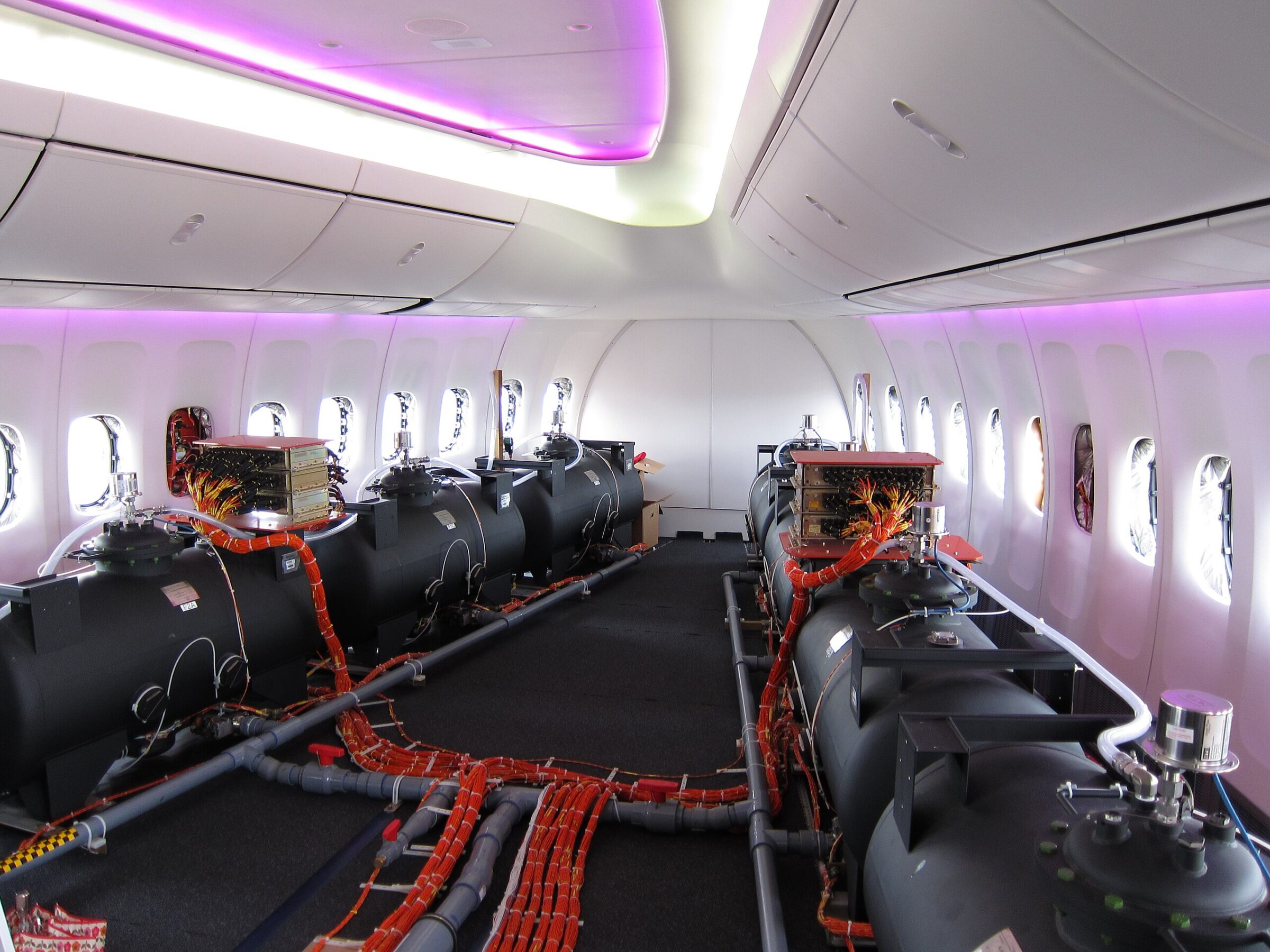
Figure 2. The change of loads and center of gravity tanks in the nose of a Boeing 747-8i prototype. Source: Wikipedia and Olivier Cleynen
A drag chute may also be installed on flight test aircraft performing high-risk maneuvers, such as stall tests. As a result, additional wiring harnesses, structural penetrations, and so on, may be required. Depending on the arrangement with suppliers, these may be installed before parts are shipped, on the assembly line, or during future maintenance.
Power On is typically a major milestone in the assembly of flight test aircraft. Although the structural or system assembly may not be complete at this stage, the ability to turn on the power confirms that key systems are installed correctly and functioning as intended. This also allows engineering teams to conduct additional functional and integration tests going forward.
Fuel Flow is another key milestone. By this time, the flight test aircraft assembly is pretty much completed. Key systems are functioning. The powertrain is fully installed. The team has sufficient confidence to start the engine and conduct additional functional tests.
Aircraft Ground Test
The aircraft is now handed over from the manufacturing team to the test team. Yet, the plane is not ready to fly at this point. A series of ground tests must be conducted to ensure flight readiness. We will look at a few examples.
A Ground Vibration Test is conducted on the first flight-test aircraft for a clean-sheet program. This test uses shakers to excite the aircraft structures. It measures the aircraft’s structural dynamics, helping engineers confirm structural integrity and validate simulation models.
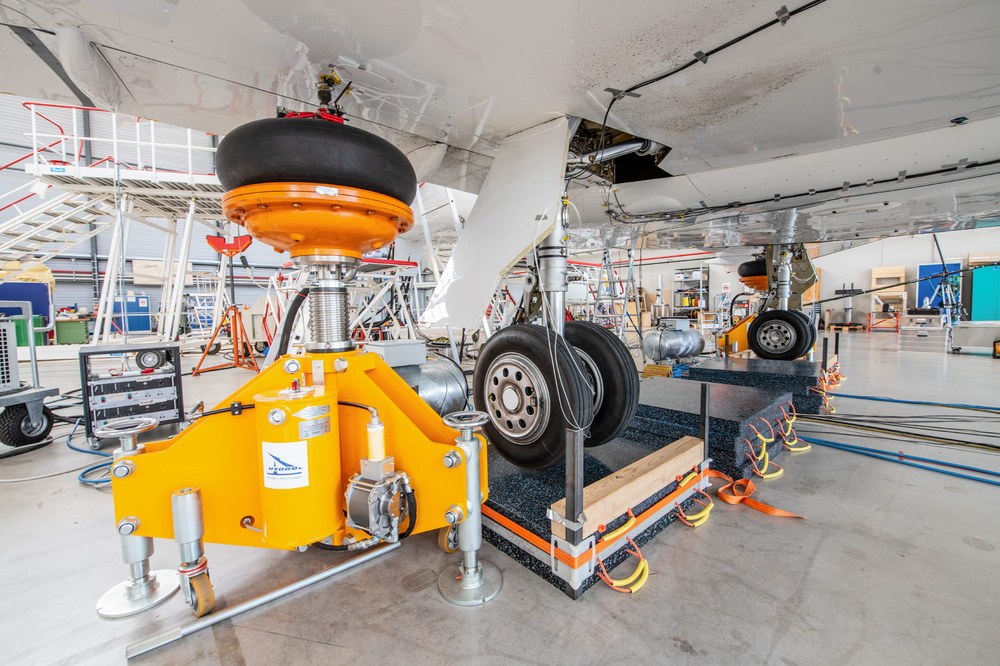
Figure 3. DLR (Deutsches Zentrum für Luft- und Raumfahrt) conducts GVT on a test aircraft. Source: DLR.
Low Speed Taxi is another key set of ground tests. These tests help validate the aircraft’s ground handling and brake system. It also allows pilots to familiarize themselves with the cockpit in a real, functioning aircraft. Test pilots gradually increase the speed over multiple sessions as they gain more confidence in the plane. This will eventually lead to a high-speed taxi test.
Before the high-speed taxi test, the team must obtain an experimental flight permit. The reason is that test pilots may decide to take off if the test does not go as planned. This may sound counterintuitive, but there are scenarios where trying to stop the plane is riskier than taking off and coming back for a landing.
For example, if there is a tire burst shortly before reaching the rejected takeoff speed, test pilots may decide to takeoff instead of stopping. Since the pilots do not know the extent of the damage, having the full runway length to stop the plane may be less risky than executing a rejected takeoff with the remaining runway available. The pilots can also get the control tower or test crew on the ground to visually assess the damage after getting airborne.
In the next Article we look at the Fight Tests.