
Leeham News and Analysis
There's more to real news than a news release.



Bjorn’s Corner: Faster aircraft development. Part 23. Preparing for Entry Into Service.

By Bjorn Fehrm and Henry Tam
January 16, 2026, ©. Leeham News: We do a series about ideas on how the long development times for large airliners can be shortened. New projects talk about cutting development time and reaching certification and production faster than previous projects.
The series will discuss the typical development cycles for an FAA Part 25 aircraft, called a transport category aircraft, and what different ideas there are to reduce the development times.
We will use the Gantt plan in Figure 1 as a base for our discussions. We have looked at the production preparations and the challenges of the serial production phase. Now we look a the preparation work around entry into service for our new airliner.

Figure 1. A generic new Part 25 airliner development plan. Source: Leeham Co. Click to see better.
Preparing for Entry-Into-Service (EIS)
In Part 22, we noted that an OEM must generate revenue from manufacturing and delivering products. This week, we will explore the delivery to our first customer, an airline. We need to prepare its operations team to take delivery and deploy the aircraft for normal operations. This way, the airline can generate revenue and purchase more products and services from the OEM in the future.
In Previous Phases…
Some of the strategic decisions related to customer support were made as early as Conceptual Design. This is especially true for startups because these decisions could affect the business case of the program. For instance, will the OEM provide pilot training itself or via a partner? Who is going to develop the training material? Who is going to build and certify simulators? And who is going to establish and run training centers? These are only a few commercial considerations to be analyzed.
There are other important topics as well. For instance, spare parts inventory, warehouses and logistics, technical publication repository, ground support equipment, maintenance/repair/overhaul, etc. The customer support team for a startup OEM needs to have a thought-out plan when pitching the aircraft to prospects.
Getting the Customer Ready
For the purpose of this article, we will focus on the delivery of the first aircraft. This is especially challenging because the aircraft is new. It is also the first time the customer support infrastructure is used in a real-life situation.
The EIS preparation process typically starts 12 to 18 months before delivery. An aircraft OEM would begin by introducing its team and key suppliers to the customer at the start of this process. This would help the airline understand roles and responsibilities of support team members. The introduction also enables members of both teams to meet their counterparts and build working relationships.
Helping the airline understand the maintenance plan and the recommended spare parts is another important objective during the EIS preparation phase. The airline needs to recognize requirements for line maintenance and scheduled checks so that it can allocate appropriate staff and tools at the right locations. The airline and the OEM also need to work together to ensure the right spare parts are at suitable sites. For example, if there is a component that is not on the Master Minimum Equipment List (MMEL) or is a “no-go” item, the airline may want to have spare parts at strategic locations to minimize potential disruptions.
The OEM also needs to discuss Maintenance, Repair, and Overhaul (MRO) capabilities with customers. Some airlines have significant MRO capabilities. Other airlines may rely on the OEM’s MRO network. Yet, even for airlines with exceptional MRO capabilities, they may still want the OEM to provide MRO offerings to handle jobs that can affect their routine work. For example, warranty work, service bulletin implementation, retrofit, etc.
Training pilots, mechanics, cabin crew, and dispatchers is another important activity for this phase. Since the aircraft is brand new, many airline employees will be needed to train on this product. This could be disruptive if not properly planned. For example, the airline may need to pull 10 pilots from their normal flight duties for a few weeks to obtain the new type rating. There is a significant opportunity cost to train them.
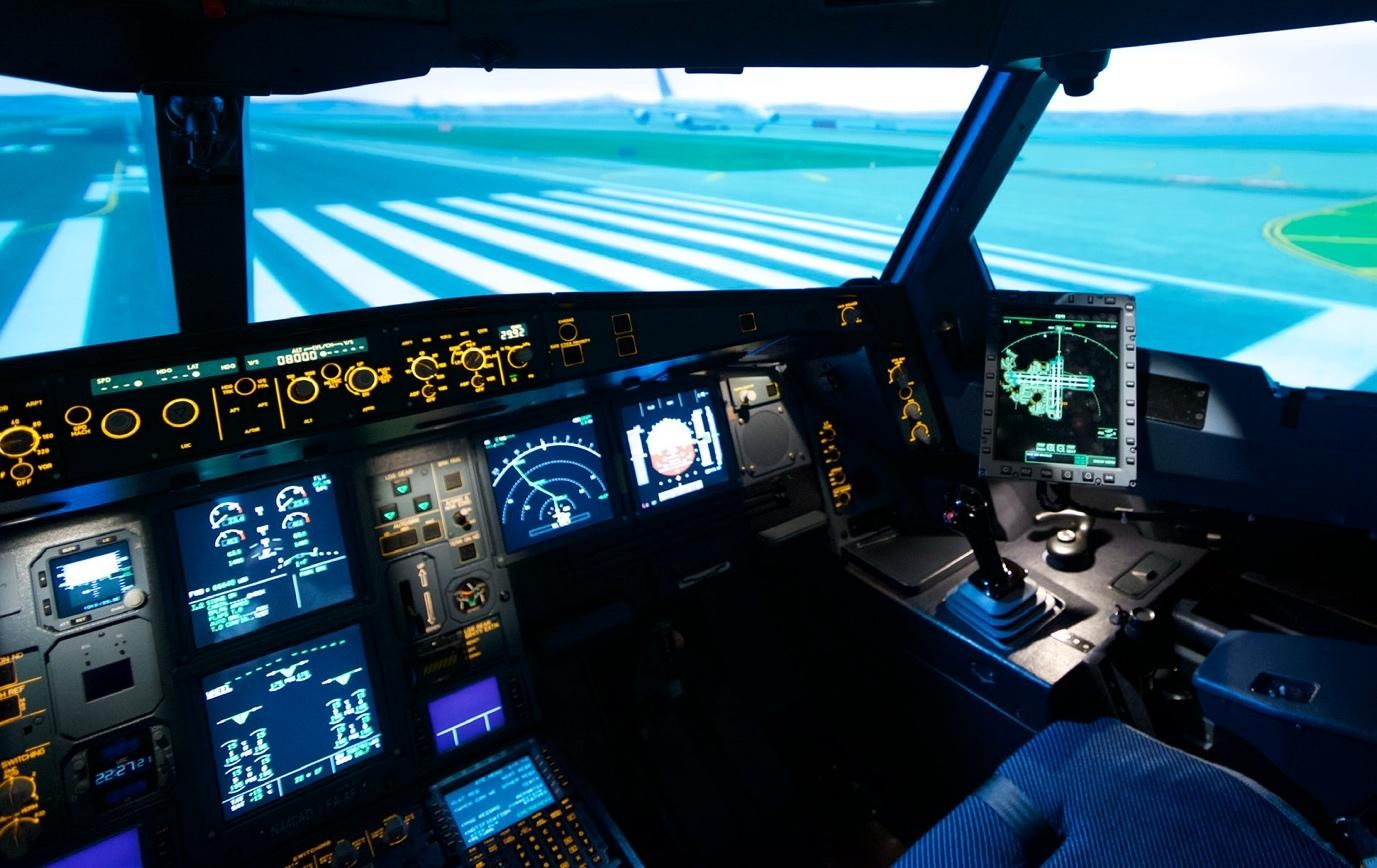
Figure 2. A flight simulator used in the training of airliner pilots. Source: Wikipedia.
Pre-delivery Inspection
Prior to handing over the aircraft, the customer typically has the right to inspect the aircraft. An airline would send representatives to ensure the aircraft meets the contractual obligations. If issues are identified, these representatives would provide their feedback to the OEM so that the issues are addressed prior to delivery.
Supporting the Airline during Initial Operation
To ensure a successful EIS, the OEM can offer an onsite team to provide guidance to the airline. For instance, a customer support pilot from the OEM can provide instructions to flight crew in routine flight and in simulators to streamline operations. If there is any snag or unexpected behavior, the customer support pilot could provide detailed information to the OEM’s engineering team to resolve the problems. Similarly, a technical representative from the OEM could support the airline’s engineering and maintenance team to navigate technical publications, familiarize with customer support processes, and address maintenance issues. The onsite team is vital for providing an efficient link between the airline and the OEM, enabling a successful entry-into-service.
Challenges for Startups
Mature OEMs have established their customer support organization. They would have the warehouses stocked, the logistics streamlined, and the training centers running like clockwork. They have also supported EIS a few times, allowing them to perfect their processes.
A startup, on the other hand, has to create the entire customer support infrastructure from scratch. These customer support related topics often get overlooked because the team is laser focused on the design of the aircraft. The team also often does not realize the impact of the aftermarket business case, nor are they aware of the complexity of the aftermarket portion of supplier contracts. This can result in major surprises when refreshing the business case, with downward adjustments to profitability. Startups should identify their knowledge gaps as early as possible and seek guidance from experienced professionals.
Speeding Up this Phase
Making this phase go faster may not be the best idea. It may be a wiser idea to make an effort to start the process early, work closely with the customer to identify risks, and build a relationship so that there are channels to discuss issues in a productive manner. The ability to build trust and offer pragmatic solutions can make the EIS process run smoother, fostering a win-win environment for both the OEM and the airline.
After the airline hearing how great and reliable this new aircraft is they go to the spare parts provisioning conference where all the aircraft major component OEM’s are represented as well, then the chock comes of the recommended spares purchases volumes and their new list prices… In addition the rain of SB’s for upgrading the components on the aircrafts to the new and coming configurations. Some airlines wait for deliveries until a 1000 SB’s has been issued and incorporated into new production… (Like buying a F-35 but wait for delivery until the Block 4 is fully functioning and skip LRIP Lot # 1-19)
Thanks for this very informative series.
One wonder if there is a market for a 149 seat 4 engine turboprop of limited range like JFK-ORD, JFK-MIA approx. 1100 nm.
Hi Claes,
Which one are you thinking of?
With efficient 8 blade turboprops and limited fuel mass you get a light and pretty cheap “trunkliner” and you do not need to push top speed as you normally fly 1-2 hr flights (JFK-BOS). Your performance model should show if a 5-6 abreast 4ea PWC turboprops 150 seater Embraer could do the the job profitably for a 4-8 $bn project. The props massflow should make for a short T-O and good climb performance. I know the Lookheed Electra history from the 1950’s might discourage this project…