
Leeham News and Analysis
There's more to real news than a news release.



Middle East conflict impact on Airbus, Boeing
By Scott Hamilton
March 10, 2026, © Leeham News: The end of the war in the Middle East appears to be on a path of continued uncertainty and confusion, with no end in sight.
Middle Eastern airlines and lessors have 1,710 airplanes on order. The Mideast represents 9% of Airbus’ backlog. It represents 14% of Boeing’s backlog. Airbus has a 43% share of the Mideast backlog, while Boeing has a 57% share. Embraer is a fractional player.
Although President Donald Trump has already said the war has been “won” and could be over soon, he’s also provided mixed messages. Trump says that a cessation will be done with the concurrence of Israeli Prime Minister Benjamin Netanyahu, a notoriously anti-Iranian leader who urged Trump to engage in the first place, according to multiple media reports.
Trump also said that bombing may continue despite hinting that the war’s end is near.
For the airlines, the continued conflict means vastly reduced service. More of the current fleets are grounded than in service. For lessors, many have airplanes with Middle Eastern carriers, and a few whose home is in the region, some have outstanding orders with Airbus and Boeing. Lenders may face requests to restructure debt payments the longer the conflict continues.
Here’s a snapshot of the backlog exposure Airbus and Boeing have with the Middle East.

Figure 1. The Airbus-Boeing firm order backlog market share in the Middle East. Sources: Airbus, Boeing.
Backlog and 2026-2028 Deliveries
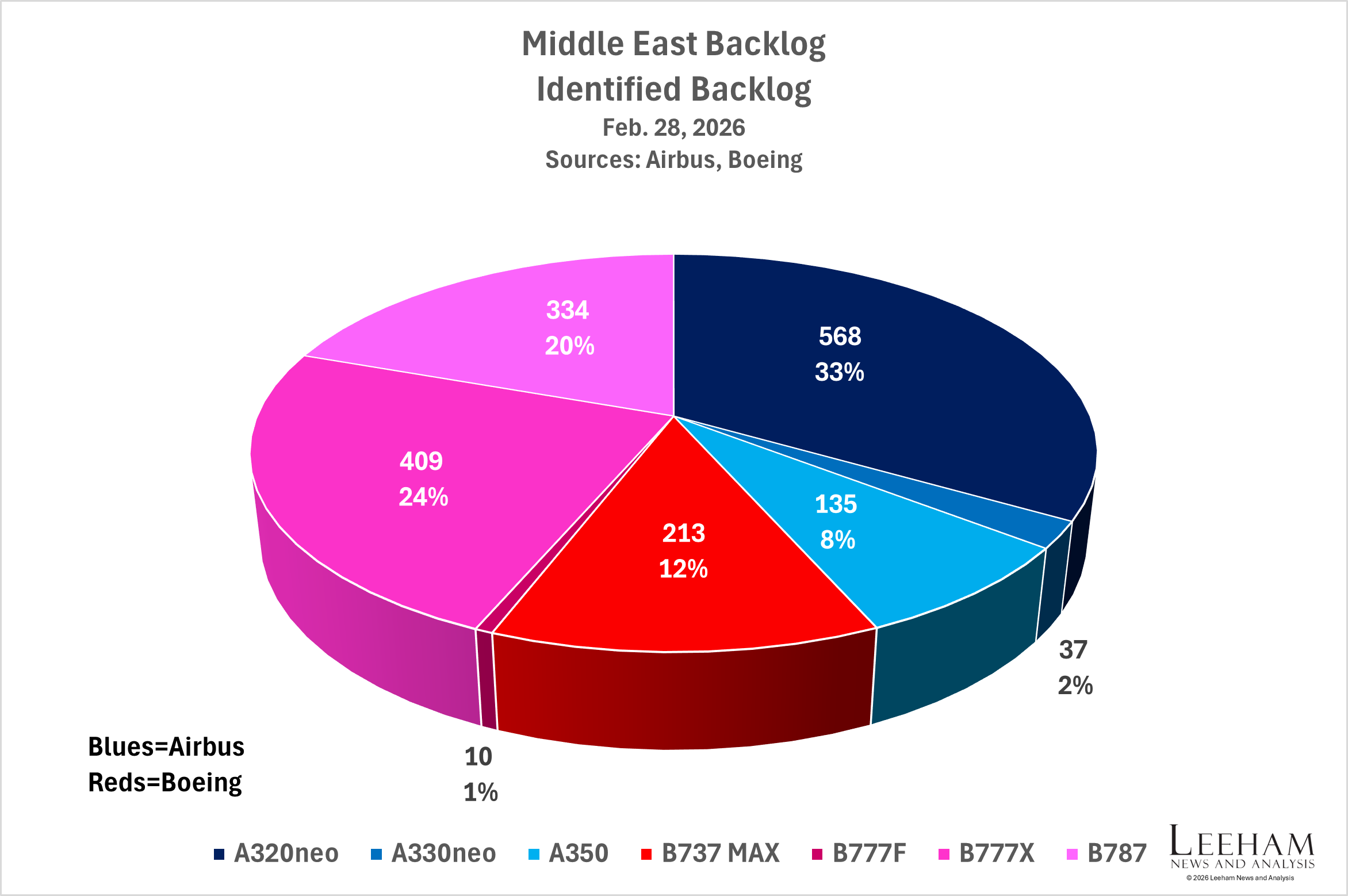
Figure 2. The firm order Airbus-Boeing backlog in the Middle East by aircraft type. Sources: Airbus, Boeing.
Deliveries within the next 18 months are at risk. If the conflict continues well into this year, deliveries in 2028 may become risky.
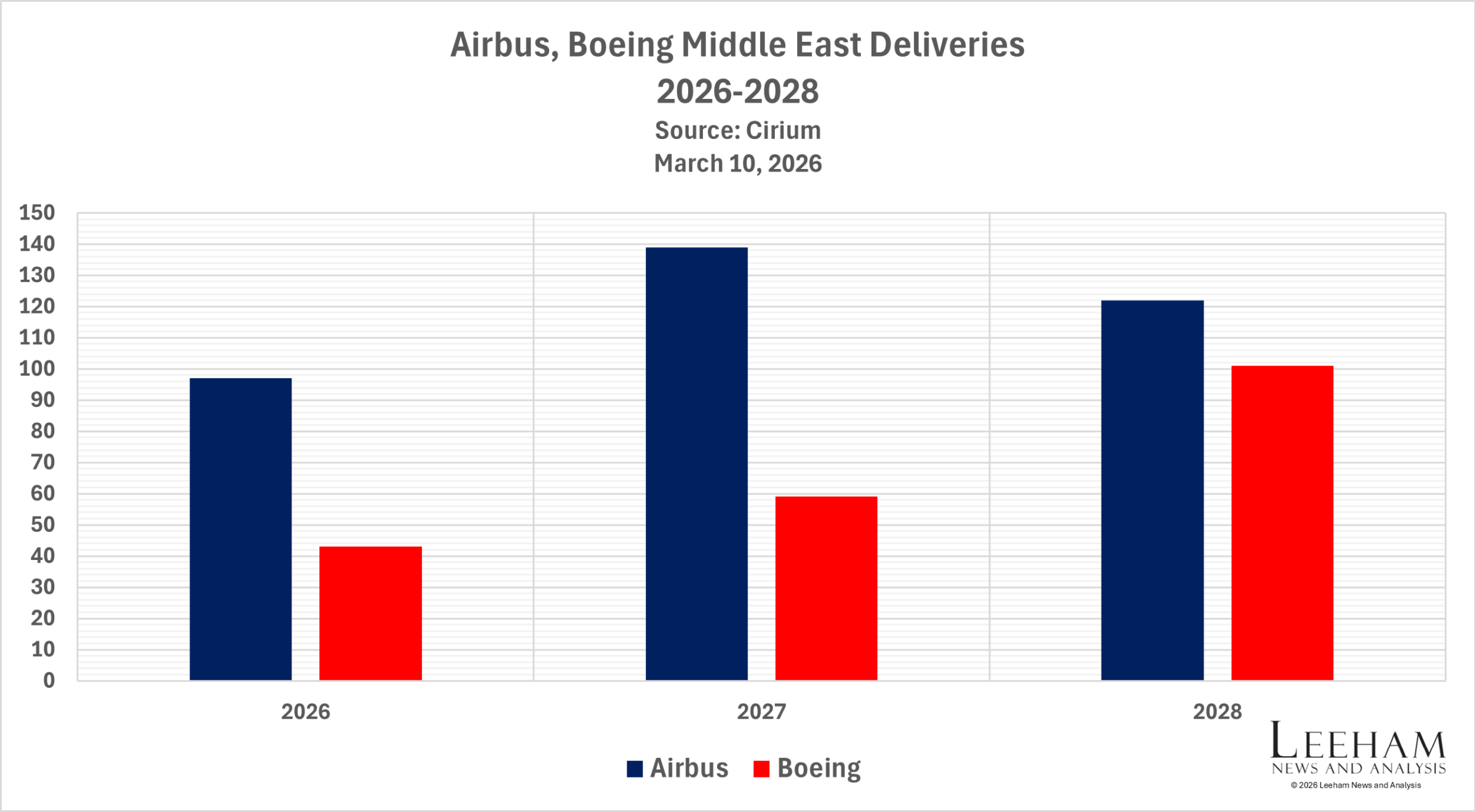
Figure 3. The Airbus-Boeing delivery stream at risk for the Middle East. Data Source: Cirium. Analysis by Leeham News.
Production typically begins within 12-18 months of scheduled delivery. Colloquially, this is known as “cutting metal,” even though Airbus A350s and Boeing 787s are composite airplanes. It’s probably too soon to say that the customers are asking Airbus and Boeing to delay production, in the hopes that the conflict will end sooner rather than later. However, these conversations may not be that far off. Most likely, production will proceed, but deliveries may be delayed.
Airplanes scheduled for delivery this year are already in production. Delays are likely.
First-quarter earnings calls begin in April. Airbus, Boeing, and the engine OEMs may address the conflict’s impact on these calls. Boeing’s CFO Jay Malave speaks at a Bank of America investors’ conference on March 17. He is likely to be asked about the impacts if he doesn’t address them in his opening remarks.
@ keesje posted this article in this week’s open forum, but it’s very relevant to the current article:
“Saudi Arabia And Gulf Allies Reportedly Discussing Withdrawing From US Contracts Amid Rising Iran Tensions”
“Gulf nations reconsider financial agreements with the US as the Iran war impacts their economies.”
https://www.ibtimes.co.uk/gulf-states-reassess-us-investments-iran-conflict-1783633
Marquee aircraft orders were a prominent part of the deals in question.