
Leeham News and Analysis
There's more to real news than a news release.



Bjorn’s Corner: Faster aircraft development. Part 18. Prototype Parts and Systems.

By Bjorn Fehrm and Henry Tam.
November 28, 2025, ©. Leeham News: We do a series about ideas on how the long development times for large airliners can be shortened. New projects talk about cutting development time and reaching certification and production faster than previous projects.
The series will discuss the typical development cycles for an FAA Part 25 aircraft, called a transport category aircraft, and what different ideas there are to reduce the development times.
We will use the Gantt plan in Figure 1 as a base for our discussions. We have exited the Detailed Design phase after conducting Critical Design Reviews, CDRs, and now enter into Prototype Manufacturing.

Figure 1. A generic new Part 25 airliner development plan. Source: Leeham Co. Click to see better.
** Special thanks to Ron Everlove for helping with this article **
Here are a couple of terms you will see in the following articles:
Designated Engineering Representative (DER) – In the United States, a DER is an individual who is appointed by the FAA to act on their behalf to approve or recommend approval of regulatory compliance and related technical data to the FAA. These individuals can be working as an independent consultant or an employee of the aircraft manufacturer. Aircraft manufacturers that have an Organization Designation Authorization (ODA) organization utilize these Unit Members, UMs, who operate in a similar manner to DERs. Please note that the title is different in other jurisdictions.
Designated Manufacturing Inspection Representative (DMIR) – A DMIR, in the US, is an individual who is appointed by the FAA to conduct conformity inspections during the manufacturing process. A DMIR must possess aeronautical knowledge and experience, be employed by a Production Approval Holder (PAH), or a PAH’s approved supplier, and meet the FAA’s qualification requirements.
Prototype Parts and Systems Manufacturing
Now that the program has completed all Critical Design Reviews and exited the Detailed Design phase, the team has to focus on getting parts for qualification tests, test rigs, and the flight test aircraft. The suppliers have started producing parts and preparing to ship them to the appropriate test and manufacturing sites.
First Article Inspection
First Article Inspection (FAI) is an important step when getting parts from a supplier. Engineering and quality teams send representatives to the supplier to inspect the first shipset against requirements and specifications. The process allows the supplier to demonstrate that the production setup, manufacturing process, tooling, etc., are capable of consistently meeting requirements and specifications. If a part fails the inspection, the supplier needs to rework the part and apply appropriate corrective actions to ensure future parts will meet requirements and specifications. Additional inspections may also be required depending on the situation.
Component/Part Qualification
As previously mentioned, parts need to go through qualification campaigns to generate compliance data to support aircraft certification. Qualification plans were already created and discussed with the authority during the last phase. The plan needs to be approved by the authority or their designee (DER/UM) before the qualification test begins. The step-by-step test procedure also needs to be reviewed and approved by the authority.
Let’s use a bleed air valve as an example. The supplier of the valve needs to demonstrate that the valve can operate and survive in a defined set of environmental conditions. The authority and the OEM agree to use specific chapters of the DO-160, Environmental Conditions and Test Procedures for Airborne Equipment, as qualification requirements and test procedures. These tests include, but are not limited to, temperature, altitude, humidity, vibration, and shock.
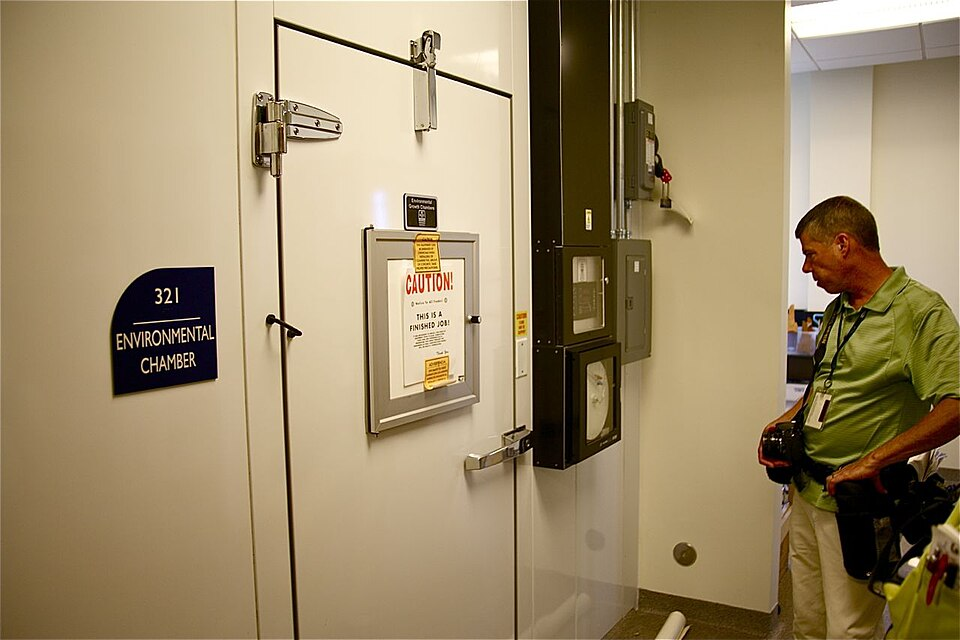
Figure 2. Environmental Chamber. Source: Wikipedia.
In addition, the bleed valve may be required to demonstrate that it is fireproof as well. To do so, the supplier needs to use approved test methods, such as those provided in FAA Advisory Circular (AC) 20-135, Powerplant Installation and Propulsion System Component Fire Protection Test Methods, Standards, and Criteria, to qualify the component as fireproof.
According to the Advisory Circular, this means that the capability of a material or component to withstand, as well as or better than steel, a 2000°F flame (±150°F) for 15 minutes minimum while still fulfilling its design purpose. The term “fireproof”, when applied to materials and parts used to confine fires within designated fire zones, means that the material or part will perform this function under conditions likely to occur in such zones and will withstand a 2000°F flame (±150°F) for 15 minutes minimum.
Related test equipment, test criteria, etc., are presented in this Advisory Circular. If a Type Certificate applicant wants to use other methods to show compliance, they need to negotiate with the authority and obtain approval for these methods.
Prior to a qualification test, authority-authorized personnel, such as a DMIR, need to conduct a conformity inspection. The purpose of the inspection is to ensure that test articles, installations, functions, and test setups conform to the FAA-approved design data. An OEM cannot use data from a test with nonconforming test articles or setups for compliance demonstrations.
When witnessing a test, an authority-authorized witness, such as a DER, needs to witness that test procedures are followed and that the instrumentation appears to provide valid data. A test report is then generated to document that the part meets the design requirements. This report will later be used to substantiate compliance with airworthiness standards.
System Level Tests
Suppliers also need to demonstrate that their systems can comply with the requirements. Let’s use the fuel system as an example. Here are a few rules related to fuel flow:
- 25.955 Fuel flow.
(a) Each fuel system must provide at least 100 percent of the fuel flow required under each intended operating condition and maneuver. Compliance must be shown as follows:
- Fuel must be delivered to each engine at a pressure within the limits specified in the engine type certificate.
- The quantity of fuel in the tank may not exceed the amount established as the unusable fuel supply for that tank under the requirements of § 25.959, plus that necessary to show compliance with this section.
- Each main pump must be used that is necessary for each operating condition and attitude for which compliance with this section is shown, and the appropriate emergency pump must be substituted for each main pump so used.
- If there is a fuel flowmeter, it must be blocked, and the fuel must flow through the meter or its bypass.
- If an engine can be supplied with fuel from more than one tank, the fuel system must:
- (1) For each reciprocating engine, supply the full fuel pressure to that engine in not more than 20 seconds after switching to any other fuel tank containing usable fuel when engine malfunctioning becomes apparent due to the depletion of the fuel supply in any tank from which the engine can be fed; and
- (2) For each turbine engine, in addition to having appropriate manual switching capability, be designed to prevent interruption of fuel flow to that engine, without attention by the flight crew, when any tank supplying fuel to that engine is depleted of usable fuel during normal operation, and any other tank, that normally supplies fuel to that engine alone, contains usable fuel.
In order to show compliance to these rules, the fuel system supplier may use a fuel system rig representative of our aircraft’s fuel system for tests. Similar to component qualification, the system test plan needs to be approved by the authority.
An authority-authorized personnel, such as a DMIR, needs to conduct a conformity inspection, and a DER must witness the test. A test report is then generated and can be used to show compliance with airworthiness standards. There is a potential to reduce the number of flight test cases if agreed by the authorities.
Next Article
We have now described some aspects of the parts and systems production and testing that precede the manufacturing of the first Prototype aircraft. In the next article, we look at putting together the first test aircraft.
Then there need to be a system for sensitive parts that the suppliers are limited in changes of its processes/materials and its suppliers and their processes as part of cost reduction and profit maximisation after passing certification testing.
Thanks for this very detailed series.
Emergency AD issued for loss of pitch control incidents on A320 aircraft. According to Airbus, it’s a similar bit flip vulnerability to the 737 MAX, caused by solar events.
In the case of the MAX, the flip could inadvertently drive the stabilizer. For Airbus, it’s in the elevator control computer (ELAC).
The fix is a software revision and for some aircraft, hardware revision as well. Also affected are A319 and A321.
https://www.airbus.com/en/newsroom/press-releases/2025-11-airbus-update-on-a320-family-precautionary-fleet-action
https://ad.easa.europa.eu/ad/2025-0268-E
https://airlinegeeks.com/2025/11/28/a320-fleet-update-prompts-significant-disruptions-airbus-says/
https://www.reuters.com/business/aerospace-defense/airbus-issues-major-a320-recall-after-flight-control-incident-2025-11-28/
Rob;
Yep:
Reuters link states around 1000 planes will be needing a hardware update.
The waiting time expected to be much longer.
Not for Boeing 737. And not for A321 versions either
Its an Airbus A320 only software issue
Boeing nor the certification authorities have made any statement for the 737 series. None
Where did you get this crap??
AW:
> The issue affects A320s and the newer A320neo variants, including A319s and *A321s* in each case.
@Duke:
I believe it was listed as similar to, not the same current A320 series issue (however broad it is or is not)
> The order goes into effect Saturday at 7 p.m. EST. At that point planes awaiting the updates would be essentially grounded. The order allows for the planes to be flown up to three times without passengers to get them to a location for the fix.
> Delta flies about 315 A320 jets, United has about 200 planes and American has around 480 planes.
United told CBS News the order does not impact its Airbus fleet. Delta expects only a small portion of its A320 fleet, less than 50 aircraft, to be impacted by the updates.
American Airlines said in a statement to CBS News that about 340 planes need the update and “work is underway,” with completion expected by Saturday.
https://www.cbsnews.com/news/airbus-plane-software-issue-thanksgiving/
https://theaircurrent.com/feed/dispatches/solar-flare-vulnerability-airbus-a320-software-forces-emergency-action-airlines/
Depends on how old the aircraft are and whether they need the hardware update.
The software update shouldn’t be a big deal, as for now it’s a rollback to an earlier version. That’s pretty quick.
I’m glad they found the issue in less than a month, as the last incident was fairly extreme. The aircraft lost 15,000 feet of altitude, with injuries.
Thanks for that.
I thought that the single aisle planes had two different main software systems, coded differently, running on separate identical hardware ?
AI says
‘Multiple, Dissimilar Systems: There are multiple computers for each function (e.g., two ELACs). Each pair uses different hardware boards and independently written software to prevent a single design flaw from affecting all systems simultaneously.’
This issue affects the elevator control dual processors
‘Two Elevator Aileron Computers (ELACs): These are the primary computers for controlling the aircraft’s pitch (via the elevator and stabilizer trim) and roll (via the ailerons) in normal operation.”
Seems that some shortcuts were taken in A320 software redundancy that was designed to be resistant to stray solar charged particles interacting with a hardware board!
I don’t know how the Airbus system works, it actually has 7 computers, 3 of which are on line at any time.
Boeing with the MAX and other 737 systems had two different software teams write the code (or the FAA required it) – have to wonder how that works out as two different versions could be wildly different. Maybe to same standards?
As I understand it, Airbus has a backup computer for each
computer, hot swaps in if a computer goes wonky (may be a 2 out of 3 vote as well – that is a strange world.
Computer 7 can fill in for any of the 3. Gives you triple redundancy on each computer line.
No question someone was asleep at the wheel.
In Boeing case it was a wild improbable that was probable. It had never happened before.
Airbus is far worse as it has hit more than two I believe.
According to Reuters, Colombian carrier Avianca said the recall affected more than 70% of its fleet, prompting the airline to close ticket sales through Dec. 8.
AW:
> The issue affects A320s and the newer A320neo variants, including A319s and A321s in each case. Most ELACs can be fixed by reverting to a previous version of recently-updated software, Airbus said. But about 1,000 of the oldest affected aircraft need a hardware change to accept the new software. These airframes will need the old hardware re-installed–a process that will take longer.
https://aviationweek.com/air-transport/safety-ops-regulation/easa-orders-immediate-airbus-a320-flight-control-software
#########
From CBS News article linked above:
> The emergency update stems from an incident Oct. 30 when a JetBlue flight traveling from Cancun, Mexico, to Newark, New Jersey, experienced an issue with its flight controls. The plane *dropped about 100 feet in seven seconds*, according to preliminary flight data from Flightradar24, and was diverted to Tampa, Florida.
Apparently not 15,000 ft! (🙀 No! No! No! Where’s common sense?) Lol.
Report by the CNN
https://www.cnn.com/2025/10/30/us/jetblue-flight-emergency-landing-florida
Per AVHerald, the descent continued after the initial drop and was 15,000 feet in total. It was a significant event, I posted it here at the time.
Emergency ADs are not issued for 100 foot bump in altitude. Common sense, indeed.
And park the snark, Pedro. No need to introduce that into a factual discussion.
Go to any flight tracking sites, pay attention to what happened at around 17:48 UTC and the vertical speed!
Last but not the least, what’s the decent rate from ~35,000 ft to 10,000 ft? LMAO.
Yes, because flight tracking sites are the authoritative source for accident and incident investigations.
It’s a linker trait that’s been noted here before.
You better accept the facts!
Can’t you see that the decent to 10,000 ft was “normal”?
“Per AVHerald, the descent continued after the initial drop and was 15,000 feet in total.”
That’s quite different from your twist that the aircraft “lost 15,000 ft of attitude”!!! 🙀
The aircraft descended by 15,000 feet, that is a fact. The crew may have done that due to uncertainly over what had just happened. Uncommanded nose down, just like MCAS
To injure 15 people in a sudden drop is a significant event. And it resulted in an emergency AD. You can spin that as much as you wish, the reality isn’t altered.
The pilot decented the aircraft following the incident for safety is quite different from your sensationalized version: “the aircraft lost 15,000 ft of attitude”!!! You made up to make the incident look worse.
descended*
Rob
“To injure 15 people in a sudden drop is a significant event”
The inconvenient truth:
> Two children and 12 adults were taken to Tampa’s St. Joseph’s Hospital with minor injuries, and all have been discharged, a hospital spokesperson said.
Thanks for a good laugh.
Rob
The French investigators treat the JetBlue incident as an “incident”, the lowest of three categories of potential safety emergencies!!
PEDRO and Rob
IF This was the lowest of 3 categories of potential safety emergencies, AND it. Precipitated a world wide immediate grounding order, I cant imagine 2 even more strict categories and what those outcomes would look like.
See below ⬇️
https://leehamnews.com/2025/11/28/bjorns-corner-faster-aircraft-development-part-18-prototype-parts-and-systems/#comment-554478
Update from @krisvancleave
> United says:
Six aircraft in our fleet are affected, and we expect minor disruption to a few flights.
>AmericanAir says after further clarification from Airbus, AA has 209 impacted A320 aircraft.
AA has requested all hands on deck this weekend, per employees posting on airliners.net.
They may catch a break as there is a major winter storm in the Midwest that is likely to cancel many flights through Sunday anyway. They are trying to reposition so that aircraft are at maintenance locations.
Estimated 2 hours per aircraft to roll back the software. Apparently this vulnerability was introduced in the most recent update, but the resulting investigation also found a vulnerability in older hardware.
Further information, the software update requires an encoder that not all locations have. So positioning is key, airlines will try to route flights through those locations tonight and tomorrow.
Airlines will have spare ELAC’s but generally only a few on hand, not enough for the 1,000 or so aircraft that need new hardware. So that will take longer but the older units can also be sent to Thales for upgrade.
Further information, the issue may have been introduced as a result of memory limitations in older versions of the ELAC. Hence the requirement to upgrade those versions before the software update can be installed.
What are the bases of your speculation?
“… the resulting investigation also found a vulnerability in older hardware.”
Where is your source??
PEDRO and Rob
IF This was the lowest of 3 categories of potential safety emergencies, AND it. Precipitated a world wide immediate grounding order, I cant imagine 2 even more strict categories and what those outcomes would look like.
Because we have a poster claimed “the aircraft lost 15,000 ft altitude” and another screamed Armageddon like Chicken Little! 🙀🙀🤣
“All hands on deck” is just a nice way to put out no matter the effort is a success or failure! PR speak!
> Update: @AmericanAir has just 4 A320 airplanes remaining to update (!!!)
https://pbs.twimg.com/media/G4lQnjdaEAADXfT?format=jpg&name=900×900
Naysayers are gonna cry.
Naysayers will simply point to the fact that over 900 aircraft in the fleet still require the hardware update, according to Airbus and in the same reporting you cite.
No idea how many of those are AA, if any, but again truthfully reporting the full context is an essential practice for commenting here. At least for most commenters.
@Rob:
We have some exceptional posters who simply do not need to use facts.
They think they are exempt and ignore things when called out being wrong.
Sure! ⬇️
> “the aircraft lost 15,000 ft altitude”!!
> Delta says it’s finished the work on its A320 family of jets requiring the FAA mandated software update
Sorry wrong link! Lol
https://pbs.twimg.com/media/G67YRBeXMAAokGy?format=jpg&name=large
Further information: the vulnerability occurs in the fail-over to a redundant channel in the ELAC, if a particle event occurs that takes out the primary channel. The handoff will result in a nose down position of the elevators.
This was discovered in a recent event and is suspected in an earlier event for which the cause could not be ascertained.
The software upgrade that produced the vulnerability introduced stall limiting while in alternate law, a feature developed for the A350 and ported to the A320.
> The AOT instructs airlines to either roll back to an earlier version of the software or replace the affected ELAC hardware with one running the earlier software version.
#########
One can read the article from FG, no need to paraphrase:
https://www.flightglobal.com/safety/a320-grounding-linked-to-software-update-designed-to-protect-against-in-flight-loss-of-control/165521.article
> EASA has instructed operators, through an emergency directive, to uninstall the L104 software standard for the ELAC B elevator aileron computer hardware, and revert to the L103+ version.
> several affected airlines had restored their aircraft to operational status within a few hours.
> EASA points out that the susceptibility of avionics has increased as a result of decreasing size of integrated circuit components.
So we are looking at literally thousands of aircraft world wide. Yep, got it, its no big deal at all just another day in the FBW world……. My question was this. If Airbus felt the failed upgrade was a necessary patch that needed to be added. When will a clean version of the patch, or Patch 2.0 be available to fix the condition needing the patch in the first place….. Rolling back to the preciously unpatched software still leaves everybody with a defiency/condition requiring the patch in the first place. What level of risk has been reintroduced to the fleet by undoing theb failed patch. If the fleet needed to be patched, it still needs to be patched again.
Instead of an airframer hiding its software deficiency as exposed by the crash of Lion Air flight 610
> This is exactly what strong safety culture looks like.
Let me repeat:
> Airbus introduced the L104 update as part of its ‘Safety Beyond Standard’ initiative, which aims to upgrade A320 capabilities – particularly in abnormal conditions – to a level similar to those of the A350.
Where does this saying that it’s a “necessary [software] patch” come from?
So is it quite normal for posters to start asserting what they imagine, instead of reality on the ground?
If this is a necessary software patch, why only a few dozen Delta aircraft and a few United aircraft are affected?
PEDRO.
AIRBUS recieved a world wide emergency airworthiness directive that said, do not fly until the issue is corrected with limitations on cycles for positioning. This is literally no different than MCAS in that it took a month from the first incident to realize the program update, unannounced to anyone, was not working as anticipated. Cut the snark here. You dont recieve a world wide AD note for a minor flaw in the programming. There is a legitimate safety problem in the update that failed.
Where’s your source that ” the failed upgrade was a necessary patch that needed to be added”? Is that your speculation?
Did you read the FD article?
Apparently not every Airbus A320 is affected (!!!), quite different from the Boeing 737 MAX MCAS debacle in my eyes!
Many sources are saying it was (mostly) an update that had to be reversed.
It affected all A320 neo ( plus some older) so was the same as Max which was software related issue.
Read what I posted again.
“Not every Airbus A320 [family aircraft] is affected” which is quite different from the Boeing 737 MAX debacle where every single 737 MAX was affected!
Every A320 neo is affected.
Older Airbus are affected too while older Boeing’s werent
The similarity goes further just as Boeing got it seriously wrong so has Airbus got it seriously wrong. These flight processors have redundancy and the coding is not the same in the separate cpus.
We don’t know whether “all A320neo” are affected!
At least not every Jetblue Airbus A320 family aircraft is affected and AA has to confirm with Airbus to find out they have only 209 aircraft affected.
Hey Rob.
Heres a few notes on the ELAC mess
First, the ELAC defect was recognised as being able to cause an in flight breakup by exceeding the structural limitations of the airframe. The cessation of flight order was immediate for all listed aircraft in the model list published because the risk is too high to continue safe flight. This is a LARGE event no matter how you some folks try to minimise it. But PEDRO was actually correct, it really isn’t the same as MCAS. MCAS did not operate in cruise with the autopilot on, and only affected elevator trim., MCAS wasnt able to break the airplane by overstressing it. MCAS had multiple ways to stop its action. The ELAC software has no identifiable way to stop the event from occuring. The ELAC event can happen autopilot on and command enough control movement to overstress and destroy the airplane.
NEARLY ALL a320 family aircraft are involved. There are group 1 aircraft and Group 2 aircraft. Group 1 aircraft are aircraft that have the defective software installed. Group 2 Aircraft do not have the defective aircraft defective software installed. ALL listed aircraft must be inspected to determine which group they exist in and then remedial actions must be taken on group 1 aircraft, and group 2 aircraft must not be updated in a way that moves them into group 1.
The TCDS for the AD note references the following aircraft.
A319-111, A319-112, A319-113, A319-114, A319-115, A319-131, A319-132, A319-133, A319-151N,
A319-153N, A319-171N, A319-173N, A320-211, A320-212, A320-214, A320-215, A320-216, A320
231, A320-232, A320-233, A320-251N, A320-252N, A320-253N, A320-271N, A320-272N, A320
273N, A321-211, A321-212, A321-213, A321-231, A321-232, A321-251N, A321-252N, A321-253N,
A321-251NX, A321-252NX, A321-253NX, A321-271N, A321-272N, A321-271NX and A321-272NX
aeroplanes, all serial numbers.
The A319-111 went into service in 1996
The A330-211 went into service in 1998
the A321-211 went into service in 1994
The model list is nearly the entire production of the A320 family of aircraft.
I just wanted to clarify a few things to make sure readers understand the actual scope of the issue.
Have a great day
“NEARLY ALL a320 family aircraft are involved”
No! No! No! About 6,000 aircraft are affected, about half of all A320 family aircraft! Not sure how you could imagine it as “nearly all”.
PNW
What’s different from Boeing’s MCAS debacle is: Airbus is open and upfront. The JetBlue incident caused not a single death, unlike Boeing’s MCAS which caused almost four hundred fatalities. Airbus took immediate action while Boeing didn’t and resulted in the second 737 MAX crash in a few short months later! Boeing knew it had a MCAS problem soon after the LionAir crash. How didn’t it act immediately and openly?? You can’t spin away Boeing’s wrongdoings.
PNW
ET 737 MAX crash
Fact:
The MCAS was activated with the autopilot on! And it resulted in a crash nonetheless. The 737 MAX was descending at a rate of greater than 10,000 metres per minute (33,000 feet per minute) at a speed far exceeded its design limit. 🙀
PNW:
If Boeing were as open as Airbus and willing to accept the consequences of grounding the fleet, thr ET 302 crash wouldn’t have happened and almost 160 lives could have been saved.
This statement is completely false, and malicious as well. But typical for this commenter.
ROB
We both know that some here have an agenda that distort the truth to fit their agenda while flatly rejecting those truths that get in the way of that goal.
ALSO If you look at the TCDS list of affected ELAC aircraft listed in the AD note, it looks to be real close to 6000 aircraft.
Yes, it was about half the fleet. And it was a serious issue. But heavy bias continuously gets in the way of being able to have a serious discussion, without rancor or vitriol.
In other forums, I defended Airbus against some of the more extreme takes, and the exaggerated media coverage. It’s never really appropriate, regardless of which side it’s on.
Why don’t you discuss the facts instead of hiding around them. Boeing caused wrongful deaths of almost 400. Accept it. Boeing has blood on its hands.
Relative to the grounding of the Boeing 737 MAX for over 20 months, this looks almost like a non-event, much fewer disruption than say the P&W engine debacle.
The Airbus issue is greater in scope and potential consequence to the similar Boeing issue, which is why it resulted in an Emergency AD and grounding order.
You keep denying this but it remains a fact. It doesn’t go away from overwrought and frantic posting against Boeing. Something you have never understood, but is endemic to your mode of argument.
Fact:
Not every Airbus A320 family aircraft is affected.
Fact:
Every Boeing 737 MAX was grounded following the twin crashes.
Fact:
Because of Airbus’s openness and safety culture, Airbus took immediate action. We all know there were no fatalities unlike what happened as a result of Boeing’s deceptive practices.
Rob
We all understand who you are but there’s no need for denial because the facts are clear.
“AIRBUS recieved a world wide emergency airworthiness directive that said, do not fly until the issue is corrected…”
Wrong again. The aircraft are flying safely on Friday and Saturday. Even the Pope took an Airbus A320 as planned. The directive goes into effect at: 29th Saturday at 7 p.m. EST.
PNW
Remember that every year there’re hundreds if not more airworthiness directive that said, do not fly until the issue is corrected by certain date. No need to sensationalize this matter. We’re all adults, aren’t we?
Heads exploded/imploded!
> Vietjet Air is preparing to resume flights with the Comac C909 in December, a little under two months after suspending operations with the Chinese regional jet.
The carrier says it will restart daily domestic services from both Hanoi and Ho Chi Minh City to Con Dao on Dec. 3, increasing to twice daily from Dec. 15 to meet holiday season demand.
Update from Wizz Air:
https://pbs.twimg.com/media/G67–ZdXUAAVaam?format=jpg&name=large
While chicken little running around: the sky’s falling, the sky’s falling!
Updates from @krisvancleave
> SpiritAirlines: We began the software update on Friday. We expect to complete the update on the affected aircraft on Saturday…
> FlyFrontier: it was completed the update on all but 16 of Frontier’s 144 impacted aircraft. The remaining aircraft will receive the software update prior to the FAA’s midnight Nov. 29 deadline. No flight cancellations have occurred as a result of the required software update.
BTW
> The Pope is currently traveling on an ITAAirways A320neo that required the software update.
ITA says it “sent the necessary components and an additional technician to Istanbul to carry out the software update
###########
Update from Air India
> Air India has successfully completed the reset on over 90% of its operating A320 family aircraft that were impacted by EASA and Airbus’ requirement for a software realignment. We expect to cover the entire fleet within the timeline prescribed by EASA, with safe8ty remaining our top priority.
UPDATE FROM AVIANCA
According to Reuters, Colombian carrier Avianca said the recall affected more than 70% of its fleet, prompting the airline to close ticket sales through Dec. 8.
How about the doomsday scenario that naysayers fantasized? The Boeing 737 MAX was grounded for almost two years!
Juan Browne on the Airbus A320 AD:
https://cinemaphile.com/watch?v=EqH7KsaA_RE
Another amusing thing has been the howling about media coverage which vastly exaggerated the problem.
Boeing is having a chuckle. Not so much fun to be on the receiving end of that.
@Rob:
I seriously doubt Boeing is having a chuckle.
They know what can happen and have responsible leadership that shudders at the thought.
Airbus and Boeing used to be aligned on safety and honor an agreement to not knock the others ops in that regard.
Leave it to the AHJ.
I just have to say the reversal here is highly amusing. When the MAX had a high energy particle issue, there were no in-flight incidents. But FAA made them address it anyway, and that was falsely touted here as the doom of Boeing and the MAX, with extreme insistence.
So now we have a similar issue which affects multiple Airbus variants, and resulted in at least 1 and possibly 2 in-flight incidents, but the people who steadfastly said Boeing was completely incompetent, are now defending that same alleged incompetence at Airbus.
You could not ask for a better example of what I pointed out to Scott last week, about what goes on here.
For the record, neither the Boeing nor Airbus vulnerabilities to high energy particles was ever going to end the aircraft or the manufacturer. Both identified the problem, both were told by their regulators to fix it before the aircraft could fly again, and both fixed it as requested.
We’ll see how long it takes for the v105 update to come out, which resolves the Airbus issue. For now the rollback to an earlier version is acceptable.
Here is a good current summary of the update effort. Also the French government has said the hardware upgrade is more like 100 aircraft rather than 1000, but no detail or confirmation on that estimate.
https://www.webpronews.com/a-race-against-time-how-the-global-aviation-industry-averted-a-holiday-meltdown-following-airbus-software-crisis/
BBC yesterday:
> Thousands of Airbus planes are returning to normal service after being briefly grounded following a warning that solar radiation could interfere with onboard computers.
> The UK Civil Aviation Authority said that airlines operating in the country worked through the night to carry out the update and air traffic had not been seriously affected.
> On Saturday, Easyjet said it had completed the update on a “significant number” of its aircraft, and planned to operate as normal.
Wizz Air is also running as normal, having rolled out updates overnight.
In Australia, budget airline Jetstar cancelled 90 flights. Most of its aircraft have now undergone the update, but some disruptions are expected though the weekend.
Air New Zealand grounded its A320 planes, but all fights have now resumed after the update was completed
> The JetBlue incident, which French investigators are treating as an “incident,” *the lowest of three categories of potential safety emergencies*.
Again, an Emergency AD was issued based on this incident. That is the highest classification of risk, not the lowest.
And again, representation in the true context is essential here.
How many ADs are issued each year by the FAA and EASA? Let’s talk about facts!
I remember some here tirelessly argue ADs of Boeing aircraft are like a nothing-burger because of the great numbers involved!
But that was then, this is now, suddenly they turn around screaming like Chicken Little. How about apparent double-standard here?
How come no one bother to talk about this?? Oops!! Oh because it doesn’t fit their agenda.
> Although some 6,000 jets remain impacted overall, a sub-set of jets needing a time-consuming hardware change rather than a quick software fix is smaller than the initial estimates of 1,000, they said.
HEY ROB, did you check this…….
PEDRO WROTE
How come no one bother to talk about this?? Oops!! Oh because it doesn’t fit their agenda.
> Although some 6,000 jets remain impacted overall, a sub-set of jets needing a time-consuming hardware change rather than a quick software fix is smaller than the initial estimates of 1,000, they said.
PEDRO COMPLETELY MISSES that MCAS only affected the currently in production MAX aircraft at the time of the incident, not the previously flying fleet of NGs or classics. There was a fleet of approx 450 aircraft in service at the time. BUT That doesnt help his agenda.
Remember that this problem gos back to aircraft built in ¹996 all the way thru to currently delivered airplanes. This is staggeringly broad in its application.
It is. Most of the forum I am on allow an Ignored choice for specific users.
That would be a great feature here. It sure would clean up things to more factual if not always agreed on aspects.
The Mad MAX MCAS debacle caused almost 400 fatalities, 20-month grounding of the whole MAX fleet, each and every one of them!!! Boeing at risk of bankruptcy…! How the hell is that comparable to this week’s nothing-burger hyped-up “armageddon”? How many aircraft are put out of service today? How many flights are canceled today caused by that? We don’t even know what the proper population of aircraft that have to be recalled: AA reported that it only has 209 aircraft that have to be updated instead of its earlier estimate of 350 or so, JetBlue said about 140 of their Airbus aircraft are not subjected to the recall, United has like five or so aircraft and Delta has like 5 or so subjected to the software update. And the earlier reported number of aircraft that have to have hardware replaced is proven incorrect!
So, please, PNW, please show me the exact final* number of Airbus aircraft subjected to the software update and your proof. Thanks. Does it cover all A320, but not A321 as one poster claimed? 🤣
Remember ⬇️
> > Delta flies about 315 A320 jets, United has about 200 planes and American has around 480 planes.
PEDRO
SInce you asked.
All aircraft listed below are subject to the AD note and needed to be inspected to determine if they were group 1 or group 2 aircraft. I POSTED THIS EARLIER, but here it is again. Something around 6000 aircraft.
aircraft.
A319-111, A319-112, A319-113, A319-114, A319-115, A319-131, A319-132, A319-133, A319-151N,
A319-153N, A319-171N, A319-173N, A320-211, A320-212, A320-214, A320-215, A320-216, A320
231, A320-232, A320-233, A320-251N, A320-252N, A320-253N, A320-271N, A320-272N, A320
273N, A321-211, A321-212, A321-213, A321-231, A321-232, A321-251N, A321-252N, A321-253N,
A321-251NX, A321-252NX, A321-253NX, A321-271N, A321-272N, A321-271NX and A321-272NX
aeroplanes, all serial numbers.
The A319-111 went into service in 1996
The A330-211 went into service in 1998
the A321-211 went into service in 1994
What else would you like to learn today
Excuse me. Can’t you read my post?
> “show me the exact final* number of Airbus aircraft subjected to the software update and your proof.”
First of all, you didn’t show any number, and, secondly, what you said has nothing to do with my question. If you want to duck, you didn’t have to post a non-answer to divert attention.
PEDRO
Oh trust me I read your post.
You really don’t understand this process at all. Expecting me to remotely parse over 6000 individual aircraft logbooks located in individual operator’s library’s spread around the world to look at the serialization of the ELACs and revision levels found on each individual aircrafts equipment list just to give you a number, shows me just how out of touch you are here.
Your question is not answerable by anybody short of God himself. EVEN THE EASA can’t make it happen. Each and every aircraft needed to be inspected to see if it was a group 1 or group 2 aircraft because the EASA, or anybody else for that matter does not have this data in any single searchable repository. That’s why they called for inspection of every aircraft with the potential for the problem. That’s why the AD Note instructed the operators to segregate the fleet into 2 groups for the EASA, because they maintain the equipment lists in real time. It’s a virtual certainty that additions and deletions have been made to many if not all equipment lists during routine maintenance and updates since all these aircraft have been delivered, Remember they started placing corruptible ELACS on the listed model aircraft all the way back to 1996.
Instead of flipping me craap about my answer, try to understand the process at a depth that allows you to ask questions that have actual answers.
LASTLY, Remember this is the largest emergency grounding of an aircraft fleet in the history of commercial aviation. The fix is relatively simple to accomplish, but the risk of inflight breakups was real, or EASA wouldn’t have done it.
PEDRO WROTR
Remember that every year there’re hundreds if not more airworthiness directive that said, do not fly until the issue is corrected by certain date
Ok, since you say Immediatd Grounding AD notes are so common. List 5 in the last year so we can check the accuracy of your data…..
Why don’t you look up the data how many ADs were there last year that said do not fly until the issue is corrected by certain date? I’ll wait.
PEDRO WROTE.
Remember that every year there’re hundreds if not more airworthiness directive that said, do not fly until the issue is corrected by certain date
AHHHHH i get it. More crap spoken as gospel. You want me to waste my time proving you wrong again. NOPE. You are responsible for your statements of “fact”. Prove yourself correct. Appare tly this sbould. E easy since you say there are scores of exa.ples to choose from…. list 5
Just when you thought all the arrogant, obnoxious commenting would somehow dissipate in Bryces’ absence;
Along comes PEDRO, to “Fill that Bill” quite nicely…
I didn’t think he had it in him but he sure is doing a fine job of it (aka a bad example can be a fine job of what or how not to go about things)
I am grateful no one died in these incidents.
This will be Airbus 2nd software issue of very recent vintage.
Something we all should be aware of, The Hunter never rests, keep alert, he might try to visit you.
It happens that, unfortunately, there are three crashes involving Boeing aircraft within the last twelve months and of course, there are also fatalities in those crashes. Thanks for TW reminding me how important safety and safe culture are in today’s world.
Rob
> Boeing is having a chuckle.
Is Boeing having a chuckle??
So it now comes down to attack and pile on Pedro syndrome?
> Indian airlines wrap up software upgrades on A320 fleet following Airbus safety warning
> IndiGo completes mandatory Airbus software upgrade across entire A320 fleet; all 200 aircraft now updated
Comments are closed thanks to violation of Reader Comment rules by OV-1, PNW, TW, Pedro and others.
Hamilton