
Leeham News and Analysis
There's more to real news than a news release.



The state of alternative propulsion aircraft? Part 6.
Subscription required
By Bjorn Fehrm
March 5, 2026, © Leeham News: Before Christmas, we started a series examining the status of alternative propulsion projects. We finished on December 18 by looking at Series Hybrids, often as battery-electric aircraft with range extenders (Figure 1).
The range extender is the natural next step when a project realizes that a pure battery-electric aircraft won’t be able to fly the missions the market is asking for.
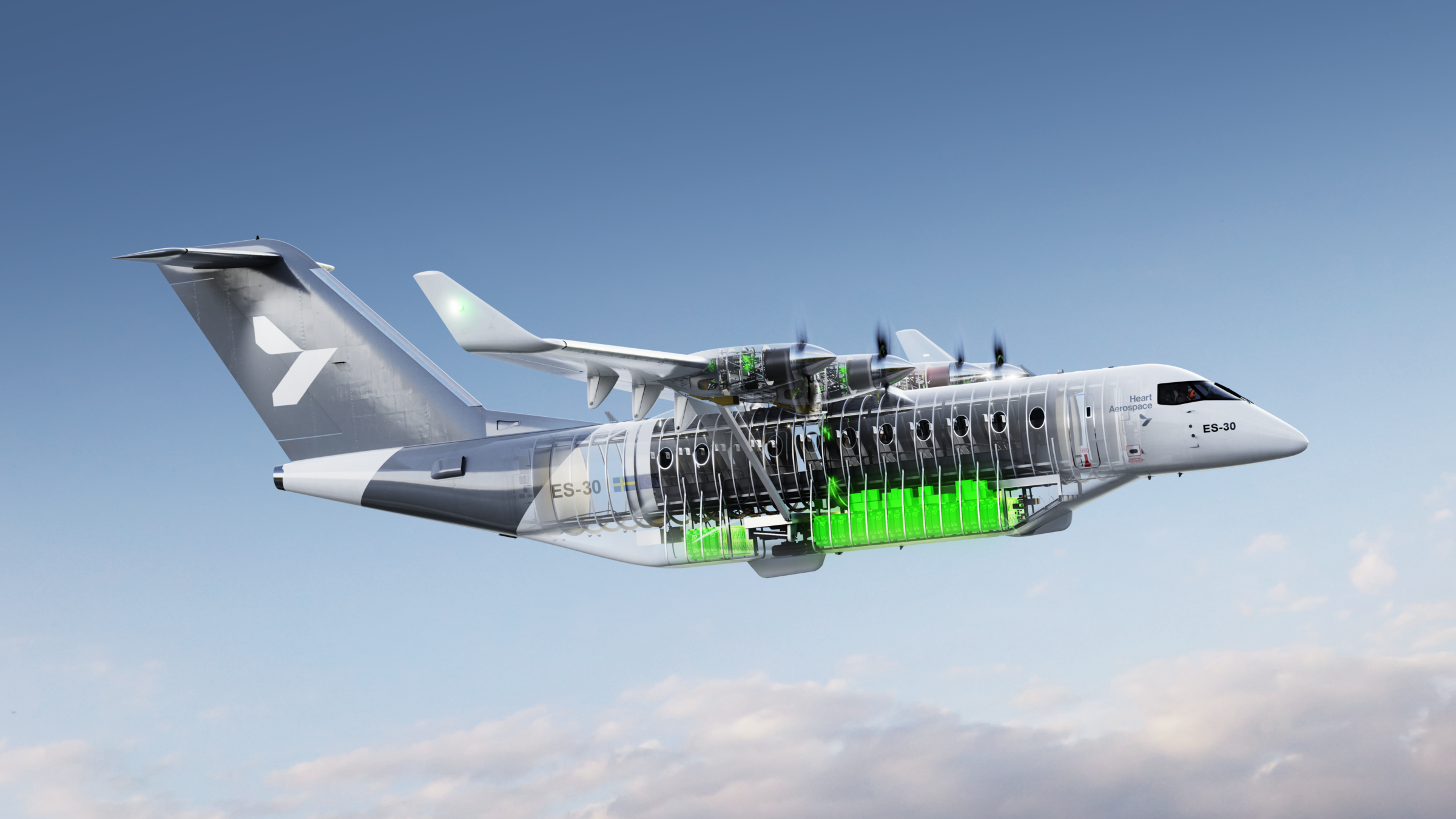
Figure 1. The Heart Aerospace Battery-Rlectric ES-30 with dual range extending turbo-generators in the back. Source: Heart Aerospace.
After a while, analysing the range extender, the drawbacks become increasingly obvious. Charging the battery system in flight or directly feeding the electric propulsion system from a turbogenerator is inefficient. The losses along the path from the gas turbine through a generator, an inverter, and then to a motor that drives a propeller or fan are much higher than when the gas turbine drives the propeller directly.
A series hybrid can’t compete on operational economics with the aircraft it shall replace (for example, the Cessna Caravan or the SAAB 340). Projects then turn to parallel hybrids, the subject of today’s article.
To read the rest of the article Login or Subscribe today.