
Leeham News and Analysis
There's more to real news than a news release.



Commercial Engine OEM: Not for the faint of heart. Or the cash-poor.
Subscription Required
By Karl Sinclair
 Updated with March 20, 2026, oil prices.
March 23, 2026, © Leeham News: Airlines and lessors around the world are clamouring for their aircraft, which have been ordered and scheduled for delivery years in advance.
As the Trump Administration begins to cobble together an economic plan to combat rising oil prices due to the Iran war, this is especially true in the narrow-body segment, where fuel-efficient aircraft are badly needed.
The IATA fuel price monitor has jet fuel selling at $197/bbl for the week ending March 20, 2026, which applies more pressure on OEMs to deliver aircraft to customers. This is up from a low of $93 a barrel just five weeks prior.
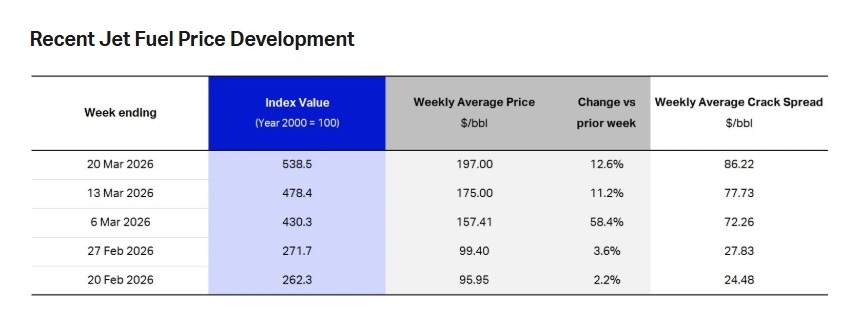
Source: IATA.
While both aircraft manufacturing behemoths, Airbus (AB) and Boeing (BA), struggled to meet their respective master production schedules, one common thread emerges that affects both in the same manner:
Engine makers cannot keep up, even in the best of times.
Across the globe, all the engine producers face their own supply-chain and technology issues. It does not matter if the producer is North American-based, European, or Asian.
Powerplants are a tricky proposition, even for the most established engine-maker.
This begs the question:
Why doesn’t someone new enter the market and pick up the slack in production? If not someone new, how about a current aviation industry corporation, with an installed engineering base, who can invest and transition into commercial engines?
To read the rest of the article Login or Subscribe today.