
Leeham News and Analysis
There's more to real news than a news release.



The state of alternative propulsion aircraft? Part 5.
Subscription required
By Bjorn Fehrm
December 18, 2025, © Leeham News: In our series about alternative propulsion aircraft, last week we looked at the energy consumption and range of a typical nine-seater battery-electric commuter aircraft using our Aircraft Performance and Cost Model (APCM).
We could see that the useful range for this aircraft was short, even when using the full 19,000lb Maximum TakeOff Weight (MTOW) to give the battery the maximum size and using VFR flight rules. Under IFR flight rules, the commuter was not usable with available batteries this side of 2030.
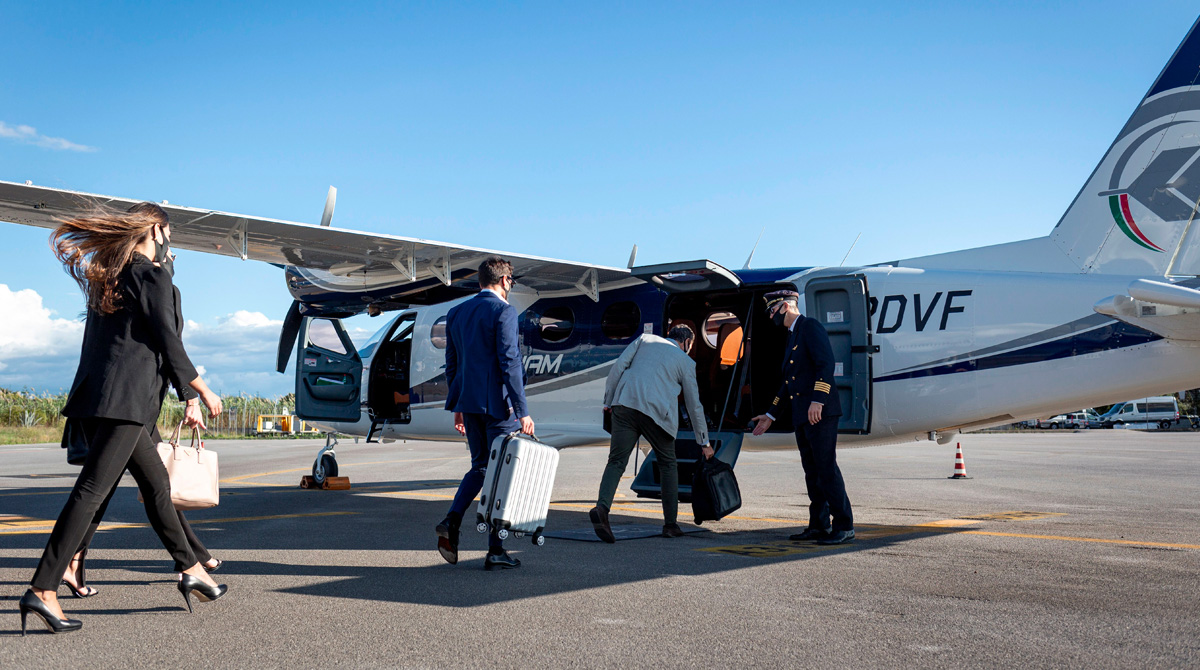
Figure 1. Our battery-electric commuter was similar in design to the Tecnam P2012 nine-seater commuter. Source: Tecnam.
When a project discovers these constraints (which often happen several years into the project, as upstarts don’t have competent aircraft performance models that handle energy consumption for different phases of flight), they start looking at Hybrid architectures.
We do the same. Once again, our model will help us to predict performance, range, operational economics, and also production costs (as a hybrid is a more complex aircraft than a battery electric one).
To read the rest of the article Login or Subscribe today.