
Leeham News and Analysis
There's more to real news than a news release.



Bjorn’s Corner: Blended Wing Body Airliners. Part 8

By Bjorn Fehrm
May 1, 2026, ©. Leeham News: We are making a series of articles on the Blended Wing Body (BWB) as a potentially more efficient design for passenger-carrying airliners than the classical Tube-And-Wing (TAW) configuration.
In the seventh article last week, we discussed the structural difference between a BWB and a Tube-And-Wing aircraft. The classical aircraft has divided the cabin pressure problem, causing cyclic pressure stress on the cabin enclosure, by enclosing the cabin in an optimal closed-tube configuration, and the wings’ aerodynamic stresses from gusts, hard landings, and the possible engine-out case are managed by a one-piece wingbox from tip to tip of the wing. These loads differ in character and therefore use different structural concepts in tube and wing aircraft.
The BWB mixes these loads, where the cabin shape, being a wide and long box-like compartment, complicates the structural concepts, where fatigue-sensitive bending loads from the cabin pressure are hard to avoid. It’s not made easier by the wing loads being absorbed by the same structure.
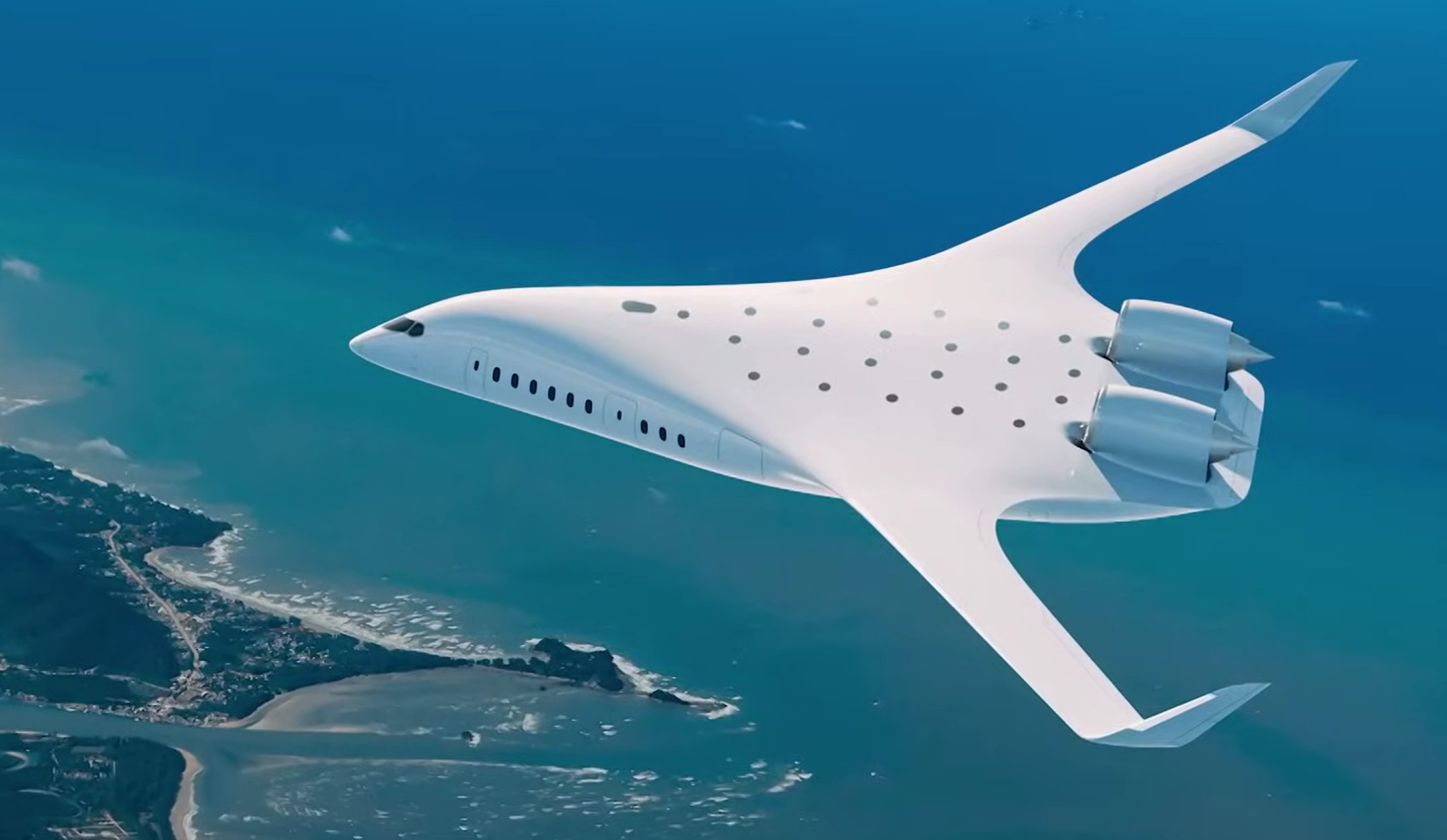
Figure 1. The JetZero Z4 BWB. Source: JetZero.
Now we look at some BWB passenger-compartment challenges compared with TAW solutions.
Passengers and the BWB
There are some differences in BWB passenger accommodation compared to a Tube And Wing airliner in terms of passenger experience and safety. Here are the differences:
Passenger acceptance of flying in a wide cabin lacking side windows
The main cabin of a BWB passenger aircraft is very different from the classical TAW cabin. The JetZero Z4 cabin, depicted in Figure 2, has an almost square main cabin area behind the First Class cabin part in Figure 2. The main cabin is 18 abreast, with four aisles.
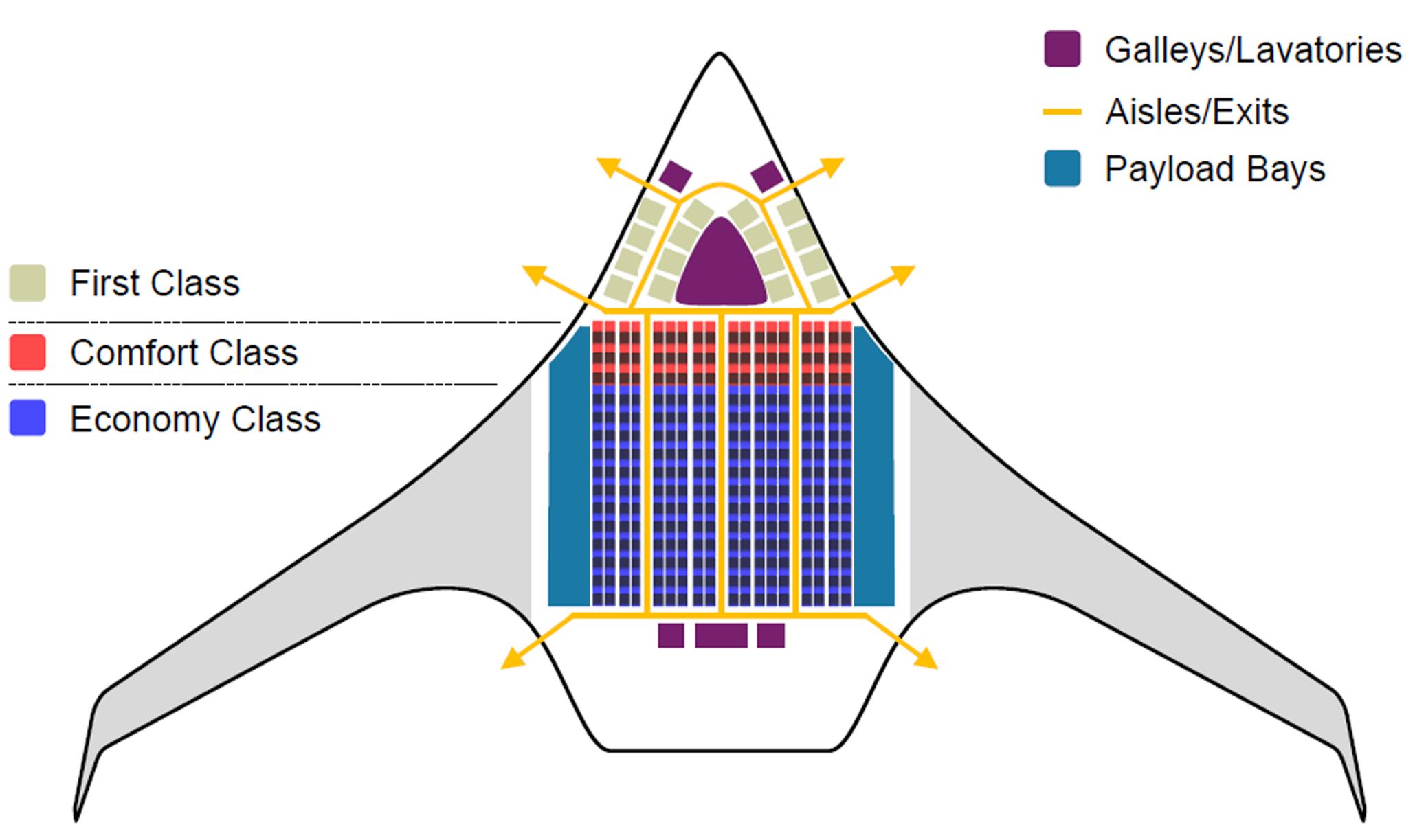
Figure 2. The JetZero Z4 cabin in a typical domestic three-class configuration, with First-class seats ahead of the main cabin. Source: Georgia Tech. University.
The outer aisles are 2+2 followed by 3+2, then 3+2 again, and finally 2+2. Between the sections, we have pillars that are part of the structural concept to keep the bottom and top of the cabin/wingbox from buckling, Figure 3.
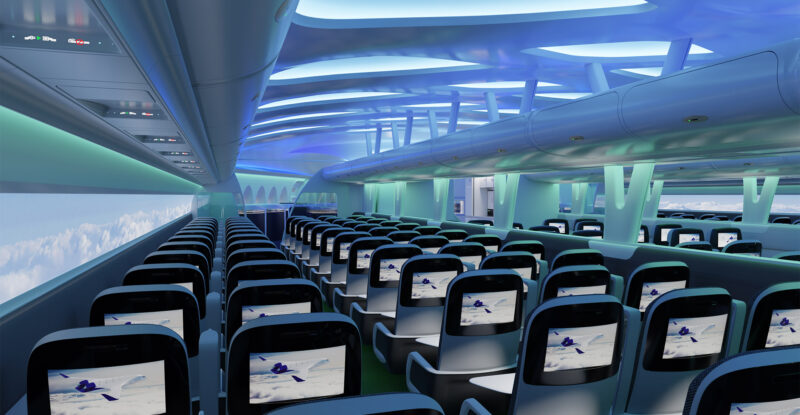
Figure 3. The main cabin area of a JetZero Z4 with the thick pillars serving at load paths between top and bottom cabin/wingbox skins. Source: JetZero.
The 18-abreast main cabin has roof sky ports (Figures 1 and 3) but no windows. The compartment for bags and cargo is placed on the sides of the cabin, taking the place of any cabin side windows, Figure 2.
The only side windows for the cabin are located in the forward, tapered section, where First Class domestic or Business Class long-range seats are installed, Figure 4.
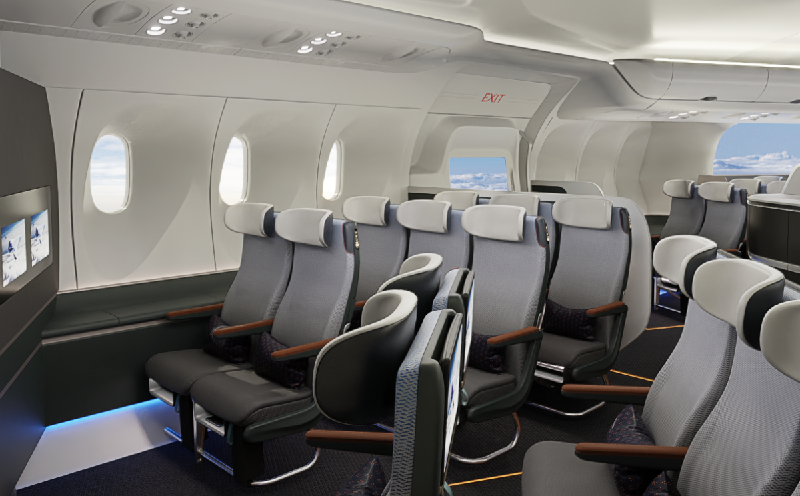
Figure 4. The forward windowed cabin area of a JetZero Z4, here with Domestic First Class seats. Source: JetZero.
Is the lack of windows for the main cabin passengers a passenger satisfaction issue? It’s difficult to tell. The cabin will have exterior views on large seatback IFE screens for each seat, in addition to roof sky ports and exterior views on large screens along the side of the cabin (Figure 3). As said, difficult to predict what the reaction will be.
Passenger reaction to cabin movements
The increased distance to the roll axis for the outside rows will make the acceleration and deceleration when the aircraft rolls to turn more marked for these passengers. Where procedures require a fixed turn radius, such as high-precision approach procedures, the turn entry and exit rates would have to be the same as for TAW aircraft. Then, the turn entry and exit acceleration forces will be around twice those of a normal aircraft in the outermost rows. Will this be an issue? Hard to say, but probably not.
For normal flying, the entry and finishing parts of turn rolling can be tuned to have a slower build-up and decay, reducing any discomfort caused by the greater distance to the roll center. In a steady turn, the G forces will be the same as for a TAW aircraft, so no issues there.
Cabin Emergency Exits
The cabin has three doors on each side for emergency exits (Figure 2). The requirement to deplane all passengers within 90 seconds in case of an emergency will make these wide, full-size doors. The rear door is a main cabin emergency-exit-only door, visible below the end of the wing in Figure 1.
The Z4 is a high-wing airplane. This complicated the emergency exit in case of a water landing. It’s very likely the BWB buoyancy places the emergency exits below the water line in case of a water landing. This would force a number of the sky ports to be made as emergency exits in case of a water landing. The regulations require that these be of the size of a typical overwing exit, type III. A special problem will be how passengers can climb to these roof-based emergency exits.
Conclusion
The BWB changes the cabin layout from long and narrow to short and broad. This poses new challenges regarding passenger reactions to the lack of an outside view, aircraft movements, and emergency exits.
The aviation industry has a tradition of solving problems, and the BWB cabin problem areas all have solutions or mitigation measures. Would passengers like to travel on BWBs? The First/Business class passengers will experience a cabin with more width and space, whereas the main cabin presents a more mundane environment with four aisles and 18 seats abreast. There are no side windows, only sky ports giving real outside light.
Will passengers accept it? Hard to say. What we know is that the most important parameter for the main cabin in the price of the flight. If the BWB can lower this, then the other issues would likely be accepted.