
Leeham News and Analysis
There's more to real news than a news release.


Outlook 2026: The airliner projects that promise new technology and lower emissions
Subscription Required
Now open to all readers.
By Bjorn Fehrm
 February 5, 2026, © Leeham News: We survey new entrants that deviate from the classical gas-turbine tube-and-wing airframe concept and offer airliners the promise of lower emissions and, hopefully, lower costs.
We will do this by starting with those closest to certification and delivery, then tapering off to those who currently fly on PowerPoint.
If we didn’t apply this filter to what we consider real projects, we would describe over 50 entries, with additional ones announced with airline orders every month over the last few years. Few of these have progressed beyond plans, which is why we focus on those that have.
Overall, it’s amazing that 11 years after the Airbus E-fan battery-electric aircraft flew at the Farnborough Air Show in 2014, we still do not have a single certified alternative-propulsion passenger aircraft. We have one light-sport two-seat trainer, the Pipistrel Electro Velis, but nothing else.
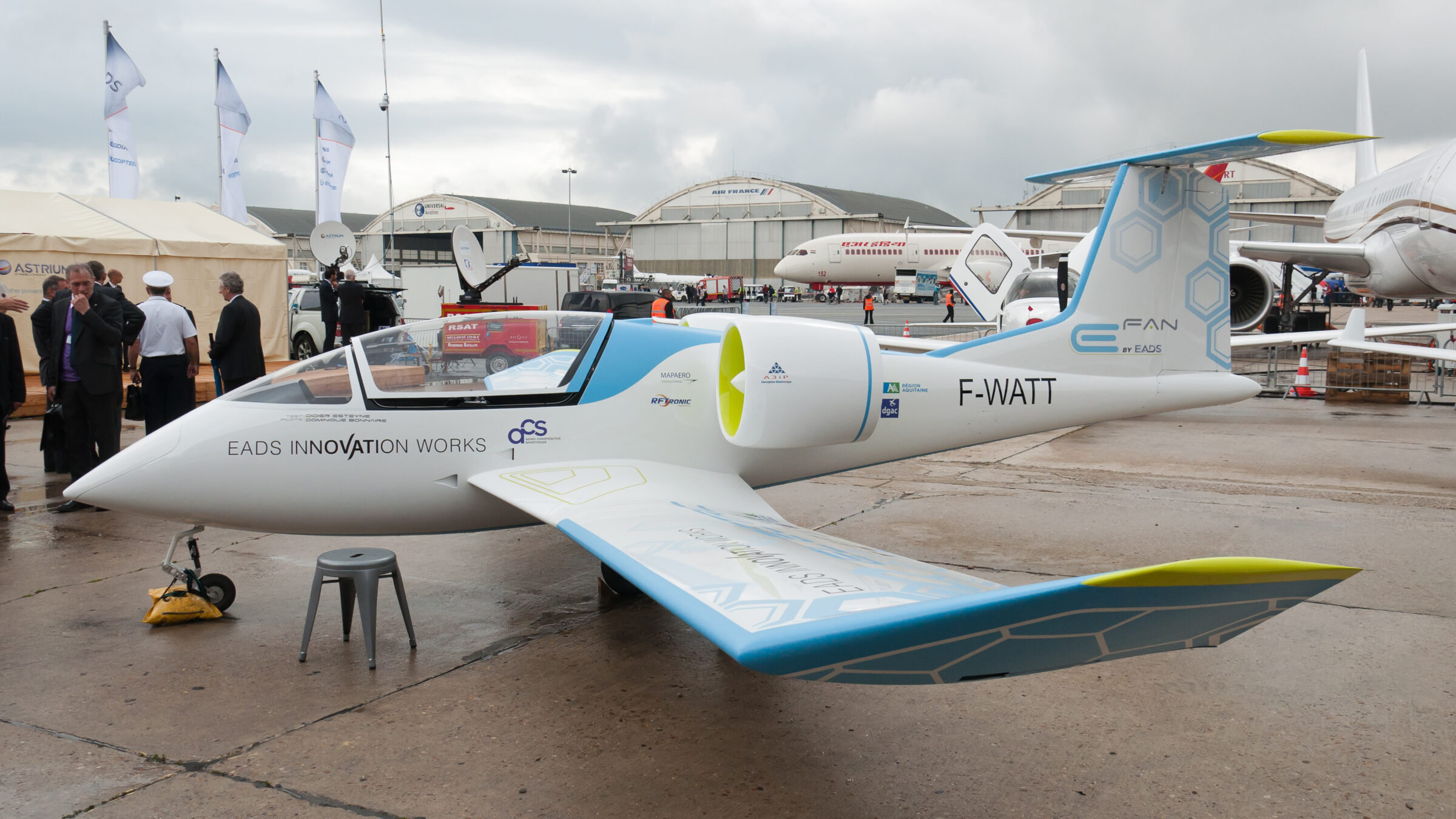
Figure 1. The Airbus E-Fan at the Paris Air Show in 2015. Source: Wikipedia.
Pratt & Whitney builds for the future while wrestling with the present
Subscription Required
By Bjorn Fehrm and Charlotte Bailey
January 26, 2026, © Leeham News: Pratt & Whitney (PW) bet big on the geared turbofan to take it back to a sizeable position in the market’s largest airliner segment, the Single-Aisle. It spent more than 20 years to develop the fan gearbox, including functional demonstrator engines that flew on Airbus test aircraft to prove the technology.
The effort was a success; the gearbox in the Pratt & Whitney range of Geared TurboFans, GTFs, has worked perfectly. It achieved what was promised, a low fuel consumption, and has been rock-solid in its function.
Yet PW’s GTFs have had a range of problems since their introduction in 2016. Bent main shafts, combustors that burn through, bearings that fail. And on top, a huge call-back of engines, as a contaminated power metal process has produced compressor and turbine discs that risk failing before their on-engine life expires. The situation has caused over 600 Airbus A320 and A321neos with GTF engines to be grounded for engine replacements, if and when replacement discs are available.
The issues, stemming from the “business as usual” parts of the GTF, have led to write-offs of billions of dollars for PW’s mother RTX and to lost market share to the competing CFM LEAP engine on the Airbus A320/321neo series. But while this clouds the business of yesterday and today, Pratt & Whitney still has the clout to invest in the future. Being part of one of the World’s largest Defence and Aerospace Companies is an important part of the answer.
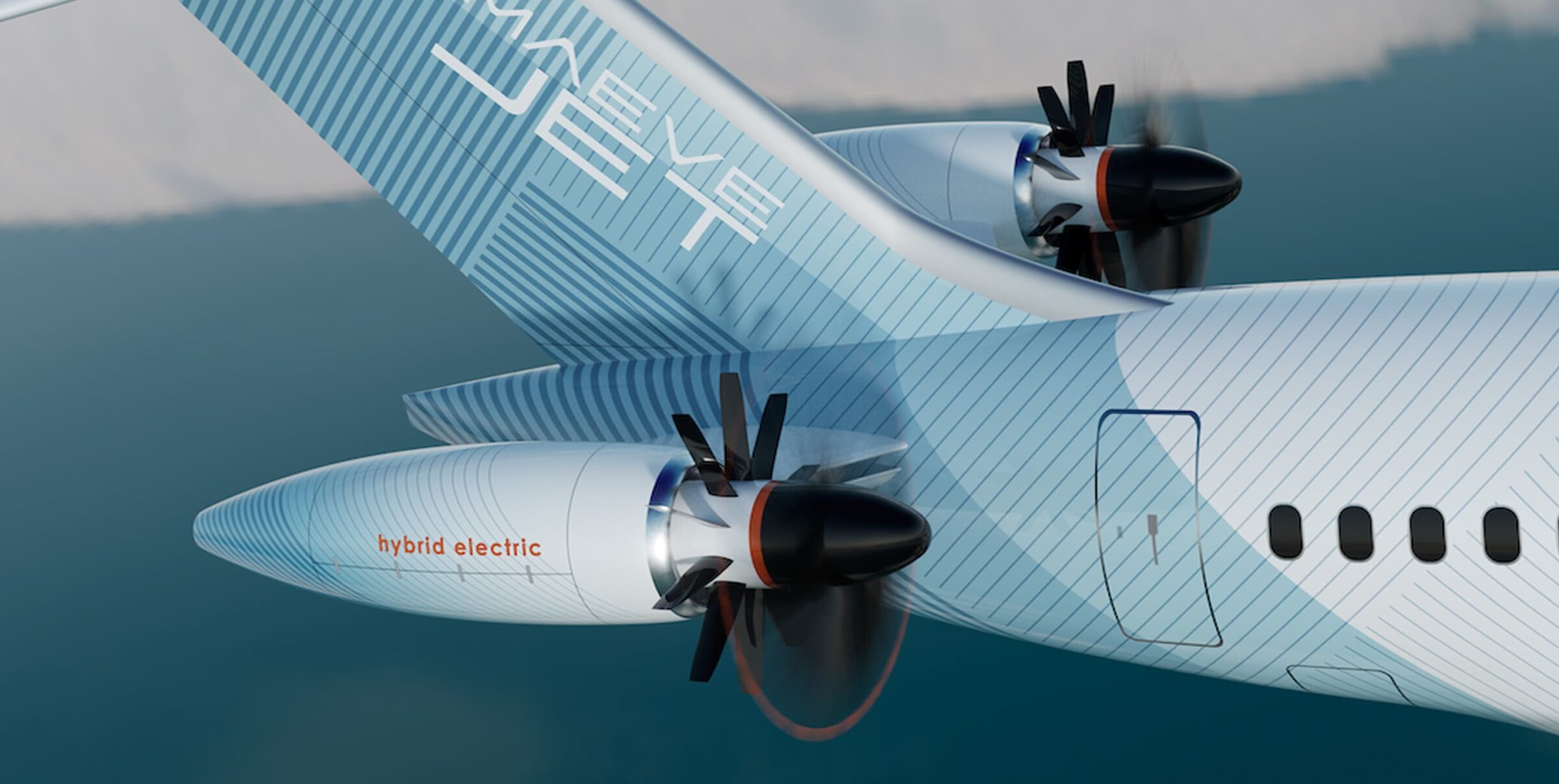
Figure 1. The Maeve MJ500 with the revolutionary Pratt & Whitney Canada Constant Volume Open Fan engine. Source: Maeve. Read more
Engine makers tout “Plan A” but have “Plan B” backups in R&D
Subscription Required
By Scott Hamilton
June 23, 2025, © Leeham News, Paris: CFM International touts its Open Fan RISE engine as the wave of the future. (CFM is a 50-50 joint venture between GE Aerospace and Safran.)
Rival Pratt & Whitney says evolution of its Geared Turbo Fan is the best engine choice going forward.

CFM’s Open Fan engine design called RISE. Credit: CFM.
Neither company will admit that it is also researching and developing a Plan B engine. For CFM, this is a conventional turbofan. For PW, this is a new Open Fan. But during the Paris Air Show, LNA confirmed that both have a Plan B engine in development.
PW has gone out of its way to dismiss the very idea of an Open Fan engine. Rick Deurloo, the president of Pratt & Whitney Commercial, won’t even talk about the “competitor.” Deurloo makes it clear—publicly, at least—that an evolution of PW’s Geared Turbo Fan (GTF) is the best solution for the next generation engine for the single aisle market, in its view.
Mike Winter, RTX’s Chief Engineer, dismissed the Open Fan as “sub-optimal” on a successor to the Airbus A320neo and Boeing 737 MAX families. It involves too many installation compromises on this size aircraft, he says. RTX is the parent of PW.
But, says one person with direct knowledge, PW fully understands that if CFM is successful in solving all the challenges of an Open Fan and meets the publicly stated goal of improving fuel consumption by 20% compared with today’s GTF and CFM LEAP engines, PW’s gain of an evolutionary GTF won’t be competitive.
So, says the person with direct knowledge of PW’s activities, the development of an Open Fan alternative engine is being worked on as PW’s Plan B.
Furthermore, PW’s sister company, Pratt & Whitney Canada, publicly disclosed its development of an Open Fan engine in a briefing on Tuesday this week. This engine is for a new 70-100-seat aircraft designed by the start-up company MAEVE. PW is following PWC’s development.
Paris Air Show preview: Don’t look for big news
By Scott Hamilton
June 11, 2025, © Leeham News: Don’t look for big news at the Paris Air Show, which begins on Monday and runs through Thursday.
There won’t be any program launches. Orders from ATR, Airbus, Boeing and Embraer shouldn’t be anything huge. The engine makers won’t have anything new to announce, except perhaps Pratt & Whitney Canada. PWC has quietly been developing a small version of the Open Fan engine for MAEVE, a start-up Netherlands/German company.
The obvious question is whether the sibling, “big” Pratt & Whitney, is developing a full-size version for mainline jets. At big PW’s air show briefing, president Rick Deurloo vowed it’s only interest is an evolution of the Geared Turbo Fan engine.
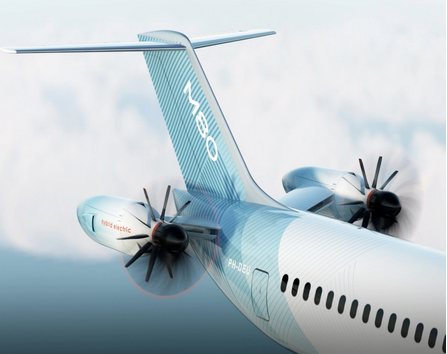
Maeve and Pratt & Whitney Canada revealed a re-design by Maeve of its proposed 76-100 seat, five-abreast regional airliner powered by a new-design Open Fan engine. Credit: Maeve.
MAEVE is developing a 76-100 seat, five abreast aircraft aimed straight at the US Scope Clause-restricted market. It went public this week with its concept, which has operating specifications that directly compete with Embraer’s older generation E175 E1. MAEVE’s airplane is a hybrid-electric aircraft.
Start-up hybrid plane OEM MAEVE teams with MHIRJ for sales, more
By Karl Sinclair
Dec. 5, 2024, © Leeham News: Start-up company Maeve last week signed a collaborative agreement with MHIRJ to provide sales and potentially product support for its proposed 80-seat M80 hybrid-electric commuter airliner.
Maeve has administrative headquarters in The Netherlands and technical headquarters in Munch. MHIRJ is the old Bombardier CRJ regional jet global product support system headquartered in Canada.
MHIRJ will lead Maeve’s sales effort for the new M80 and instantly give Maeve credibility in potentially offering a reliable product support system. MHIRJ also has global access to airlines via the CRJ program, which Maeve lacks as a start-up.
If things go as planned, Maeve will see the launch of the first clean-sheet turboprop aircraft in over three decades. The M80 is scheduled to undergo a critical design review by the beginning of 2028, make its first flight in 2030, and enter service in 2032.
“That’s the timeline that they’re still working towards, and that’s why they brought us on, to start looking at their design, from all aspects,” said Ross Mitchell, Senior Vice-President of MHIRJ, in an interview with LNA.
MHIRJ is a fully owned subsidiary of Mitsubishi Heavy Industries (MHI) and is the result of Mitsubishi’s 2020 acquisition of the CRJ Series program.
“MHIRJ is the largest MRO for regional aircraft in the world,” said Mitchell. “The [US labor contract] Scope Clause is a little more complicated than some people think, and because we had that experience dealing with Scope Clause over the years, we can certainly advise them on how to make sure your airplane is most suitable for the US market.”

MAEVE’s proposed M80 hybrid-electric 80-seat airliner. Credit: MAEVE.
Scope Clauses limit the size and number of passengers a regional aircraft can carry and exist between mainline carriers and their respective pilot’s unions. The most common clause among the Big Three is a maximum take-off weight of 86,000 lbs and a seating limit of 76 passengers.