
Leeham News and Analysis
There's more to real news than a news release.


Change incorporation on Boeing 777-9s will take “years”, CEO said
Subscription Required
Open to All Readers
By Scott Hamilton
Background to a new series
 May 3, 2026, © Leeham News: Boeing has more than 30 777-9s built and stored at the Everett (WA) Paine Field, where the 777s are assembled.
Some have been stored since 2020. Years of testing, fixing, and certification delays pushed the anticipated delivery to next year. However, every stored aircraft must undergo change incorporation first to meet the standards required by the Federal Aviation Administration (FAA), which involves years of scrutiny, system updates, and fixes identified in testing.
Beginning tomorrow, LNA will publish a five-part series on incorporating change. Boeing has received a lot of publicity about this practice since the March 2019 grounding of the 737 MAX, the early 787s that were rife with design and production issues, and the suspension of 787 deliveries beginning in October 2020. These programs had unprecedented levels of change incorporation required.
However, the process isn’t new, and Boeing learned a lot over the decades. LNA describes the evolution of change incorporation since the Boeing 767 program. The 767 was originally designed as a three-crew cockpit. A few airplanes were produced in this configuration. After the FAA approved operation by two-person crews, Boeing had to change these airplanes from three- to two-person cockpits and change those in production.
LNA recounts change incorporation for the 767, 747-400, 777 Classic, 787, and the 777X.
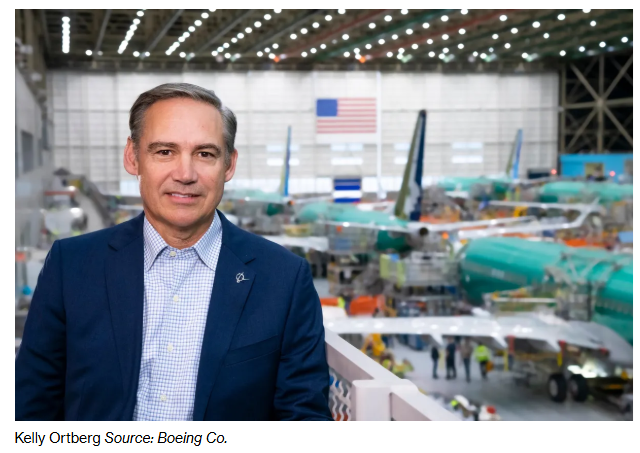
CEO Kelly Ortberg, responding to a question on the 1Q2026 earnings call, gave a high-level outline of what Boeing faces with the 777X.
AI: “The precipice of an absolute technology revolution”
Subscription Required
By Scott Hamilton
Part 4

In 2017, Boeing published “Innovation Quarterly”, covering a wide range of company efforts in new technology–including Artificial Intelligence. Credit: Boeing.
April 23, 2026, © Leeham News: Expanding the use of Artificial Intelligence (AI) will be an important part of developing Boeing’s next new airplane, whatever it is.
During an appearance last month at the Pacific Northwest AIAA (American Institute of Aeronautics and Astronautics), Boeing’s VP of Product Development outlined how AIAA may be used in the future. Brian Yutko declined to specifically tie AI to any specific new airplane program. However, he addressed how this and other new technology applies to new aircraft development.
In addition, LNA has been independently learning from its sources how Boeing will use AI for its future airplane programs.
Yet for all the growing attention about AI in today’s world, it’s hardly new. As far back as 2017, Boeing began telling the world about its interests in AI. In June that year, Boeing announced that its Boeing HorizonX venture capital arm acquired a Texas firm, SparkCognition, a machine-learning company.
“SparkCognition has established itself as a machine learning technology leader, developing a cognitive, data-driven analytics platform for the safety, security and reliability of data technology for customers in energy, oil and gas, manufacturing, finance, aerospace, defense, telecommunications and security,” Boeing said in its press release.
A search of Boeing’s archives reveals announcement after announcement about AI investment, research and activities.
On perhaps a more mundane level, the maintenance monitoring systems on Boeing, Airbus and other airplanes have long been a money-saving part of operations. As airliners are enroute, these systems monitor the “health” of the aircraft. If something “wrong” is detected, a message can be sent to the airline’s maintenance department to be ready with a solution as soon as the aircraft arrives at its gate.
Related Articles
- Boeing’s 30 year march to a new airplane
- What will Boeing’s next new airplane be?
- New technology for Boeing’s next airplane
- WISK technology for Boeing’s next airplane
Boeing 1Q2026 Earnings: Defense business is booming due to Iran War
By Karl Sinclair
 April 22, 2026, © Leeham News: “We’re already seeing higher demand in our defense business given the increased operational tempo, which over time will be a good offset to any potential commercial MRO weakness that results from these higher fuel prices,” The Boeing Company (BA) CEO Kelly Ortberg said today on the 1Q2026 earnings call.
He elaborated further on what the war means financially for the corporation.
“Let me give you a couple of examples of areas where I think this new defense budget is going to benefit us as well. We see $5bn in the budget for F-47. Increasing KC-46 production, $4bn. F-15EX, $3bn. The enhanced strategic SATCOM of $2bn. Massive increases in weapon systems as well. If you look at the backdrop of this, while it is funding new capability, it is really funding additional production of existing systems, which should be low risk for us,” he said.
While the defense sector appears to be the financial beneficiary of the conflict, Boeing sees little downside to commercial orders in the Middle East region.
“Fourteen percent of our unit backlog is in the Middle East for customers, but two-thirds of that backlog delivers out in 2030 and beyond. We have pretty good ability to re-sequence airplanes in the 12 to 18-month timeframe, so I think we will be okay,” he explained.
How Boeing’s WISK technology may apply to its next new airplane
Subscription Required
By Scott Hamilton
Part 3
April 21, 2026, © Leeham News: In 2000-2001, Boeing revealed the concept it called the Sonic Cruiser.
This sleek, futuristic airplane was conceived to cruise just below the speed of sound. Once an airplane crosses this threshold, it flies at supersonic speeds. The Sonic Cruiser’s concept cruising speed was 0.97 Mach.
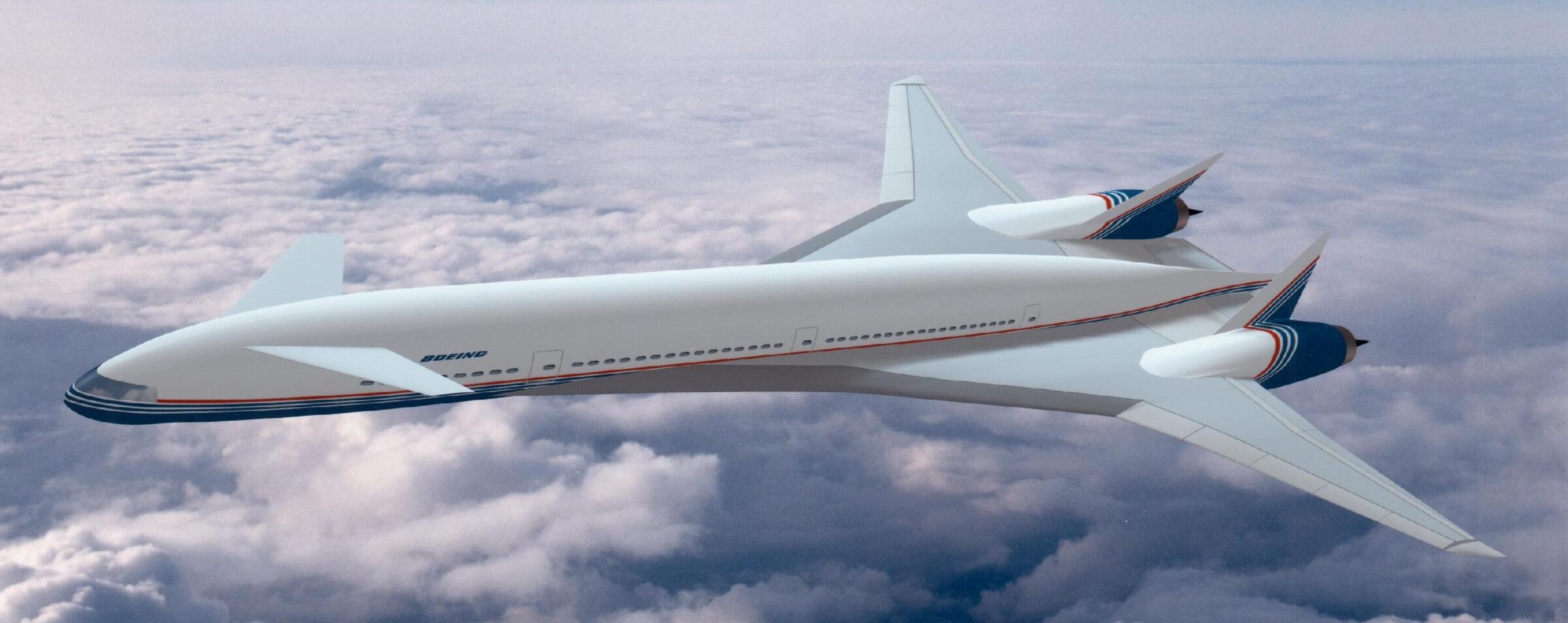
In 2000-2001, Boeing floated the Sonic Cruiser as a possible new airliner. Cruising just below the speed of sound, the concept died after the 9/11 terrorist attacks. Airlines wanted efficiency, not speed. Technology from the Sonic Cruiser were shifted to what became the Boeing 787. Credit: Boeing.
There are all sorts of technical challenges for cruising just below the speed of sound, but this isn’t what killed the project. The terrorist attacks of 9/11 were a game-changer for airlines. They became more interested in dramatically lower fuel consumption. The Sonic Cruiser would burn the same fuel as 1982’s Boeing 767.
So, Boeing scrapped the Cruiser and began applying technology from this to a new idea, the 7E7. Thus, a new, all-composite airplane with an advanced wing design and a spacious, futuristic-looking interior was born: the 787.
Airlines wrecked the spaciousness by putting nine economy seats in a space designed for eight, but the 787 went on to become the best-selling twin-aisle airplane in the world.
Applying new technology from a design that never went beyond the concept stage is not new. Boeing today continues to follow this pattern with its WISK four-passenger autonomous eVTOL.-

Brian Yutko, VP of Product Development for Boeing Commercial Airplanes. Credit: Leeham News.
Brian Yutko, Boeing Commercial Airplanes’ VP of Product Development, last month outlined how WISK’s new technology is likely to migrate to the next new airplane, whatever it is. He spoke at the Pacific Northwest chapter of AIAA (American Institute of Aeronautics and Astronautics).
WISK is Boeing’s four-passenger autonomous eVTOL. The first test flight was at the end of last year. There were no squawks, he said.
Related Articles
- Boeing’s 30 year march to a new airplane
- What will Boeing’s next new airplane be?
- New technology for Boeing’s next airplane
Preview 1Q2026: How quickly things can change: this time, it’s not Boeing
Subscription Required
By Karl Sinclair
 April 20, 2026, © Leeham News: At the very least, The Boeing Company (BA) can point to external forces beyond its control this time for a setback in its road to recovery.
Just when it seemed that a difficult six-year stretch was finally in the rearview mirror, along comes another crisis to spoil the party.
Skyrocketing jet fuel prices caused by an ill-advised “special military operation” into Iran, initiated by President Donald Trump and combined with a blockade of a blockade is throwing an entire industry predicated on long-term projections and steadiness in the markets, into the dustbin.
It is hard to find any positives in what is coming.
No FAA decision by May 1 on extending 777F Classic production
By Scott Hamilton
April 16, 2026, © Leeham News: Boeing won’t get a decision from the Federal Aviation Administration (FAA) by May 1 on its request to exempt the 777F Classic freighter from an international rule that means production must cease by Dec. 31, 2027.
Boeing filed the request on Dec. 19.
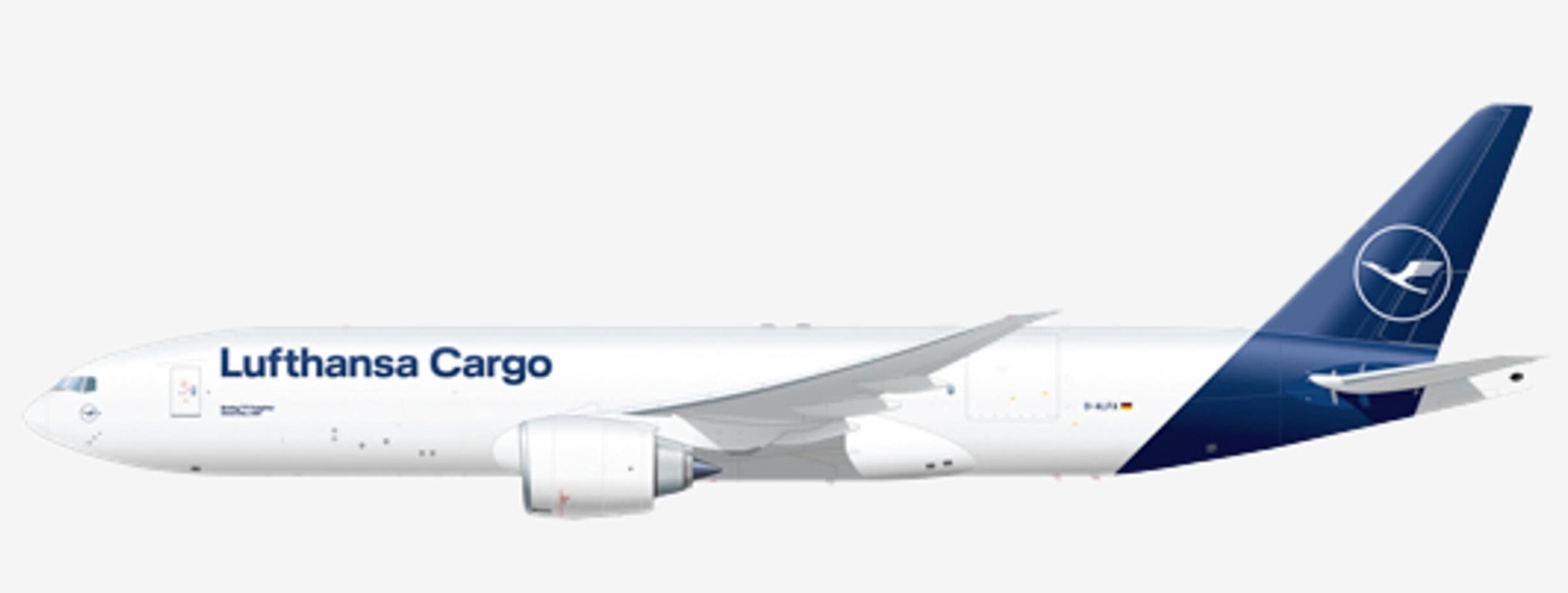
Boeing wants to extend production of its popular 777F Classic beyond Dec. 1, 2027, due to continued certification delays for the 777X program. It asked the FAA for an exemption from emissions rules to do so. Boeing asked for a decision by May 1. This isn’t going to happen. Credit: Lufthansa Cargo.
The FAA will publish a solicitation for public comment in the Federal Register tomorrow. The comment period deadline will be on or about May 7. There is no indication of how quickly the FAA will make a decision after that.
New technology for Boeing’s next new airplane
Subscription Required
By Scott Hamilton
Part 2
Brian Yutko, VP of Product Development for Boeing Commercial Airplanes. Credit: Leeham News.
April 13, 2026, © Leeham News: As Boeing considers its next new airplane, whatever it is, there is a plethora of issues that must be considered.
Last week’s article outlined a high-level view of Boeing’s future airplane programs. Today, LNA details some specifics that Boeing must consider before launching a new airplane program.
Brian Yutko, the VP of Product Development at Boeing Commercial Airplanes, declined to address any questions about new airplane development. However, at the retiree meeting of the Pacific Northwest chapter of AIAA (American Institute of Aeronautics and Astronautics) last month, Yutko discussed some of the issues Boeing will face in the coming years.
Related Articles:
Bjorn’s Corner: Blended Wing Body Airliners. Part 5

By Bjorn Fehrm
April 10, 2026, ©. Leeham News: We have started a series of articles on the Blended Wing Body (BWB) as a potentially more efficient design for passenger-carrying airliners than the classical Tube-And-Wing (TAW) configuration.
In last week’s article, we discussed how the wingspan is an important factor in an airliner’s takeoff performance. The induced drag is about 85-90% of the drag at the critical V2 point after rotation, where regulations require that a twin-engined airliner be able to fly on one engine with a climb rate of 2.4%.
We now go through the entire mission for a BWB airliner and compare its drag characteristics with those of a classical Tube-And-Wing (TAW) design.
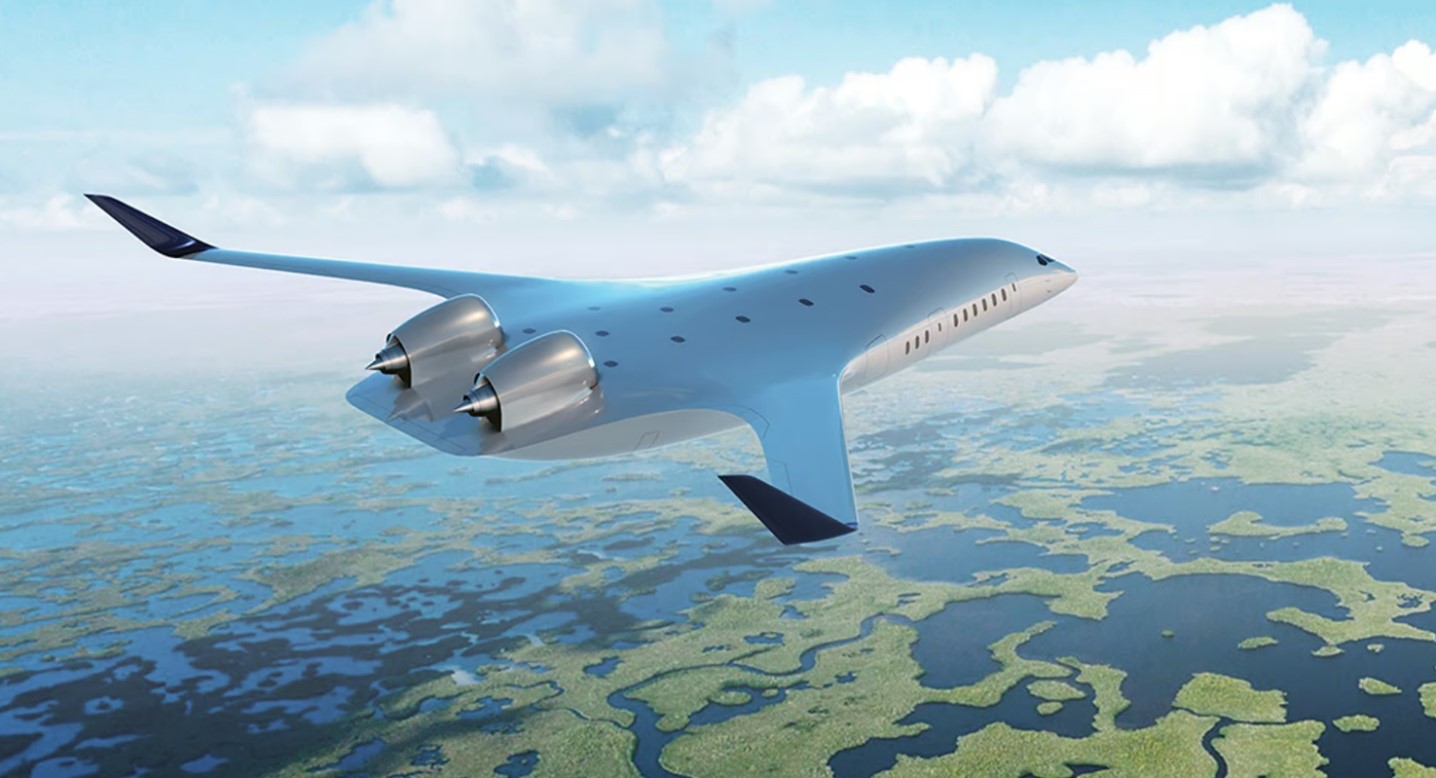
Figure 1. The JetZero Z4 BWB. Source: JetZero.
Boeing’s next airplane will eventually come; what will it be?
Subscription Required
By Scott Hamilton
Part 1
April 9, 2026, © Leeham News: CEO Kelly Ortberg has been clear: there won’t be any new airplane program launched until the airlines are ready, the technology is ready, and Boeing is ready.
Ortberg became CEO of The Boeing Co. on Aug. 8, 2024. One of his first decisions was to kill the research and development of a concept called the X-66A, the moniker for a Transonic Truss Brace Wing (TTBW) single-aisle airliner that could replace the 737 MAX in the coming decade.
However, he said that Boeing, coupled with NASA, would continue to research and develop an advanced wing for a new, highly efficient airplane. NASA, the National Aeronautics and Space Administration, has a long history of partnering with Boeing to evaluate new aerospace development.
Ortberg’s decision to kill the X-66A demonstrator project reversed a decision by the man he replaced, David Calhoun, who was the TTBW’s leading proponent within Boeing. Calhoun became CEO in January 2020 when his predecessor, Dennis Muilenburg, was fired during the prolonged 737 MAX crisis.
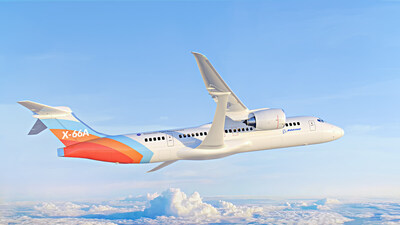
Figure 1. The Boeing-NASA concept X-66A TTBW airplane. Source: NASA.
One of Calhoun’s first decisions was to kill the R&D project of a New Midmarket Airplane (NMA), a twin-aisle design roughly the same dimensions as the Boeing 767-200ER and -300ER. The NMA had been under study since at least 2012. Muilenburg was on the path to seek board approval to launch this program in 2019, when the MAX was grounded by global regulators. Calhoun, the lead director, didn’t support the plane. With Boeing’s cash-cow 737 grounded, Calhoun used the crisis to kill the NMA. Given the billions of dollars in losses Boeing was and would incur, the decision was an obvious one.
Related Article
Boeing’s 30-year march to its next new airplane
Subscription Required
Open to All Readers
By Scott Hamilton
Background
April 6, 2026, © Leeham News: Depending on what starting point you want to choose, it will be up to 30 years between brand new, clean sheet airplane designs at The Boeing Co.
Boeing announced its 787 program in December 2003, with a formal launch the following spring. The entry-into-service goal for the 787 was May 2008. Boeing planned to design a replacement for the aging 737 platform after the 787 entered service. A new design for replacing the 777 was supposed to come after that.
The 787’s EIS date came and went as design and production problems added up to 3 ½ years of delay.
With cost overruns, deferred production, and deferred tooling costs totaling more than $50bn, plus several billion more dollars written off for research and development and abnormal production costs, the 787 still has more than $14bn in deferred costs to recover.
Delays and cost overruns hurt the 747-8 program. The 2019 21-month grounding of the 737 MAX resulted in billions more in charges. The January 2024 door plug blowout on a new Alaska Airlines 737-9 hurt recovery. Scrutiny by the Federal Aviation Administration (FAA) continues to this day. Production rates for the 737 and 787 are well below those that predate the MAX grounding. Certification of the 737-7, 737-10, and 777X remains a hope, not a reality, so far.
A plethora of losses, charges, and delays in defense and space programs added to the losses. Boeing’s long-term debt in 2018, its last normal year, was over $10bn. Today, it’s over $54bn, with big repayments coming soon.
Boeing’s next new airplane program remains years away.
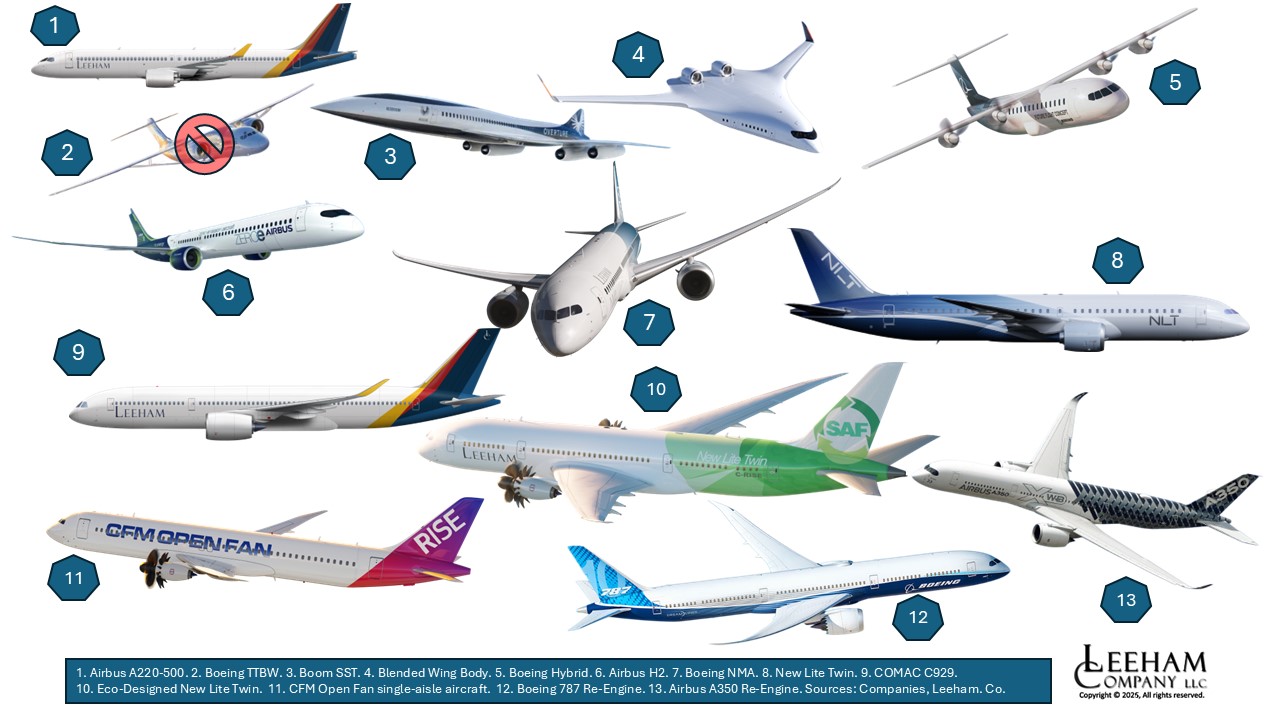
What will Boeing’s next new airplane be? We have a pretty good idea. A new series beginning Thursday explores this question. Credit: Leeham News.