
Leeham News and Analysis
There's more to real news than a news release.


Reader Comments Open Forum, Week of April 27
 LNA’s Comments Open Forum allows Readers opportunities to comment about any post (note, we said “Post”, not any “Topic”). All comments will be held for review and Moderation per our new policy. The Open Forum enables Readers to Comment on paywall articles (to the extent the paywall preview is open to all readers).
Maintain civility and follow Reader Comment rules.
A new Open Forum will be posted weekly.
Bjorn’s Corner: Blended Wing Body Airliners. Part 6

By Bjorn Fehrm
April 17, 2026, ©. Leeham News: We have started a series of articles on the Blended Wing Body (BWB) as a potentially more efficient design for passenger-carrying airliners than the classical Tube-And-Wing (TAW) configuration.
In the fifth article last week, we discussed how the drag characteristics of the BWB are different from a classical Tube-And-Wing airliner. The dominance of air-friction drag over induced drag results in a 10,000ft higher optimal cruise altitude compared with an equal-capacity TAW.
We compared JetZero’s Z4 project to a 250-seat variant of Boeing’s NMA that we have analyzed several times with our Aircraft Performance and Cost Model, APCM. Both aircraft use modern composite structures, aerodynamics, and systems, resulting in similar overall weights and drag.
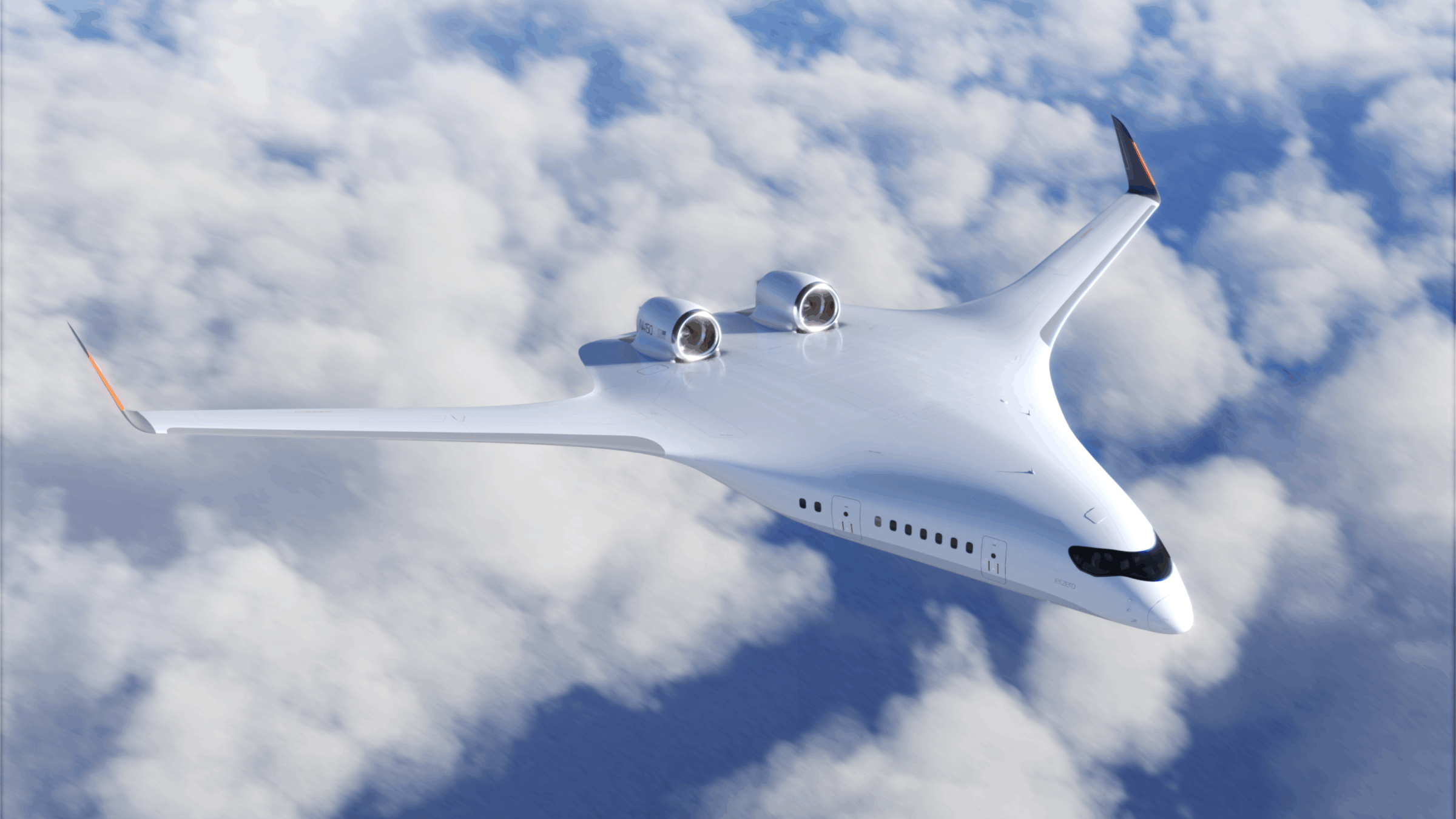
Figure 1. The JetZero Z4 BWB. Source: JetZero.
The difference is how the drag is partitioned between the wetted area caused drag (air friction drag) and drag due to weight (induced drag). The difference between drag and optimal cruise altitudes has consequences for engine choice. Here is how.
Bjorn’s Corner: Blended Wing Body Airliners. Part 2
By Bjorn Fehrm
March 20, 2026, ©. Leeham News: We have started a series of articles on the Blended Wing Body (BWB) as a potentially more efficient design for passenger-carrying airliners than the classical Tube And Wing (TAW) configuration.
In the first article last week, we established that it’s not about getting more lift during the efficiency-deciding cruise phase; it’s about reducing the drag that must be countered by engine thrust.
The drag in cruise is essentially decided by the air friction drag against the aircraft’s outer skin, called the wetted surface of the aircraft, and the induced drag, which is decided on how wide the aircraft is where there is lift generated. The reason is the high pressure below the wing will push air towards the wingtips to circulate to the low pressure above the aircraft, causing the global circulation around the wingtips of an aircraft.
Figure 1. The JetZero Z4 Blended Wing Body 250 passenger concept. Source: JetZero.
The state of alternative propulsion aircraft? Part 8.
Subscription required
By Bjorn Fehrm
March 19, 2026, © Leeham News: In our series on the state of alternative propulsion projects, we have analysed electric hybrid projects and found that these do not make for an operationally acceptable airliner. They are more expensive in production, thus in purchase, and their operational costs are not lower than the aircraft they shall replace.
Projects analyze hybrids after realizing that battery-electric airliners are too limited in range. But soon, the problem areas of hybrids become clear. The studies then swing to hydrogen propulsion systems.
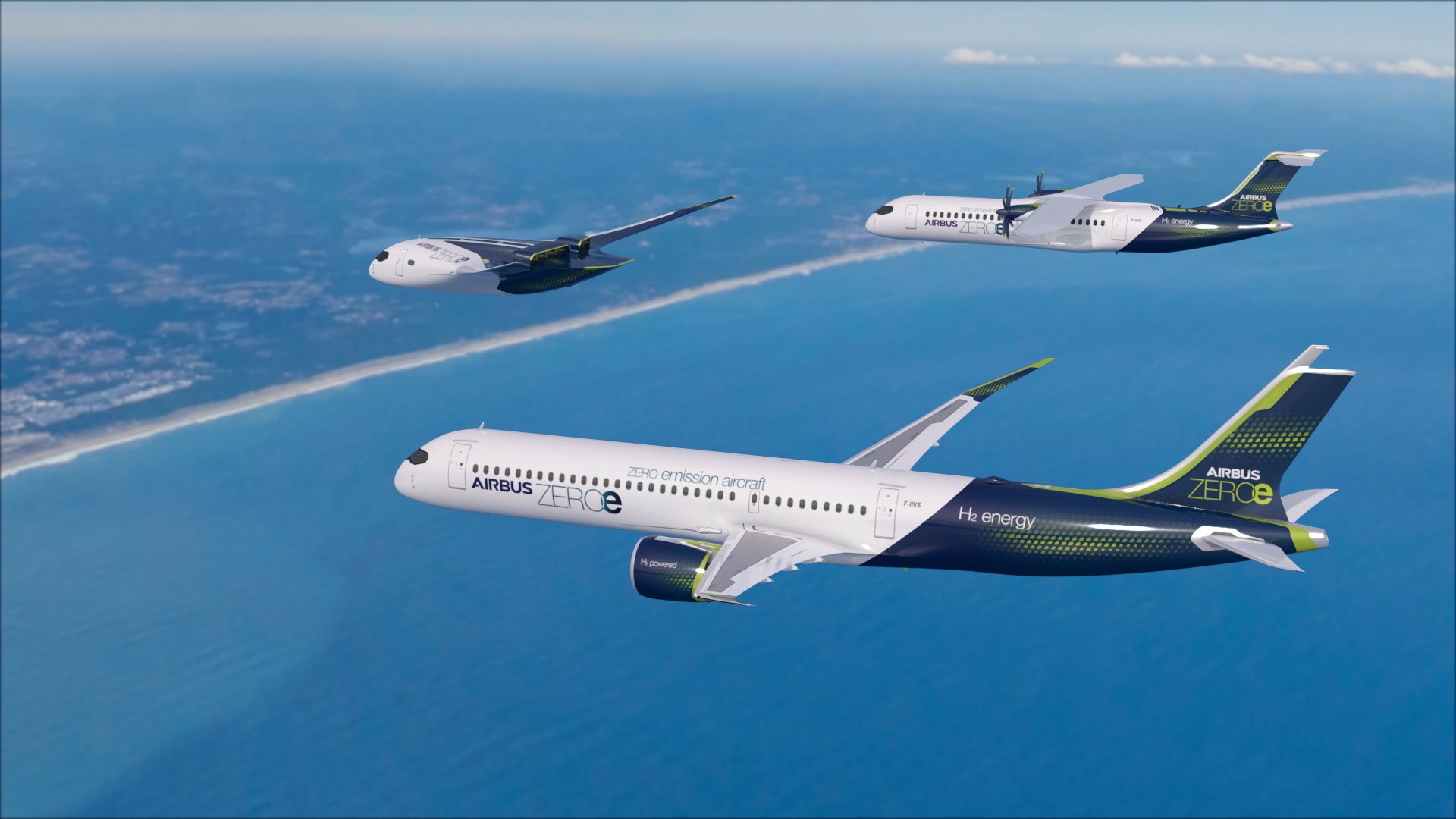
Figure 1. The Airbus ZEROe hydrogen-fueled concepts for a future airliner. Source: Airbus.
These have new technical challenges but produce aircraft with operationally acceptable range. We now examine the various concepts for hydrogen-fueled propulsion and outline their challenges and capabilities.
Bjorn’s Corner: The Blended Wing Body, BWB, Airliner. Part 1.
By Bjorn Fehrm
March 13, 2026, ©. Leeham News: The flying wing has been researched for almost 100 years. During the Second World War, the Horten Brothers developed as flying wing military aircraft in Germany with mixed success. The Northrop company then flew several flying wing prototypes after the war, finding these to have severe stability issues at higher angles of attack.
With the advent of Fly-By-Wire, this could be mastered, and the flying wing’s inherent low radar cross-section is used in the B-2 and B-21 US Air Force bombers.
A flying wing is not suitable for use as an air transport passenger aircraft, as passengers would feel as if they were being transported in a coffin within the wing. An evolution of the flying wing is the Blended Wing Body (BWB, Figure 1), which moves the center section forward to form a blended fuselage that houses the payload.
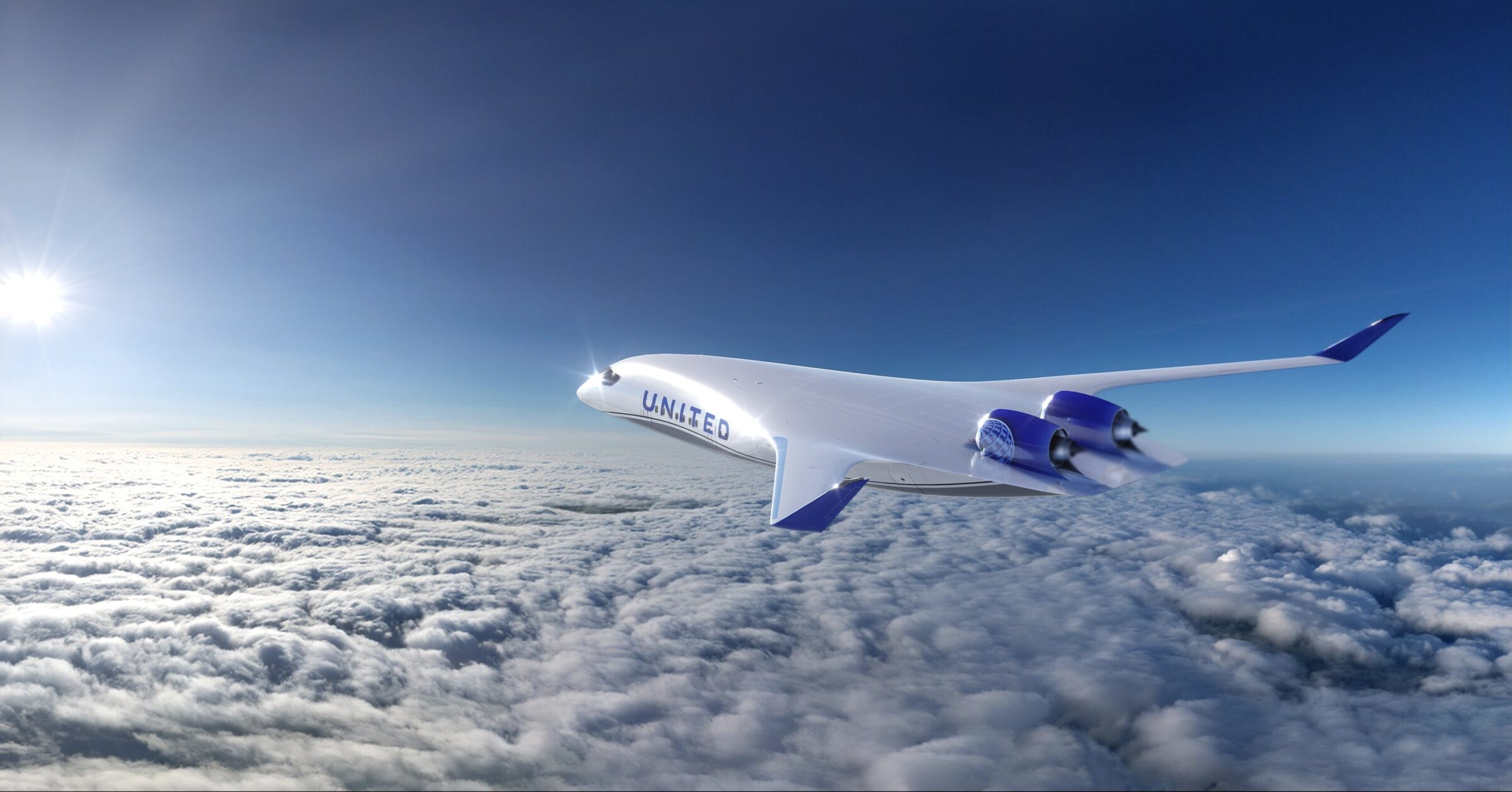
Figure 1. The JetZero Z4 BWB in United’s colors. Source: JetZero.
As the search for lower fuel consumption and emissions intensified, the search for a more efficient way to transport passengers has led to increased interest in the BWB concept since the early 1990s, primarily from NASA and the US aircraft industry.
The proliferation of composite primary structures since 2000 has helped address the structural problems of a BWB. This has created a renewed interest in BWBs, both for military and commercial applications.
Airbus FY2025: Not happy with Pratt & Whitney
By Karl Sinclair
 Feb. 19, 2026, © Leeham News: The normally reserved Airbus (AB) CEO Guillaume Faury had some strong words for engine-maker Pratt & Whitney (P&W), at the annual video conference reporting results for the 2025 financial year.
Airbus is ready to “enforce contractual rights” with regard to the engines being supplied to the airframe maker from P&W (corporate speak for “You’ll be hearing from our lawyers”), in an effort to meet delivery requirements.
The issue is centered around the resources that Pratt is deploying to remedy the problems caused by powdered metal coating contamination misstep, which is hampering production of both the A320neo and the A220 families.
According to Airbus, the engine-maker has focused more effort on addressing in-service fleet issues, while eschewing its responsibility to provide engines to the aircraft OEM for deliveries.
This is hindering Airbus’s efforts to increase production as it seeks to meet its commitments to airlines and lessors.
“On the A320 family, the continued failure to commit to the number of engines ordered by Airbus is negatively impacting this year’s guidance and the ramp-up trajectory for this year. As a consequence, we now expect to reach the rate of between 70 and 75 aircraft a month by the end of 2027, stabilizing at a rate of 75 thereafter,” said Faury.
Whether this is simply sabre-rattling to force P&W to increase production by publicly calling them out is unclear.
Faury elaborated further in the earnings call, “Pratt & Whitney has resigned from the orders we had placed, and they had accepted for the volumes in 2026. We have to base our guidance on what they tell us now they’re willing to commit and deliver. We’ll continue to work hard to enforce our contractual rights, which we believe are not respected in that case…We are not happy with the outcome, but that’s what it is today.”
These are choice words in an industry where airframe and engine makers work closely together to meet their customers’ needs.
Bjorn’s Corner: Faster aircraft development. Part 27. Where Speed-Up gets Tough.

By Bjorn Fehrm and Henry Tam.
February 13, 2026, ©. Leeham News: We are summarizing how modern tools, processes, and AI can help reduce the time required to develop a clean-sheet 200-seat replacement for the Airbus A321neo and the Boeing 737 MAX 10.
We discussed some ideas in the last article on how current AI can support development. We could see it helping reduce the time spent on templating documents and on designing and verifying simple parts, such as mounting brackets for pipes and cables.
To address the more challenging parts where AI struggles to assist, we need to understand why development programs now take longer than in the past and what can be done to shorten the timeline.
Outlook 2026: The airliner projects that promise new technology and lower emissions
Subscription Required
Now open to all readers.
By Bjorn Fehrm
 February 5, 2026, © Leeham News: We survey new entrants that deviate from the classical gas-turbine tube-and-wing airframe concept and offer airliners the promise of lower emissions and, hopefully, lower costs.
We will do this by starting with those closest to certification and delivery, then tapering off to those who currently fly on PowerPoint.
If we didn’t apply this filter to what we consider real projects, we would describe over 50 entries, with additional ones announced with airline orders every month over the last few years. Few of these have progressed beyond plans, which is why we focus on those that have.
Overall, it’s amazing that 11 years after the Airbus E-fan battery-electric aircraft flew at the Farnborough Air Show in 2014, we still do not have a single certified alternative-propulsion passenger aircraft. We have one light-sport two-seat trainer, the Pipistrel Electro Velis, but nothing else.
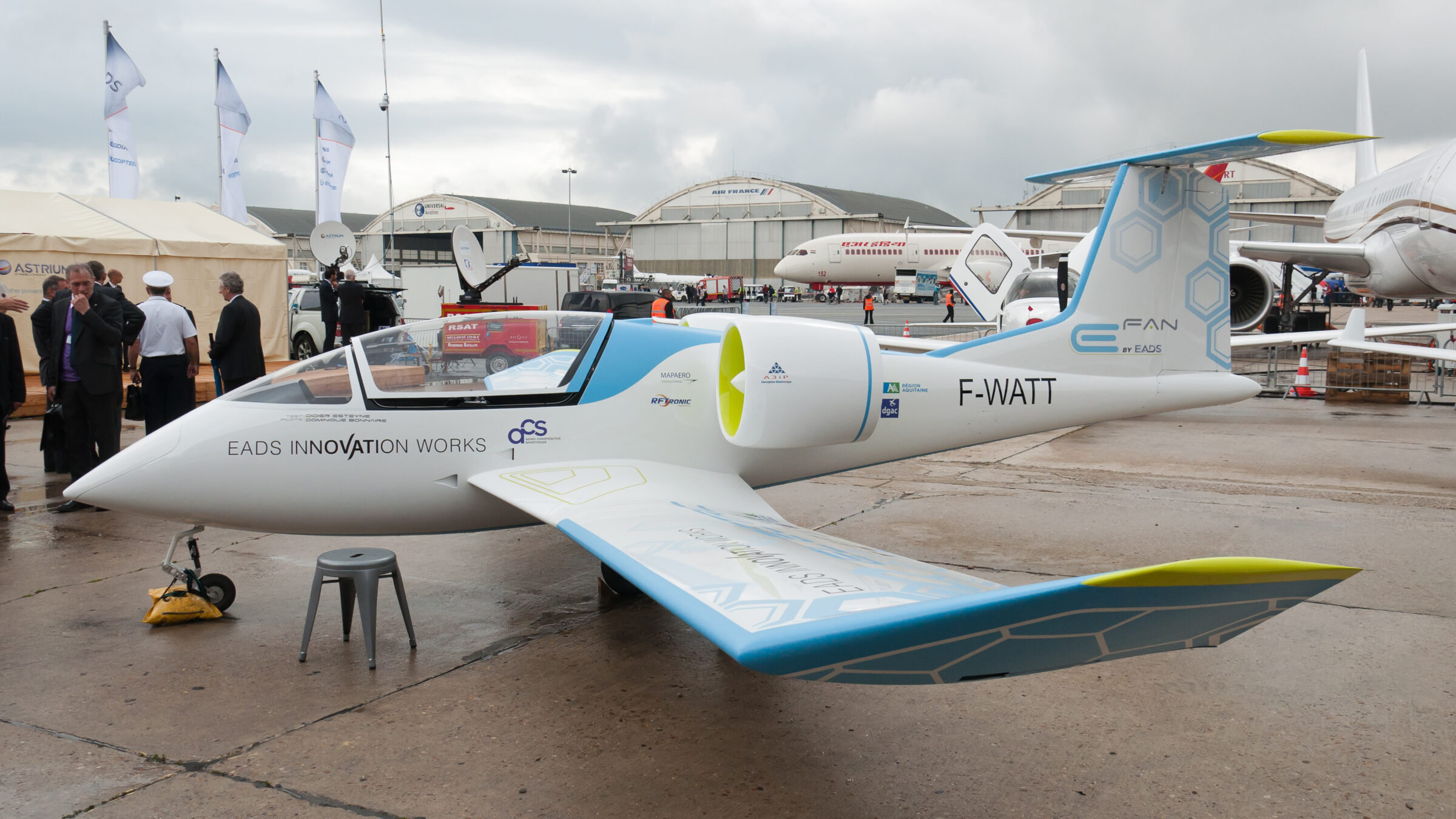
Figure 1. The Airbus E-Fan at the Paris Air Show in 2015. Source: Wikipedia.
GE Aerospace FY and Q4 2025 Earnings Thrust Higher Propelled by Services Growth, LEAP Volume and Expanding Margins
By Chris Sloan
 Jan. 22, 2026, © Leeham News: GE Aerospace closed 2025 with a materially larger order book than in prior years, underscoring sustained demand across both commercial and defense markets as the company continues to lean on its services-heavy business model. Chairman and Chief Executive Officer Larry Culp said 2025 marked a year of operational progress and execution. “2025 was an outstanding year for GE Aerospace as we made operational progress, delivered on our financial commitments, and continued to invest in our future,” Culp said.
The fourth quarter provided a strong finish to the year, with management pointing to robust demand for both services and equipment as customers continued to prioritize engine availability and fleet utilization. For the full year, the company cited improvement across its key operating measures, supported by growth in both Commercial Engines & Services and Defense & Propulsion Technologies. Culp highlighted a backlog of roughly $190bn—nearly $20bn higher than a year earlier—as evidence of sustained demand across commercial and defense customers. “GE Aerospace is an exceptional franchise,” Culp said, pointing to the company’s installed base of approximately 80,000 engines. He added that continued deployment of the FLIGHT DECK operating model is expected to improve execution and customer support across the fleet.
Analysts said the results reinforced the durability of GE’s aftermarket-driven earnings profile. “A robust conclusion to 2025 from GE, with the engine aftermarket continuing to produce strong growth,” said Robert Stallard of Vertical Partners Research. “While this growth is expected to ease in 2026, it should be roughly similar to OEM growth, and so GE should not see a meaningful mix shift.” Similarly, Seth M. Seifman of J.P. Morgan said the fourth-quarter results were solid and that the initial outlook suggests operating profit could exceed current consensus. “It’s always hard to know how good is good enough,” Seifman said, “but we view the results as solid… and the potential for upward revisions appears to be in place.”
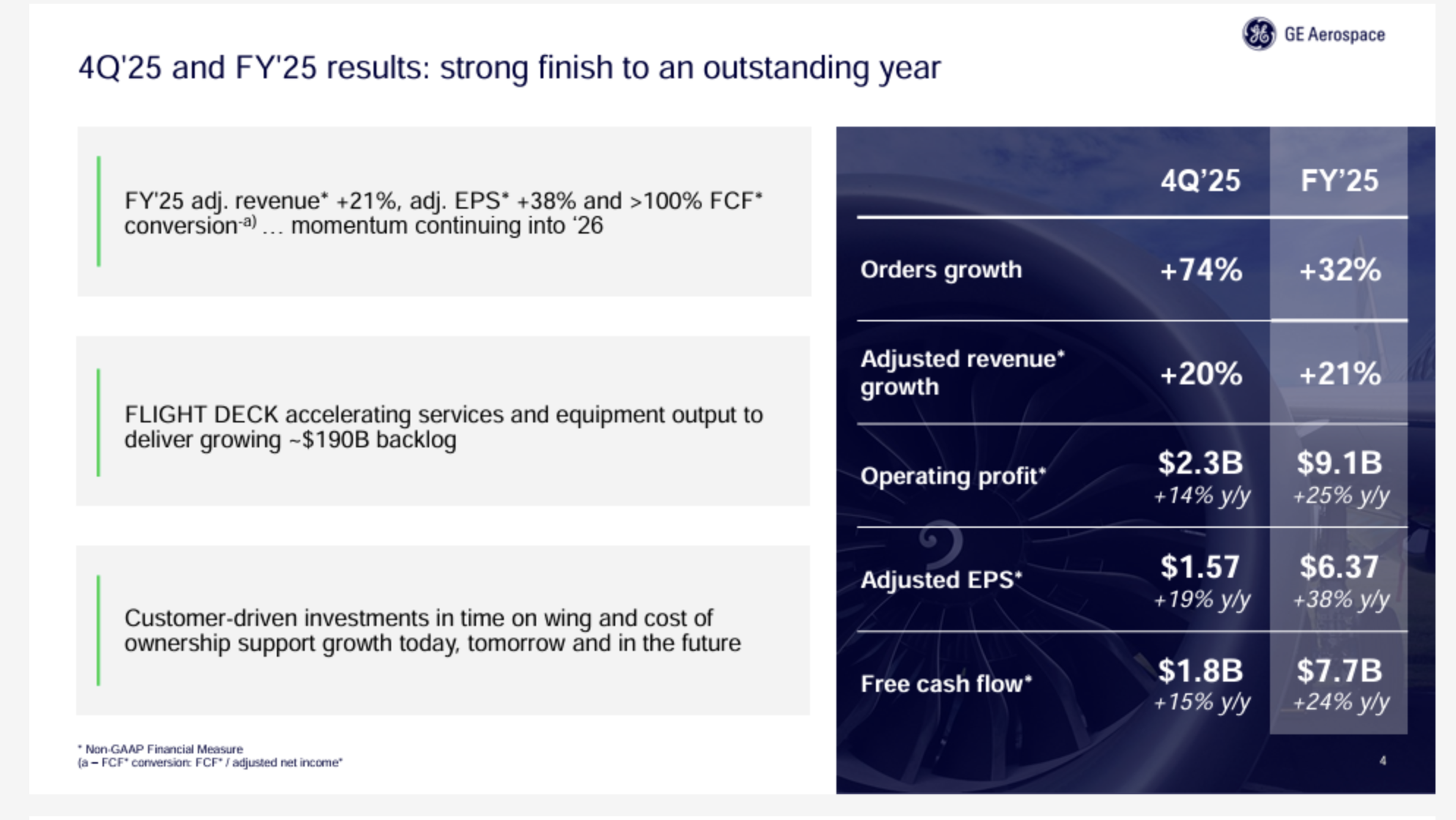
Image courtesy: GE Aerospace
Bjorn’s Corner: Faster aircraft development. Part 22. Serial Production.
By Bjorn Fehrm and Henry Tam.
January 9, 2026, ©. Leeham News: We do a series about ideas on how the long development times for large airliners can be shortened. New projects talk about cutting development time and reaching certification and production faster than previous projects.
The series will discuss the typical development cycles for an FAA Part 25 aircraft, called a transport category aircraft, and what different ideas there are to reduce the development times.
We will use the Gantt plan in Figure 1 as a base for our discussions. We have completed flight testing of the flight test aircraft and obtained a design Type Certificate (TC). We now examine the production preparations and the serial production phase.

Figure 1. A generic new Part 25 airliner development plan. Source: Leeham Co. Click to see better.