
Leeham News and Analysis
There's more to real news than a news release.


Boeing is fighting fire with fire in reacquiring Spirit Aero (Updated)
Subscription required
By Dan Catchpole
Analysis
July 1, 2024, © Leeham News: This is an analysis of Boeing’s reported $4.7 billion purchase Spirit AeroSystems, as Reuters reported Sunday.
First, let’s set the frame.
Boeing seems incapable of doing anything right these days. Even a pre-Farnborough Airshow media briefing by the aerospace giant last week resulted in a reprimand from the National Transportation Safety Board for sharing information about its investigation into the panel blowout on an Alaska Airlines flight on Jan. 5.
 The company is bleeding money in its commercial and defense divisions. Boeing could turn around its balance sheet if it could straighten out production for its cash cows—the 737 and 787. Yet somehow, both programs are still struggling.
Boeing’s pissed off the Federal Aviation Administration, the NTSB, key members of Congress, some of its biggest customers, and the Machinists union in Washington and Oregon, among others. Its current CEO is a lame duck who helped create the crises overwhelming the company. Potential successors have said they don’t want the job. Among the front-runners to succeed David Calhoun is BCA’s new CEO Stephanie Pope, who has no production or product development experience and has had few public appearances since she took over BCA in March. There are plenty more problems, but you get the point.
Spirit AeroSystems has been floundering since the COVID-19 pandemic threw the aviation industry into chaos. Since 2020, it has recorded $3.2 billion in net losses, including $617 million posted in the first quarter of this year. Boeing has helped keep the company afloat with financing and price changes.
In short: Boeing is fighting countless fires, and it just bought another one.
Can Boeing fight fire with fire?
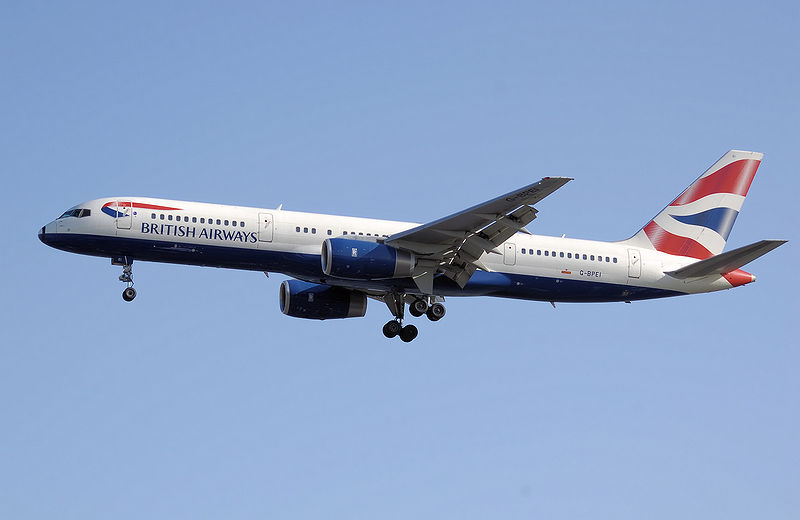
To what extent can the A321XLR replace the Boeing 757, Part 1.
Subscription required
By Bjorn Fehrm
June 27, 2024, © Leeham News: The Airbus A321XLR, the extra-long-range version of the A321neo, will start operational service with IBERIA on the Madrid-Boston trans-Atlantic route later this year. It’s the type of thin, long-range route the Boeing 757 has served to date.
We will use our Aircraft Performance and Cost model (APCM) to examine to what extent the A321XLR can replace the 757 on world routes. What is the difference in capacity and range, and what improvement in operational economics can be expected?
Summary:
- The Boeing 757 was the original MOM/NMA (Middle-Of-the-Market / New-Midmarket-Airplane).
- It had unique characteristics, which Boeing would have followed up with the NMA project.
- Boeing hesitated, and Airbus developed the A321XLR to fill this role. Has it succeeded?
Airbus lowers 2024 guidance amid A320/A321 supply chain and space system challenges
Bjorn Fehrm
June 24, 2024, © Leeham News: Airbus issued a press release today where it lowered guidance for 2024.
The release highlighted two areas as the drivers for the update:
- Larger-than-expected supply chain issues for the single-aisle segment (A320/A321), where delivery ramp problems in engines, aerostructures, and cabin equipment mean that the guidance for 2024 goes from 800 aircraft in total to 770. Because of this, the ramp to 75 A320/A321 deliveries per month has been moved out a year to 2027 instead of as previously forecasted 2026.
- The Defence and Space Systems management has, after an extensive review, found schedule, workload, and sourcing challenges for certain Space telecommunications, navigation, and observation programs. Airbus has decided to record charges of around € 0.9bn in the H1 2024 report to cover the problems in these programs.
As a result, Airbus has decided to update the 2024 guidance ahead of its 1H2024 results release, which is on 30 July:
- Around 770 commercial aircraft deliveries (was 800).
- EBIT Adjusted of around € 5.5 billion (was €6.5bn to €7bn).
- Free Cash Flow before Customer Financing of around € 3.5 billion (was € 4bn).
Airbus adds the usual caveats to the guidance:
The Company assumes no additional disruptions to the world economy, air traffic, the supply chain, the Company’s internal operations, and its ability to deliver products and services. The Company’s 2024 guidance is before M&A.
Aircraft production woes stretch far beyond Boeing
Subscription Required
By Judson Rollins
June 17, 2024, ©. Leeham News: Estimating airplane delivery rates isn’t much more than a guessing game nowadays.
While many headlines point fingers at beleaguered Boeing and Spirit AeroSystems, aviation’s production woes are much more complex. Even in 2024, the labor shortage legacy of COVID-19 and raw material shortages exacerbated by the Russia-Ukraine war loom large over the industry.
Airbus struggles to deliver airplanes on time, and engine makers also see their deliveries constrained by supply chain issues.

Source: AFP via Aviation Week Network.
Summary
- Boeing commercial production is far below advertised rates.
- Airbus deliveries suffer from shortages of seats, other parts.
- Embraer says deliveries would be higher without supply chain issues.
- COMAC’s disruption opportunity is dampened by likely trade conflict.
- Pratt and GE Aerospace slowly ramp up delivery of redesigned components.
Freighter market faces turmoil while passenger sector gets the headlines
Subscription Required
By Scott Hamilton
June 10, 2024, © Leeham News: Delivery delays of widebody airplanes are causing disruptions in freighter conversion plans as feedstock is retained for passenger operations.

IAI Bedek Boeing 777-300ER P2F. Photo: IAI Bedek.
Demand for passenger airplanes also is slowing Airbus’ plans for the A350 freighter, according to market intelligence.
Softening of the cargo market since the end of the COVID-19 pandemic also impacts the immediate need for converting airliners to freighters, sources say.
Although Boeing’s delays with the 787 and 777X get most of the blame, Airbus also gets some credit for the A350 program. Already, say potential cargo airplane buyers, the A350 freighter is looking at a delay beyond the 2026 entry into service (EIS) date. Uncertainties among Middle Eastern carriers Etihad and Emirates over the A350-1000 Rolls-Royce engine durability are also causing officials to rethink retaining Boeing 777-200LRs and 777-300ERs in service.
Certification of the IAI Bedek 777-300ER freighter conversion program is taking longer than expected. The reason: the negative halo effect dating to the Federal Aviation Administration (FAA) certification crisis with the Boeing 737 MAX.
It took Boeing 21 months to recertify the MAX after its grounding began in March 2019. The MAX 7 and MAX 10 still aren’t certified and aren’t expected to be until sometime next year.
Certification of the 777X, also affected by the negative halo effect of the MAX crisis, isn’t certified. EIS was intended to be in 1Q2020. Boeing has yet to receive Type Inspection Authorization (TIA) from the FAA, one of the final steps required before certification. Boeing officially hopes certification will occur next year. But quietly some within Boeing now don’t think TIA will come until 1Q2025. Emirates and Lufthansa Airlines, the first scheduled operators of the airplane, openly say they don’t expect deliveries until 2026.
The upshot: feedstock of the 777-300ERs for conversion companies is drying up.
The all-important cabin. Part 3
Subscription required
By Bjorn Fehrm
June 6, 2024, © Leeham News: We do an article series about the all-important cabin and its seating for an airliner. We have looked at different narrowbody cabins and how the seating differs widely depending on the market and customer segments the aircraft addresses.
This week, we focus on why widebody aircraft have relatively low seat counts compared with single-aisle aircraft, like the A321neo.
We use the cabin generator in our Aircraft Performance and Cost Model (APCM) to configure widebody cabins and compare these with the narrowbody equivalents.

Summary:
- The widebody cabins are configured for longer flight times, resulting in them taking more space.
- When a widebody is configured for domestic flights, its seating per cabin area is closer to that of a narrowbody.
The all-important cabin. Part 2
Subscription required
By Bjorn Fehrm
May 30, 2024, © Leeham News: We will do an article series about the all-important cabin and its seating for an airliner. The cabin layout and its comfort are the most important part of an airliner for the passenger. For an airline it’s its face to the customer.
We will look at the different types of cabins used and how these use the airliner’s real estate, what the cost is, and what the weight is. With the weight, we can also predict how different cabins affect the aircraft’s performance.
Summary:
- The configuration of the cabin has a large influence on total seating, weight, and cost.
- The relationships change up to 500%.
Big hurdles for COMAC to become serious challenger to Airbus, Boeing
Subscription Required
By Scott Hamilton
May 27, 2024, © Leeham News: A flurry of orders by China’s Big Three airlines finally began to balance announced deals for the COMAC C-919 mainline jet.
Until the recent orders from Air China, China Eastern, and China Southern, the vast number of the announced transactions were concentrated among Chinese lessors. The imbalance was not a good thing.
Airbus and Boeing prefer speculative orders by lessors amounting to 25% to perhaps 35% of the order book. (Lessors in recent decades often accounted for 40% to 50% of the in-service fleet, but the differences were from sale/leasebacks of orders originally placed by airlines.)
Boeing and Airbus have different views toward lessors. Airbus, especially under then-Chief Commercial Officer John Leahy, viewed lessors as an extension of the Airbus marketing arm. Lessors broadened Airbus’ market penetration, especially during the early years of the A320’s entry into service.

On the other hand, Boeing viewed lessors as a necessary evil, preferring to deal with a select few rather than a large number. Both viewed lessors to some degree as competitors to direct sales.
Before the Big Three orders, COMAC’s tally was around 760+ for the C919. More than 70% of the announced orders were for Chinese lessors. No lessor outside China was a customer and only Indonesia’s Trans Nusa (partly owned by Chinese lessor CALC) was a customer outside China.
Following the Big Three orders, about 46% of the orders are from airlines—a much better mix than before but still overweighted with lessors.
With Airbus’ A320 family sold out into the 2030 decade and Boeing’s MAX production and delivery schedules in disarray, what alternatives do customers have to the Big Two OEMs? COMAC is the most likely, but the challenges are immense.
COMAC’s challenges
COMAC has big challenges ahead if it wants to become a major global player in commercial aviation.
- Gaining credibility for the C919 inside and outside China.
- Economic competitiveness to the A320neo and 737 MAX.
- Ramping up production.
- Global product support.
- Geopolitical concerns.
The all-important cabin. Part 1
Subscription required
By Bjorn Fehrm
May 23, 2024, © Leeham News: We will do an article series about the all-important cabin and its seating for an airliner. The cabin layout and its comfort are the most important parts of an airliner for the passenger.
Most of the time, the traveler doesn’t know what type of aircraft he is flying on, but he will have a clear understanding of the cabin and whether it meets his expectations.
The cabin is where the airline can expose its branding and set the flight experience for the passenger. It’s thus an area that is updated to new cabin concepts for the fleet more often today than 10 years ago, especially for mainline carriers.
The cabin is also important in evaluating airliners, as the characteristics of the aircraft (fuel consumption, operational costs) are evaluated per seat. OEMs have become experts in maximizing the seating of their aircraft to gain an advantage during an evaluation. Sometimes, in a non-transparent way. We will explain the typical tricks and how to guarantee an apples-to-apples comparison when evaluating airliners.
Summary:
- The cabin and its seats mean different things to a passenger, airline, and evaluation expert.
- We go through the different priorities, and how they affect the end product.
A350-1000 or 777-8? Part 2
Subscription required
By Bjorn Fehrm
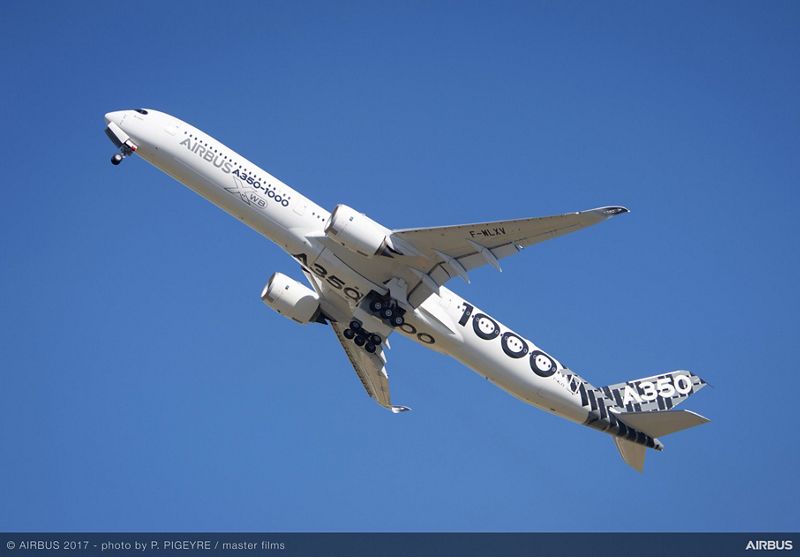
May 16, 2024, © Leeham News: We are doing an article series comparing the capabilities of the Airbus A350-1000 and the Boeing 777X. We have looked at the A350-1000 versus the 777-9 and started comparing the history and capabilities of the 777-8 versus the A350-1000 last week.
Now, we use our Aircraft Performance and Cost Model (APCM) to fly the aircraft on a typical route and compare their performance.
Summary:
- The A350-1000 and the latest 777-8 definition is a closer payload-range match than the A350-1000 and 777-9.
- Passenger and cargo capabilities are similar. The economic comparison will be determined by maintenance costs for the engines.