
Leeham News and Analysis
There's more to real news than a news release.


Bjorn’s Corner: Blended Wing Body Airliners. Part 4

By Bjorn Fehrm
April 3, 2026, ©. Leeham News: We have started a series of articles on the Blended Wing Body (BWB) as a potentially more efficient design for passenger-carrying airliners than the classical Tube And Wing (TAW) configuration.
In the third article last week, we saw that the large wing surface area of a Blended Wing Body does not come from cruise-phase requirements; it comes from the lift needed in the landing phase, where BWBs lack flaps to increase wing lift. It needs a large wing area to compensate.
Now we will see that the wingspan is not sized by cruise requirements but by takeoff requirements.
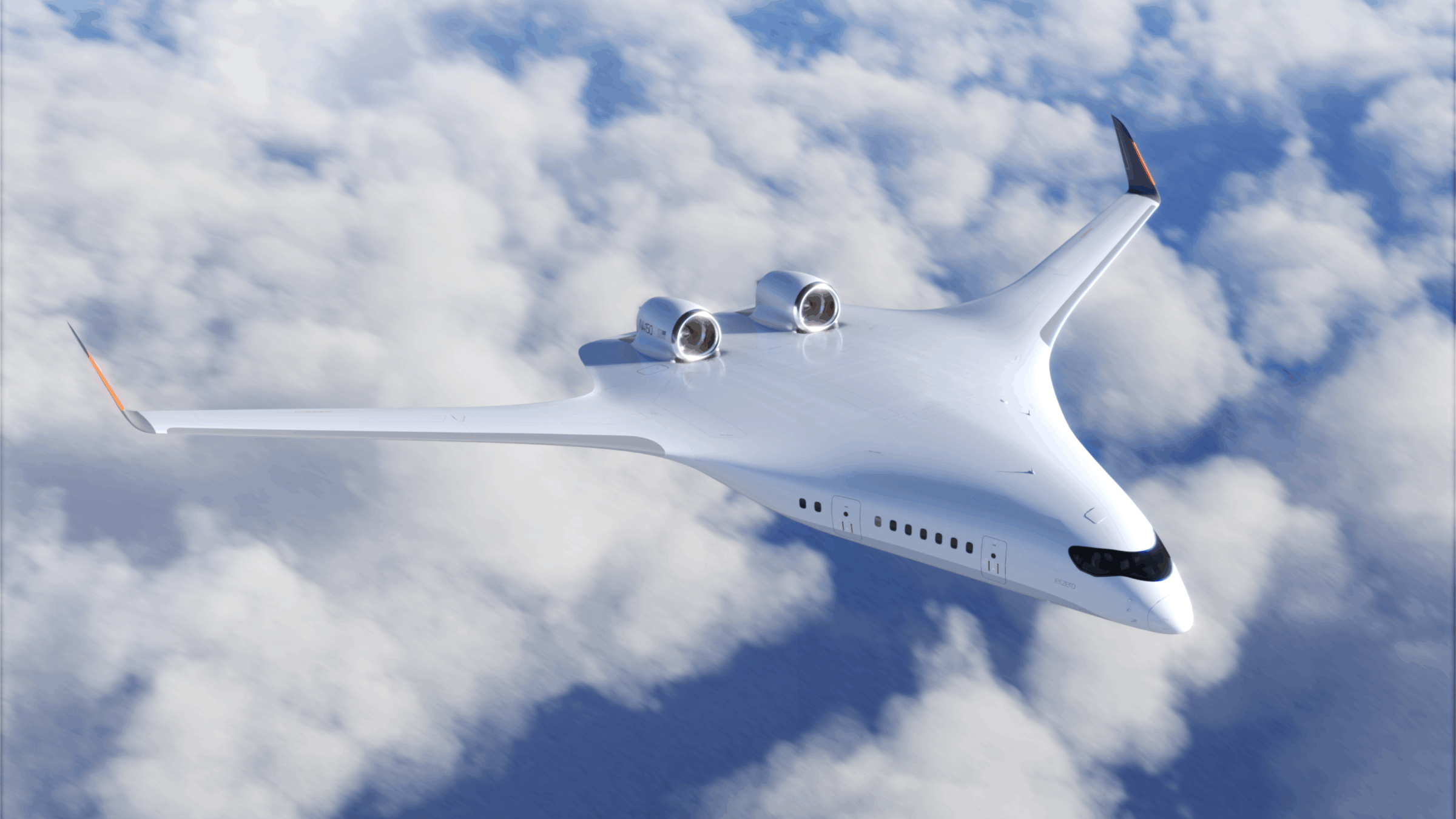
Figure 1. The JetZero Z4 BWB. Source: JetZero.
Bjorn’s Corner: Blended Wing Body Airliners. Part 3.
By Bjorn Fehrm
March 27, 2026, ©. Leeham News: We have started a series of articles about the Blended WingBody (BWB) as a potentially more efficient passenger-carrying airliner design than the classical Tube And Wing (TAW) configuration.
In the second article last week, we saw that the aircraft skin surface area, which creates the dominant skin friction drag, was smaller than that of the same capacity Boeing 767 for the 250-seat JetZero Z4, but not for the 165-seat Ascent1000, compared with the Boeing 737 MAX 8.
Both the Z4 and the Ascent1000 had a larger wingspan than the 767 and 737-8, but this is comparing future concepts with older aircraft. The Ascent1000 has folding wingtips to fit in the 36m gate, which a TAW replacement for the MAX 8 would also have. The Z4 and the 767 must use widebody gates.
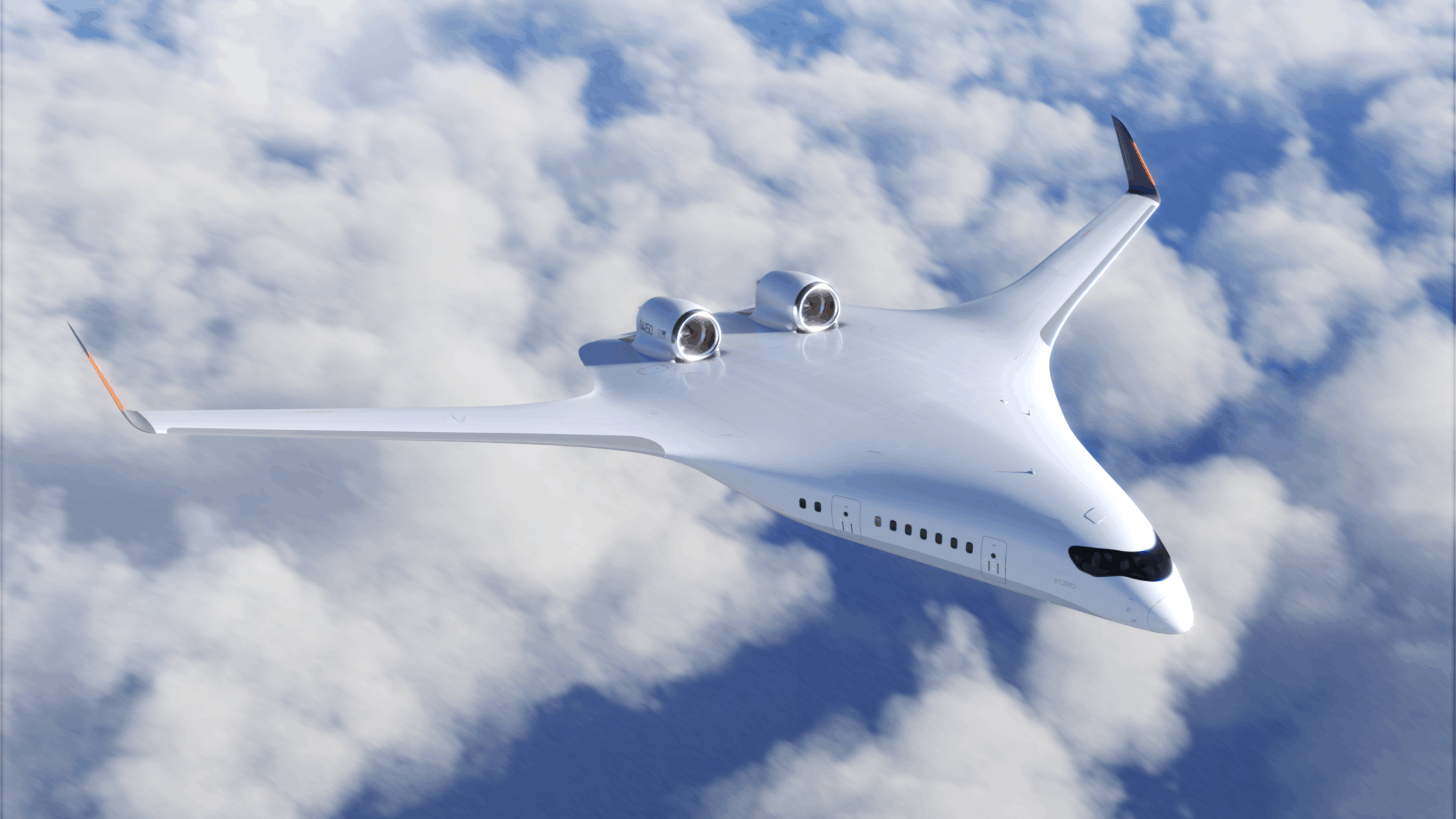
Figure 1. The JetZero Z4 BWB. Source: JetZero.
Why do the BWBs have such large wetted areas when they lack a fuselage and empennage? It’s because they lack a tailplane! Why does a lack of a tailplane force a larger BWB wing?
Bjorn’s Corner: The Blended Wing Body, BWB, Airliner. Part 1.
By Bjorn Fehrm
March 13, 2026, ©. Leeham News: The flying wing has been researched for almost 100 years. During the Second World War, the Horten Brothers developed as flying wing military aircraft in Germany with mixed success. The Northrop company then flew several flying wing prototypes after the war, finding these to have severe stability issues at higher angles of attack.
With the advent of Fly-By-Wire, this could be mastered, and the flying wing’s inherent low radar cross-section is used in the B-2 and B-21 US Air Force bombers.
A flying wing is not suitable for use as an air transport passenger aircraft, as passengers would feel as if they were being transported in a coffin within the wing. An evolution of the flying wing is the Blended Wing Body (BWB, Figure 1), which moves the center section forward to form a blended fuselage that houses the payload.
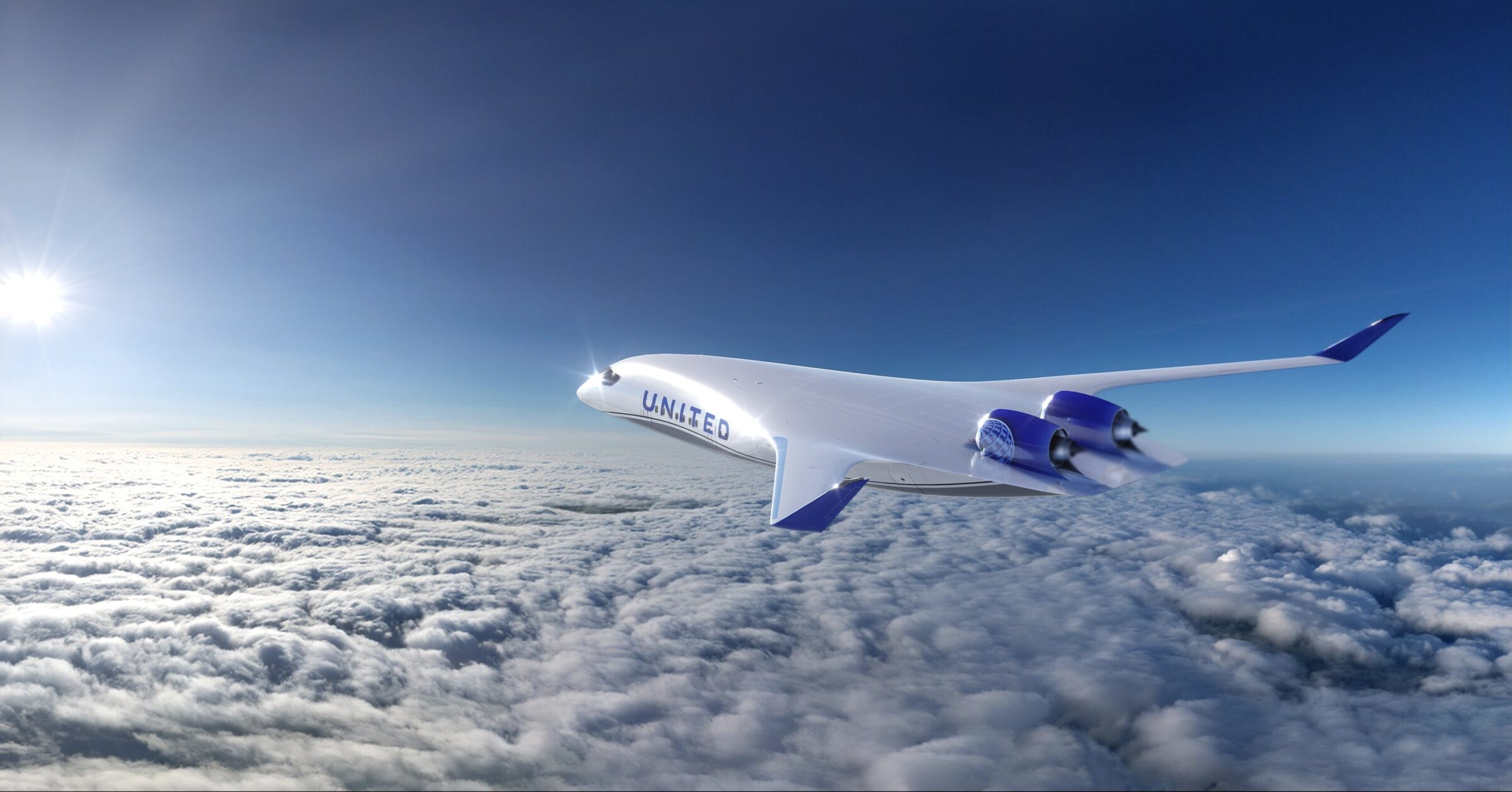
Figure 1. The JetZero Z4 BWB in United’s colors. Source: JetZero.
As the search for lower fuel consumption and emissions intensified, the search for a more efficient way to transport passengers has led to increased interest in the BWB concept since the early 1990s, primarily from NASA and the US aircraft industry.
The proliferation of composite primary structures since 2000 has helped address the structural problems of a BWB. This has created a renewed interest in BWBs, both for military and commercial applications.
Bjorn’s Corner: Faster aircraft development. Part 1.
By Bjorn Fehrm
August 1, 2025, ©. Leeham News: Four years ago I did a series about aircraft development together with Henry Tam and Andrew Telesca. Both worked on the Mitsubishi Spacejet program. You can find the series here.
It was about the arduous task of developing and producing a certified aircraft for the FAA Part 23 standard and its EASA equivalent. The idea was to better describe what’s ahead for the many upstarts that wanted to develop 9-seat and 19-seat alternative propulsion aircraft.
Now we do a series about recent ideas on how the long development times for large airliners can be shortened. New projects talk about cutting development calendar time by one-third or more. Is this realistic?
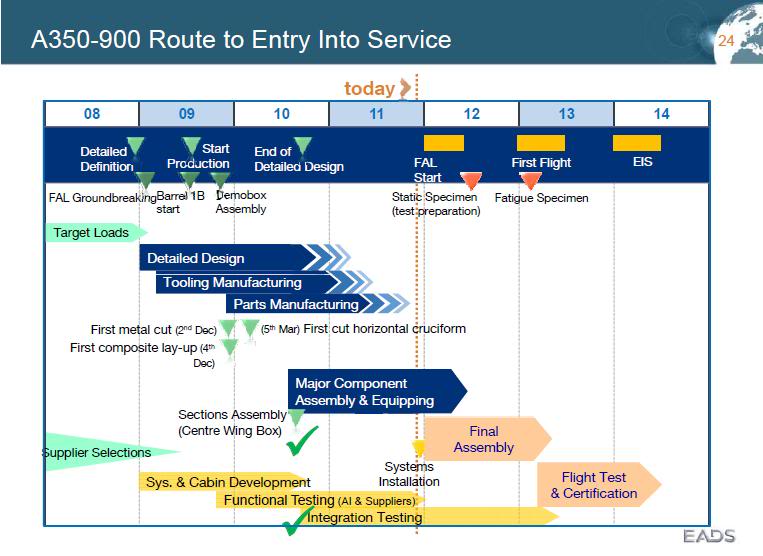
Figure 1. The A350 development schedule from December 2011. Source: Airbus.
Read more
What’s the next new aircraft? Part 3
By Scott Hamilton and Bjorn Fehrm
Subscription Required
July 24, 2025, © Leeham News: In Part 3 of our five-part series on examining the potential next generation of aircraft in the coming decades, we take a closer look at Aircraft projects 1 to 4 in our Figure 1.
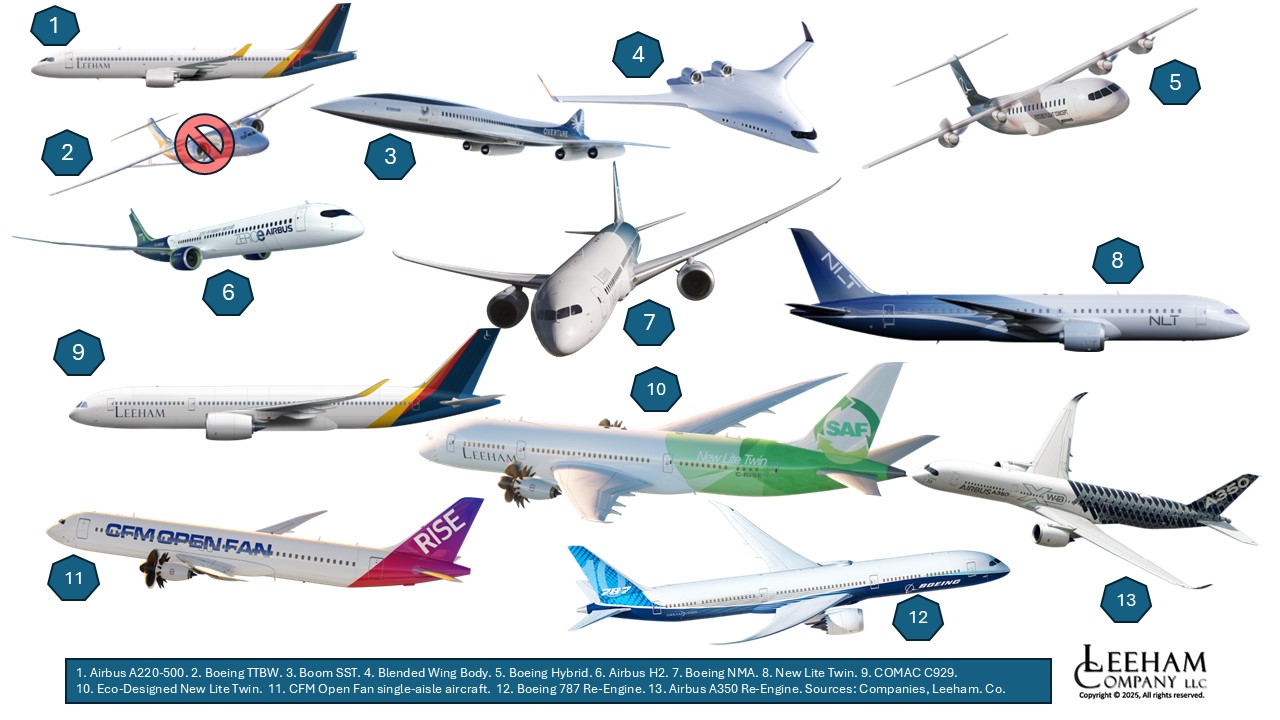
Figure 1. The 13 airliner ideas we look at in the series. Source: Leeham Co.
These are the (1) A220-500, (2) Boeing’s Transonic Truss Brace Wing (TTBW), (3) Boom’s Overture Super Sonic Transport (SST), and (4) the Blended Wing Body (BWB) aircraft suggested by leading proponent Jet Zero.
What’s the next new aircraft, Part 2
Subscription required
By Bjorn Fehrm
July 21, 2025, © Leeham News: Our series about “What’s the next new aircraft” was introduced last week, where we look at what potential new aircraft could be introduced over the following decades, and what technologies these would use.
In Part 2 of the five-part series, we introduce some basics around aircraft efficiency and examine what areas these 13 new aircraft aim to improve to enhance their efficiency.
In the following Parts, we will look into these aircraft in more detail and write about how challenging it will be to develop and mature the needed technologies.
Figure 1. The 13 new aircraft concepts that we study. Source: Leeham Co.
JetZero readies effort for private equity fund raising
Subscription Required
By Scott Hamilton
May 5, 2025, © Leeham News: JetZero, the start-up company developing commercial aviation’s first passenger Blended Wing Body (BWB) airplane, is gearing up to seek private equity funding for billions of dollars needed to bring its aircraft to market.
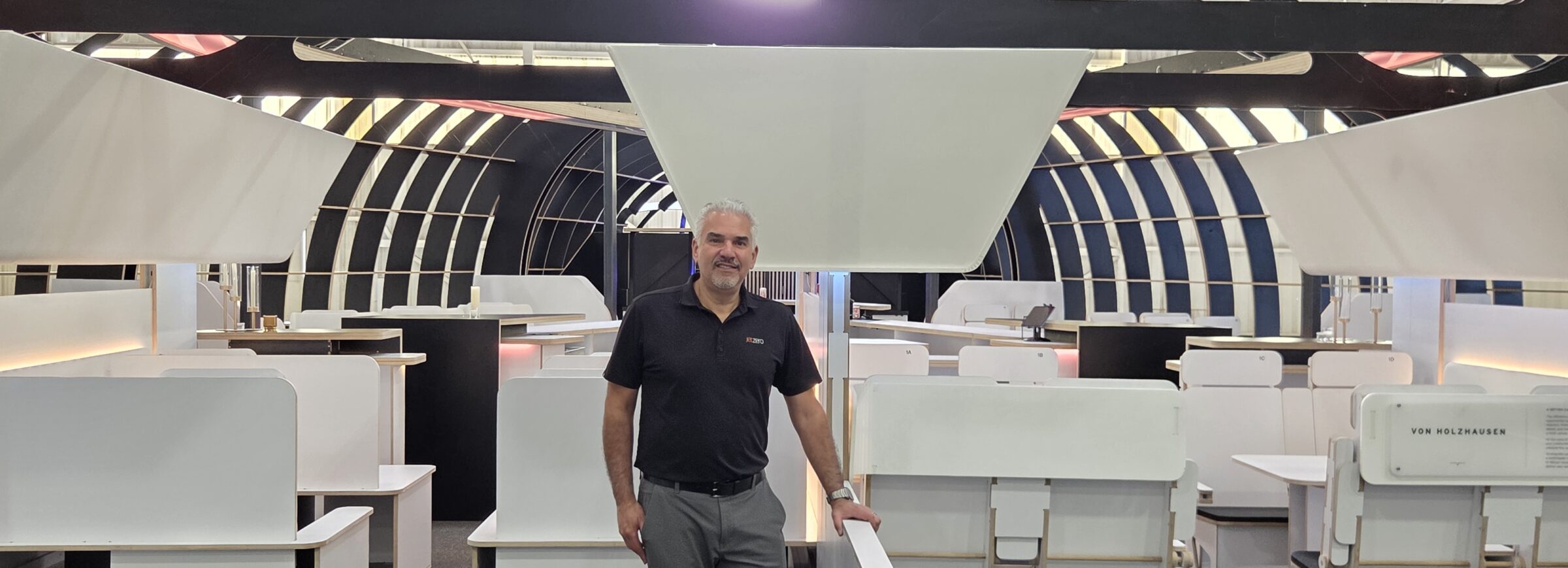
JetZero president and COO Dan da Silva demonstrates the human scale of the Z4 Blended Wing Body mock-up at the company’s Long Beach (CA) facility. Credit: Leeham News.
In a media day on Friday, executives and staff briefed reporters on progress to date, production work on the first full-size demonstrator aircraft, technical details and studies continuing an production plans.
Officials expect to announce a site selection for its final assembly plant in the coming weeks, before the Paris Air Show that begins in mid-June.
JetZero’s airliner is dubbed the Z4. It’s nominally a 250-passenger, 5,000nm design for the so-called Middle of the Market currently occupied by out-of-production and aging Boeing 767-300ERs, Airbus A330-200s and a limited number of Boeing 757s. Entry-into-service is targeted for the “early 2030s.” The first flight of the demonstrator aircraft is planned for 2027.
JetZero has an ambitious goal for producing the composite aircraft. The final assembly site, for which the company has down-selected the finalists, will be on a 1,000 acre site with a building about the size of Boeing’s widebody plant in Everett (WA). Boeing’s Everett site is somewhat larger than 1,000 acres.
JetZero is planning for a monthly production rate of 20 five years after production begins. The company has hundreds of conditional orders from major airlines.
Daunting tasks remain in the coming years. Among them: there is currently no engine commitment for the airplane; a product support system is needed; finalizing the method to product the composite airplane; “flying” the iron bird; and much more.