
Leeham News and Analysis
There's more to real news than a news release.



CFM to increase LEAP production 50% this year, GE Aerospace executives say
Subscription Required
By Bryan Corliss
March 10, 2023, © Leeham News – GE Aerospace executives said Thursday that production of LEAP engines will increase 50% this year to meet increased demand from Boeing and Airbus.
 LEAP engines, which power Airbus A320 Neos and Boeing 737 MAX jets, are produced by CFM, the joint-venture partnership between U.S.-based GE and French-based Safran.
“This is no small feat,” said GE CEO of Commercial Engines and Services Russell Stokes. He noted that the network for LEAP includes 160 external suppliers and 20 internal GE shops.
Stokes, GE CEO Larry Culp and other executives spoke at GE’s 2023 Investor Conference.
- Strong demand driving Commercial growth
- GE9X growth expected in 2025
- 70% of GE Aerospace revenues from services
- Work continues on SAF, RISE
Read more
Bjorn’s Corner: New aircraft technologies. Part 3. Airframe improvements

By Bjorn Fehrm
March 10, 2023, ©. Leeham News: Last week, we could see that the best investment in new aircraft technology would be for the replacement of the single-aisle segment, where the Airbus A320 series and Boeing 737 MAX are the players.
If we can make this segment more efficient, we will improve the economics and emissions from this aircraft class. The detailed discussion is done in a sister article, New aircraft technologies. Part 3P. This is a summary of this article.
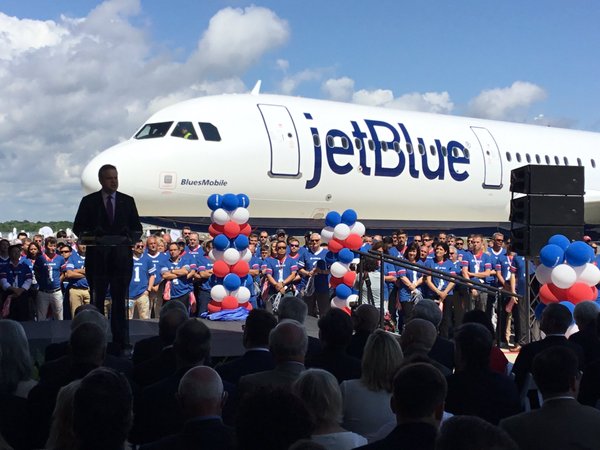
Figure 1. The Airbus A321 delivery to jetBlue, part of the aircraft segment that is up for replacement. Source: Airbus.
Bjorn’s Corner: New aircraft technologies. Part 3P. Airframe improvements
Subscription required
By Bjorn Fehrm
March 10, 2023, ©. Leeham News: This is a complementary article to New aircraft technologies. Part 3. Airframe improvements. It discusses in detail the areas of an airliner airframe where tangible improvement can be made to make it more efficient and thus lower cost combined with less Green-House-Gas (GHG) emissions.
Hydrogen flight integrator AeroTec created 3,000 parts in 12 months
Subscription Required
By Bryan Corliss
March 9, 2023 © Leeham News – AeroTec learned “a lot about hydrogen” as it prepared Universal Hydrogen’s (UH2) Dash-8-300 flying testbed for its first flight last week.

AeroTec Chief Technology Officer Dale Goulding./AeroTec photo
“Hydrogen wants to escape,” said Dale Goulding, the chief technology officer for Seattle-based AeroTec. “It’s a very small molecule that wants to get out of whatever container you put it in.”
For that reason, Universal Hydrogen’s modular capsule makes refueling easier than it would be if the companies tried to replicate the fuel-pumping process used to refuel carbon-powered aircraft, he said.
“It’s been no problem at all,” Goulding said. “Just roll them in and out. It’s real easy.”
Goulding led a team of roughly 60 AeroTec employees working out of Grant County International Airport in Moses Lake, WA., which was where Universal Hydrogen’s first flight took place on March 2. The plane took two passes over the airfield, flying with a hydrogen fuel cell powering one propeller, while a second kerosene-powered motor was on idle, in case it was needed.
The short flight was intended to “get up, get down safely, then look at all the data,” he said; taking concepts out of the lab and putting them into the sky.
- Hydrogen fuel cell, electric motor power propeller
- AeroTec hustled to create 3,000 unique parts
- Next steps are up to Universal Hydrogen
Pontifications: 30-40 MAXes potentially delayed by software issue: Jefferies

By Scott Hamilton
March 7, 2023, © Leeham News: About 30-40 Boeing 737 MAXes potentially will be delivery-delayed by the Option Section Software reconfiguration issue, the investment bank Jefferies Co. reported yesterday. Jefferies followed up on our report published Monday by Airfinance Journal and LNA.
Boeing didn’t much like our story about the new software issue delaying some deliveries of the 737 MAX. The story was joint reporting by AFJ and LNA.
“This has no impact on our [2023] delivery outlook,” a corporate communications representative emailed yesterday, specifically putting this on the record. The statement addresses a point the story didn’t raise.
“Today’s Leeham News article looks misleading in that the software issue it describes as ‘new’ has been known for over a year and isn’t expected to cause incremental delays in 737 MAX or 787 deliveries,” wrote the aerospace analyst at TD Cowen Co. “BA indicates this issue has been known for well over a year, isn’t new, was well understood at the time of their investor day and won’t cause any incremental impact to BA’s projected deliveries.”
AFJ/LNA was told by customers that the issue was discovered last Autumn, which is what we reported. One of the questions posted to Boeing included the Autumn timing. Boeing did not react to the timing outlined.
New software issue delays some 737 MAX deliveries/Update
By Scott Hamilton and Laura Mueller

Boeing 737 MAXes in long-term storage at Moses Lake (WA). About 140 MAXes ordered by China remain undelivered. Credit: Leeham News.
Update, March 9, 2023: Some readers have interpreted this story as reporting that new deliveries directly from Boeing are being delayed. The wording is somewhat ambiguous. To clarify, airplanes purchased by lessors–who have taken delivery from Boeing–are experiencing delays in delivery to their lessees due to the issues with the Boeing software reconfiguration described.
March 6, 2023, © Leeham News and Airfinance Journal: A new issue with a software program is delaying deliveries of some Boeing 737 MAXes by up to a year, joint reporting by Leeham News and Airfinance Journal learned. The Federal Aviation Administration views its use as a safety matter that must be resolved before delivery on aircraft undergoing reconfiguration. It is not a safety issue when aircraft are delivered to the originally intended operator.
The Boeing software, called Option Selection Software (OSS), is used by Boeing to identify software installed on 737 MAXes that must be reconfigured when the airplanes are going from one airline going to another. For example, if a 737 was built for Airline A and instead it will go to Airline B, reconfiguring the cockpit display and related systems may be necessary. We are told that MAXes and 787s are impacted, given their large inventories of airplanes that have been stored long enough that some original customers no longer wanted the aircraft. When sold or reconfigured for a different operator, Boeing uses the OSS to reconfigure the software and identify related parts for any changes.
This issue has not been reported previously.
First flight of Universal Hydrogen Dash 8 opens new era, company says
Subscription Required
By Scott Hamilton
March 6, 2023, © Leeham News: Universal Hydrogen (UH2) last week took off with its demonstrator aircraft for what it believes is the beginning of a new era.

The first flight of a hydrogen-powered De Havilland Dash 8-300, developed by Universal Hydrogen, occurred on March 2, 2023. Credit: Leeham News.
The Dash 8-300 took off from the Moses Lakes (WA) airport at 8:41 am on March 2 for a short flight circling the former US Air Force Base, now called Grant County International Airport. On one circle, the test pilots throttled back the Jet A-fueled Pratt & Whitney PW123 engine, flying on the No. 2 electric motor, powered by hydrogen fuel.
Thus, UH2’s Dash 8 became the second largest plane (after the Soviet-era Tu-155) to fly on hydrogen and the first to fly solely on clean energy given that the No. 1 engine was at idle.
LNA previously reported details of UH2’s airplane plans.
Related Stories
How UH2 moves forward is detailed below.
Summary
- UH2 raised $100m. Another $200m-$250m is required to bring the aircraft to market.
- UH2 has 247 orders and commitments.
- ATR-72 will be the first H2-powered airliner to enter service. The Dash 8-300 will follow.
- A fueling company, not an airplane company.
Bjorn’s Corner: New aircraft technologies. Part 2. Target markets.
March 3, 2023, ©. Leeham News: We started a series last week that will look at what environmental and air traffic economy improvements we can get with traditional aeronautical technology developments.
Before we look at technology, we must define what air transport market has the highest impact from changes. Useful technology developments are not necessarily the same for Regional, Narrowbody, or Widebody aircraft.
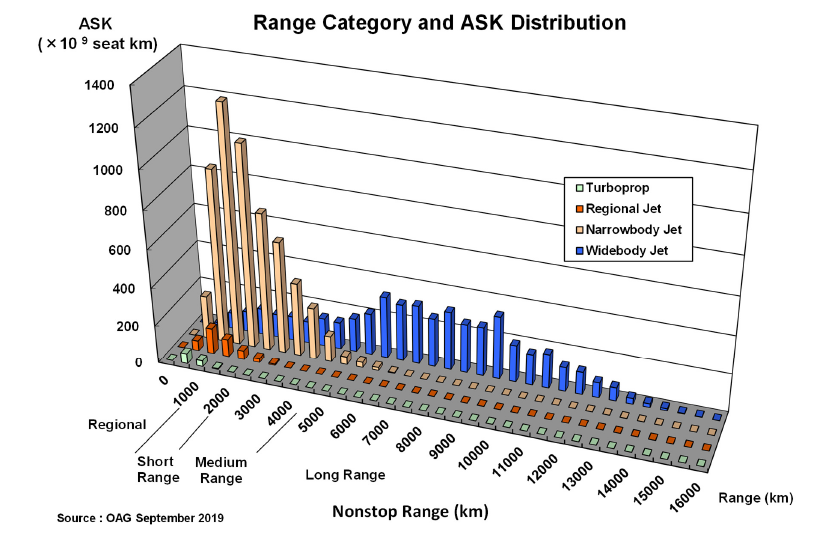
Figure 1. The distribution of Available-Seat-Kilometer by airplane type 2019. Source: JADC.
Analysis: Washington may be best state for aerospace; it needs to get better
Subscription Required
By Bryan Corliss
March 2, 2023, © Leeham News – The AeroDynamic Advisory’s latest Aerospace Competitive Economics Study is out, and while its findings were overshadowed by the comments the firm’s two managing directors made about Boeing that week, there is good data in the report that should be acted upon.

The Washington State Capitol in Olympia.
Particularly if you’re a Washington state lawmaker concerned about the long-term future of your state’s economy.
Washington remains the most-competitive state in America for manufacturing aerostructures and final assembly of aircraft, AeroDynamic determined. It finished ahead of Texas, but while Texas was ”impressive,” it was still “well behind Washington in its overall competitiveness,” the report says.
However, when you take a deeper dive into the numbers, there are some clear gaps in the Washington state game. With the state’s Legislature currently in session in Olympia, it’s our hope (as parochial residents of the Evergreen State), that somebody puts this report in front of policy makers, and that it motivates them to take action this year.
- Taxes, incentives aren’t pressing issues
- Spend more on roads and rails
- Lower building costs by spreading the cluster
- Invest more in research, education
Read more
Pontifications: Visiting AvGeek heaven
By Scott Hamilton
Feb. 28, 2023, © Leeham News: When Boeing began selling off real estate in the greater Seattle area to reduce costs during the 737 MAX grounding and the COVID pandemic, some sacred cows were among the sales.
All the buildings located in Renton on a former horse racing track known as Longacres were sold. The symbolism was painful. These buildings were the headquarters for Boeing Commercial Airplanes. Some buildings where composites were made and research was located were sold.
Buried in the downsizing disposing of the building in Bellevue, a Seattle suburb, that was the long-time home of Boeing’s archives. Documents. Engineering plans. Photos. Film and movies. Records of just about everything you can think of and lots you probably can’t.
And models. Rows and rows and rows of models. Models of every Boeing airplane ever sold. Models of concept airplanes, some really weird.

Boeing archivist Michael Lombardi holds a model of an Avenger Army truck Boeing built during a period of diversification. Credit: Leeham News.
Then there are models and records of things probably 99% of the people who follow Boeing didn’t know Boeing ever did. Boeing built and delivered mass transit rail cars. Military ground vehicles. Small naval vessels. Small passenger ferries.
Where was all this history going to go with the closure of the Bellevue location?
All the records, models, photography, etc., moved to a new and larger location at Boeing’s industrial and design complex in Auburn, a Tacoma suburb. The move was completed in January. I had the opportunity to visit this facility last week.
It is an AvGeek’s heaven.