
Leeham News and Analysis
There's more to real news than a news release.


Delta’s growth in Seattle cause ansgt among Alaska Air fans, but ALK the likely winner
Delta Air Lines is boosting its domestic service to Seattle, causing a lot of angst among Alaska Airlines fans, the hometown airline here.
Alaska (stock symbol ALK), which has about 50% of the market at Sea-Tac Airport, is a Delta code-sharing partner. Delta is overlaying a number of AS routes to Seattle, causing a bevy of news articles and wonderment about just what AS (the OAG code) had done to piss off Delta, and more to the point, if AS’s very existence will be threatened by Delta’s aggressive moves.
Delta also canceled a ground services contract with Alaska, another sign, some think, of the growing “war” between the two airlines.
Delta’s growing domestic presence in Seattle has to be taken into context with its international ambitions here. Delta is making Seattle an international hub. Once with just a few flights, all inherited from its merger with Northwest Airlines, Delta is adding trips, including re-introducing Seattle-London Heathrow, a flight NWA flew for a short period then dropped in the face of long-established service by British Airways.
Delta Air Lines International Service from Seattle
Sources: Delta Air Lines, Great Circle Mapper
Seattle has historically been a difficult international market. Routes are often very seasonal. Air France offered its own flights here from Paris for a short time before agreeing with Delta to take it over. United Airlines had London service but couldn’t sustain it. American Airlines once had Tokyo service that connected to its Miami hub for onward flights to South America, but also dropped it.
Odds and Ends: AA, US and DOJ have mediator; new C919 order; A380 break even
Movement on AA-US merger: Terry Maxon of The Dallas Morning News reports that American Airlines, US Airways and the Department of Justice have picked a mediator to sort out the DOJ’s lawsuit to block the AA-US merger. See also this Maxon report.
Maxon has a long piece, asking several pontificators (including yours truly) what they think the outcome will be.
Bloomberg reports that American CEO Tom Horton “sees a way” to a settlement but did not elaborate.
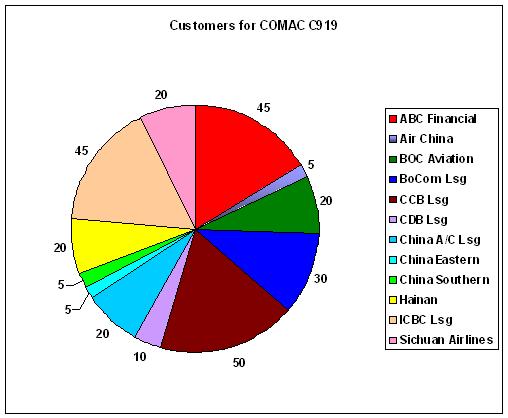 COMAC orders: COMAC says it received 20 more orders for the C919, but it once again is from a Chinese lessor, not an airline. A majority of orders for the C919 are from Chinese lessors, in stark contrast to standard practice among established lessors that they want to see a solid base (or a likely solid base) for a new aircraft type from airlines before signing up.
Although COMAC says this latest order brings the total up to 400, a data base shows only 275 so far (meaning the other 125 haven’t been converted to firm orders yet).
A380 Break Even: Airbus CEO Fabrice Bregier says hitting break even on the A380 program in 2015, which is the current plan, will be difficult if deliveries fall below the target of 30 per year. Airbus should deliver 25 this year, he said.
Odds and Ends: Supply chain demands; Southwest hints?; Retrospective on A320/737 replacements
Supply chain demands: Earlier this week, we talked about the prospect of production wars as Airbus and Boeing ramp up over the next five years, combined with the new entrants and the new offerings from Bombardier and Embraer.
We noted that this will mean opportunity and risk for the supply chain. Ryan Murphy from Salem Partners has a long analysis the starts with the finishing sector but which goes beyond this to discuss the broader implications. It makes for an interesting read.
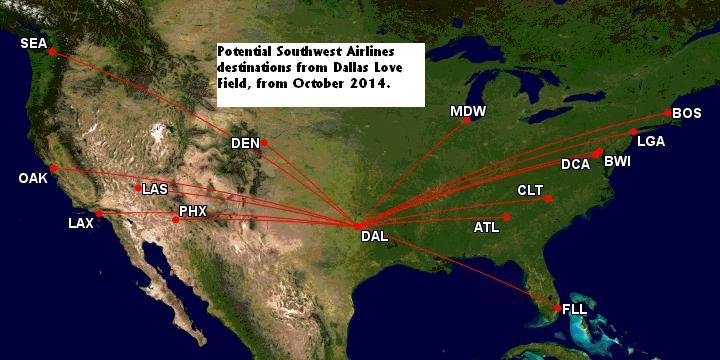
Southwest: Hints of things to come? Yesterday we wrote about Southwest Airlines and the demise of the Wright Amendment that restricts travel from Dallas Love Field. We suggested several routes that Southwest would launch from Love once the Amendment passes into history.
Here’s a display Southwest erected on its countdown to the end of the Wright Amendment. We think it hints at things to come. Going clockwise: Chicago, New York and Charlotte seem to be where the airplanes are going. Then Los Angeles and Salt Lake City seem to be implied destinations. But the last one? Boise, or some other obscure city?
Or are we reading too much into the placement of these airplanes?

Source: Dallas Morning News
Our thoughts:
Retrospective: We were looking at previous posts for some specific information and in the process re-read one about replacing the Airbus A320 and Boeing 737. The post dates from 2009. In light of subsequent events, it makes for interesting re-reading. We discuss the internal views of Airbus and Boeing about replacement or re-engining their aircraft and the engines from Pratt & Whitney and GE Aviation/CFM. We also touch on Boeing leaning toward not replacing the 777.
Retrospective, Part 2: Airchive has a nice set of historical looks at the development of the Boeing factory at Everett: Part One and Part Two.
Southwest’s forthcoming expansion will offset AA-US consolidation
Southwest Airlines has begun a one year countdown to the day the Wright Amendment will disappear.
The Amendment, named after former US House Speaker Jim Wright, restricts Southwest’s ability to fly from in-town Dallas Love Field. Originally Southwest was restricted to Texas and the immediately adjacent states. The Amendment has been modified several times. Today the carrier may fly anywhere within the US beyond the exceptions with one stop. Love Field is now restricted to 20 gates; Southwest controls all but a few of them.
.
The restrictions were put into place to protect the then-new Dallas-Ft. Worth Regional Airport, which was constructed mid-way between the two cities. All the airlines at the time served Love Field and when DFW was created, they all agreed to move to the new airport and close Love Field to airline traffic. Except Southwest, which didn’t exist at the time of the agreement but which began service from Love in the interim between the signing of the agreement and the opening of DFW. The attempts by Braniff International Airways and Trans Texas International (nee TRANS Texas) to put Southwest out of business are industry folklore.
The fear was that Southwest and Love would hurt DFW and the airlines competing from the distant airport, including American Airlines. When Southwest a few years ago launched a full-scale attack on the Wright Amendment, American led the charge to block the effort. The compromise was the gate restriction, the one-stop service and a five year phase out.
Who could have foreseen that this now could help come to the rescue of American and US Airways as they fight the US Department of Justice’s attempt to block the merger of these two carriers?
Here’s why.