
Leeham News and Analysis
There's more to real news than a news release.



Right-to-Work, Creepy and Right-to-Worse in Washington State
No column we’ve written has gotten more attention outside the blogosphere than the one in which we concluded that if Washington State is to truly become competitive with the South, it needs to become a Right-to-Work state.
Gov. Jay Inslee responded indirectly to the suggestion, via The Puget Sound Business Journal (it ain’t gonna happen). A leader of the engineer’s union for Boeing, Stan Sorscher of SPEEA, wrote an Op-Ed column in which he linked our column and in the next sentence said it was “creepy.” We exchanged emails with Sorscher, and he said he didn’t mean we are creepy—just the idea. The president of IAM 751, the local for Boeing, Tom Wroblewski, niftily called the idea Right-to-Worse. Several labor websites and newsletters reprinted the Sorscher and Wroblewski columns.
We occupy an interesting position in our role as an observer and pontificator in aerospace, and in Washington State, where we live. We’re not beholden to any company or special interest here, nor are we any longer on the Board of Directors of any trade group (thus we now can say what we really think). Our only interest is the growth of the aerospace sector here. We consulted to the state Department of Commerce for 18 months, until budget cuts in 2011, recommending strategies and policies. “Beyond Boeing” and seeking a suppliers fair with Airbus for our state’s aerospace businesses were among the recommendations we made.
We watched as the SPEEA and IAM 751 members essentially bailed out Boeing (“saved Boeing’s ass” is how we put it to the Puget Sound Business Journal) during the 787 and 747-8 design and production debacles. We watched while IAM 751 struck Boeing for 58 days in 2008 and SPEEA worked to defeat Boeing’s contract offer this year.
We’ve watched as Boeing placed 787 line 2 in South Carolina (our view is that this was retaliation for the 2008 IAM strike, which Boeing steadfastly denies—and which we don’t believe for an instant). We’ve watched as Boeing cut jobs in Information Technology and with engineers, outsourcing these to non-union states. We firmly believe Boeing Chicago is waging war on the unions, with the weaker SPEEA union firmly in its sights first.
In this totality and context, we came to the conclusion that Washington State needs to make some major revisions in its approach to labor—if it wants to be competitive with non-union states. Boeing has made it abundantly clear it will move jobs from unionized Washington State—the fourth-most unionized state in the nation, IAM 751 boasted in advance of its 2008 strike.
Unions would rather have no jobs than non-union jobs. Our basic view is that nobody should be forced to join any group in order to have a job. If a work force in any company votes to organize, fine. But anyone who wants to work should be free to work. Here in the Seattle area, unions are working against two projects valued at close to $1bn because they fear non-union jobs will be attached to the businesses or construction. We think this is just nuts. This is another reason Washington State needs to become Right-to-Work. These economic-drivers will create direct and indirect jobs (some of which will almost certainly be union, since at the least garbage collectors are unionized). To actively lobby against these projects and deny jobs to those who want them and positive economic impact for the Seattle area is simply an eye-rolling moment.
Aerospace jobs are moving out of the state because Boeing is moving them to non-union areas. This State lost attracting companies in the past because the State is the fourth most unionized state in the nation.
The IAM’s Tom Wroblewski pointed to Idaho as having lower wages because it’s non-union. We think Idaho has lower wages because…it’s Idaho. There isn’t a lot there to recommend it, really, despite some truly attractive areas. Among the detriments: it’s long been a pocket for neo-Nazis and skin-heads. (We are braced for the hate mail on this one.) And unionization isn’t a guarantee the state’s education system is going to be funded as it should be, as Wroblewski infers. Washington, the fourth most unionized state in the nation, has been underfunding education for decades. Former Boeing CEO Frank Shrontz was complaining about this in his day, in the early 1990s. Only this year, after the State Supreme Court, ordered the Legislature to more properly fund education did it step up and do so.
We acknowledge the sterling work of SPEEA and IAM 751 members—as we said, they saved Boeing’s ass—but Washington has to compete with the Southern States. Being the fourth most unionized state in the nation isn’t the way to do it.
Airbus adds to information about A330/A350 “Lite”
Airbus provided some answers to some (but not all) of our additional questions posed in our post a week ago about the A330 and A350 “Lite” versions.
We noted that Airbus had provided Direct Operating Cost (DOC) comparisons for the A330-200/300 vs the Boeing 787-8/9 but only Cash Operating Cost (COC) comparisons for the A350-900 vs the 787-10.
Airbus provided a detailed explanation, which is below.
But we also asked Airbus what are its assumptions underlying the DOC and COC conclusions. We specifically asked about the following assumptions, since they are important elements of reaching the conclusions Airbus did:
- Number of seats on the Airbus and Boeing aircraft;
- Fuel price per gallon;
- The stage length used; and
- The Capital Cost of the aircraft in lease rates.
Airbus responded with the seat assumptions for its aircraft but not for the Boeings:
- A330-200: 246 pax;
- A330-300: 300 pax;
- A350-900: 315 pax
Airbus also provided the assumed lease rates for the A330 and 787-8/9 but not the A350 nor the 787-10:
- A330-200: 800K$/mo
- A330-300: 900k$/mo
- 787-8: 1.1M$/mo
- 787-9: 1.25M$/mo
The A333 and 789 lease assumptions have been used since Airbus first revealed them at Innovation Days in 2011, and we wrote about those at the time. The A332 and 788 lease rates are new information.
“We have not included figures for the A359 vs 787-10 because Boeing’s own figures are currently sketchy,” Airbus said in excluding this data.
“I do not have any more info to give you at this time, but I have been advised that we may have more visibility around October,” an Airbus spokesman wrote in an email.
Because of the “sketchy” information on the 781, the spokesman wrote that absent 781 list prices (which Boeing has yet to publish), Airbus can’t calculate a DOC with capital cost.
“The A350-900 has 4% lower trip cost (COC) than the 787-10 (comparable per seat),” the spokesman wrote. “The A350-900, in its regional variant, has been specifically optimised to offer the same payload range characteristics as the 787-10. The design weights of both aircraft are very similar. In fact, in operation, with its slightly larger number of lower-comfort seats and additional passengers and stretched fuselage the 787-10 is actually heavier than the A350-900.”
Airbus also said that the A350-900’s wing is optimized for this design while the 781 wing is the same used on the smaller and lighter 788, “resulting in compromised aerodynamics that penalise fuel burn in such a large aircraft.”
(Of course, the same principals could be applied to the smaller A350-800 and the larger A350-1000, which use the same wing at the A359.)
“The newer engines of the A350-900 burn less fuel than those of the 787 which are still struggling to deliver a fuel burn level close their specification,” the Airbus spokesman adds. He said initial test flights of the A359 show fuel burn results at spec level, which he says is lower than the 787.
“Operating at a lower rating of 75,000 lbs (vs 84,000 for basic spec) for regional applications, the engines of the A350-900 will also benefit from significant reduction in maintenance cost compared to the 787-10 engines that will be operating very close to their maximum thrust capability that was designed for the 787-9,” the spokesman wrote.
Odds and Ends: 787 Developments on ELT, Production; Frontier as a ULCC
787 Developments: There have been a flurry of developments late Friday on the Boeing 787.
First, it emerged that Boeing’s Charleston plant will not reach a production target of three per month by the end of this year as Boeing repeatedly said. The Charleston Post & Courier first reported the story, and the Puget Sound Business Journal picked up on it Friday.
We weren’t surprised by this because (1) we’d been hearing rumblings for months that progress at Charleston was less than Boeing was suggesting publicly and (2) we got a call from the Post & Courier reporter a week ago perplexed by Boeing’s response when he made inquiries. And to us, this is the most bizarre part of the entire story. Boeing’s official response was quite snarky:
“If anyone was under the impression that Boeing South Carolina would be at three per month by the end of this year, they didn’t understand what we’ve been saying about the surge line in Everett helping us to meet the program-level rate as the facility there comes up in rate. That’s been our message for a long time now,” the Boeing Charleston spokesperson told the P&C and Everett told the Business Journal (via two different spokespersons).
This was really quite a pissy official statement from Boeing.
When the P&C presented Boeing with Boeing’s own statements from last year pledging a 3/mo production rate at Charleston, the Corporate Communications people had to backtrack. Steve Wilhelm at the Business Journal wrote:
But when confronted with Boeing’s own October 2012 release stating that the North Charleston operation would hit three monthly by the end of this year, as well as a 2012 interview with North Charleston site director Jack Jones, in which he said he expected to hit an even-higher 3.5 monthly rate by the end of this year, the Boeing communications team backed down.
After conferring with her colleagues, presumably in North Charleston, [Lori] Gunter (Boeing Everett) issued this statement:
“The 787 program is on track to reach a total production rate of 10 airplanes per month by the end of 2013. This rate will be accomplished by combining the results of the Everett Final Assembly Line, the Boeing South Carolina Final Assembly Line and the Temporary Surge Line in Everett. Boeing South Carolina is expected to reach a production rate of three airplanes per month in 2014.”
This is an embarrassing display from Boeing.
Since the surge line had been put over to rework, we wonder its current status.
Second, The Wall Street Journal, followed by The Seattle Times, reported that Canada’s regulators are about to issue an Airworthiness Directive concerning Honeywell’s Emergency Locator Transmitter; and that there was a part that should have prevent the ELT from overheating in the event of a short circuit.
Seperately:
- Frontier as a ULCC: The consultancy CAPA has an analysis of the prospect of Frontier Airlines moving even more in the direction of becoming an Ultra Low Cost Carrier than it has already.
C919 program in trouble
COMAC’s bid to develop a 150-200 passenger jet is in trouble.
According to this report, CFM doesn’t plan to proceed with an assembly line within China for the LEAP-1C that will power the C919. Concerns over intellectual property and the business case for the airplane are cited.
According to this article, GKN of Europe, which was to build the horizontal tail assembly, isn’t going to.
The airplane was supposed to enter service in 2016 and we already figured a delay of at least two years. Given the regional ARJ21 is already around seven years late, and still not certified, we think the two years is probably going to move to the right substantially.
If we’re generous and look at a 2020 EIS, this means the C919–an Airbus A320 look-alike–would enter service five years after the A320neo and three years after the Boeing 737 MAX. The airplane is also going to trail in sophistication.
Boeing officials as recently as this year still believe China will develop viable, commercially competitive airliners within the next 25-50 years. The ARJ21 program has been a disaster and it we anticipated that the C919 would be better than the ARJ21 (a low bar, to be sure), not truly competitive with the A320 and 737 but COMAC’s “makee-learn” airliner. It’s looking like this will be a disastrous program, too.
Mid-size, Twin-Aisle forecasts: the changing numbers; more Odds and Ends
MId-Size, Twin-Aisle Forecasts: The Blog by Javier has an interesting post about the changing mix in twin-aisle, mid-size aircraft from the Boeing Current Market Outlook over the years.
The author works for Airbus, but his opinions and his alone and we find his stuff quite analytical and balanced.
Ryanair and MAX: Talks between the Irish discount carrier and Boeing for a 737 MAX order may go into next year.
Boeing workers hurt by outsourcing: The government agreed with the IAM 751, Boeing’s local Seattle union, that workers laid off by the company have been hurt by outsourcing.
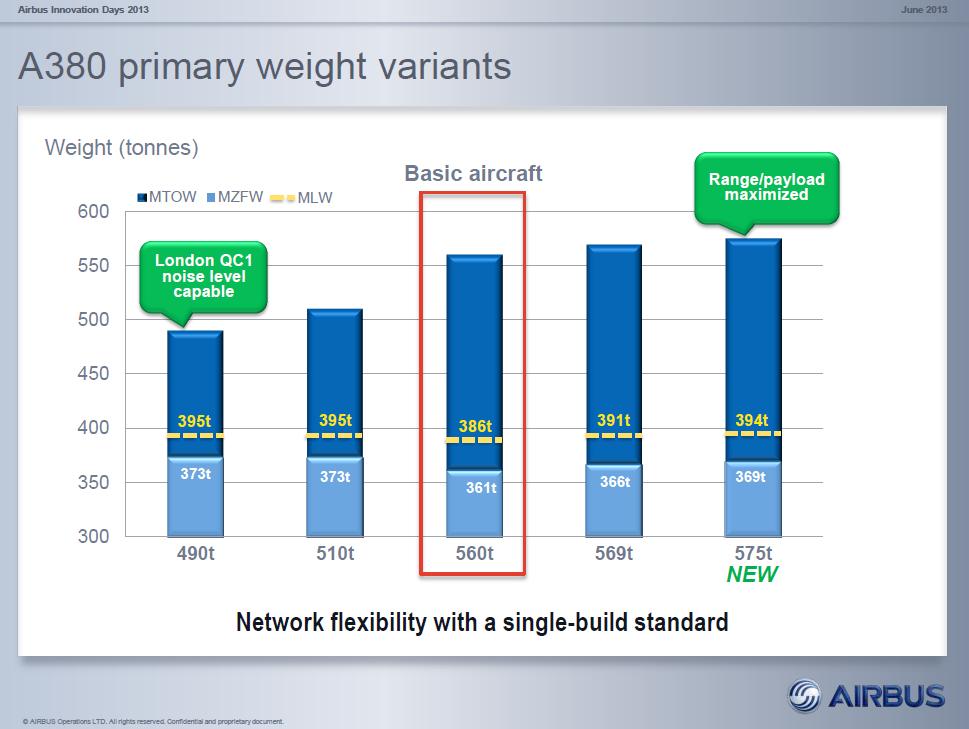
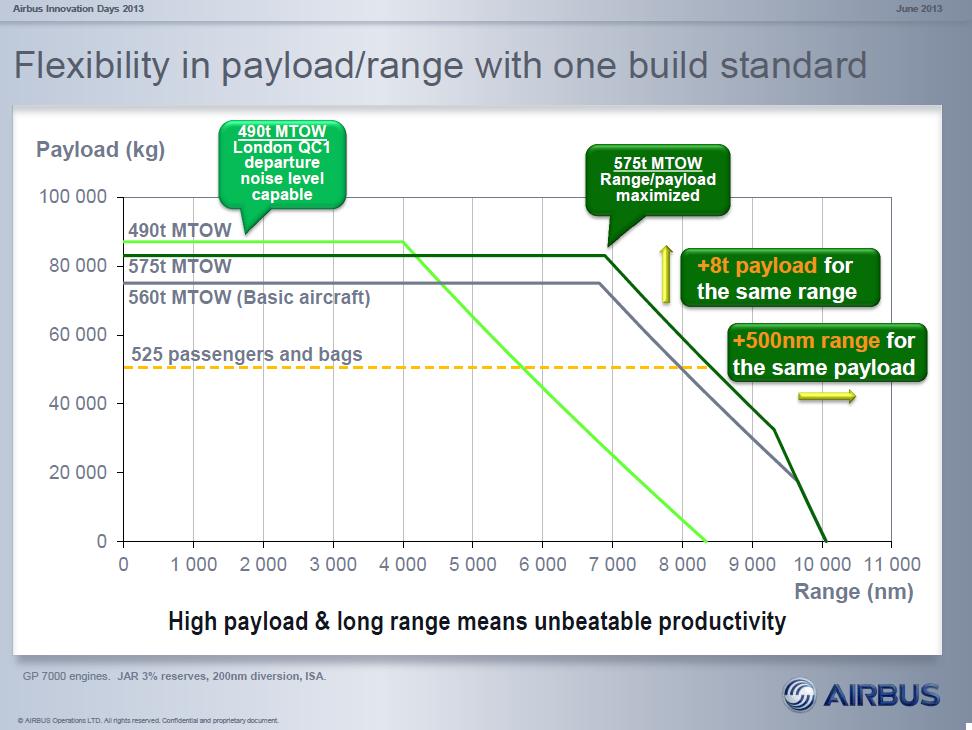
A380 has “Lite” versions, too
The announcement by Airbus that it will offer Lite versions of the A330 and A350 families caused a much larger stir than we would have thought.
As we previously noted, Boeing will offer a Lite version of the 777-8, and this news was greeted with a yawn.
Airbus offers the A380 in Lite versions. So we still are perplexed about all the questions raised by some, and the high-profile media attention, the A330/350 announcement garnered.
.
Dropping EADS for Airbus Group
The move to drop the acronym EADS for Airbus Group is being made out by some media to be a major step that better positions Airbus to compete with Boeing. This is a stretch.
The name change simply reflects reality: Airbus is the dominate member of the company. It also does away with the acronym, which many people mispronounced as “eeeds” rather than how it was supposed to be said (E-A-D-S, like I-B-M) that reflects an awkward name, European Aeronautic Defense and Space, a name so awkward it doesn’t readily appear on the EADS website.
A name change has really been thought about for years. On one trip to Toulouse, in 2009, we had a discussion then with Airbus personnel and the topic came up. We favored the Airbus name for the enterprise then–not that our opinion had anything to do with the action four years later :-).
More significant is the continued direction by CEO Tom Enders to move away from the government influence that first was instrumental in the growth of the enterprise but then became an albatross with jobs and prestige programs trumping business decisions (think A400M engine, the A380 [the product of 747 envy] and assembly locations). The volatile topic of government subsidies, necessary in the beginning and conceptually little different than the early days of US defense and commercial aviation, evolved into “reimbursable launch aid” that is unnecessary for a company like Airbus and which remains a target of international controversy when politics arise.
We welcome the change and the continued evolution of Airbus into a true commercial enterprise. Tom Enders will leave a legacy that will make him one of the most significant figures in global aerospace.
Meantime, EADS today announced its first half financial results.
Odds and Ends: Fixing Ethiopian’s 787; Pricing the 777X; Indigo and Frontier Air
Fixing Ethiopian’s 787: The New York Times has a good article on the challenges of fixing Ethiopian Airlines’ Boeing 787.
Pricing the 777X: The Wall Street Journal has an article about Boeing’s challenge of pricing the 777X. It’s via Google News, so it should be available to all Readers.
Indigo and Frontier Airlines: Sounds to us like Indigo is gearing up to be Frontier Airlines’ new owner.
Spirit Airlines Announces Sale of Common Stock by Indigo
MIRAMAR, Fla., July 29, 2013 (GLOBE NEWSWIRE) — Spirit Airlines, Inc. (Nasdaq:SAVE) announced today the public offering of 12,070,920 shares of common stock by certain existing stockholders affiliated with Indigo Partners LLC (“Indigo”). Upon completion of the offering, investment funds affiliated with Indigo will no longer own shares of common stock of Spirit Airlines. The company will not receive any proceeds from this offering. Barclays is acting as the sole underwriter for the offering.
The shares of common stock are being offered pursuant to the Company’s existing shelf registration statement filed with the Securities and Exchange Commission (the “SEC”) on July 31, 2012. A final prospectus supplement describing the terms of the offering will be filed with the SEC and, when available, may be obtained from the SEC’s website at www.sec.gov or from Barclays Capital Inc., c/o Broadridge Financial Solutions, 1155 Long Island Avenue, Edgewood, NY, 11717, Telephone (888) 603-5847 or by e-mailing Barclaysprospectus@broadridge.com.
In connection with the offering, the Company also announced that Messrs. William A. Franke and John R. Wilson have informed the Company that upon completion of the offering, they expect to resign as directors at the next board meeting, presently scheduled for August 7, 2013. Upon Mr. Franke’s resignation, the Company’s board intends to elect Mr. H. McIntyre Gardner, a director since 2010, as Chairman of the Board.
This press release shall not constitute an offer to sell or the solicitation of an offer to buy, nor shall there be any sale of these securities in any state or jurisdiction in which such offer, solicitation or sale would be unlawful prior to registration or qualification under the securities laws of any such state or jurisdiction.