
Leeham News and Analysis
There's more to real news than a news release.



Airbus’ profitability challenges
Subscription Required
By Vincent Valery
Introduction
Feb. 10, 2020, © Leeham News: Airbus Commercial Aircraft ended 2019 with a surprisingly strong 1,131 new aircraft orders (768 net orders) and a backlog of 7,482 aircraft.
There were 863 aircraft deliveries, 8% higher than in 2018
But 2019 also sees settlement of a year-year probe into bribes and corruption of Airbus commercial airplane sales dating back years. A record fine of €3.6bn will be recorded against 2019 earnings. These results will be announced on Feb. 13.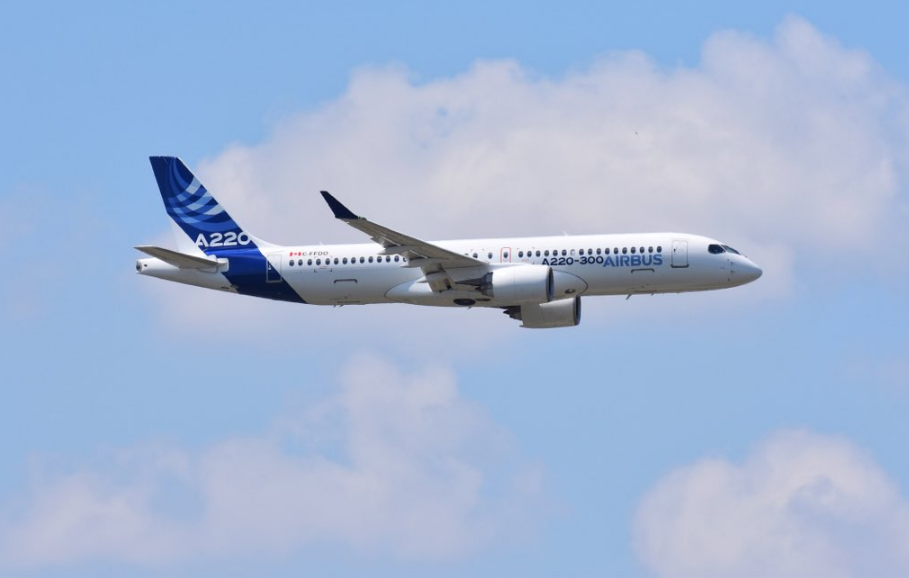
Settling the probe lets Airbus off the hook from criminal prosecution, providing its skirts remain clean for the next three years.
But prosecution against individuals may proceed. The potential targets have not been identified.
Summary
- The poster child of European integration;
- Profitability lagging commercial success;
- Decades-old programs still causing headaches;
- Making up for early A220 program losses;
- Short and long-term challenges.
Pontifications: A few rays of sunshine emerge in MAX crisis
Feb. 10, 2020, © Leeham News: The was plenty of angst among suppliers last week at the annual Pacific Northwest Aerospace Alliance conference.

By Scott Hamilton
Worries about the production shutdown, its duration and lack of communication from Boeing prevailed.
But there were in fact rays of sunshine beginning to break through the dark clouds of the last year.
Some suppliers—not many—reported that they’ve been told to begin shipping parts and components as early as March 1.
This gives hope that production will resume in April.
To be sure, the good news is mixed with a lot of bad news for suppliers. Some laid off workers and more layoffs are yet to come.
1 of 2 trade secret lawsuits settled; plaintiff attorneys seek withdrawal in Boeing case
By Scott Hamilton
Feb. 07, 2020, © Leeham News: A trade secret theft lawsuit against the giant insurance company Xavian Holdings involving an insurance funding program for Boeing airplanes was settled last month under undisclosed terms.
Marsh and Boeing were sued in 2018 by Xavian, which claimed it created the plan and undertook all the research for a concept that it presented to Boeing under a trade secret/non-disclosure agreement.
The Boeing lawsuit is pending.
Replacing ExIm funding
The concept was intended to replace funding previously provided by the US ExIm Bank. Congress refused to renew the bank’s authority to fund deals of the size required for Boeing airplanes.
Boeing initially declined Xavian’s overtures when it looked like ExIm would be reauthorized. When Congress failed to do so, Boeing contacted Xavian to renew  conversations, the lawsuits claimed.
Robert Morin of the US ExIm Bank, who was aware of Xavian’s efforts, later went to work for Marsh, taking with him information obtained under the Xavian plan, Xavian claimed—hence the lawsuit against Marsh.
In court documents in New York, the federal court in the Southern District ordered mediation. Documents reveal a settlement was reached, but terms were not disclosed. Court approval of the settlement is pending.
Bjorn’s Corner: Why e in ePlane shall stand for environment, Part 8. Hydrogen.
February 7, 2020, ©. Leeham News: After discussing established ways of improving the environmental footprint of our air transport system and highlighting the challenges involved with an electric/hybrid route we now look at hydrogen as an alternative energy source.
We will quote from a study series made by Airbus at the turn of the century. It’s today 20 years old but its ideas and conclusions are more relevant than ever.

Figure 1. Hydrogen powered airliner from Airbus study. Source: Airbus study presentation.
Boeing will proceed with NMA. Or FSA. Take a poll
By Scott Hamilton
Feb. 6, 2020, © Leeham News: Boeing will decide to proceed with the launch of the New Midmarket Aircraft (NMA).
Or it won’t and instead launch a single-aisle replacement for the 737 MAX that essentially  reinvents the long-gone 757.
These are the two popular options discussed yesterday at the annual conference of the Pacific Northwest Aerospace Alliance in Lynnwood (WA).
Aerospace analyst Ken Herbert of Canaccord Genuity believes Boeing will launch the NMA.
Analyst Rob Epstein of Bank of America Merrill Lynch believes Boeing will go with the Future Small Airplane (FSA), a fresh design that is similar in size to the 757-200 and 757-300.
Consultants Kevin Michaels of Aerodynamic Advisory and Michel Merluzeau of AIR voted for the NMA. Consultant Richard Aboulafia of The Teal Group voted for the FSA.
Could Airbus’ A220 fly Air Canada’s Montreal to Toulouse route?
By Bjorn Fehrm
Subscription Required
Introduction
February 6, 2020, © Leeham News: Air Canada announced in August 2019 it will start a five weekly route between Montreal and Toulouse from the 4th of June. It connects two growing, French-speaking cities with strong aeronautical clusters. The route will also connect Airbus headquarters and production in Toulouse with its new A220 aircraft development and production center in Mirabel outside Montreal.
Air Canada announced it will fly the route with its 292 seat Airbus A330-300 but the question has been raised “Could route be served with the smaller A220, then with an increased frequency”? We use our airliner performance model to find out.

Summary:
- Montreal to Toulouse is on the range limit for an A220, especially when flying the return route against winter winds.
- We look at different means to increase the range of the A220 to make the route possible without fueling stops when going West.
Consultant to Boeing: cut dividends, invest in new airplane
By Scott Hamilton
Feb. 5, 2020, © Leeham News: Boeing is headed for a 30% market share unless it invests in a new airplane, and soon.
This is what aviation consultant Richard Aboulafia of The Teal Group predicted today at the annual conference of the Pacific Northwest Aerospace Alliance in Lynnwood (WA).
Aboulafia, who has been following Boeing for 30 years, implored the new CEO, David Calhoun, to redirect billions of dollars in shareholder dividends toward research and development instead.
Calhoun recently suspended 2 ½ year focus on the New Midmarket Aircraft to conduct a clean-sheet review of the next new airplane.
This has been widely interpreted as a move to kill the NMA. In reality, LNA understands, this is more about reassessing the market and what the airplane should ultimately be.
“Who’s going to fail?”
By Scott Hamilton
Feb. 5, 2020, © Leeham News: “Who’s going to fail?”
This is a key question on the sidelines of the annual Pacific Northwest Aerospace Alliance conference in Lynnwood (WA).
The question, of course, related to the small- and medium-sized suppliers caught up in the grounding of the Boeing 737 MAX.
Boeing 737 production rate boost to 57/mo delayed by four years
- Plan called for 737 rate to go to 57/mo YE 2019.
- This rate won’t be achieved until 2023.
- Rate reduction considered for 777.
By Scott Hamilton
Feb. 5, 2020, © Leeham News, Lynnwood (WA): Suppliers attending the annual conference of the Pacific Northwest Aerospace Alliance say they gained some clarity from Boeing last week about future production plans for the 737 MAX.
But they still face a multi-year challenge that puts strain on everyone.
Boeing’s plans to return to the pre-grounding production rate of 52/mo will take until 2022. Plans to boost the rate won’t be fulfilled until 2023—four years later than planned.
Assessing airlines’ widebody replacement needs
Subscription Required
By Vincent Valery
Introduction
Feb. 3, 2020, © Leeham News: As part of the 777X maiden flight, Boeing briefed the media on its demand forecast for the large widebody market. The OEM sees a demand to replace between 60 and 100 aircraft annually in that market segment until 2030.
Last week we estimated the number of narrowbody aircraft where airlines still need to place a replacement order. We now perform a similar analysis for the widebody market.
OEMs are struggling to cope with the insatiable demand for latest-generation narrowbody aircraft. However, the situation is different in the widebody market. After significant orders and deliveries during most of the last decade, demand is sharply slowing now.
After announcing a 787 Dreamliner production rate cut last year from 14 to 12 per month, Boeing acknowledged it is expecting a further cut to 10 per month from early 2021. The company expects to return to rate 12 in 2023.

Photo by Scott Hamilton
Airbus hasn’t announced any reduction in its A330neo or A350 production rates yet but acknowledged demand softness.
Both OEMs point to the significant widebody replacement needs that will arise later in the decade. We will analyze whether their hope for better days is justified.
We will also partially address why Boeing decided to go back to the drawing board on new aircraft design.
Summary
- At face value, numerous widebody aircraft to replace;
- Materially different customer mix from narrowbody aircraft;
- Varying demand, depending on aircraft size;
- Boeing forecast for the large widebody market;
- And a change of mind on the NMA;
- Replacement needs timelines.