
Leeham News and Analysis
There's more to real news than a news release.



Embraer 3rd Quarter 2022 results; E-Jet deliveries backloaded
By Bjorn Fehrm
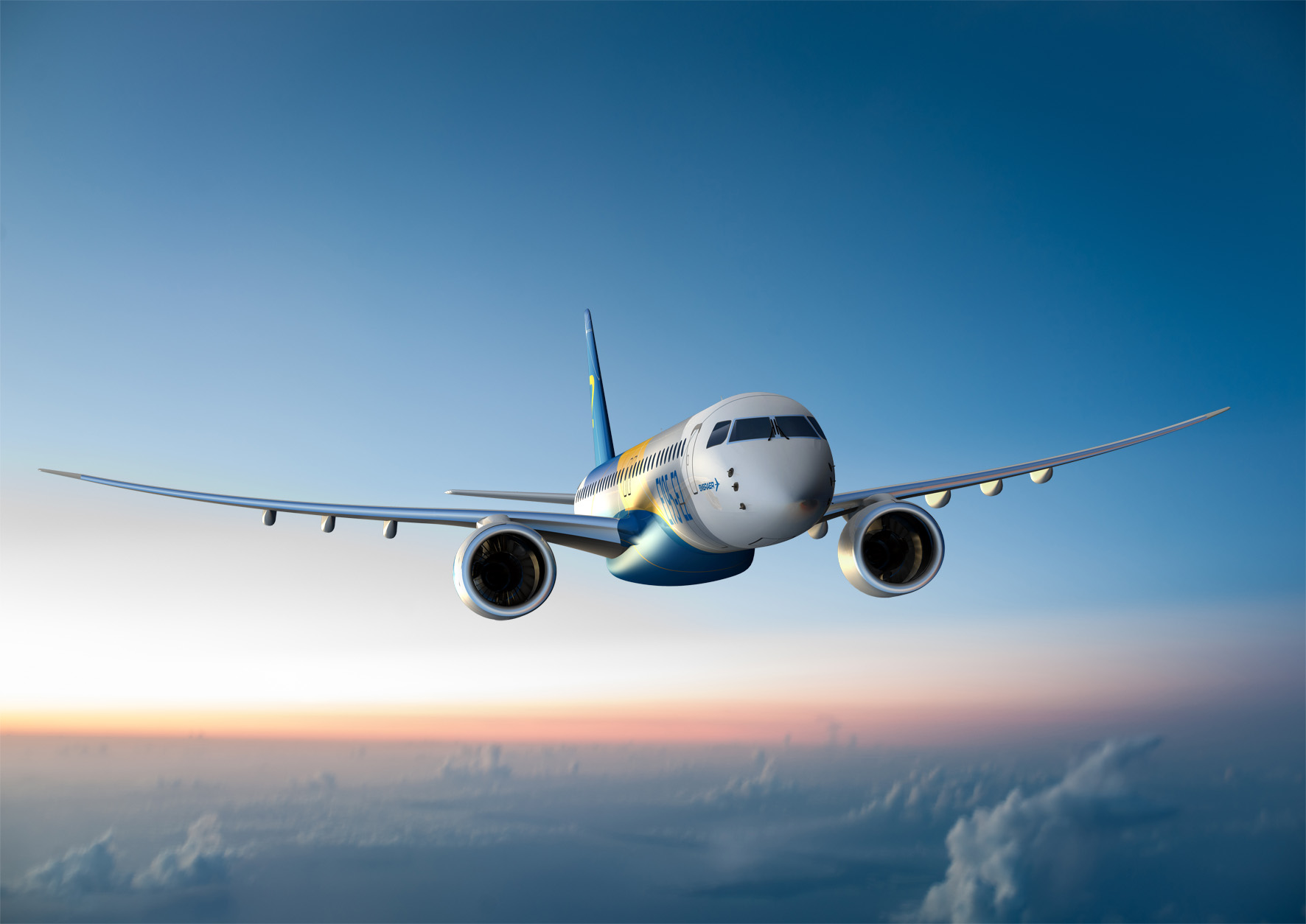
November 14, 2022, ©. Leeham News: Embraer presented its 3Q2022 results today. Commercial aircraft deliveries stayed low, with only one E195-E2 delivered in the quarter, together with nine E175s. In total, 27 E-jets have been delivered from a guidance of 60-70.
Revenue for the group was down 3% compared with 3Q2021, mainly due to Defense & Security revenue declining $75m ($102m vs. $177m). Group net profit was -$30m (-$45m 3Q2021).
Group sales were flat as Porter and SalamAir orders for E195-E2s balanced a Republic Airways reduction of E175 orders with 31 units. The company retained the 2022 guidance with an increase in Free Cash Flow from $50m to $150m or better.
With Boeing’s decision against new airplanes, Airbus will stand down, too
Subscription Required
By Scott Hamilton

Kiran Rao. Credit: Airborne Capital.
Nov. 14, 2022, © Leeham News: Boeing’s decision to suspend the launch of any new airplane until the middle of the next decade means innovation of any kind from any company is largely dead for the next decade.
Airbus won’t launch a new airplane either, now that Boeing has stood down, says its former chief strategic officer, Kiran Rao. Rao is now an advisor to airlines and lessors. He had been with Airbus for 25 years in sales and product strategy.
While Boeing’s decision to suspend new airplane development casts a dark cloud over its strategic future, Airbus now is going to rest on its own status quo, Rao said.
Summary
- Airbus engineers will atrophy.
- Boeing was “one step away from checkmate” against Airbus in 2005-2006 and made a big mistake not taking up the opportunity.
- GE and Safran don’t want to innovate. Pratt & Whitney can’t do much beyond today.
- Boeing should have launched the NMA. It would have beaten the A321XLR.
- The NMA would have created a new market.
Pontifications: Takeaways from the Boeing Investors Day
Nov. 14, 2022, © Leeham News: Here are some takeaways from last week’s Boeing Investors Day.
New “Airplanes”
By Scott Hamilton
When CEO David Calhoun said there won’t be any new airplane this decade, much of the industry went into shock. Consultant Richard Aboulafia, writing in Forbes, said the decision threatens Boeing’s future in commercial aviation. He’s previously predicted delaying a new airplane program launch will see Boeing descend to about a 30% market share.
Kiran Rao, the former chief product strategist for Airbus and now an advisor to airlines and lessors, told LNA that Boeing is now headed to a market share between 20% and 30%.
In the wake of Calhoun’s announcement, some wondered when Boeing would “launch” a new airplane. Would this be in the last part of this decade, with entry into service in the mid-2030 decade? Or did Calhoun mean a program launch next decade?
A Boeing spokesman provided this transcription to clarify:
“And then there’ll be a moment in time where we’ll pull a rabbit out of the hat and introduce a new airplane sometime in the middle of next decade,” Calhoun said. (Emphasis added.)
A normal program launch-to-EIS is about seven years. One could conclude, then, that the program launch could come around 2027 or 2028 if EIS is 2035. (Boeing wants to shrink the timeline to five years from launch to EIS.) CFM is working on an Open Fan engine design for the single-aisle sector (ie, replacing the 737 MAX and A320neo). The EIS target for the engine is 2035. So, Calhoun’s statement seems to fit with his desire for a step-change engine.
Intriguing, to say the least.
Bjorn’s Corner: Sustainable Air Transport. Part 45. eVTOL, how green?

By Bjorn Fehrm
November 11, 2022, ©. Leeham News: We have spent some 50 articles going through the new air transport category, eVTOL, or electrically propelled Vertical TakeOff and Landing vehicles.
They promise to replace the helicopter for local air transport above congested cities and highways.
The question is now: How do eVTOLs fit in sustainable air transport? Are they a green way of starting a flight journey, and how does it compare to alternative transports?
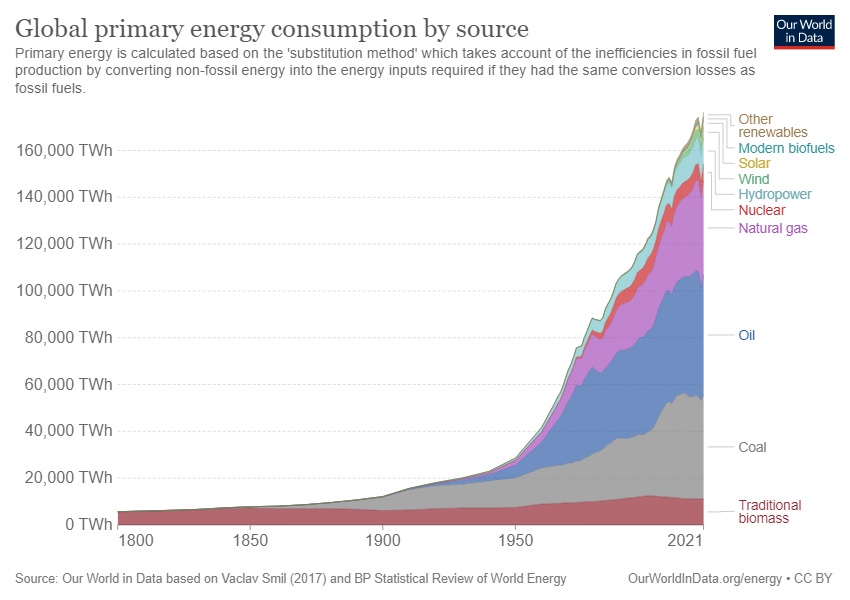
Figure 1. The World’s energy consumption and sources. Source: World in Data and BP.
HOTR: Eviation claims “almost” 300 orders worth more than $2bn; Boeing vs Airbus
By the Leeham News Team
 Nov. 10, 2022, © Leeham News: Eviation, the developer of the all-electric airplane Alice, today added another 20 commitments to its tally for the aircraft. The latest is from Australia’s Northern Territory Air Services. The commitments are in a Letter of Intent.
A short time before this latest commitment, Eviation issued a press release stating it had “almost” 300 orders (not “commitments and orders”).
“Our order book passing the US$ 2 billion mark is a significant commercial milestone,” said Gregory Davis, President and CEO of Eviation.
“With almost 300 aircraft now on order, the Alice is receiving strong customer endorsement,” Eviation VP Eddie Jaisaree said.
The press release is a little ambiguous on figures: “almost” 300 airplanes and “passing $2bn.”
Using 300 and $2bn for the math, this means the airplanes are $6.67m each. That’s $741k per seat. This compares with $506k per seat for a 787-9 (296 seats, $150m true sales price) and $309k per seat for a 737-9 (178 seats, $50m true sales price). The ATR-42, with 48 seats and a sales price as low as $12m, is $250,000 per seat.
The capital cost of the Alice is awfully pricey and makes the economics challenging, not even counting the maintenance costs of replacing the batteries after a short period of time.
When asked about these facts, Eviation’s PR firm provided this response from the company.
“Our cost is competitive with aircraft in the same class as Alice, and customers will see significant cost savings in operating and maintenance costs. For example, Alice will reduce operating costs by two-thirds when compared to traditional aircraft.”
LNA’s Bjorn Fehrm has analyzed the operating cost of electric, hybrid, and hydrogen-powered aircraft in a series of articles. His conclusions are that these methods are a lot more costly than promoted.
The A350 enhancements, Part 3
Subscription Required
By Vincent Valery
Introduction
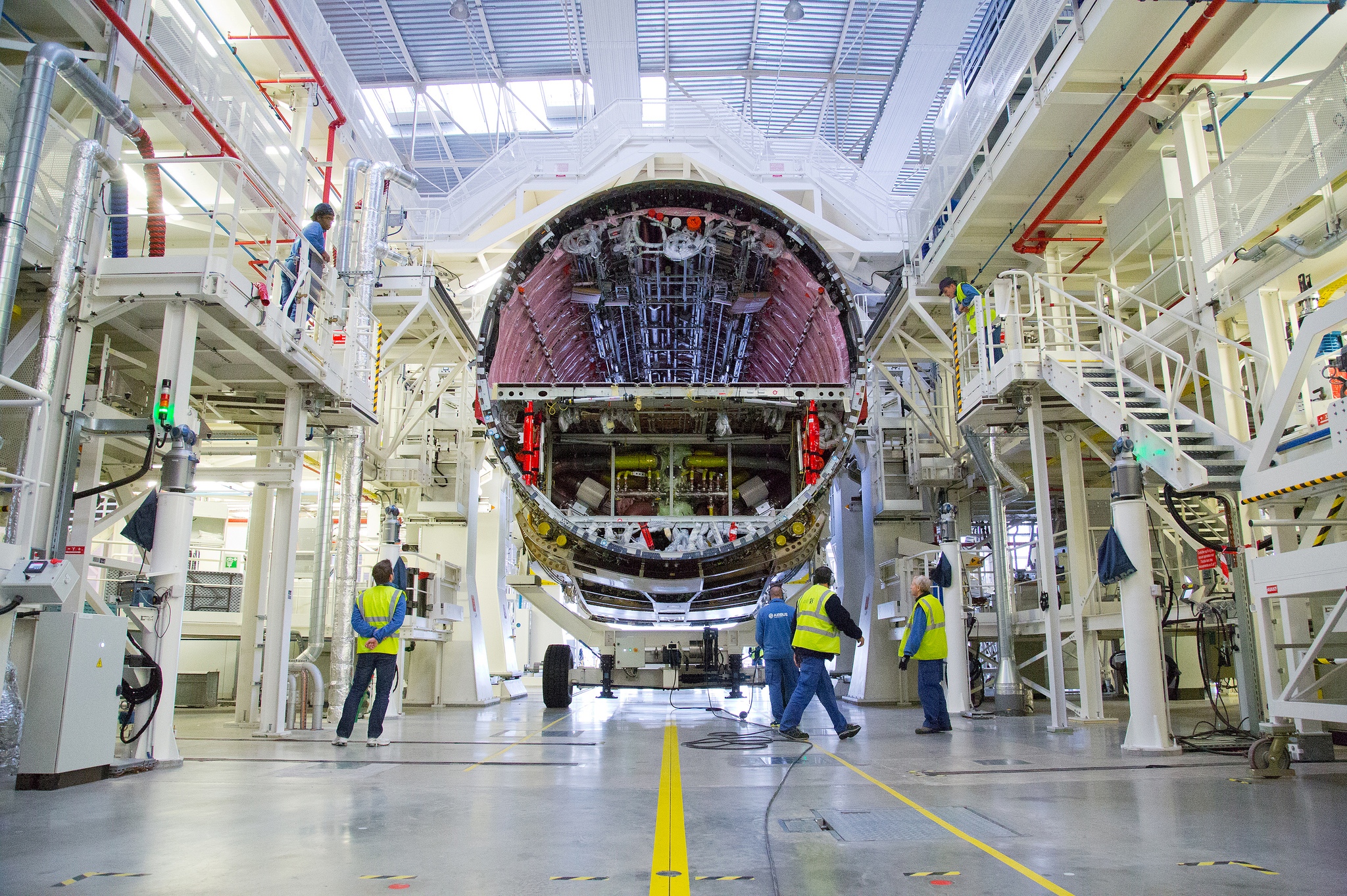
A350 Fuselage, Credit: Airbus
Nov. 10, 2022, © Leeham News: Last week, we saw the impact of the New Production Standard (NPS) on the Airbus A350-900’s economic performance against the Boeing 787-10. While using a ten-abreast economy class cabin configuration negatively impacted passenger comfort, it significantly improved the relative competitiveness of the A350-900.
We now turn our attention to the larger variant that will benefit from the NPS, the A350-1000, and compare it against its closest competitor, the 777-9.
Summary
- Future major large-twin sales campaigns;
- Comparing aircraft cabins;
- The extra seat changes the economic pecking order;
- It is not all about unit costs.
New air cargo operators to drive freighter demand, Boeing says
By Bryan Corliss
Nov. 9, 2022, © Leeham News: The Boeing Co. projects the world’s air cargo fleet will grow by 80% in the next 20 years, as new operators rush to meet demand caused by a global boom in e-commerce.
This will translate into orders for nearly 2,800 new and converted freighters by 2041, said Darren Hulst, Boeing’s vice president of commercial marketing.
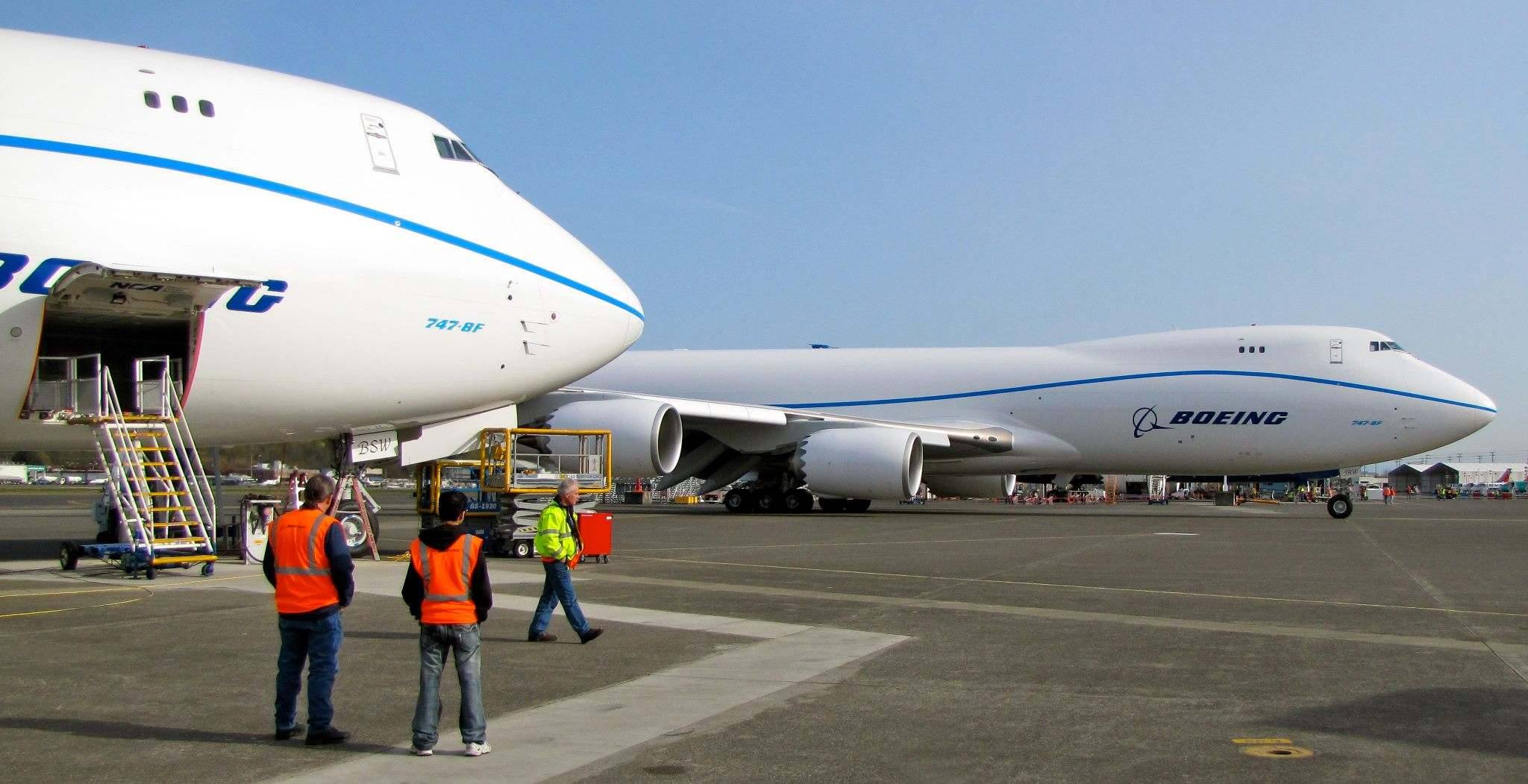
Boeing 747-8F jets at Boeing Field, Seattle, during initial flight testing in 2011. Bryan Corliss photo.
As many as 40 new companies are getting into the air cargo market, ranging from start-ups to traditional shippers diversifying into the air cargo market, Hulst said.
“Cargo has been, relatively, the bright spot in aviation since the beginning of the pandemic,” he said during a briefing with reporters prior to today’s International Air Cargo Association forum in Miami..
SUMMARY
- Cargo market hanging on to most pandemic gains
- Demand strong for dedicated cargo jets
- Boeing doesn’t see need to replace 747-8F until ‘mid-century’
Read more
Excluding China in Boeing forecast recognizes trade, geopolitical realities
Subscription Required
By Scott Hamilton
Nov. 8, 2022, © Leeham News: Boeing CEO David Calhoun last week said Boeing’s future through at least 2025/2026 doesn’t include assuming China is part of its equations.
It’s a good thing. Relations between the US and China are heading south. The Pentagon last week outlined an extremely pessimistic outlook pointing to future military conflict with China. The Biden Administration not only didn’t reverse tariffs imposed in 2017 by the Trump Administration, but in some respects, Biden upped the game.
Related Article
Boeing started remarketing 737 MAXes ordered by China. It also began taking engines off those airplanes to put onto new production aircraft. Boeing—and others—don’t see China taking any new deliveries from China in the next two or three years or placing orders with Boeing.
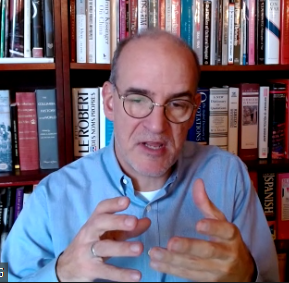
Michael McAdoo of Boston Consulting Group. Credit: Leeham News.
Trade publication Airfinance Journal reported Oct. 31 that nearly one in five leased aircraft owned by Chinese lessors are being offered for sale to non-Chinese interests. LNA previously reported that Chinese lessors were being allowed to accept a small number of MAXes providing they were leased outside China.
A trade expert for Boston Consulting Group outlined how he sees relations between China, the US and Europe in an Oct. 26 interview with LNA.
Summary
- China considers the US to be the enemy, one well-placed observer notes.
- The US, EU see China differently.
- Airbus has a window of opportunity.
How Boeing can pursue new airplane sooner than 2030 decade
Subscription Required
By Scott Hamilton
Nov. 7, 2022, © Leeham News: Boeing is methodically working through the full return of the 737 MAX to service, a process that will continue to early 2025 to clear the stored inventory. There were 270 stored MAXes at the end of the third quarter, Sept. 30.
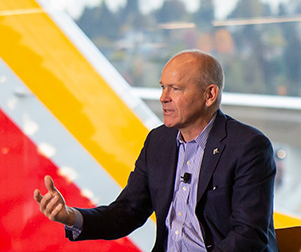
David Calhoun. Source: Boeing.
Delivering 115 787s that were built but stored during a pause of nearly 20 months from October 2020 will also take two years to complete.
Ramping up production of each line is a slow, arduous process. The 737 line was shut down in December 2019. The line now is geared to produce 31 737s a month, though meeting this target has been erratic.
The 787 line in Everett was shut down permanently and the Charleston (SC) line was reduced to just half an airplane per month. It will be a couple of years before production returns to 5/mo, the level at the start of the pandemic and reduced when deliveries were suspended.
CEO David Calhoun said stability and reliability are keys to Boeing’s recovery from the MAX and pandemic crises that sapped finances and all but destroyed a once-sterling credibility.
Calhoun also said he has no plans to launch an airplane program to fill a gap in the product line—a reference to Boeing’s weak position vis-à-vis the Airbus A321neo. Rather, he wants to launch a game-changing airplane that at a minimum is 20% more efficient than today’s aircraft. He believes engines coming off today’s technology will only host a 10% gain.
He added that Boeing won’t launch a new airplane program until the next decade because a new engine won’t be ready until then. He made his remarks at the first investors day since 2018. Three weeks before that, Boeing hosted a meeting with advisors, consultants, and opinion makers.
Pontifications: Boeing is fighting the last war instead of the present one
By Scott Hamilton
Nov. 7, 2022, © Leeham News: With the firm declaration that Boeing won’t launch a new airplane program until the next decade, CEO David Calhoun is signaling he’s content to see the company shrivel into a distant number two position after Airbus.
Amazingly, one Boeing executive told one of the attendees of the investors day event that he (the executive) was okay with that for now.
It’s a recipe for Boeing to follow the path of McDonnell Douglas Corp. (MDC) in its long decline into commercial oblivion. MDC merged into Boeing in 1997. Boeing hasn’t been the same since. Its legacy as an engineering company shifted into one focused on shareholder value. McDonnell Douglas had become a company where Derivatives-R-Us prevailed. Boeing long ago shifted to this mode as well.
Calhoun is a creature of Jack Welch’s GE mantra. Cut costs. Emphasize profits and shareholder value. And while Welch’s philosophy that GE should always be No. 1 or No. 2 in any industrial sector it played in, Welch’s vision of No. 2 was a close No. 2. Boeing’s decline into a distant No. 2, with only a 40% market share against Airbus (and less when looking only at the total single-aisle sector) began long before Calhoun became CEO in January 2020.

David Calhoun. Source: Boeing.
Calhoun told his audience of investors and aerospace analysts that he’d like nothing more than to return cash to shareholders. Knowing who your audience is is part of any speaker’s requirement, so in isolation, I’m not going to chop Calhoun up for this statement. The trick is to balance shareholder return against the future of the company.
As I’ve written in the past, returning 100% of free cash flow to shareholders isn’t necessary. Before suspending the dividends and stock buybacks after the MAX grounding, Boeing returned more than $62bn to shareholders over a decade. Using part of this for new airplanes would have been a good approach.
Calhoun declared that even if all the advanced design and manufacturing is ready this decade, he won’t support a new airplane until the next decade when a new engine that can reduce fuel consumption by at least 20% is ready. Any new airplane must hit this target to benefit airlines and the environment, he said.
Well, there are other ways to hit this target. LNA discusses this behind today’s paywall.
In the meantime, Boeing is content to rest on the past.