
Leeham News and Analysis
There's more to real news than a news release.



Achieving net zero carbon is a promise you can keep: P&W’s Webb
Subscription Required
By Scott Hamilton
Sept. 26, 2022, © Leeham News: The International Civil Aviation Organization (ICAO) is nearing the next step in support of dramatically cutting emissions by airlines and the aviation industry.

Graham Webb
“ICAO has been working for about the last three years on something called a long-term aspirational goal (L-TAG). That’s regarding a study that was conducted by a number of their scientists to determine if it is feasible for the aviation industry to reduce its carbon emissions specifically, to achieve a net zero standard. That’s what for a long-term aspirational goal is,” said Graham Webb, Chief Sustainability Officer for Pratt & Whitney. “At this point, the study has been completed and has been reviewed by 93 member states. It would appear that the initial motion of the language that is going to be put forward will pass.”
ICAO previously adopted the Carbon Offsetting and Reduction Scheme for International Aviation (CORSIA). L-TAG is the next step, Webb said in an interview this month with LNA.
“Once that is in place, it will enable ICAO, much as it already is done with CORSIA, to establish policies that would then be enforced by all its member states in a common, in a related way as opposed to the concern that many people have had, where you would see a patchwork. You would see some countries, such as the United States, providing incentives through vendors’ tax credits. You would see Europe in the form of mandates and taxes. They have this Emissions Trading Scheme that they’ve been putting forward and running through the Parliament. The overall objective is to have this singular global aviation industry, regulatory body, ICAO, that would then set the guidelines for the industry.”
Pontifications: Single-pilot jetliners OK for cargo, not yet for passenger airplanes
By Scott Hamilton
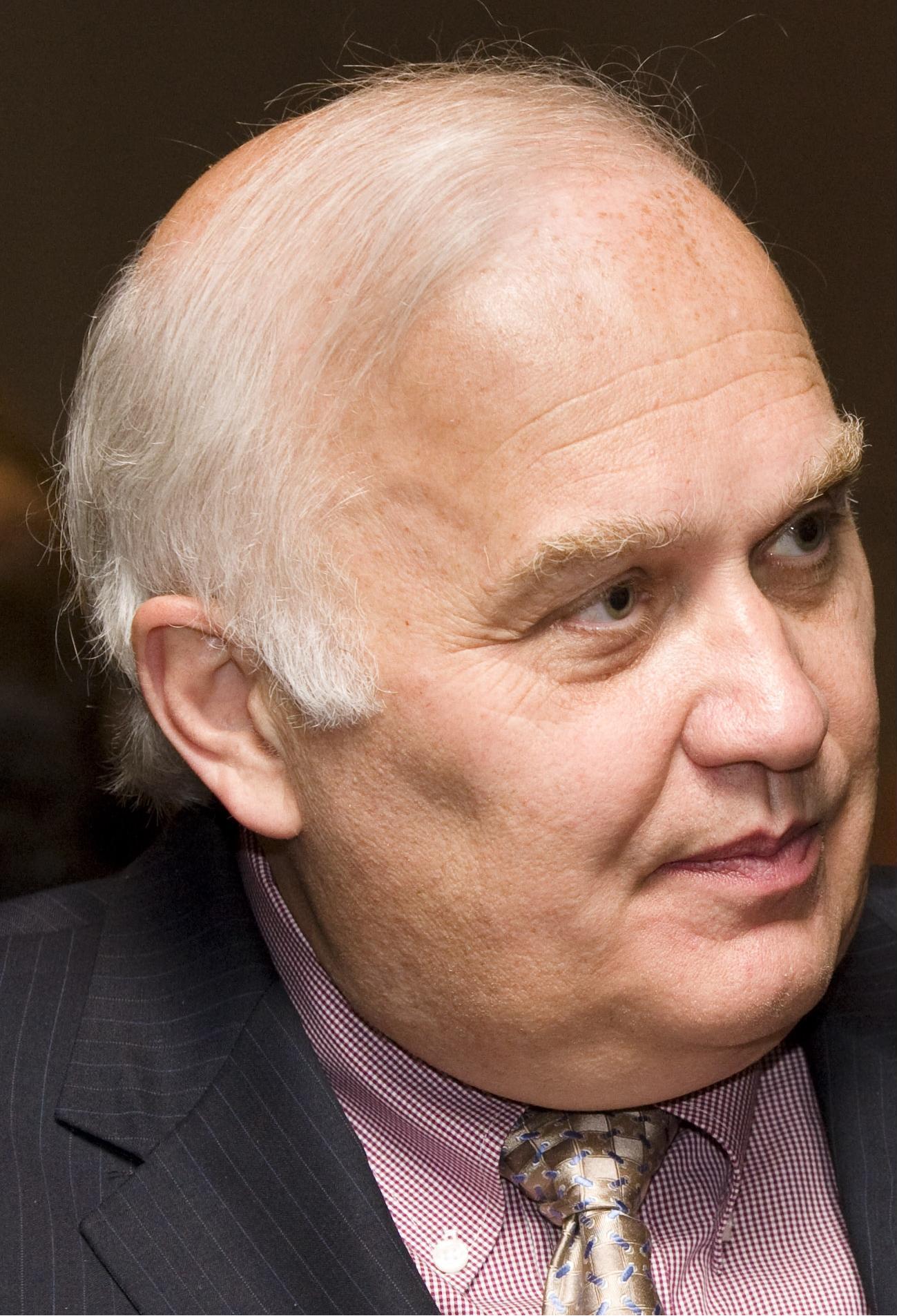
Sept. 26, 2022, © Leeham News: I sat down with Fred Smith, the founder and now executive chairman of FedEx, on Sept. 15 at the US Chamber of Commerce Aerospace Summit. The first article appears here.
The balance of the interview covered a wide range of topics. I’ll summarize them below.
Bjorn’s Corner: Sustainable Air Transport. Part 38. Piloting the VTOL

By Bjorn Fehrm
September 23, 2022, ©. Leeham News: Last week, we looked into the hardware needed for the Flight Control System (FCS) of the eVTOLs in development.
We could see the redundancy of the FCS had to be extensive as the tricky hover to forward flight transition demanded a full-time Fly By Wire concept with no direct mode backup.
Yet the FCS hardware demands are not the main problem of a safe eVTOL FCS. The pilot interaction is. Not because it’s tricky. Because every project does it their way.

Figure 1. Pilot flying the Joby S4 simulator. Source: Joby Aviation.
Read more
Engine Development. Part 6. High Bypass goes mainstream
Subscription Required
By Bjorn Fehrm
Introduction
September 22, 2022, © Leeham News: With the introduction of the High Bypass engine for the Boeing 747, Douglas DC-10, and Lockheed Tristar, it was obvious Pratt & Whitney’s low bypass engines on the Boeing 707, 727, 737, and Douglas DC-8, -9 should be attacked with a new High Bypass engine in this thrust class.
French Snecma and GE teamed up to break Pratt & Whitney’s monopoly of the jet engine market outside the widebodies. The CFM56 was born.
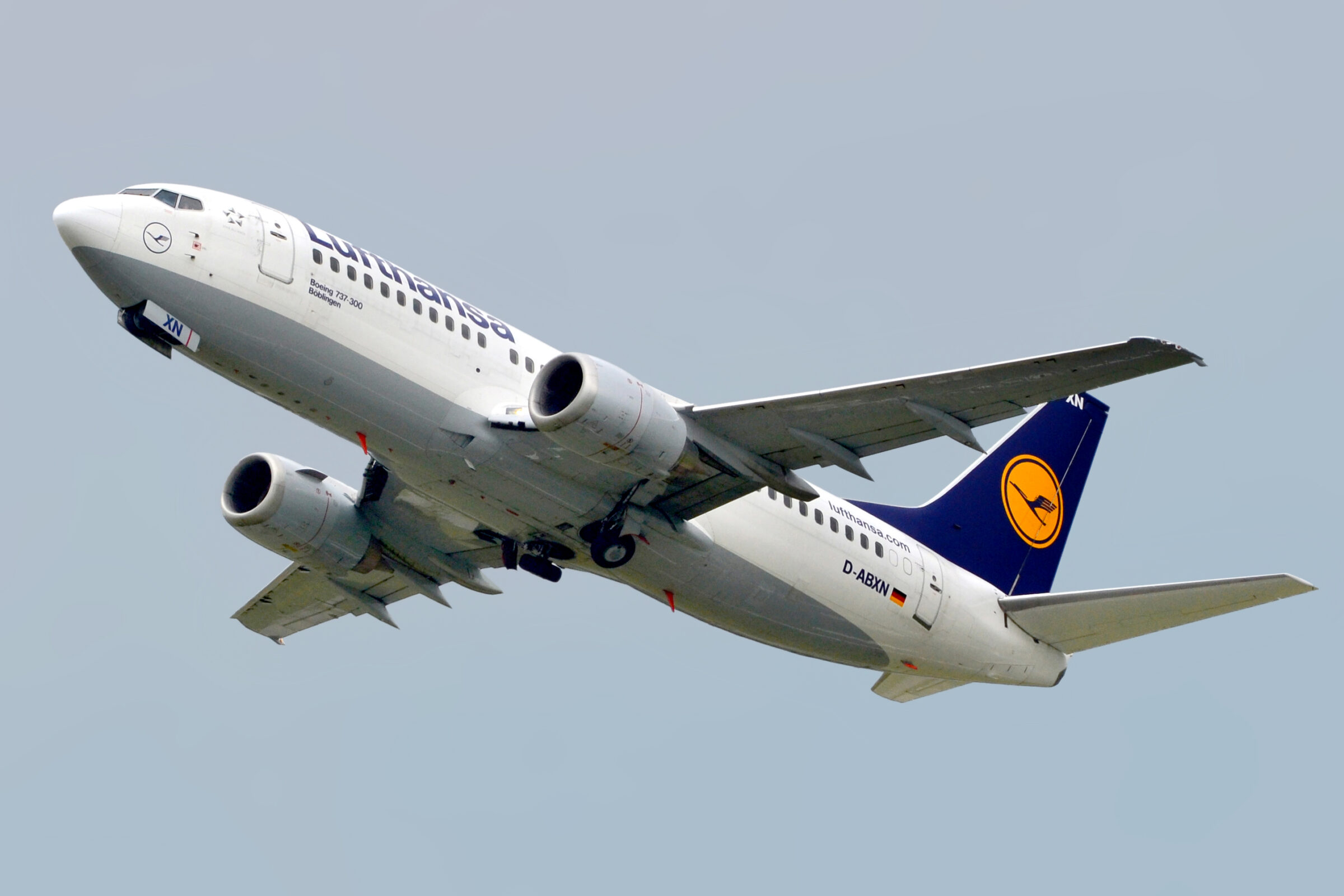
Figure 1. The Boeing 737-300, the breakthrough for the CFM56 engine. Source; Wikipedia.
Summary
- With an exclusive fit on the Boeing 737 and a 10-year introduction advantage on the A320, the CFM56 has dominated over the competing IAE V2500.
- The CFM56 is the world’s most produced jet engine, with over 32,000 engines produced to date.
Boeing shows FedEx concepts for 787F and NMA-F
By Scott Hamilton

Concept of a Boeing 787F. Illustration is for the 787-8, but Boeing also is studying 787-9 option. Credit: Leeham News.
Sept. 20, 2022, © Leeham News: FedEx last week withdrew its previous financial guidance for the year on a revised analysis. Now, the company says, revenues will be about $500m less for air operations and about $300m less for ground operations.
The flagging global economy and higher costs are blamed. As a result, FedEx will be parking an unspecified number of airplanes and implementing cost savings initiatives.
But at the same time, the company is evaluating new aircraft freighters and potentially acquiring and converting used Boeing 777-300ERs to freighters.

Fred Smith, executive chairman of FedEx. Credit: FedEx.
In an interview on Sept. 15, the same day the financial forecasts were revised, Fred Smith told LNA that the airline is evaluating the 777-300ER aftermarket conversions and new airplanes offered by Airbus and Boeing.
The Boeing concepts include the proposed 787F and a freighter version of the New Midmarket Airplane (NMA). LNA revealed months ago that Boeing was studying both of these aircraft. Boeing already launched the 777-8F, another option for FedEx. Airbus has offered the A350F to FedEx. Smith said he’d like to see Airbus launch a new-build freighter version of the A321neo.
Related Articles
- ICAO standards are the death knell for the 777F and 767F
- Boeing vows to maintain freighter dominance
- Jump in R&D spending points to new Boeing airplane
- Boeing ponders 787F
The Airbus and Boeing market outlooks, Part 2
Subscription Required
By Vincent Valery
Introduction

Credit: Leeham Company LLC
Sept. 19, 2022, © Leeham News: In the first article last week, we focused on the differences in market outlook assumptions between Airbus and Boeing. Despite similar levels of passenger single-aisle and twin-aisle deliveries envisioned over the next two decades, there were significant differences in the underlying assumptions.
We now focus on whether there is enough production capacity to meet the envisioned aircraft demand over the next two decades.
Summary
- Outlining the delivery forecast assumptions;
- Converting deliveries into production rates;
- Estimating production capacity;
- Is Boeing implying something?
Pontifications: No engines, billions shy, devastating enviro analysis, Boom’s CEO still exudes optimism
By Scott Hamilton
Sept. 20, 2022, © Leeham News: Blake Scholl, the founder and CEO of Boom, the start-up company, continued to paint an optimistic picture about the Overture Supersonic Transport.
He told the US Chamber of Commerce Aerospace Summit last week that the Overture, a Mach 1.7 88-passenger aircraft concept, will revolutionize international air travel.
But Boom has big challenges ahead—not the least of which is that there is no engine manufacturer so far that has stepped up to provide an engine. The Big Three—GE Aviation, Pratt & Whitney, and Rolls-Royce—have either outright rejected participation or other priorities exist.
Plethora of Challenges
- Rolls says publicly it won’t pursue an engine for Boom. GE told LNA it’s not interested in developing an engine for Boom. P&W is focused on advances for its GTF, developing sustainable technology and military engines.
- The International Civil Aviation Organization (ICAO) in July issued a report on the environment that eviscerated SSTs and the SAF concept outlined for Boom. The report included analysis from the International Council on Clean Transportation (ICCT).
- Scholl claims a market demand for thousands of SSTs but Boom’s 2013 study by Boyd International forecast a market demand over the life of the program of 1,318 Overtures. Some thought this figure was generous.
- Boyd’s report also concludes Boom needs a Mach 2.2 airplane to be commercially viable. Scholl reduced the speed to 1.7. This means that in some cases, airline crews can’t do a round trip from the US to Europe without a relief crew, which upsets some of the economics.
- If Boom were a publicly traded company, all the orders would fall under the ASC 606 accounting rule that questions the viability of those orders.
- Scholl told AIN Online Boom needs $6bn to $8bn to come to market and so far, it has raised $600m.
- And we don’t get into the certification and regulatory hurdles. Among them: In his presentation to the Chamber, Scholl said there are 600 potential SST markets. He included some inland in the US, where there is a ban on SSTs flying over land.
HOTR: MAX 7 and 10 certification; ecoAviation and the missing life cycles
By the Leeham News Team
Sept. 18, 2022, © Leeham News: LNA last week attended the US Chamber of Commerce’s Aerospace Summit in Washington (DC). We’ll have a  series of full reports in the coming weeks. Here are things picked up on the sidelines.
Boeing
- The Federal Aviation Administration remains “pissed” at Boeing.
- Boeing CEO David Calhoun said certification of the 737 MAX 10 could come this year, but it might not. He expects certification of the MAX 7 to come this year.
- Separately, LNA is told that the MAX 10 probably won’t be certified until next summer, and certification of the MAX 7 could come as early as next month.
- Calhoun said that Boeing is now pausing the 737 production line when parts don’t come in from suppliers. Doing so prevents traveled work. “We’re going to stay here until these lines move. Steadily, steadily, steadily when we’re not getting defects and we’re not getting shortages.”
- Calhoun said the stored airplanes aren’t facing shortages. But getting them delivered is a matter of going through the “conformance” steps. “They sat for a couple of years. There were a lot of deferred actions that were incorporated into the new certification. Every one of those actions must be taken on these return-to-service airplanes. It requires almost as many hours to do that as it did to build one in the first place.”
- Boeing is probably going to be frozen out of China for one-two years, principally in retaliation for the visits by House Speaker Nancy Pelosi and a Congressional committee as well as defense product sales to Taiwan.
Bjorn’s Corner: Sustainable Air Transport. Part 37. VTOL Flight Control.
By Bjorn Fehrm.
September 16, 2022, ©. Leeham News: We discussed one of the critical systems for an eVTOL over the last weeks, the battery system, its cells, and its management system.
Another critical system for a VTOL is its Flight Control System (the FCS).

Figure 1. The Honeywell UAM FBW (Fly By Wire) triple channel computer. Source: Honeywell.
Boeing remarketing stored 737s ordered by China
By Scott Hamilton
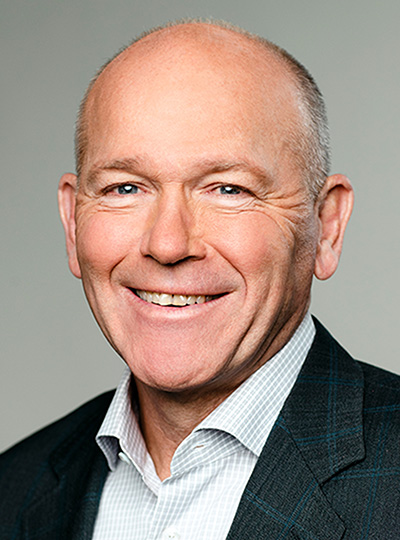
David Calhoun
Sept. 15, 2022, © Leeham News: The indefinite delay in China authorizing Boeing to deliver 737 MAXes to airlines led Boeing to slowly remarket more than that are 100 stored.
CEO David Calhoun said today that Boeing can no longer wait for China’s OK with the large inventory of aircraft that went into storage when the MAX was grounded in March 2019. Boeing continued building the MAX on the assumption that the grounding would be a short one. When by the end of 2019, there was no end in sight for recertification, production was halted with 450 MAXes built but stored. About 140 of these were destined for Chinese airlines and lessors. Lessors have been allowed to accept some deliveries as long as the airplanes were delivered to customers outside China, LNA previously reported.