
Leeham News and Analysis
There's more to real news than a news release.



Pontifications: Total life cycle impacts missing from nearly all ecoAviation discussion
By Scott Hamilton
Oct. 10, 2022, © Leeham News: Batteries are the best thing for the new generation of clean airplanes. Or so say those promoting the concept.
However, few talk about the total life cycle of the concepts, whether eVTOL, hybrid-battery aircraft or pure battery airplanes.
And there’s the rub. Batteries may be clean in operation. But they are far from being a panacea for life-cycle clean aviation.
Some acknowledge that the power source for charging batteries could be an eco-issue. Others acknowledge that recycling batteries is an issue. A few acknowledge that today’s batteries don’t last very long—they must be replaced every 1,000 to 2,000 flights, depending on usage and other factors.
But so far, the real skunk at the lawn party is the fact that mining lithium, a key chemical for long-lasting batteries, is strip-mining, one of the most environmentally damaging methods of extracting anything from the earth.
Bjorn’s Corner: Sustainable Air Transport. Part 40. VTOL mission.

By Bjorn Fehrm.
October 7, 2022, ©. Leeham News: Last week, we discussed the reality of mass fractions for certified aircraft. There is an abundance of statistics on projects that have gone through the arduous development and certification phase, which always turns out heavier than projected.
Using such statistics, we have a base from which to fly a typical hover and cruise eVTOL design and see what we get in terms of energy consumption and range.
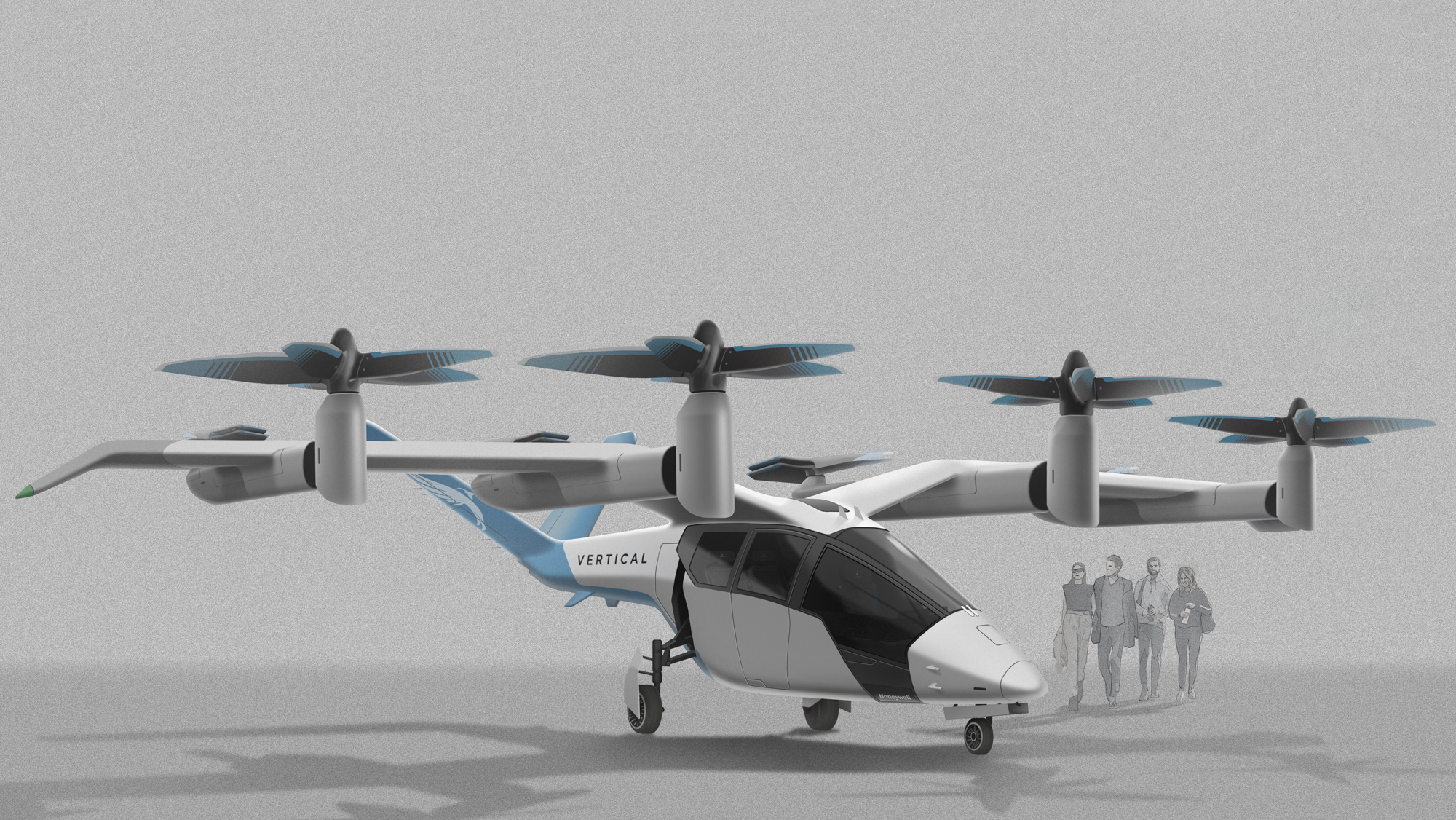
Figure 1. The Vertical Aerospace VX4 in an early rendering with similar looks to the eVTOL we discuss. Source: Vertical Aerospace.
Airbus predicts services will grow faster than aircraft deliveries
October 06, 2022, © Leeham News: Airbus presented their 20-year Global Services Forecast (GSF) for the world’s airliner business today. It’s a complement to the aircraft Global Market Forecast (GMF) that Airbus presented in July.
The services business for the over 100-seat air transport market grows from $105bn pre-COVID to $232bn by 2041, an increase of 221% or a 3,7% CAGR (Compound Annual Growth Rate), Figure 1.
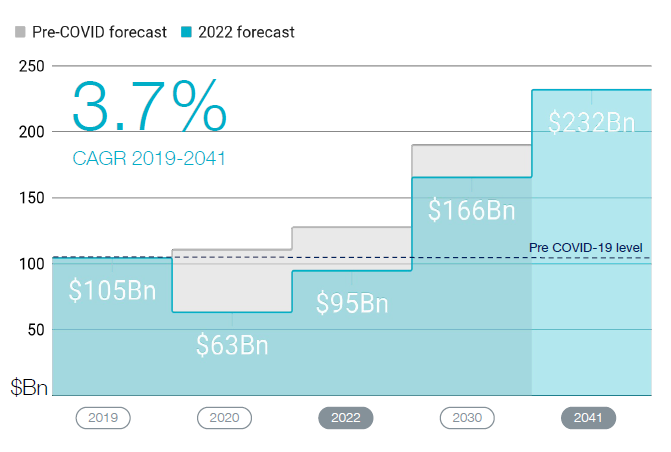
Figure 1. The growth of services to the worldwide over 100-seat air transport market. Source: Airbus.
Engine Development. Part 8. Throttle push or not?
Subscription Required
By Bjorn Fehrm
Introduction
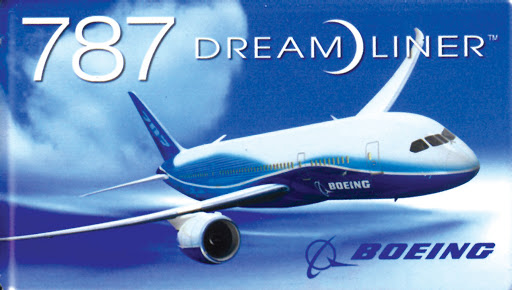
October 6, 2022, © Leeham News: The early years of 2000 saw new engine programs launched for the new Boeing 787 Dreamliner and Airbus response, the A350.
Substantial differences in the life of these aircraft programs made the engine programs develop differently. It was about throttle push or not.
Summary
- The Dreamliner engines changed as the 787 programs went through many stages.
- The Airbus A350 program was a standard program in comparison.
EASA: SAF production must increase dramatically to meet climate goals
Subscription Required
By BRYAN CORLISS
Oct. 3, 2022, © Leeham News: Aviation is “a key vulnerable economic sector that is only in the early stage of adaptation to climate change,” according to a new report from EASA, the European Union’s Aviation Safety Agency.
To meet the industry’s environmental challenges – and there are several — more must be done to identify the hazards and risks that extreme weather events caused by climate change can bring to the industry, the report says.
The report also recommends that more needs to be done to plan for the impact of extreme weather on aircraft and airline infrastructure. The industry and regulators also need to “identify and apply ‘win-win’ solutions” to reduce carbon dioxide and other emissions from airliners, and to accelerate the deployment of aircraft and air traffic control technology to improve the efficiency of Europe’s airline fleet.
The good news in the report is that researchers believe aviation could cut emissions by 69% by 2050 by adopting a suite of changes, including increased use of sustainable aviation fuel (SAF), improved aircraft technology, better operational practices and by using hydrogen or electric motors to power aircraft where feasible.
Summary
- Production of Sustainable Aviation Fuel must increase dramatically.
- Airline emissions are going up as a percentage of contribution to climate impact.
- In another blow to Boom’s claim its SST will be environmentally friendly, EASA takes a different view about SSTs.
Pontifications: Suppliers don’t lack for demand, but haven’t recovered from Pandemic crisis
By Scott Hamilton
Oct. 3, 2022, © Leeham News: Aerospace suppliers don’t lack demand. But they still have a long way to go to recover from the crisis brought about by the COVID-19 pandemic. The pandemic began in earnest in March 2020. While largely under control today, there are still COVID variants sending people to hospitals and deaths.
Jeff Knittel, the president of Airbus Americas, homed in on the fundamental question during the US Chamber of Commerce Aerospace Summit last month in Washington (DC). Knittel moderated a panel with suppliers Tom Gentile, CEO of Spirit Aerosystems, and Paolo Dal Cin, Senior Vice President, Operations, Supply Chain, Quality, Environmental, Health, and Safety for Raytheon Technologies.
“Is this the beginning or the end or the end of the beginning in terms of [supply chain] disruptions?” Knittel asked. “This has been painful for everyone, and outside our industry also. Where do you see us today in terms of the recovery and next steps for you and the industry?”
“I would say that the recovery has started for the supply chain, but we still have a long way to go,” said Gentile. At the July Farnborough Air Show, there were few orders announced. The whole story was the supply chain.
Bjorn’s Corner: Sustainable Air Transport. Part 39. VTOL design realities.
By Bjorn Fehrm.
September 30, 2022, ©. Leeham News: Last week, we discussed how the pilot should control the eVTOLs that enter the market in three to five years. The absence of a standard for pilot interaction with the VTOL is troubling.
Having gone through the market’s major eVTOLs, their flight principles, and the key systems, we now look at how it all fits together. What payloads can be flown to what range? What will be the operational costs, and how green will it all be? We start by looking at some design realities for eVTOLs.

Figure 1. A teaser image of the Archer four-passenger Midnight eVTOL. Source: Archer Aviation.
Read more
Engine Development. Part 7. Engine reliability changes the aircraft market
Subscription Required
By Bjorn Fehrm
Introduction
September 29, 2022, © Leeham News: The 1970s saw the introduction of the High Bypass engine for the medium/long range Boeing 747, Douglas DC-10, and Lockheed Tristar, with Airbus A300 employing an updated variant of the DC-10 engine for medium range missions.
In the following decades, these engines introduced improved technology and matured into new levels of reliability. With the increase in reliability came changes in how long-range aircraft were designed.
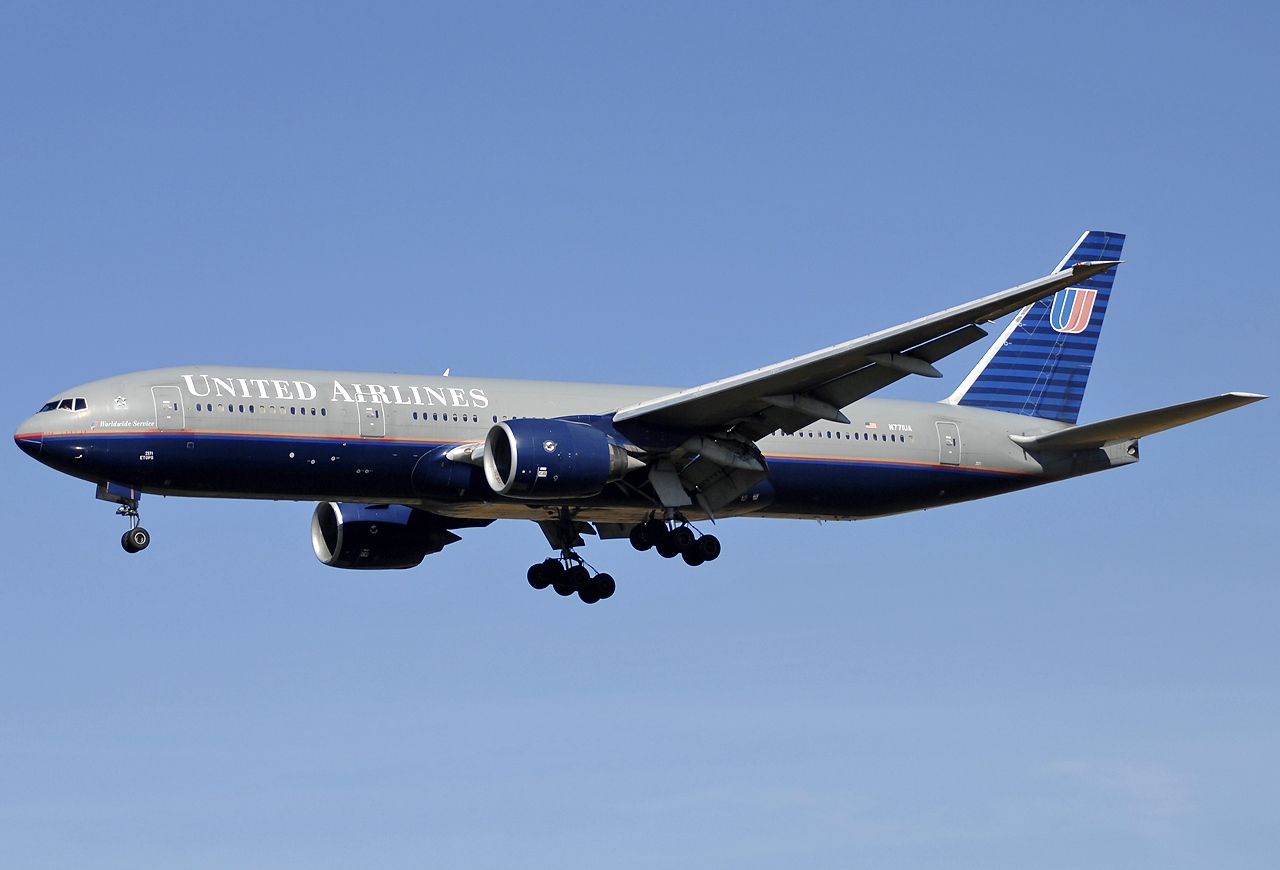
Figure 1. The Boeing 777-200 was introduced by United Airlines in 1995. Source: Wikipedia.
Summary
- The engine development after the introduction of the high bypass turbofans in the 1970s focused on reliability and higher efficiency rather than new design principles.
- The change in reliability made the two-engined long-range aircraft the winner over three and four-engine aircraft.
Boeing shows off new Additive Manufacturing facility, a key to future aerospace
By Scott Hamilton
Sept. 28, 2022, © Leeham News: Boeing last week officially celebrated the opening of its Boeing Additive Manufacturing plant (BAM) in the small suburb of Algona (WA), east of Tacoma.
BAM opened just at the start of the COVID-19 pandemic in March 2020. But ceremonies were postponed until now.
Additive manufacturing (AM) is not new to Boeing. It’s been doing AM in various forms for 30 years. But increasingly, companies are turning to AM to reduce costs and production time. Also known as 3D printing, companies are using AM for tooling, parts, and small components from civil and commercial aviation to defense and space programs. Parts are used on airplanes, drones, and spacecraft.
Many homes and non-aerospace businesses have 3D printers. Some are for business and others are for hobbyists. As part of a media and VIP tour last week, guests received gifts of two small airplanes created by 3D printing, one metal, and one plastic (plus a box of two chocolates, not made by AM, but the real thing).
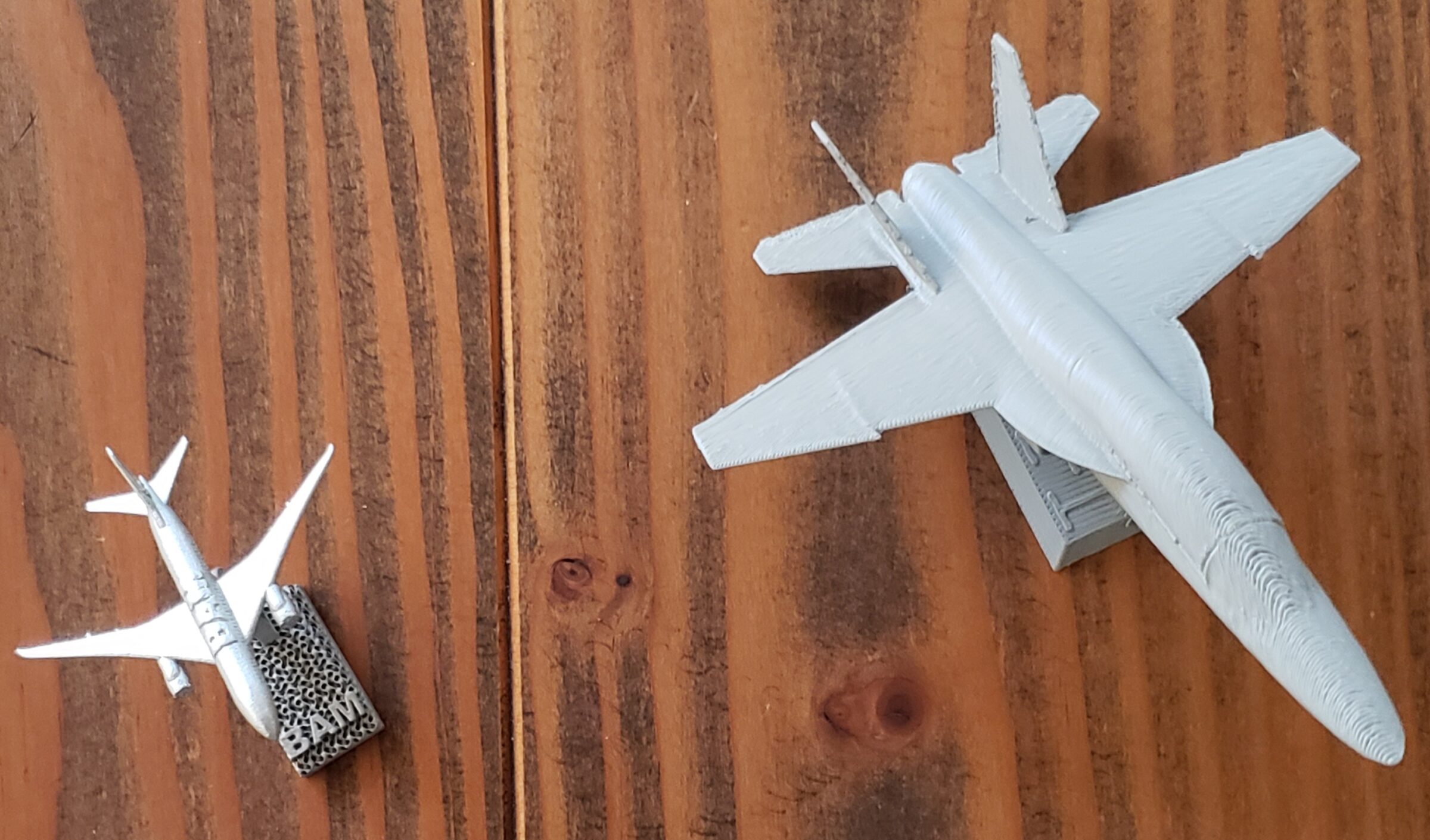
Two model airplanes created by 3D printing, also known as Additive Manufacturing. Boeing printed these at its new facility in Algona (WA). Photo: Leeham News.
UPDATED: All-electric Eviation Alice takes 1st flight
By Bryan Corliss
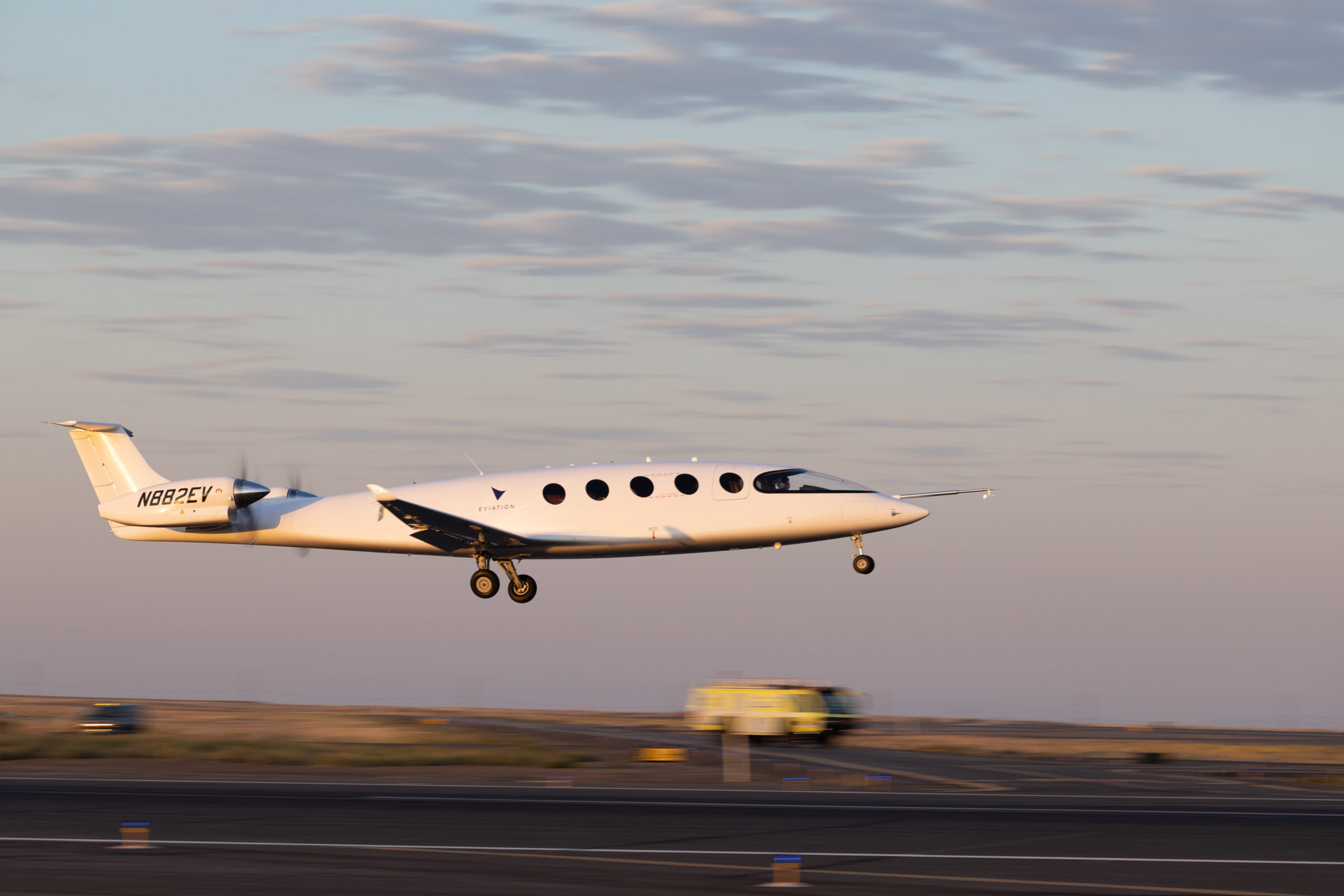
Sept. 27, 2022 © Leeham News: The battery-powered Eviation Alice has flown for the first time.
The nine-seat aircraft, powered by twin electric propeller motors assembled by Eviation’s sister company, magniX, rotated up and took off into a sky hazy from forest fires shortly after sunrise in the Pacific Time Zone, a little after 7 a.m.
After takeoff the plane banked to the right, circled for eight minutes around Grant County International Airport in Moses Lake, then landed safely. The Alice reached an altitude of 3,500 feet.
The dawn flight was an important milestone for Eviation, magniX, and for battery-powered aircraft in general. The Alice appears to be the largest electric passenger aircraft to fly so far, larger than the two-seater Pipistrel Velis, which had its first test flight with passengers in Iceland last month. Tecnam and Rolls Royce teamed up to fly a four-seater P2010 with a hybrid electric engine in February.
Summary
- EIS is still years away, CEO says
- Eviation and magniX need batteries to get better
- Alice will evolve in interim