
Leeham News and Analysis
There's more to real news than a news release.



One A380 departure or two 777-200ER alternatively 787-9? Part 2.
Subscription Required
By Bjorn Fehrm
Introduction
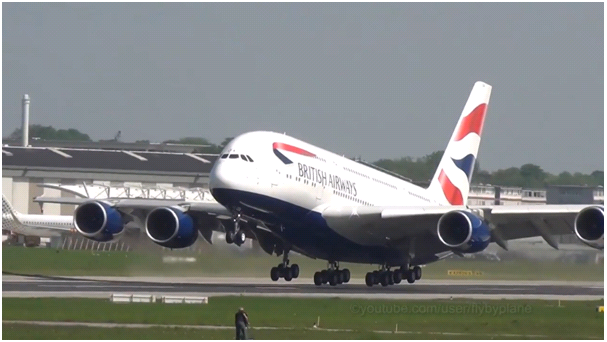
December 9, 2021, © Leeham News: Last week, we checked the economics for an airline that dispatches one A380 instead of two smaller widebodies on a trunk route with heavy traffic.
Our example was modeled after British Airways, which uses the A380 on its highest volume Heathrow departures. We modeled flights where we only considered the passenger payload and looked at operating costs. Now, we add cargo to the mix and look at the generated on the flights.
Summary
- The A380 was surprisingly competitive against the compared aircraft when we looked at passenger traffic.
- As expected, when cargo is added, the A380 competitiveness declines. It’s now a matter of what a slot more costs on the departure and destinations airports.
HOTR: A near $100bn Equity Hole to Fill
By the Leeham News Staff
Dec. 7, 2021, © Leeham News: LNA published an article last April highlighting the divergence in financial fortunes between airlines in lessors in the aftermath of the COVID-19 pandemic. While most lessors avoided heavy losses, airlines recorded losses more significant than during any previous downturn.
Many airlines hadn’t published their annual results at the time. LNA now updates the figures with the latest annual results.
A short history of production system development
Subscription Required
By the Leeham News Team
Dec. 6, 2021, © Leeham News: Long ago, aircraft were simple, made of steel tubing, wood, and fabric. Engineering staffs were small, and the craftsmen building them had little need for specific production planning instructions because they were very simple. This was the work environment

Boeing Model 40 at the Museum of Flight, Seattle.
when CAM4B and CAM 18, the Civil Aeronautics Board Manual 4b and 18, described how aircraft were designed, certified, built, and maintained. Think of Ford Trimotors, Fokker F10, Boeing Model 40s and 80s, and Lockheed Vegas. It was the golden age of air transport.
Pontifications: Retrospective of KC-X tanker competition
The first in a series.
By Scott Hamilton
Dec. 6, 2021, © Leeham News: The US Air Force began the process this year to procure the KC-Y aerial refueling tanker.

By Scott Hamilton
Originally, this was to follow the KC-X (awarded to Boeing in the form of the KC-46A) to replace the McDonnell Douglas KC-10. This has been altered to be a bridge tanker between the KC-X and the KC-Z, an advanced tanker design that is in the conceptual stage.
The KC-Y promises to be a contest between Boeing, for more KC-46 orders, and a partnership between Lockheed Martin and Airbus based on the A330-200 MRTT. MRTT stands for Multi-Role Tanker Transport. The Lockheed Martin plane is called the LMXT, for now.
The KC-X competition was bitter and repetitive. A partnership between Northrop Grumman and Airbus initially won the contract. But Boeing protested how the USAF scored the bake-off. The General Accounting Office upheld the protest. A new competition saw the contract awarded to Boeing.
KC-Y is only in the Request for Information stage and neither Boeing nor Lockheed have submitted filings yet. But already, the surrogate Boeing campaign appears underway.
Bjorn’s Corner: The challenges of airliner development. Part 32. Aircraft delivery and EIS

By Bjorn Fehrm, Henry Tam, and Andrew Telesca
December 3, 2021, ©. Leeham News: Last week, we went through typical problems by the start of serial production, such as weight creep and traveled work.
Now we discuss the ins and outs of delivering the aircraft to the customer airline and how we support the aircraft’s entry into service.
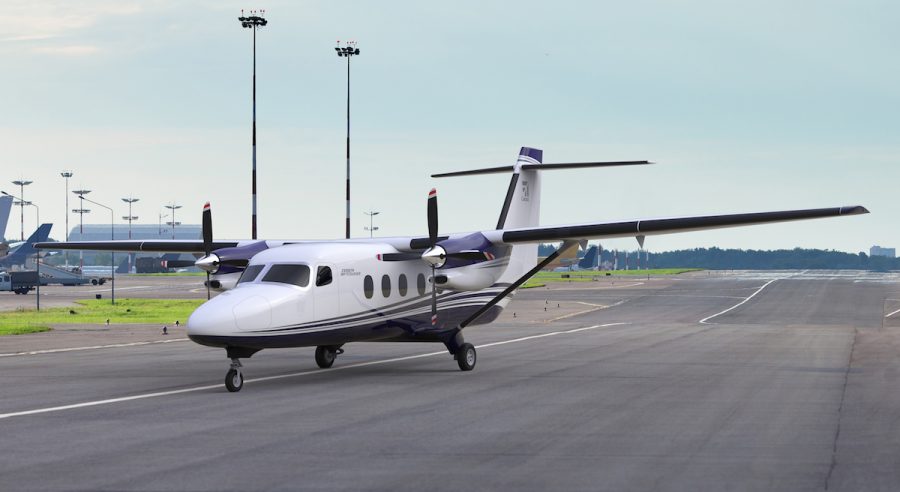
Figure 1. A new 19 seater design, the Cessna SkyCourier. Source: Cessna.
One A380 departure or two 777-200ER alternatively 787-9?
Subscription Required
By Bjorn Fehrm
Introduction
December 2, 2021, © Leeham News: With the last Airbus A380 rolling of the production line in days, we started looking at why the A380 didn’t sell last week. Now we check its economics for an airline that can fill it. We fly one A380 versus two departures of smaller aircraft on a typical trunk route.
Our analysis takes British Airways as an example and whether it shall use an A380 on Heathrow to LAX at peak traffic or rather two departures with its Boeing 777-200ER or 787-9.
Summary
- When you can fill the A380, it’s surprisingly competitive even against a more modern aircraft like the 787-9.
- This is when we focus on passengers and cost.
- We change the analysis angle next week when we add cargo and look at margins rather than cost.
HOTR: 787 delivery restart appears to slip to April: customers
By the Leeham News Staff
Nov. 30, 2021, © Leeham News: Plans to resume deliveries of the Boeing 787—halted since October 2020—appear to be slipping again.
Customers tell LNA that deliveries may not resume until April, a slip of one or two months from the previous unofficial timeline. Boeing hasn’t announced any timeline, deferring to the Federal Aviation Administration’s review of plans to fix issues related to composite delamination and fuselage section mating.
“As we have previously shared, we are completing comprehensive inspections and associated rework across 787 production and within the supply chain, while holding detailed, transparent discussions with the FAA, suppliers, and our customers,” a Boeing spokesperson wrote LNA in an email.
“Work continues in our production facility and rates will continue to be dynamic as we focus on eliminating traveled work and prioritize resources to support our inspection and rework efforts. We are taking the time needed to ensure the highest levels of quality, and while these efforts will continue to impact deliveries, we’re confident this is the right approach to drive stability and first-time quality across our operations and to position the program for the long term as market demand recovers. None of the issues have been determined to present a safety of flight concern with respect to the active in-service fleet.”
Related Article
It’s time for a reality check on ecoAviation
Subscription Required
By Scott Hamilton
Introduction
Nov. 29, 2021, © Leeham News: The goals are admirable and lofty: cut carbon emissions dramatically.
Boeing wants to have its 7-Series airplanes be 100% compatible with Sustainable Aviation Fuel (SAF) by 2030. Whatever Boeing can do, so can Airbus.
Airbus wants to produce the first hydrogen-powered airliner, probably in the 70-seat sector, by 2035.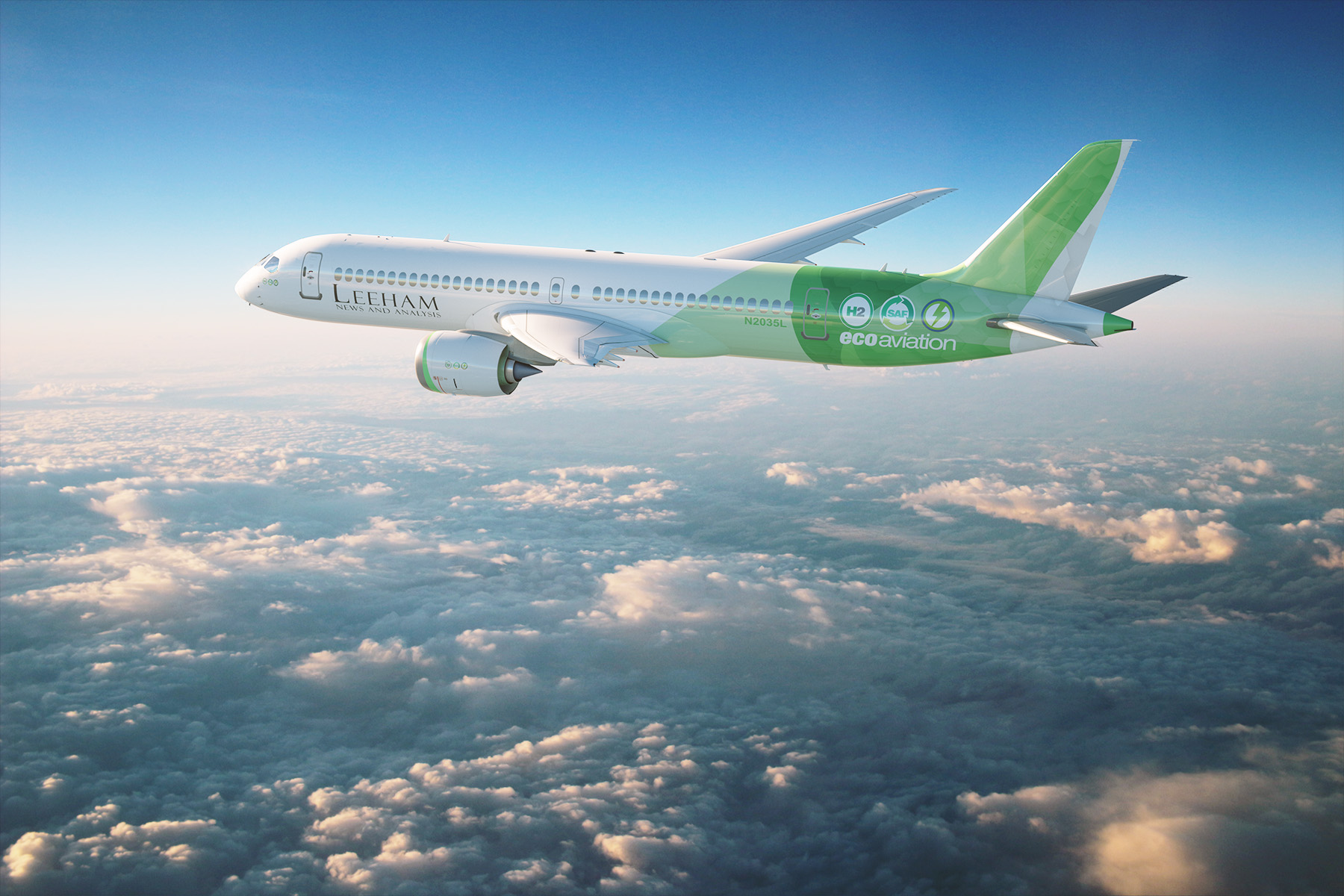
IATA, the International Air Transport Assn. industry trade group, set 2050 at the target for net-zero emissions.
All great ideas. Industry officials understand the challenges and realities. Tim Clark, president of Emirates Airline, minced no words at the IATA AGM in October: Don’t make promises you can’t keep.
For the pie-in-the-sky crowd, the sheer numbers don’t add up. Replacing the thousands of Airbus A320ceos, A330ceos, Boeing 737 NGs, 757s, 767s, 777 Classics, Mitsubishi CRJs, and Embraer E1 jets with their successors—let alone, the successors to the successors—will take decades.
And this doesn’t even count replacement of today’s turboprops with a successor that doesn’t exist, followed by their successors.
Summary
- 20-year Forecast to 2040 shows about 4,000 single-aisle, mainline jets will remain in service by 2040. The majority of these flying today are older generation aircraft.
- There will be about 1,000 twin-aisle jets flying today that will be flying in 2040. These can be expected to be Boeing 787s, Airbus A350s and a small number of A330neos. Each is more environmentally friendly than previous generations.
- There will be a handful of four-engine jets flying by 2040, most likely cargo aircraft.
- Of the sub-100 seat category, there will be fewer than 300 jets flying in 2040 that are flying today. Some of these will likely be end-of-line CRJs plus late-model, older generation E175-E1s. Deliveries of the latter continue well into this decade because the future of the Embraer E175-E2 is uncertain.
Pontifications: Think tank analyzes KC-Y competitive landscape
Nov. 29, 2021, © Leeham News: A conservative think tank believes the US Air Force must invest not only in another round of aerial refueling tankers. It must also invest in infrastructure and future, innovative designs.
By Scott Hamilton
The Hudson Institute in Washington (DC) issued a study earlier this month in which it analyzed the Air Force’s global refueling requirements. The study may be downloaded here.
While perusing the website and looking at who’s involved with the institute makes it clear this isn’t just a conservative think tank but an overtly partisan one as well, the study appears well thought out and even-handed. It relies on well-reasoned data. The study is unlike Loren Thompson of the Lexington Institute, whose latest column about the next round of tanker procurement returns to the tiresome and expired whining about illegal subsidies for the Airbus A330-200.
Breaking news to Loren: the WTO case is over. Additional breaking news: subsidies and the WTO aren’t considered in military procurements. The Lexington Institute gets funding from Boeing. It also previously received funding from Lockheed. Thompson did not disclose in this latest missive if it still does.
Bjorn’s Corner: The challenges of airliner development. Part 31. Serial Production problems
By Bjorn Fehrm, Henry Tam, and Andrew Telesca.
November 26, 2021, ©. Leeham News: Last week, we started our analysis of the serial production phase. If development is filled with revelations and problems to solve, production has it as well.
We start this week by looking at the beginning of serial production, where several issues are overhangs from development. There are areas of the aircraft, though we have achieved our Type Certificate, that are not quite to the maturity level we want for long-term serial production.
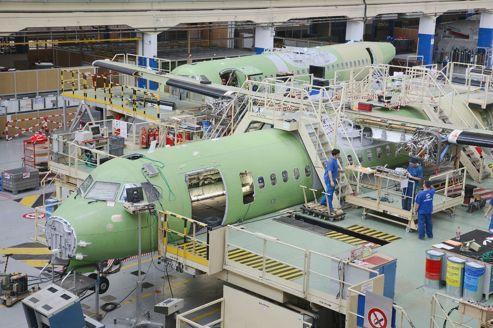
Figure 1. A typical aircraft Final Assembly Line (FAL) site. Source: ATR.