
Leeham News and Analysis
There's more to real news than a news release.



HOTR: Mitsubishi, Bombardier set June 1 to close CRJ deal
By the Leeham News staff
May 6, 2020, © Leeham News: Mitsubishi Heavy Industries announced May 7 (Tokyo time) that it will close the acquisition of the Bombardier CRJ program June 1.
Production of the CRJ was to end this summer. The COVID crisis effectively terminates the program now. But the CRJ itself wasn’t the reason MHI  bought the program, for US$500m. The attraction was the built-in global product support system for the CRJ that will transition to the M100 SpaceJet. It also provides a new revenue/profit stream as MHI enters the global RJ market.
Along with it, as icing on the cake, is acquisition of Bombardier’s sales team, infrastructure and other assets.
It would take years for MHI and Mitsubishi Aircraft Corp. (MITAC) to establish its own product support system.
 This is a major step in development of the SpaceJet as a new global competitor.
With the collapse of the Boeing-Embraer joint venture, MITAC can reinvigorate and strengthen its relationship with Boeing.
Embraer, which said it needed the Boeing JV to compete in the future with Airbus against the A220, increasingly faces higher risks as MITAC and MHI evolve the CRJ product support system and potentially strengthens the Boeing relationship.
MHI also announced that it will immediately write down the $500m acquisition by ¥50bn- ¥ 70bn ($470m-$656m).
Updated with earnings call: Spirit Aerosystems reports 1Q loss, expect worse 2Q
By Scott Hamilton
May 6, 2020, © Leeham News: Spirit Aerosystems, a major supplier to Boeing and Airbus, reported a net loss of $163m for the first quarter.
The loss was a negative margin of 15.5% on revenues of $1.08bn, but it was better than analyst expectations.
With a majority of revenues coming from Boeing, the grounding of the 737 MAX continued to hit Spirit hard. The COVID-19 crisis further impacts the company.
Spirit will deliver 125 737 fuselages to Boeing this year, down from 216 previously agreed, reflecting the COVID crisis. This includes 18 delivered in January before production was suspended. Spirit did not reveal how many of 116 produced and stored in parking lots will be among the 125.
On the earnings call, Spirit said the the storage will grow somewhat, peaking in July-August. It will get back down to the 120s by year end. The inventory will decline in 2021 and “burn down” in the next two years.
Supply chain focus: Safran’ s first 2020 quarter
By Bjorn Fehrm
May 5, 2020, ©. Leeham News: Next out in our COVID19 supply chain focus is Safran Group.
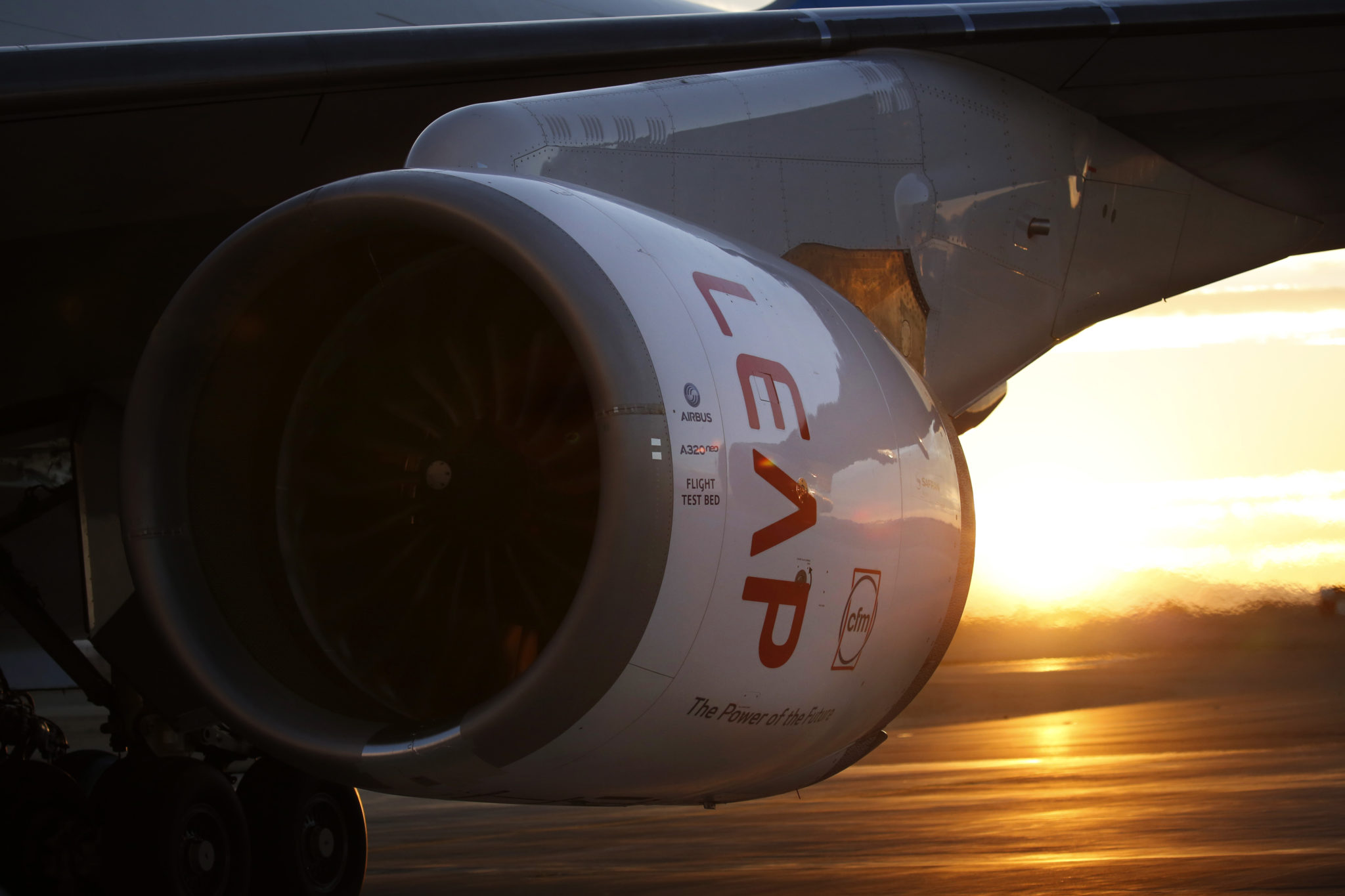
Safran, together with GE Aviation, is the largest supplier of turbofan engines to the World’s airliners. Their success in the CFM joint venture is unprecedented. The first joint engine, the CFM56 has passed 30,000 deliveries, and the follow-up, the CFM LEAP, has 16,000 orders.
At the back of this successful business, Safran has expanded to a major aeronautical supplier for propulsion, systems, and cabins.
Seattle Times, reporting team win Pulitzer Prize for Boeing 737 MAX coverage
May 5, 2020, © Leeham News: The Seattle Times and its reporting team won a Pulitzer Prize, it was announced yesterday, for its coverage of the Boeing 737 MAX crisis.

The team is Dominic Gates, Steve Miletich, Mike Baker and Lewis Kamb.
Engine OEMs forecast big hit to aftermarket revenue
Subscription Required
Now open to all readers.
By Scott Hamilton
May 5, 2020, © Leeham News: The COVID crisis will damage the aerospace aftermarket in ways that are only beginning to be understood.
As key companies report 1Q earnings, it’s clear that engine aftermarket revenue is going to take a major hit for years to come.
Engine companies like CFM, GE Aviation, Pratt & Whitney and Rolls-Royce, rely on aftermarket sales as the key component of their business plans.
The research and development money that goes into an engine consumes such huge amounts of cash that the OEMs don’t recoup their costs for 10-20 years. The aftermarket for parts, maintenance, repair and overhaul is where they make their profits in the meantime.
But this is seriously threatened by the virus crisis.
“The aftermarket for key programs took 4+ years to return to 2008 levels out of the Great Financial Crisis, and that was with traffic decline at a fraction of the declines today,” Bernstein Research wrote in a May 4 note to clients.
Collapse of Boeing-Embraer JV gives Mitsubishi Aircraft new opportunities
Subscription Required
By Scott Hamilton
Introduction
May 4, 2020, © Leeham News: The collapse of the Boeing-Embraer joint venture removes a major cloud over another Boeing agreement with a different airframe company.
Long ago, Boeing and Mitsubishi Aircraft Corp. (MITAC) entered into a support agreement for what was then the MRJ program.
MITAC was to receive marketing and services support from Boeing for the MRJ.
From the moment the news emerged that Embraer and Boeing were talking about a merger, acquisition or joint venture (the goal moved over time), questions arose over the future of the MITAC agreement.
Summary
- Boeing said the MITAC agreement would be honored, but skepticism remained.
- The MRJ and later the SpaceJet would compete with the former Embraer product line.
- Recovery consensus 3-5 years.
- With collapse of Boeing-Embraer JV, Mitsubishi-Boeing can reaffirm, strengthen their cooperative agreement.
Pontifications: Ugly, fundamental changes coming for airline industry

By Scott Hamilton
May 4, 2020, © Leeham News: The global airline industry is on the cusp of a fundamental restructuring that will be painful, and painfully long.
A few airlines already ceased operations.
Several others are on the brink of filing for bankruptcy—among them Lufthansa and Virgin Atlantic, brand names that aren’t normally at the top of an endangered list.
A shake-out in Europe was already underway before the COVID-19 crisis erupted. The inevitable shake-out in Asia hadn’t yet begun.
Fleet rationalization among legacy carriers will occur at rapid-fire speed. And some carriers now have the opportunity to shed unprofitable routes that were maintained for market share.
It’s going to be an ugly process, though.
Bjorn’s Corner: Why e in ePlane shall stand for environment, Part 20. Wrapup.
May 1, 2020, ©. Leeham News: We now wrap the series about technologies that can help reduce air transport’s environmental footprint.
I wrote in the first article, December 13: We have lost our way in our search for a lower carbon footprint air transport system by heading down the electric lane. I will argue why it’s not the best route as it’s not the route that leads to tangible results any time soon, despite huge investments.
In 19 Corners to date, we discussed why. It’s time to summarize what we learned.

Figure 1. The Gartner hype cycle. Source: Wikipedia.
Supply chain focus: Thales’ first 2020 quarter
By Bjorn Fehrm
April 30, 2020, ©. Leeham News: We continue our special focus on the OEM supply chain as the COVID19 crisis threatens several suppliers.
Thales Group is the number three supplier of Avionics and IFE to the commercial aircraft industry. The defense sector represents 45% of the business, and the commercial side 30%. With defense less exposed to the crisis, it moderates the effect on the 1Q2020 results.

Figure 1. The Airbus A350 avionics and displays are mainly from Thales. Picture from my test flight of the A350-900 in May 2015. Source: LNA.
Better to bring capacity back with a 777X or 777-300ER
Subscription Required
By Vincent Valery
Introduction
April 30, 2020, © Leeham News: The travel restrictions implemented in the aftermath of the COVID-19 outbreak lead to an unprecedented collapse in global passenger traffic.
These travel restrictions should remain in place until a COVID-19 vaccine becomes available for the wider population. Combined with the economic effects of the various social distancing measures, travel demand will remain depressed for a substantial period. Leeham Co. predicts that it will take four to eight years before traffic returns to 2019 levels.

Boeing 777-9 on the way to what was hoped to be its first flight Jan. 24. Photo by Scott Hamilton.
Airlines grounded a large number of aircraft due to the collapse in passenger demand. As a result, there will be plenty of aircraft in long-term storage available for lease or purchase at discounted prices once demand recovers.
These aircraft will compete against those coming off the assembly line. The 777-9 is planned to enter service in 2021 at the earliest. Apart from Lufthansa, all the airlines that ordered the 777X are 777-300ER operators. Once traffic bounces back, they will have to ponder whether they are better off keeping (or sourcing) older 777-300ERs or take deliveries of 777-9s as scheduled.
In this article series, we will compare the economics of the 777-300ER with the 777-9 on the world’s busiest intercontinental route.
Summary
- Depressed demand brings airlines to the brink;
- Near-terminal wounds to heal once demand recovers;
- A perfect storm for new (large and expensive) aircraft;
- Peculiarities of operating on the busiest intercontinental route.