
Leeham News and Analysis
There's more to real news than a news release.


Bjorn’s Corner: Sustainable Air Transport. Part 6P. Energy consumption, the deeper discussion.
Subscription required

By Bjorn Fehrm
February 11, 2022, ©. Leeham News: This is a complementary article to Part 6. Energy consumption. It uses the Aircraft Performance Model from our Consultancy practice to generate energy consumed data when we fly a typical airline mission for the first aircraft we analyze, the battery-based Eviation Alice and Heart Aerospace ES-19.
These represent what to expect for airliners that have chosen this energy storage principle.
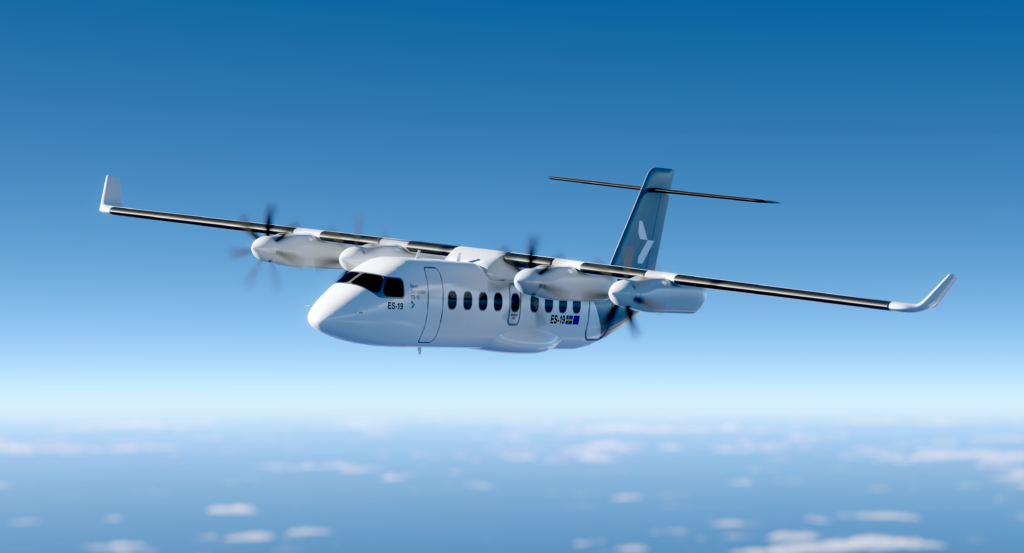
Heart Aerospace ES-19. Source: Heart Aerospace.
Bjorn’s Corner: Sustainable Air Transport. Part 6. Energy consumption.
By Bjorn Fehrm
February 11, 2022, ©. Leeham News: In a sister article, Part 6P. Energy consumption, the deeper discussion we use Leeham’s Aircraft Performance Model from our consulting practice to generate the aeronautical energy consumption for aircraft like Eviation’s Alice and Heart Aerospace’s ES-19.
This is the energy needed to combat the drag of the airframe during flight (Figure 1). We then add the losses in the chosen propulsion system to arrive at the energy drawn from the energy source.
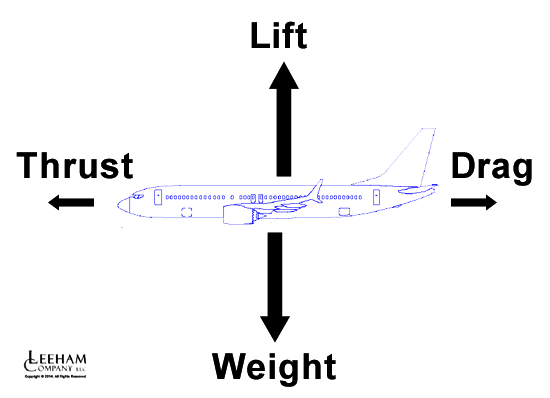
Figure 1. Simplified force model for an aircraft. Source; Leeham Co.
Forecast 2022: Sustainability
Subscription Required
By Bjorn Fehrm
Introduction
February 7, 2022, © Leeham News: The year that passed was when Sustainability broke through the walls of “I’m not convinced we have a problem” and “If so, what shall we do about it.”
The declarations ahead of, at, and after COP26 in Glasgow, United Nations 26’th climate conference, had many major states and organizations commit to targets for the reduction of Greenhouse gases by 2030 and 2050.
With this change in mind and traction, what can we expect to see in 2022 from the Air Transport industry?
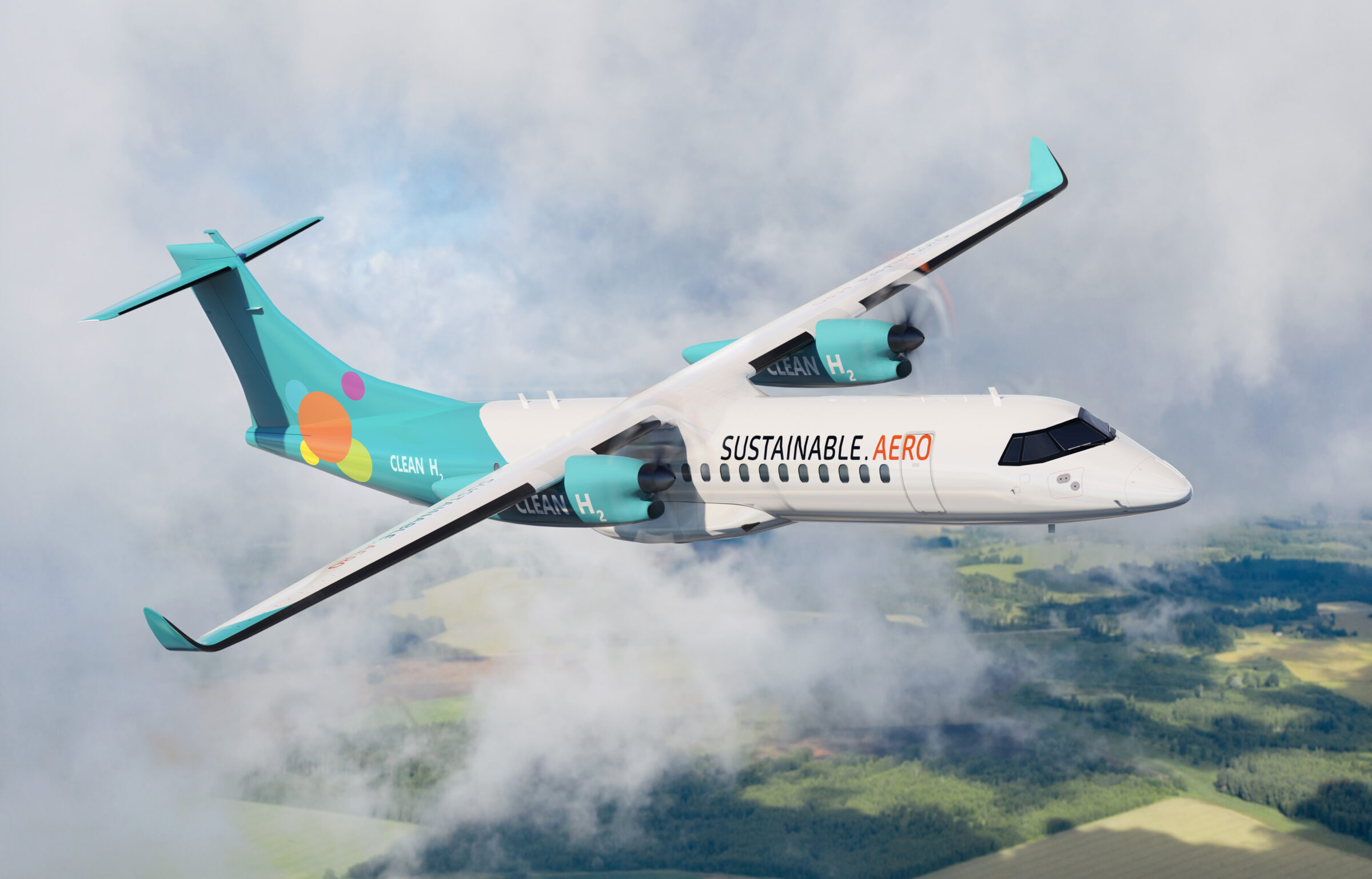
Idea for Sustainable Air Transport, a hydrogen regional. Source: Sustainable Aero Lab.
Summary
- The years that passed were run-up years. Now the preparations shall lead to the first results.
- We summarize what we can expect to see during 2022.
Bjorn’s Corner: Sustainable Air Transport. Part 5. Fundamentals recap.
By Bjorn Fehrm
February 4, 2021, ©. Leeham News: We did a simple reality check on two high-profile ideas for Sustainable Air Transport last week, the Eviation Alice project and Heart Aerospace’s ES-19.
We now look at energy usage when performing Sustainable Air Transport flights, but it can be timely to recap some fundamentals of such flights before we discuss this.
Figure 1. A simplified aircraft force model. Source: Leeham Co.
Bjorn’s Corner: Sustainable Air Transport. Part 4. Reality checks.
By Bjorn Fehrm
January 28, 2022, ©. Leeham News: Having discussed where investments would be the most efficient in alleviating our Greenhouse gas problems and identified the low-hanging fruit, we now look at new technology airplanes that can improve the situation.
We start with classical airliners, working our way from small types to the largest, then we discuss the impact of new transport forms like VTOLs for short-haul transportation.
As we will use the Leeham Aircraft Performance Model in some of the work, there will be extra articles (for this one, a Part 4P) which are Paywall, where we use the model to generate deeper data and understanding.
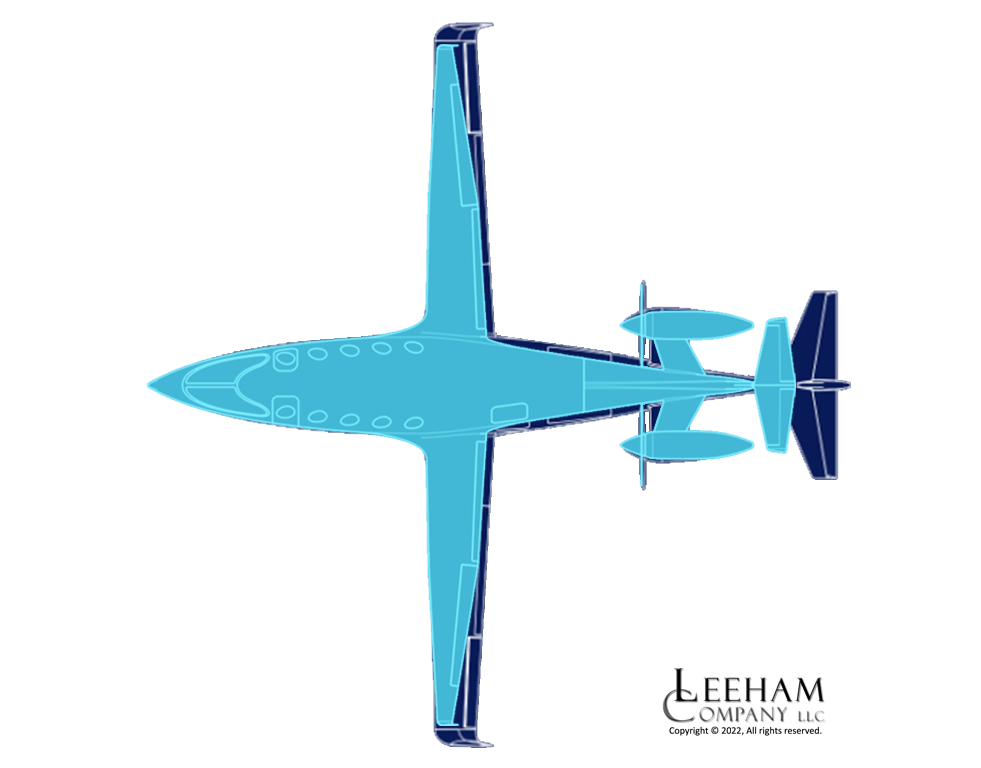
Figure 1. The Alice nine-seater drawings from Eviation’s Web. The present drawing (dark blue) differs from the mid-2021 drawing (light blue, on top). Source: Eviation and Leeham Co.
Bjorn’s Corner: Sustainable Air Transport. Part 4P. Reality checks, the deeper discussion.
Subscription required
By Bjorn Fehrm
January 28, 2022, ©. Leeham News: This is a complementary article to the Part 4. Reality Checks article. It uses data from Leeham Company’s Aircraft Performance Model to develop the relationship between OEW (Operational Empty Weight) and MZFW (Maximum Zero Fuel Weight) compared with MTOW (Maximum Take-Off Weight) for 74 airliners in the model.
The article also discusses in more detail what’s the reasons behind large weight misses for new projects and how it’s handled.
Boeing invests $450m in Wisk Aero air taxi venture
By Bjorn Fehrm
January 25, 2022, ©. Leeham News: Boeing and Wisk Aero yesterday had a media briefing on why Boeing is extending its investment in Wisk Aero with a further $450m.
The main technology is not the eVTOL aircraft. Wisk is just one of many upstarts that relies on batteries and multiple electrical propulsors to create a VTOL air taxi. It’s the pilotless operation that’s the key technology in the project. As perhaps the only VTOL company, Wisk goes directly to pilotless flight.
Brian Yutko, VP of Sustainability and Future Mobility at Boeing, explained: “The pilotless flight technology is of great interest to Boeing. It’s challenging technology, but it has a wide field of applications once mastered. We are not targeting our airliners but other civil and military applications. It’s an important driver for us in the continued support for our Wisk joint venture.”

Figure 1. The fifth-generation prototype Cora, with which flight tests are done in New Zeeland. Source: Wisk Aero.
Bjorn’s Corner: Sustainable Air Transport. Part 3. Low hanging fruit.
By Bjorn Fehrm
January 21, 2021, ©. Leeham News: Whatever is done in terms of new Sustainable technology for the aircraft, will have a limited influence on the amount of Greenhouse gases that Air Transport emits before 2050.
We will only get the new aircraft types into operation about 15 years before the deadline and with, on average, 100 to 200 aircraft per year. That’s 1,500 to 3,000 of the total of 25,000 aircraft that operate in our skies daily. It will not reduce our Greenhouse gas emissions significantly.
Sustainable Aviation Fuel, SAF, will help, but only when it’s available in quantity and to a reasonable cost. We can do things that have a much faster effect, and that’s how we manage our flights.

Figure 1. The US flights as seen on Flightradar24 yesterday. Source: Flightradar24.
Bjorn’s Corner: Sustainable Air Transport. Part 2. The problem to solve?
By Bjorn Fehrm
January 14, 2021, ©. Leeham News: Before we dig into the different alternatives we have for more Sustainable Air Transport, let’s look at the problem and its sources.
Figure 1 shows the emissions of CO2 per person since 1900 and the rise of the world temperature. The increase in world temperature changes the weather, with increased weather-related emergencies in recent years.
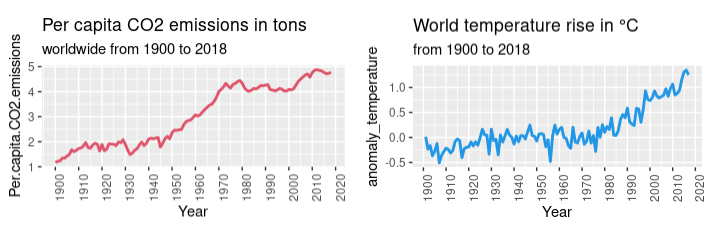
Figure 1. The increase in CO2 emission per capita and the rise of the world temperature from 1900 to 2018. Source: Wikipedia.
Bjorn’s Corner: Sustainable Air Transport. Part 1. A deeper look.
By Bjorn Fehrm
January 7, 2022, ©. Leeham News: We finished a 34 article series before Christmas about the enormous work involved to get a new aircraft certified for passenger transport.
It was a background article series to the one we start now, a deeper series on what’s involved in designing air transport vehicles that are less polluting for our environment. We have seen a landslide of such projects in the last years, and from an experienced aircraft designer’s desk, most of these are doomed for failure.
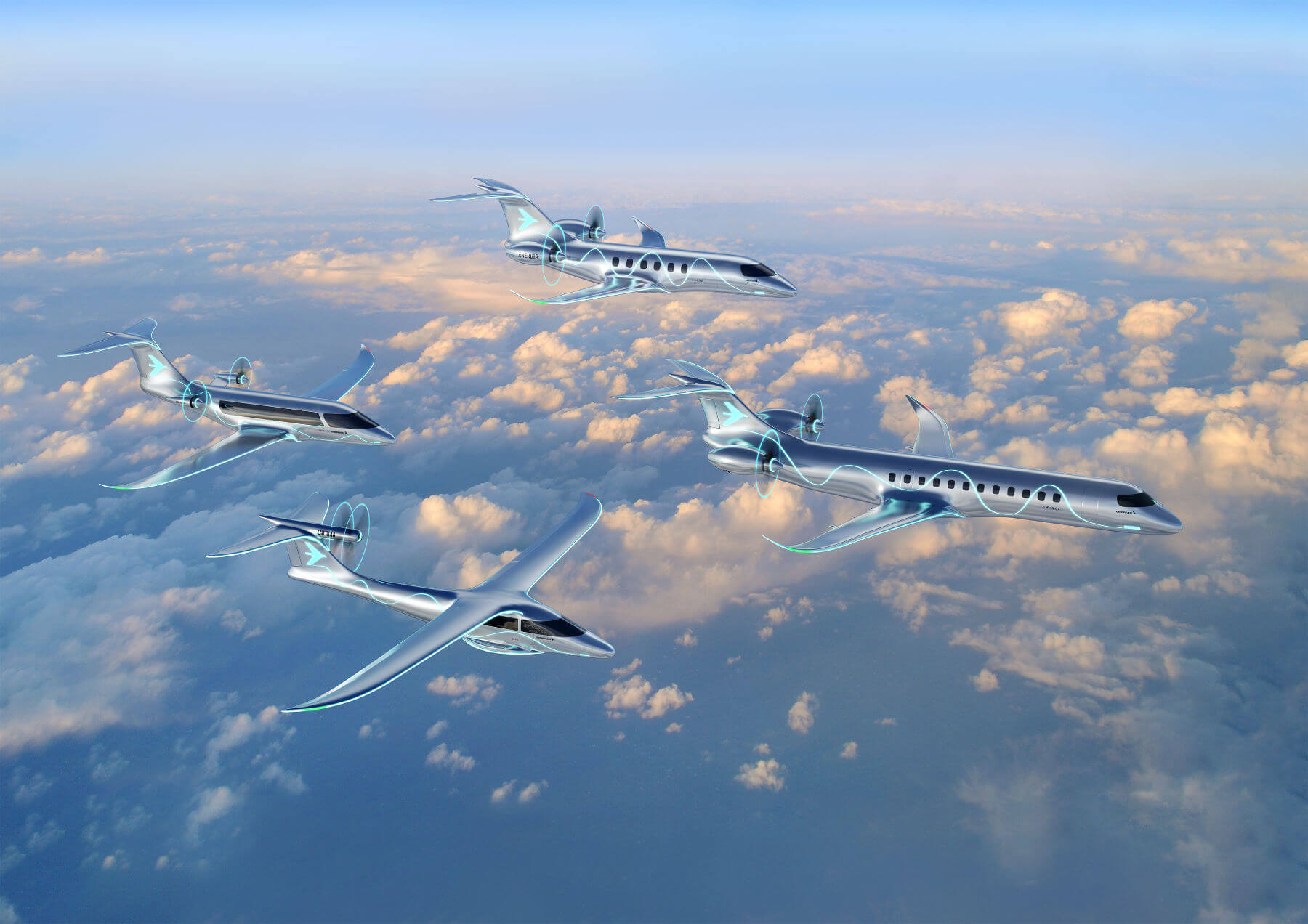 Figure 1. The Embraer Energia concept aircraft. A credible Sustainable Air Transport research program. Source: Embraer.