
Leeham News and Analysis
There's more to real news than a news release.



Howmet taking cautious approach projecting OEM deliveries for 2023
Subscription required
By Bryan Corliss
Feb. 15, 2023, © Leeham News – Howmet Aerospace is taking a “cautious and conservative view” that Boeing will build 30 737s a month this year and Airbus will build 53 or 54 A320s and A321s.
 That’s what CEO John Plant told investors Tuesday, as Howmet reported its year-end and fourth-quarter earnings.
That’s far more conservative than the 737 build rate that Spirit AeroSystems had projected the week prior, Plant acknowledged. Executives with the Wichita airframer project sending 42 737 fuselages a month to Boeing by the end of this year.
Howmet, which fabricates fasteners and casts pieces for aerostructures and jet engines, reported annual profit of $1.3 billion for last year, up 12% when adjusted for one-time items. For the fourth quarter, its adjusted profit was $336 million, up 13%.
- Howmet ended last year with excess inventory
- Company still projects 17% growth in Commercial
- Howmet hiring, but not everyone is sticking around
Read more
Pontifications: Ihssane Mounir’s big challenge at Boeing
By Scott Hamilton
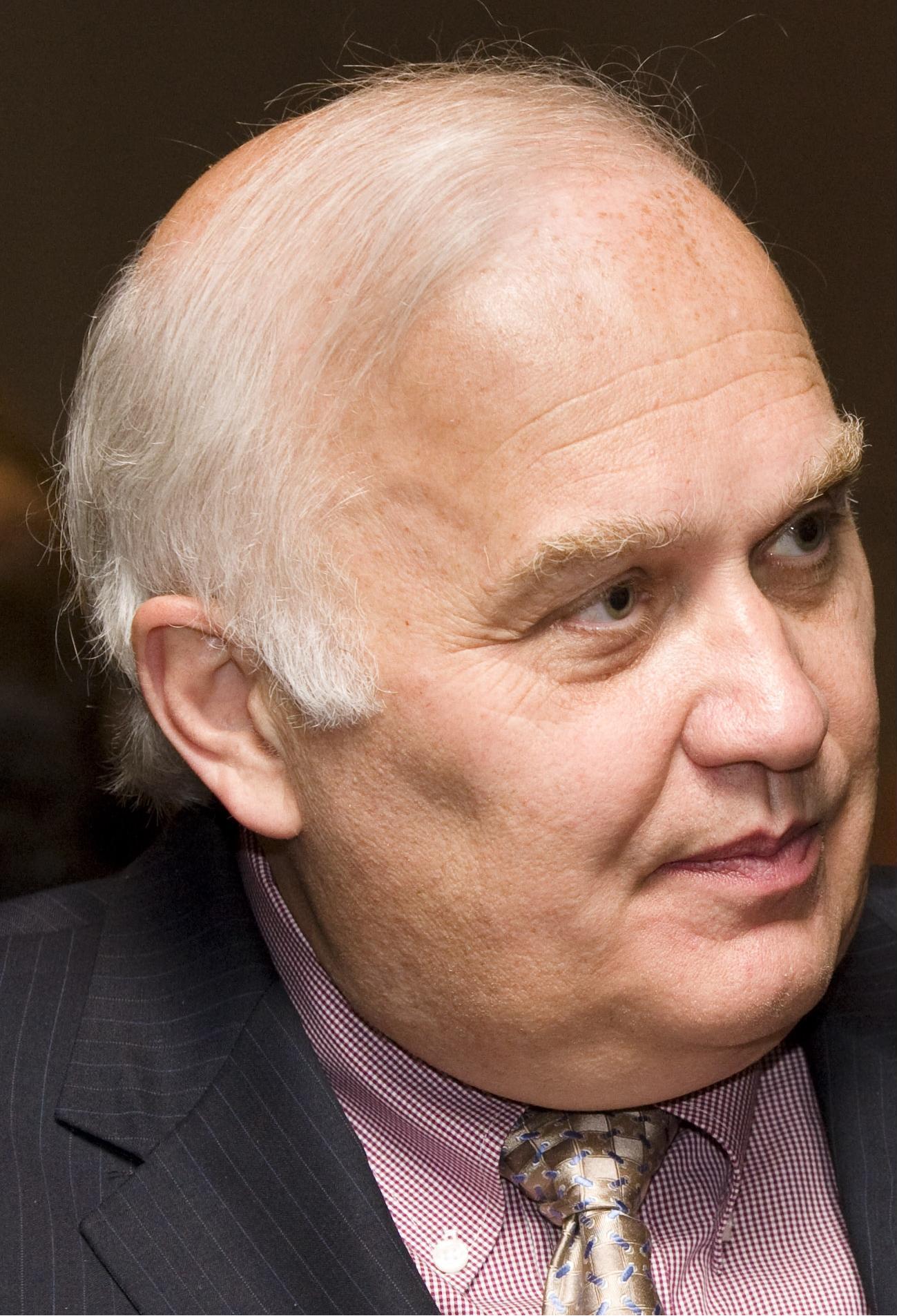
Feb. 14, 2023, © Leeham News: Ihssane Mounir was named senior vice president of Global Supply Chain and Fabrication for Boeing Commercial Airplanes (BCA). Appointed in December, he previously was the top salesman for BCA.
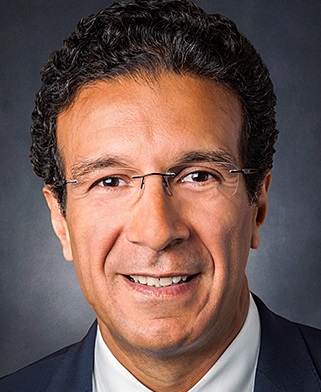
Ihssane Mounir. Credit: Boeing.
Mounir has a huge challenge ahead of him that goes beyond managing the logistics of BCA’s huge supply chain. He faces an irate group of suppliers who are increasingly openly angry. Some border on open rebellion.
As LNA reported last week, suppliers at the Pacific Northwest Aerospace Alliance (PNAA), some suppliers on the sidelines of the conference openly complained about Boeing’s lack of transparency and reliability. Some vowed to reduce their exposure to Boeing or even abandon working with the company. As always, Boeing’s Partnering for Success program—a long-running cost-cutting effort that demanded suppliers cut costs or be terminated—was another complaint.
Some who also supply Airbus but have to trim costs for it as well nevertheless praised Airbus’ gentler, collaborative approach vs Boeing’s threatening tactics.
The latter is relevant for some of the panelists.
Aerospace supply chain needs capital, which isn’t always easy to find–and it may be expensive
Subscription Required
By Scott Hamilton
Feb. 13, 2023, © Leeham News: The aerospace supply chain is still struggling to recover from the grounding of the Boeing 737 MAX, the suspension of deliveries of the 787, the delays to the Boeing 777X, and the COVID pandemic.
Labor shortages and workforce quality/experience is also a challenge for the supply chain.
Profits remain elusive and capital is available at high interest rates, if at all. CFM, GE, Pratt & Whitney, and Rolls-Royce continue to face technical challenges with their engines. The CFM LEAP and PW Geared TurboFan engines have durability issues and must be taken off wing for maintenance and warranty work at a fraction of the time their predecessor engines were on wing.
It’s a rather bleak picture painted of the state of the aerospace industry during the annual conference of the Pacific Northwest Aerospace Alliance (PNAA) last week in a Seattle suburb.
Summary
- Suppliers need capital; Boeing should return to 30-day payment terms for immediate capital injection.
- Recovery not over, suppliers can make better investments in defense.
- Without a new airplane, there’s no reason for suppliers to invest in commercial.
Bjorn’s Corner: Sustainable Air Transport. Part 57. Summary

By Bjorn Fehrm
February 10, 2023, ©. Leeham News: We started the present series around Sustainable Air Transport on the 7th of January 2022, more than a year ago. During this time, we have covered a lot of subjects regarding the emissions from Air Transport.
It’s time to wrap up the series and summarize what we covered and learned.
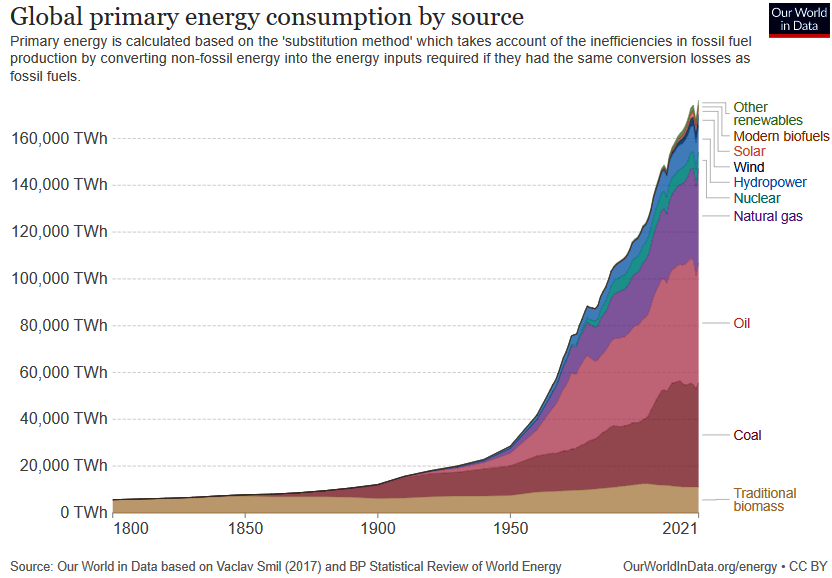
Figure 1. Our energy consumption and where it’s coming from. Source: Our World in Data.
HOTR: Boeing slammed in absentia at conference
By the Leeham News Team
Feb. 9, 2023, © Leeham News: Boeing wasn’t present, but that didn’t stop a succession of speakers and suppliers from slamming the company during the annual meeting of the Pacific Northwest Aerospace Alliance this week in Lynnwood (WA).
 Boeing boycotted the conference for the second year in a row. In October 2021, Boeing withdrew from the February 2022 conference over an alleged sexual discrimination lawsuit filed by a woman against the then-executive director of PNAA and against the organization. The lawsuit was settled out of court and the executive director today is a woman. But Boeing declined to return to the conference this year.
Boeing’s absence was roundly criticized by suppliers on the sidelines of the conference. The suppliers complained about Boeing’s payment policies (deferring payment to them for 90-120 days) after years of cutting prices under Boeing’s Partnering for Success. They also complained bitterly about Boeing’s lack of transparency and frequently changing production plans. Boeing should have been at the conference to face them and communicate with them.
Kevin Michaels, managing director of Aerodynamic Advisory, is a supply chain expert. For many years, he criticized Boeing’s approach toward the supply chain. Tuesday wasn’t any different. He once again criticized Boeing for its treatment of the supply chain. Noting that suppliers, mainly Tiers 1 and 2, went through “Partnering for Poverty 1 and 2” cutting prices, Boeing then promised payment terms of 30 days. In subsequent days, payments stretched to 60 days, 90 days, and now up to 120 days. Coupled with the 737 MAX grounding, 787 delivery suspension, and the COVID pandemic, the extended payment terms put additional stress on the suppliers.
In terms unusually blunt for Michaels in this forum, he predicted it will not be long before “the shit hits the fan.”
The long, slow death of Mitsubishi’s SpaceJet
By Scott Hamilton

The Mitsubishi MRJ90, rebranded the SpaceJet, was to be replaced by the M100. The M100 was Scope Clause compliant and certifiable, unlike the poorly conceived MRJ90. Credit: Leeham News.
Feb. 9, 2023, © Leeham News: Mitsubishi Heavy Industry’s (MHI) announcement this week that it finally killed the SpaceJet program is hardly new. This was apparent as far back as January 2020 when all the Canadian and American leadership at Mitsubishi Aircraft Corp (MITAC) was unceremoniously booted out. Then, in May 2020, using the COVID pandemic as an excuse, all US operations were closed; so was the recently opened Canadian engineering center; the budget was reduced by 95%; and nearly all the engineers at the home office in Nagoya, Japan, were laid off or reassigned.
MHI refused to state the obvious. Instead, officials said repeatedly that the program was “paused.” This drip, drip, drip was all about saving face. Thus, the slide in MHI’s presentation about why the program was finally being killed was more candid than expected.
What would be the ticket price influence of SAF?
Subscription required
By Bjorn Fehrm
Feb. 9, 2023, © Leeham News: I have the last weeks described the difference between Jet fuel and SAF, or Sustainable Aviation Fuel, in my Friday Corners. We could see it has emission advantages compared with fossil Jet fuel that goes beyond the CO2 reductions it offers.
It’s a cleaner fuel where the production methods can avoid the troublesome aromatic carbon molecules that causes soot to form in jet engine exhaust. With reduced soot, the generation of contrails reduces, which is beneficial for reducing global warming.
But we could also see that SAF should be costlier to produce as the production cycle is complete. Our fossil fuel’s raw material had their CO2-absorbing plant growth millions of years ago.
So, if we mix SAF into Jet fuel at different ratios, what will be the effect on ticket prices? How much more expensive would flying be when we use SAF or other measures like CO2 emission taxes are introduced? We use our airliner performance and cost model to find out.
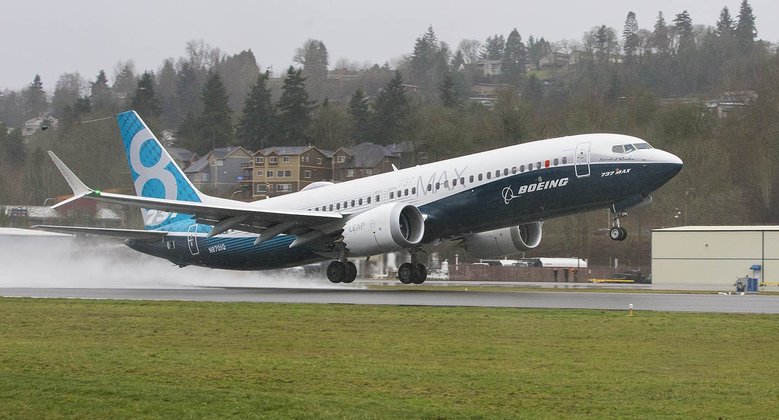
Figure 1. The typical short to medium-haul airliner, 737 MAX 8, we use in our calculations. Source; Leeham Co.
Summary:
- In addition to the aircraft operating costs, we must add other airline costs to understand ticket prices.
- Then we must look at the effects of revenue management and the type of flight, domestic or long-range.
Spirit gearing up to produce 42-a-month on 737 program by the end of 2023
Subscription required
By Bryan Corliss
Feb. 8, 2023, © Leeham News – Spirit AeroSystems plans to deliver 42 new-built 737 MAX fuselages a month to the Boeing Co. by the end of this year, executives said Tuesday.
 Whether that’s how many 737s Boeing is delivering to customers is not for Spirit to say, CFO Mike Suchinksi told analysts during the company’s year-end earnings call.
“What Boeing delivers to their customers is, we have no purview. That’s on the Boeing side,” he said. “We’re just trying to communicate to you what the contract schedules have been and what we expect to produce internally and what we expect to ship to Boeing and to get paid for.”
But Spirit and its suppliers still have major challenges to overcome before they can get to those higher rates, Suchinski and CEO Tom Gentile warned. The company, which struggled through a tough year in 2022, is making major cash outlays in early 2023 to acquire the people and materiel it will need to reach those higher rates, and that will weigh on profitability for the next few quarters.
- Losses doubled in fourth quarter
- Outlook: 420 737s and 650 A320s
- Some suppliers in ‘deep distress’
- Spirit hiring, but new workers need time
Read more
‘What kind of vision is that?’ Industry analysts scorch Boeing and CEO Calhoun
By Bryan Corliss
Feb. 7, 2023, © Leeham News – Less than a week after Boeing CEO Dave Calhoun stood in the company’s Everett factory and vowed to “maintain this leadership culture forever,” a panel of top aerospace industry analysts blasted Boeing’s corporate culture and criticized Calhoun’s leadership, saying he lacks vision, industry knowledge – even charisma.
Aerospace analyst Kevin Michaels.
“No new aircraft until 2035,” said AeroDynamic Advisory Managing Director Kevin Michaels. “What kind of vision is that?”
Having Calhoun at the helm of Boeing at this juncture is “the worst-case scenario,” said Michaels’ partner at AeroDynamic, Richard Aboulafia. “(Calhoun) is somebody not only not from this industry, but someone who maintains a willful ignorance of it.”
The challenges Boeing faces mending fences with all the groups it has disappointed or alienated in the past 20 years – customers, suppliers, regulators and workers – are immense and it may be more than one person can handle, said Bank of America Managing Director Ron Epstein, who also was on the panel.
“It’s a hard, hard, hard job right now, to be the president of the Boeing Co.,” Epstein said.
- Panel rips lack of new product development
- Without a new airplane, whole industry is challenged
- Panel: Boeing struggles to retain engineering talent
- Michaels: Suppliers in ‘crisis’
Pontifications: One “good” engine in future for RR, faulty business strategy and model: JP Morgan
By Scott Hamilton
Feb. 7, 2023, © Leeham News: Our report last week about Rolls-Royce’s new CEO characterizing the company in dire straits is just part of the story. Shortly before that, on January 18, JP Morgan issued a 38-page dissection of the company that perfectly encapsulates what LNA has pointed out in the past about its commercial engine business.