
Leeham News and Analysis
There's more to real news than a news release.


Emirates’ mid-range choice
By Bjorn Fehrm
Nov. 10 2015, ©. Leeham Co: The Dubai Air Show is on its second day and there are no mega orders. The one that should have been, the mid-range requirement for Emirates Airline, has been postponed, not only to “next year” but for “another year.”
What is the reason? Are we seeing a widebody oversupply fueled by used Boeing 777s/Airbus A330s being available in the market “for very low prices,” as suggested by Delta Air Lines CEO Richard Anderson? Are these the first signs of a damping of an order bonanza which has been going on for five years? Will things be more quiet (or should we say normal) going forward?
We don’t think so. Emirates just want to make the right choice and the equation has got more complicated as it has been working the problem. And it is in no hurry.
Pontifications: A380neo? Try A380TXWB. Dubai Air Show and other Odds and Ends
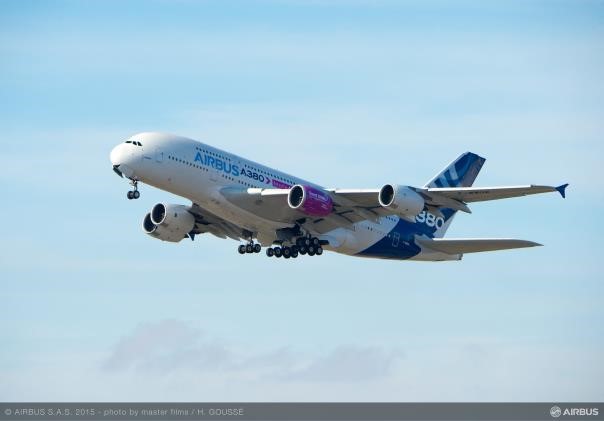
Click on image to enlarge. Airbus photo.
Nov. 9, 2015, (c) Leeham Co. Airbus last week launched its A380 flying test bed with the A350-1000’s Rolls-Royce Trent XWB 97,000 lb engine placed in the number two position.
The first thing that came to mind when I saw the photo was that if Airbus put three more engines on it, you’d have the A380neo. Or maybe call it the A380TXWB. Done and dusted, as they say in England.
Is FedEx poised to order 777Fs?
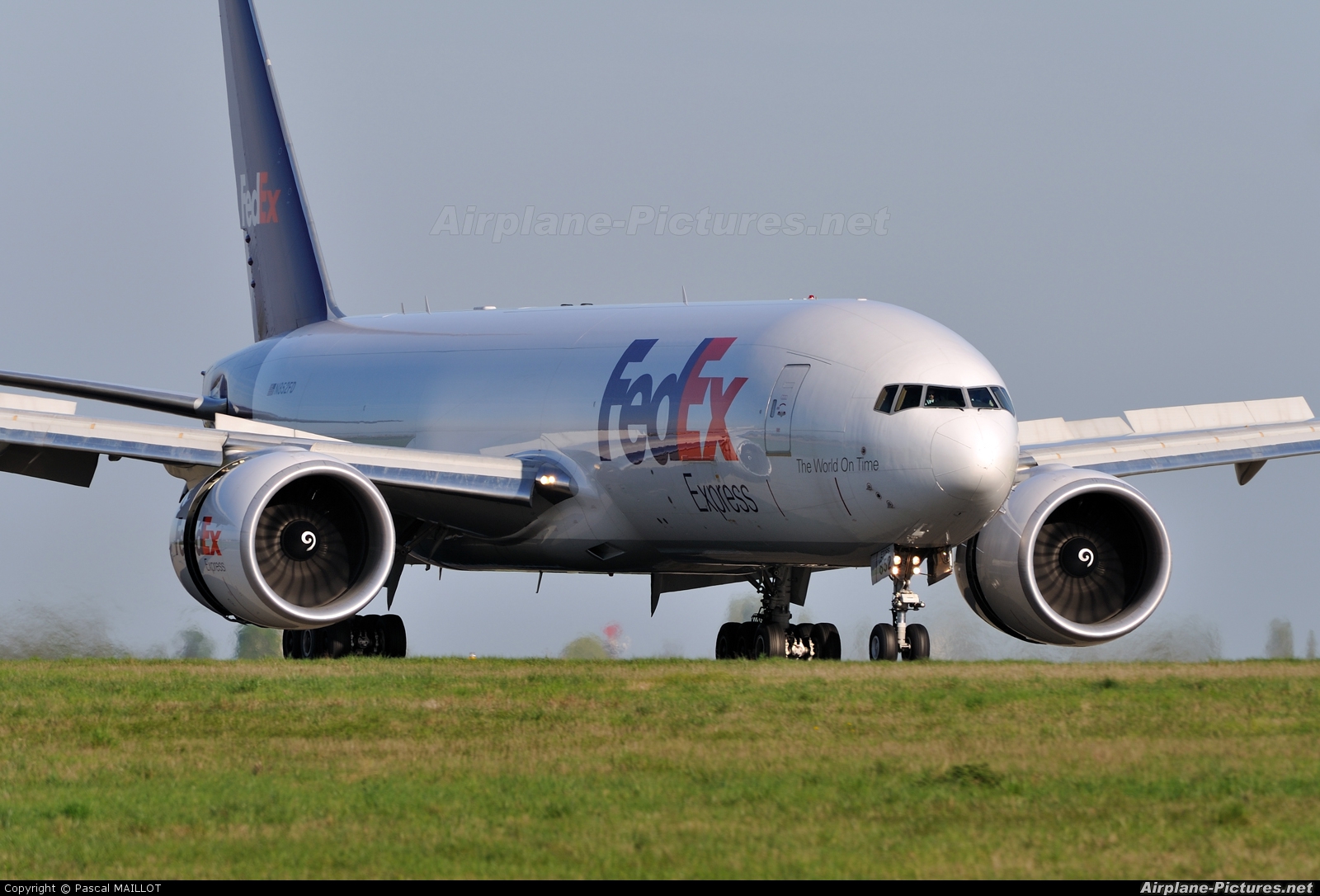
FedEx Boeing 777. Airplane-Pictures.net via Google images.
Oct. 20, 2015. (c) Leeham Co.: Two developments at FedEx may give a boost to Boeing’s slow-selling 777 Classic program.
Pilots approved a six year contract that had been open for some time. Pay increases an average of 10% and other contract benefits were achieved.
Delta Air sees 777 surplus developing
Subscription required.
Oct. 14, 2015, © Leeham Co.: Delta Air Lines sees a major surplus of young Boeing 777s developing in the near term as key operators plan to let the aircraft go from leases or retirements. The looming surplus makes it more likely that increased pressure on Boeing’s efforts to sell new 777s, and to sell them at reasonable margins, will become increasingly difficult.
Goldman Sachs, the investment bank, sees Delta’s comments as further evidence supporting the likelihood there will be a sharp production rate reduction as early as 2017, perhaps down to six/mo.
Separately, Bernstein Research’s aerospace analyst Doug Harned, also see 777 rates coming down to the equivalent of 6.5/mo in 2017, six in 2018 and five in 2019. The first 777X isn’t scheduled for delivery until 2020, when Harned predicts only five deliveries of the X.
Qantas robbed of longest flight by Emirates and then Singapore airlines
By Bjorn Fehrm
Oct. 14 2015, ©. Leeham Co: The planned “Flight 21” of Singapore Airlines between Singapore and New York would rob Qantas Airways of the title of flying the longest direct flight in the world come 2018.
Qantas operates today’s longest flight, the one between Sydney (SYD) and Dallas- Ft. Worth (TX) (DFW), using its Airbus A380. Emirates plans to take that crown next year with a Dubai (DXB) to Panama City (PTY) flight, Figure 1. It’s fractionally longer than the Qantas flight when comparing great circle distances (the 2015 and 2016 label).
Qantas CEO Allen Joyce just announced that the airline plans to take that title back when the Boeing 787-9 arrives in 2017. This aircraft enables direct service to London Heathrow (LHR) with flights from Perth (PER) in Western Australia, a flight of 7830nm or 18 hours, labeled 2017 in Figure 1.
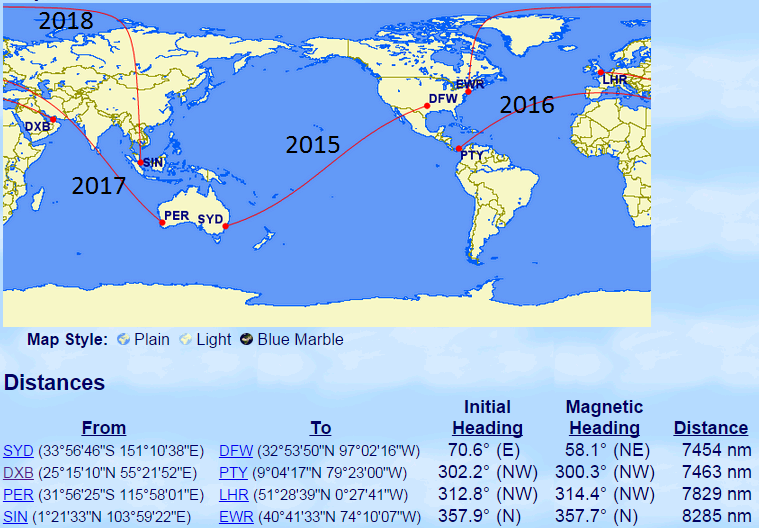
Figure 1. Worlds longest flights 2015 to 2018. Source: Great Circle Mapper.
ISTAT Europe 2015 in Prague: LCCs and Turkish airways take over Europe
By Bjorn Fehrm
06 October 2015, ©. Leeham Co: The global airline industry is on a steady course as a whole, but there are dramatic changes within Europe as low cost carriers, plus Turkish Airlines, redraw the competitive landscape.
China’s current economic softness raises concerns, with an independent analysis concluding that economic growth here is 2%-3% instead of the announced rate of 7%-8%.
Still, the mixed messages given at the annual ISTAT meeting in Europe this week didn’t put a damper on the mood of 1,200 delegates here in Prague.
- The airlines are fine for 2015 as the fuel price is low but what about 2016? China is braking to a halt and Asia is getting infected? Will the infection spread? Will the airlines return to bad results?
- What about the European airline industry? Can the low costs units of IAG, Lufthansa and Air France-KLM compete with the up-and-coming LCCs? Who is king of long haul travel out of Europe?
- What about the order glut? When Asia slows, will the order bubble break?
Evaluating airliner performance, Part 4
By Bjorn Fehrm
Subscription required.
Introduction
Oct. 05 2015, ©. Leeham Co: In the final part of our series about comparing and evaluating economic and operational performance of airliners, we will combine the different Cash Operating Costs (COC) with the capital and insurance costs to form the Direct Operating Costs (DOC).
We will also look at typical values for the different costs that make up the DOC for a single aisle Boeing 737 or Airbus A320 aircraft and a typical dual aisle Boeing 787 or Airbus A330neo aircraft.
Summary:
- We describe the cost that form an aircraft’s capital costs and how these differ between an ownership or a lease model.
- When forming the Direct Operating Cost (DOC). The low fuel price of $1.50 per US Gallon has lowered the fuel’s part of DOC to around 20% for single aircraft and 30% for dual aisle aircraft on their typical mission types.
- This means that other costs types in the DOC gets a more dominant role. We show which are the costs to look out for.
- Finally we give the typical CASM (Cost per Available Seat Mile) values for single and dual aircraft in the market.
Pontifications: Boeing view of market conditions today
By Scott Hamilton
Sept. 14, 2015, © Leeham Co.: Randy Tinseth, Boeing’s VP Marketing, spoke with Bernstein Research last week on a variety of topics. In a note issued after the conversation, analyst Douglas Harned reported:
- “Boeing views the 140 orders to date as a good start, and that high demand for this model will come later when it is closer to being in service. Boeing is sold out for all models of the 787 through the decade, so there are few opportunities for near/medium term deliveries in any case. The company sees the 787-10 as a natural replacement for 767s, A330s and some 777s, and expects that these will drive strong replacement

Randy Tinseth. Photo: Boeing.
demand in the early 2020s.”
- “Airlines have been upgauging narrowbodies away from the 737-700 and A319. Boeing expects that the 737-900ER will gain share, but that the 737-800 (or soon the 737MAX-8) will remain its most popular narrowbody. Airlines have been moving to larger narrowbodies and using slimline seats to add capacity to existing airplanes. Boeing believes that, while this trend does exist, the market will be centered on the 737-800/A320-size airplanes, but with a larger share than in the past going to 737-900s/A321s. Boeing believes that its product set offers greater flexibility since the 737-800 and 737-900ER are closer together in size that are the A320 and A321.”
- “In terms of orders for the 777, the companyis sold out in 2016 and is over 60% sold out for 2017, with many campaigns in progress. Production of the 777X would start in 2018 and current 777 rates will be lowered to introduce the 777X in the final assembly line (consistent with our projections). There are some 737NG slots left in 2018 and 2019, but the first available slots for the 737MAX are now in 2021.”
Airbus FAL in Mobile (AL), Part 2
Sept. 13, 2015, (c) Leeham Co., Mobile (AL): The new Airbus Final Assembly Line (FAL) opening today here will serve the US market, a plan that follows the philosophy when the company opened an FAL in

Barry Eccleston, president and CEO of Airbus Americas. Photo via Google images.
Tianjin, China years ago.
Just as that plant is intended to serve the Chinese airlines and lessors, so is this one for the US market.
Barry Eccleston, president and COO of Airbus Americas, said there remains plenty of growth in the North American market, which is considered mature in the global airline industry.
Traffic is going to go up 40% over the next 20 years, he said. Ninety percent of this 40% will come from existing routes, says Eccleston. This means the airliner are buying larger airplanes. A major number of the orders are for the A321s, which can carry up to 240 passengers.
“Our original plan was to open the Mobile plant with A320s, but it is with A321s.”
Even at 4/mo, the Mobile facility isn’t filing the need for A320s in the North American market, Eccleston said. There is a demand for nearly 6,000 passenger and freighter aircraft in North America over 20 years: 4,730 single-aisles, 1,000 twin aisles and 170 A380s.
Airbus A350-900ULR enables Singapore Airlines to reopen Singapore-New York
By Scott Hamilton and Bjorn Fehrm
The A350-900ULR enables Singapore Airlines to reopen the Singapore-New York “SQ flight 21” that was closed 23 November 2013. It was the world’s longest flight, using an Airbus A340-500 until SQ discontinued it during the more recent high fuel prices that rendered the flight uneconomic.
Update: Singapore has now released this picture through twitter:
It will also enable Singapore to restart direct flights to the US West Coast, something that the main competition, such as Cathay Pacific Airways, has been able to offer because of a better geographical position. The A350-900ULR now closes that competitive gap for Singapore Airlines.
Singapore has converted seven of its A350-900s to the -900ULR version, deliveries will start in 2018. The ULR will be in a custom premium configuration of 170 seats, about 60 more than used on the A340-500.
Read more
69 Comments
Posted on October 13, 2015 by Scott Hamilton
Airbus, Airlines, Leeham News and Comment
A340-500, A350-900, A350ULR, Airbus, Cathay Pacific Airways, Singapore Airlines