
Leeham News and Analysis
There's more to real news than a news release.


Thinking outside the box at Pratt & Whitney
June 16, 2016, © Leeham Co.: “I’m working on six or eight engines. The more the better.”
 This startling statement comes from Alan Epstein, vice president of technology and the environment for Pratt & Whitney.
It runs counter to everything the airline industry has believed since the introduction of the twin-engine Boeing 767 was qualified for ETOPS in the early 1980s: fewer engines are better.
Epstein explained his statement during an interview with LNC at the United Technologies Media Days last week in Hartford (CT).
Epstein last year at the same event told LNC he was looking at four-engine technology for future airplanes. We asked him this year if he was still looking at four engines. That’s when he said he was looking at six.
It’s his job to think outside the box. This one clearly qualifies.
Mid-Market airplane comes before A320, 737 replacement: Pratt & Whitney exec
Subscription Required
Introduction
June 16, 2016, © Leeham Co.: A middle of the market airplane will come before a replacement for the Airbus A320 and Boeing 737, predicts Alan Epstein, vice
Alan Epstein, VP technology and environment, Pratt & Whitney.
president of technology and the environment for Pratt & Whitney.
“The challenge to the business of the narrow-bodies is the A320s and the 737s are so learned-out that Boeing and Airbus are so efficient at building those airplanes, that their inherent cost is so low, it’s extremely difficult to move into that market,” Epstein said. “Because the learning curve, you need incredibly deep pockets and you’re going to be negative for a long time.
“I think that also applies to Airbus and Boeing,” Epstein said, referring to the prospect of a new single-aisle aircraft.
Summary
- New single aisle airplane would be a “white elephant” for 10 years.
- Engines need to be at least 10% more efficient than today’s GTF and LEAP for a new single-aisle aircraft.
- Middle-Market airplane likely to come first.
Pontifications: GTF faces steep learning curve on costs
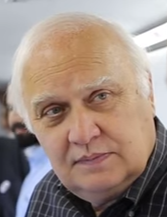
By Scott Hamilton
June 13, 2016, © Leeham Co.: The current cost to build the new Pratt & Whitney Geared Turbo Fan engine is $10m per engine.
Greg Hayes, CEO of United Technologies. Photo: Hartford Courant via Google images.
This has to come down by a factor of five, said Greg Hayes, the CEO of United Technologies, parent of PW.
This also illustrates the learning curve experienced by engine OEMs, a topic frequently discussed by the airframe OEMs but not so much by the engine manufacturers.
Hayes made the remarks at the UTC Media Day in Hartford (CT) last week. UTC is the parent of Pratt & Whitney, United Technologies Aerosystems (UTAS) and other non-aviation companies.
UTAS sees increasing electronic architecture in future airplanes
Subscription Required
Introduction
 June 9, 2016, © Leeham Co.: The debate continues whether the next new, clean-sheet airplane will be a Middle of the Market aircraft (MOMA) or replacements for the Airbus A320 and Boeing 737 families.
Along with he studies of new airplanes are those undertaken by suppliers. Electric Systems, a unit of United Technologies Aerosystems (UTAS), is working with the OEMs to determine what level of electric systems will be used in the new aircraft, whatever is selected to go next.
Summary
- Electric systems on the Boeing 787 are up to 80% more efficient than those on the Boeing 777 Classic.
- The 777X retains the Classic systems or commonality.
- Benefits decline the shorter the flight.
Irkut MC-21 rolls out
June 9, 2016: Irkut rolled out its challenger to the Airbus A320 and Boeing 737-800/8

MC -21 rollout. Photo: AIN Online via Google images.
yesterday the MC-21-300.
The new airplane is powered by either the Pratt & Whitney GTF or a Russian engine. A report from a Russian-sponsored media site is here.
LNC previously published an analysis of the economics of the MC-21 behind our paywall. We’ve opened up the first of four parts to all readers here.
UTC media day 2: GTF hits 99.5% dispatch reliability rates
June 7, 2016: The new Pratt & Whitney Geared Turbo Fan, on seven Airbus A320neos,

Bob Leduc, president of Pratt & Whitney.
have achieved more than 2,000 revenue cycles with no returns or rejected take-offs, says Bob Leduc, president of Pratt & Whitney. The engines have a 99.5% dispatch reliability. The last time this level was achieved was with the introduction of the Boeing 777, which at the same point had a 100% dispatch reliability rate.
UTC media day 2: PW addresses Under-Performing supply chain
Day 2 of the United Technologies Corp (UTC) Media Days is focused on Pratt & Whitney.
June 7, 2016: Pratt & Whitney officials today clarified an eye-popping statement yesterday by Greg Hayes, CEO of parent United Technologies, that 44% of the suppliers on the new Geared Turbo Fan engine were performing to goals.
UTC media day 1: Intelligent aircraft, aftermarket support
June 6, 2016: Intelligent aircraft–systems that communicate more fully within the aircraft

Mauro Atalla, UTC Aerospace Systems
and between the aircraft and the ground–is increasing and it requires more and more power to achieve, says Mauro Atalla, vice president, engineering and technology-sensors and integrated systems of UTC Aerospace Systems.
Intelligent sensors on an aircraft have been reduced in the number on board an aircraft even as the needs greatly increase, he said. There has been a reduction of more than 50%, providing a 50% weight reduction.
UTC media day 1: UTAS, twice the size of any other aerospace systems company
Note: United Technologies Corp (UTC) is holding its annual Media Days today and tomorrow. We’re providing reporting from the event. This is the first time in our long participation that UTC Aerospace Systems is presenting. UTAS is a major supplier and service provider to all the airframe OEMs.
June 6, 2016: UTC Aerospace Systems is just four years old, following mergers with

Dave Gitlin, CEO of UTC Aerospace Systems (UTAS).
Hamilton Sundstrand and Goodrich–the largest in aerospace history, says Dave Gitlin, president of UTC Aerospace Systems.
UTAS provides electrical power and bleed air systems, engine, starters, power systems, all the circulating fans on the Boeing 787, monitoring systems and much more. Evacuation slides, the Ram Air Turbines, landing gear, flaps and slat control systems, brakes and thrust reversers.
Airbus aircraft programs in review
By Bjorn Fehrm in Hamburg
Introduction
May 31, 2016, ©. Leeham Co: Airbus went through a complete review of all their aircraft programs as part of their yearly briefing for media in Hamburg today. A lot was said regarding the status for the different programs by Airbus CEO Farbice Bregier, its COO customers John Leahy and Executive VP Strategy and Marketing Kiran Rao.
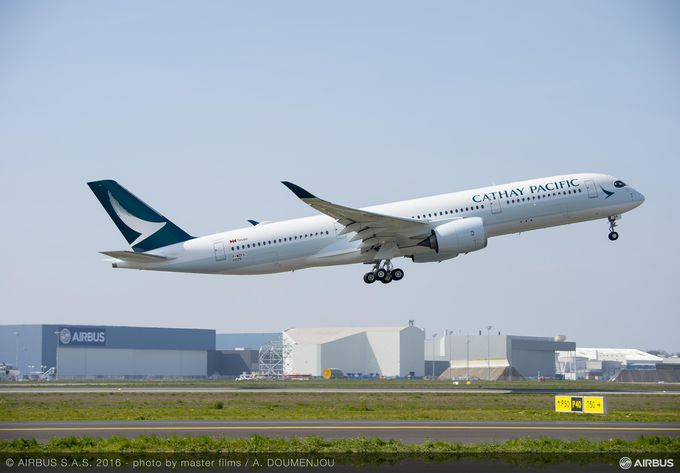
Figure 1. Most recent A350 delivery was to Cathay Pacific. source: Airbus.
The briefing was given against a backdrop of weak orders and deliveries for the first five months of the year. Both Bregier and Leahy said, “This is to be expected, it’s not sustainable that we have Book-to-Bill ratios (orders vs. deliveries) of over 1.5 or even close to two for many consecutive years. We have a backlog of 6,700 aircraft that customers expect us to deliver and they have little appetite to order new aircraft when they can earliest get them by 2021 at the earliest.
“We are now in a period of focus on deliveries and we can expect and be happy with a book to bill ratio of around one for the coming years. The extraordinary backlog also justifies our decision to increase production to 60 units per month for our A320 single aisle program.”
Here follows what was said for each of the programs.