
Leeham News and Analysis
There's more to real news than a news release.



Bjorn’s Corner: The challenges of Hydrogen. Part 3. Application space.

By Bjorn Fehrm
August 7, 2020, ©. Leeham News: In our series on Hydrogen as an energy store for airliners we now look at the emission targets one is chasing and then discuss for what type of airliner does a hydrogen propulsion system make sense.
The CO2 emission target as expressed by Air Transport Target Group (ATAG) is shown in Figure 1. The graph is from the EU report on Hydrogen Powered Aviation.
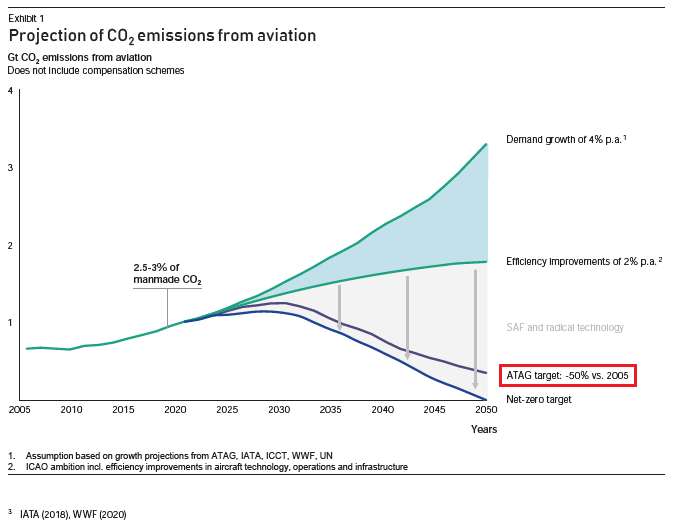
Figure 1. The development of CO2 from aviation and the ATAG 2050 target. Source: EU Hydrogen Powered Aviation report.
US Regional Consolidation Began Before Covid
Second in a Series on the Future of Regionals
Subscription Required
Introduction
By Kathryn B. Creedy
Aug. 6, 2020, (c) Leeham News: Many might assume the recent loss of three regionals – Compass, Trans States and ExpressJet – is Covid related.
 What is actually happening is the long-anticipated consolidation of the regional airline industry coupled with fleet restructuring and the most recent fallout of the pilot shortage crisis that began in 2013.
Reducing the number of regional partners also streamlines the inherent inefficiencies of the regional/major model.
Summary
- Regional airline industry is volatile.
- Mainline-regional model broken for many years.
- Rising costs eliminate some advantages.
Embraer’s 2Q2020: Revenues more than halved, causing increasing losses
By Bjorn Fehrm
August 5, 2020, ©. Leeham News: Embraer presented its 2Q2020 results today. The revenue virtually halved for 1H2020 to $1.17bn (2.2bn 1H2019) and shrank 61% for the second quarter to $537m ($1,379m 2Q2019), after delivering only four E-Jets during the quarter (26).
Total losses were -$342m ($27m), whereof -$202 was non-operational charges. The COVID crisis hits commercial aircraft deliveries, but Embraer had no cancellation of E-Jet orders in the quarter.
The Executive jet segment is holding up comparatively well, as is Defense and Security.
HOTR: Boeing warns of forward losses on 787, 777X programs
By the Leeham News Staff
Aug. 5, 2020, © Leeham News: In another demonstration of the negative impact of the COVID-19 crisis, Boeing warned that two flagship airplane programs could face forward losses.
Neither the 787 nor the 777X are in forward loss positions yet. A forward loss means Boeing won’t make money on the program.
Despite the 787 incurring more than $30bn in deferred costs, Boeing hasn’t taken a write down. The deferred costs have been burning off since 2015. Other programs have been subjected to forward losses, including the 747-8, VC-25 (Air Force One) and the KC-46A tanker.
But with the production reduction of the 787, down to 6/mo in 2021, Boeing now says there is a risk to a forward loss.
Boeing’s big opportunity
Subscription Required
Now open to all Readers.
By Scott Hamilton
Analysis
Introduction
Aug. 3, 2020, © Leeham News: Boeing has one of the biggest opportunities in decades.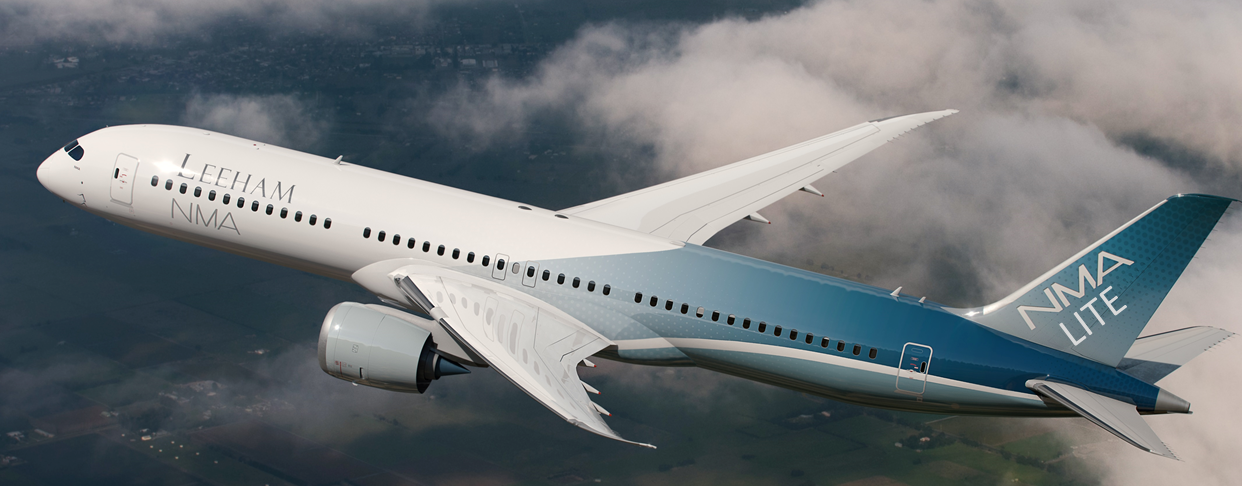
This is counter-intuitive, given the disaster it faces with the COVID-19 crisis.
But in chaos, there are opportunities.
There are some key assumptions that must be made. But these are not outlandish.
Summary
Assume:
- Boeing survives the virus crisis.
- Boeing consolidates 787 in Charleston.
- 787 demand doesn’t return, reactivating Everett line.
- Sharp gains in production efficiency.
- These lead to the Big Opportunity.
HOTR: NOK Air, 3 more bite the dust in COVID fall-out
By the Leeham News Staff
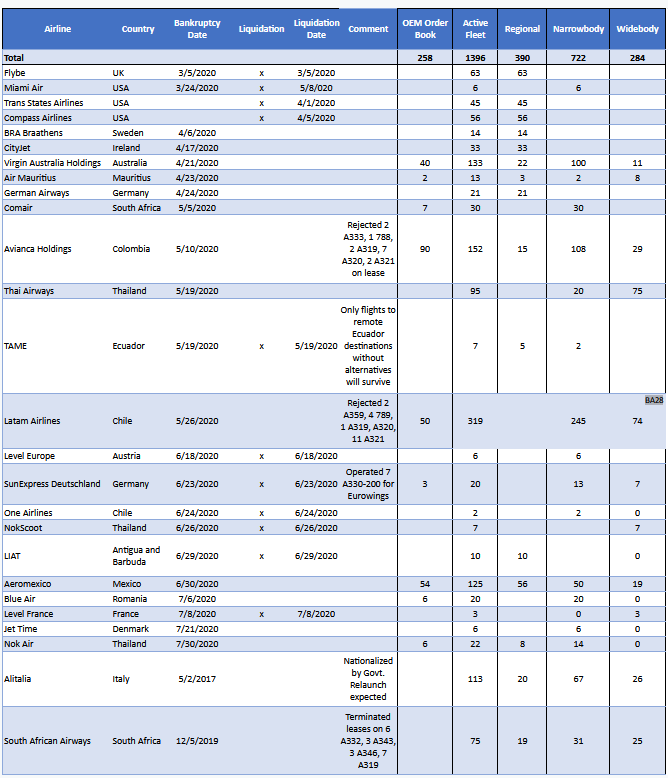
July 31, 2020, © Leeham News: NOK Air of Thailand is the latest carrier to filed for bankruptcy.
LNA’s monthly tracking of failed carriers adds NOK, Jet Time, Level and Blue Air to the list of carriers in bankruptcy since COVID collapsed the global airline industry beginning in mid-March.
Bjorn’s Corner: The challenges of Hydrogen. Part 2. Ecosystem.
By Bjorn Fehrm
July 31, 2020, ©. Leeham News: In our series on Hydrogen as an energy store for airliner use we begin by looking at the needed ecosystem that can produce and distribute Hydrogen.
When I was skeptical about hydrogen as a means to propel our airliners three years ago, the main problem was the lack of this ecosystem. That year, in 2017, 13 transport and energy companies formed the Hydrogen Council, to create this ecosystem. Today the council has 81 members, with 22 joining in the last year, Figure 1. The list reads as Who’s Who in the transport and energy sector.
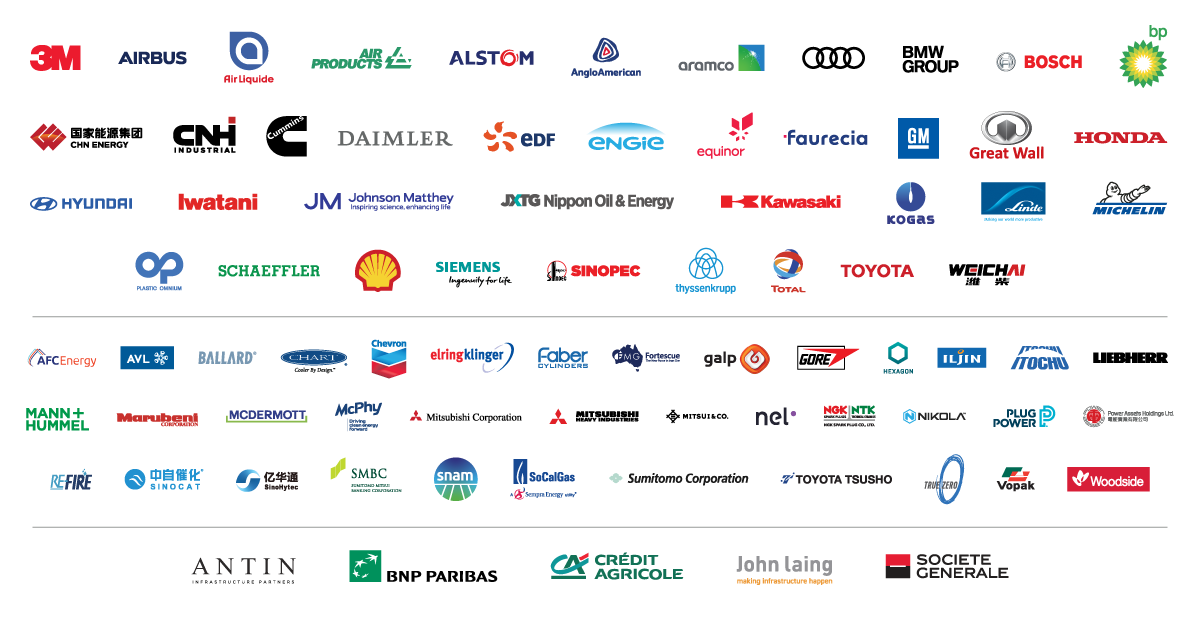
Figure 1. Members of the Hydrogen Council. Source: Hydrogen Council.
COVID production rates “firm” up
By Scott Hamilton
July 30, 2020 © Leeham News: Airbus and Boeing refined their COVID production schedules this week slightly downward in some cases.
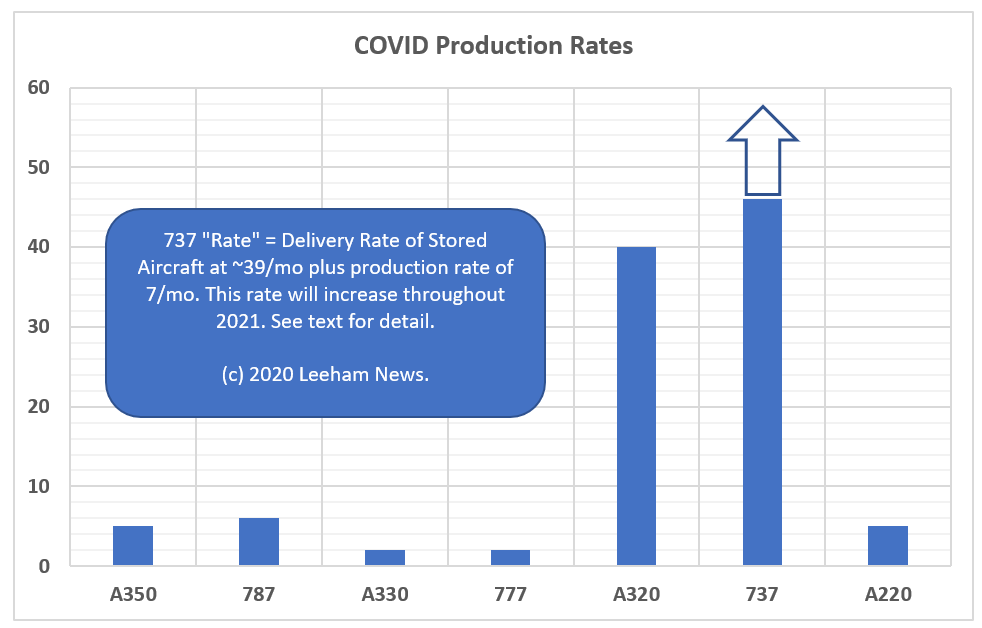
Airbus largely held to its previously announced production schedule. It dropped the A350 rate by one, to 5/mo from six. The A320 rate remained at 40/mo, as did the A330 rate at 2/mo. The A220 rate is returning to 4/mo in Montreal and 1-2/mo in Mobile.
Airbus 1H2020; “We have reached the right production level for the pandemic”
By Bjorn Fehrm
July 30, 2020, © Leeham News: Airbus presented its results for the first half of 2020 today. Airbus CEO, Guillaume Faury said on the analyst call “We made a large adjustment to lower production rates end April. We are there now and it seems the right level. Except for a small adjustment for A350, from six to five per month, we are happy, we have found the right level for the crisis”.
The group revenue settled at €18.9bn for the first half of 2020 compared with €30.9 a year ago, with deliveries at 196 commercial aircraft (389 1H2019). EBIT adjusted for the first half is €-0.9bn, the size of the COVID-19 extra costs charge.
Airbus says A350 loans now WTO compliant
By Bjorn Fehrm
July 30, 2020, ©. Leeham News: Airbus CEO Guillaume Faury announced Friday that it had made the A350 Repayable Launch Investment (RLI) loans fully WTO compliant, to break the deadlock in the 16-year-old fight with Boeing over state subsidies to their airliner industries. The claim was reiterated today during the Airbus second-quarter earnings call.
“We have fully complied with all the WTO requirements. These additional amendments to the A350 RLIs demonstrate that Airbus has left no stone unturned to find a way towards a solution,” said Faury. “This is a clear signal of support to those who are suffering from the severe impact of the tariffs imposed by the USTR, especially at a time when industries are hard hit by the consequences of the COVID-19 crisis.”
