
Leeham News and Analysis
There's more to real news than a news release.


AVi8 to be ‘clearing house’ for lessors, OEMs, airlines
April 24, 2017, © Leeham Co.: AVi8 Air Capital is a new lessor with a different business model.
Instead of the standard operating lease model, Avi8’s mission is to buy groups of airplanes from other lessors and later sell them. AVi8 intends to be a clearing house for other lessors.
 The company, which pronounces its name with the long “A” (as in aviator), was formed last year and expects to conclude its first transaction this year.
“The difference between AVi8 and other leasing companies is as follows,” says Sisson. “When I was running AWAS, I was told by a number of investment banks that you get economies of scale by getting between $12bn and $18bn in assets. You can be bigger than that, but when you get between $12bn and $18bn, you capture real economies of scale – you’re buying enough new aircraft from OEMs, financing aircraft in bulk in capital markets/bank syndicates/Export Credit agencies, and leasing enough aircraft to airlines globally.”
This, among other things, was important to the rating agencies, Sisson said.
Bjorn’s Corner: Keeping airliners operational

By Bjorn Fehrm
April 20, 2017, ©. Leeham Co: We expect our flights to depart on time and with 100% safety. At the same time, the aircraft is used up to 14 hours and flies up to 5-6 missions a day.
This means 1,800 flights a year. As airliners will last 25 years, we talk about 45,000 flights with 99.7% dispatch reliability and 100% safety.
It’s clear the aircraft must be cared for in a special way. We’ll discover how.

Figure 1. The first modern maintenance program was formed around the Boeing 747, here at the roll out in 1968. Source: Wikipedia.
Could an NMA be made good enough? Part 5
By Bjorn Fehrm
Subscription Required
Introduction
April 20, 2017, © Leeham Co.: After defining the fuselage and wings, it’s now time for the engines. We go through the sizing criteria for engines for airliners and find the size of engine that is needed for the NMA.
The NMA will need engines which are larger than the single aisle engines for Airbus’ A320neo and Boeing’s 737 MAX. But they will be smaller than the next size up for modern engines, the GEnx-2B for Boeing’s 747-8.
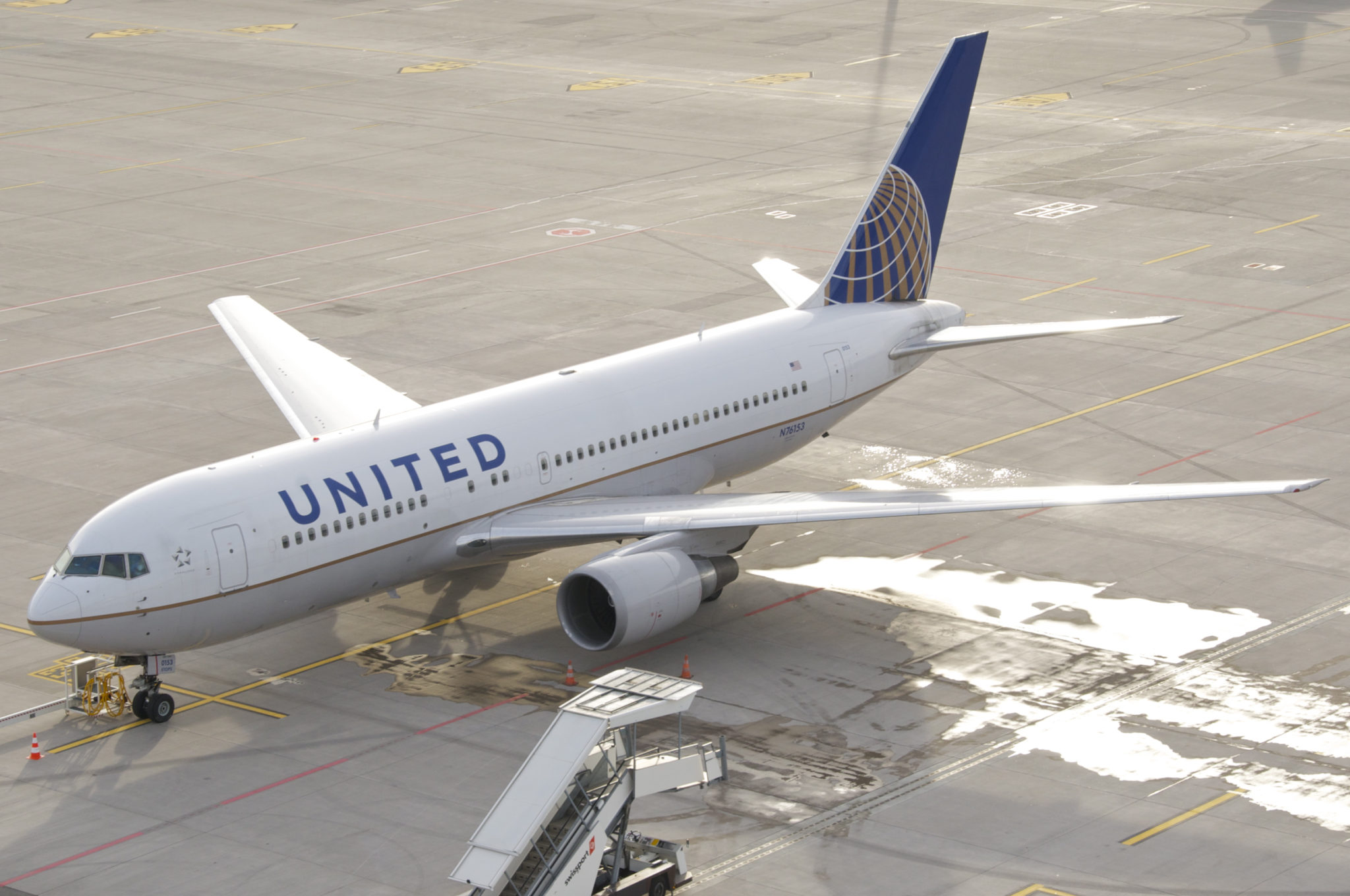
Figure 1. The NMA takes more and more the shape of a 767 replacement (A United 767-200). Source: United
This means the NMA will need new engines, at least 50% larger than the present engines designed for A320neo and 737 MAX.
Summary:
- An NMA engine will be sized by V2 safety speed or Maximum Continuous Thrust (MCT) criteria.
- The normal Top of Climb (ToC) sizing point will be less stressing for a twin engine airliner like NMA.
Aeroflot, the route to a modern airline, Part 2
By Bjorn Fehrm
April 19, 2017, ©. Leeham Co: In our second article about Aeroflot, the Soviet Union flag carrier that transformed to a modern airline, we will cover the period from the fall of the Soviet Union until 2010.
This was the difficult period for all participants. The old structures no longer existed and were replaced with… nothing, followed by uncertainty and a long struggle to get back to normal.
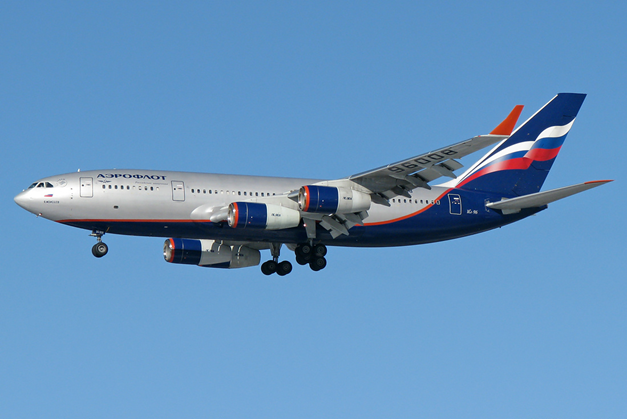
Figure 1. IL-96-300, a Soviet long range aircraft which stayed in the Aeroflot fleet until 2014. Source: Aeroflot.
Asian airline shift portends big ramifications
Subscription Required
Introduction
April 17, 2017, © Leeham Co.: A shift is underway among Asian airlines that could have ramifications for the airframe and engine manufacturers and, by extension, their suppliers.
It doesn’t appear, however, that aerospace analysts in the US and Europe realize this shift. At least none has written about it that we’ve seen among the research notes we receive.
Summary
- The creation of the Value Alliance of Low Cost Carriers brings together eight LCCs under one alliance.
- AirAsia faces a competitive threat.
- Full service carriers also face a threat, particularly those in Japan, concludes one aerospace analyst team in the region.
- Airbus, Boeing have a backlog of more than 1,000 airplanes with the VALCC group and hundreds more with other airlines.
Read more
Pontifications: Lessor cites cool reception to MAX 10
By Scott Hamilton
April 17, 2017, © Leeham Co.: Buckingham Research Group last week issued back-to-back notes about Boeing. One was a recap of an investors call with Steve Rimmer, CEO of Altavair Airfinance (nee Guggenheim Aviation partners). The other was BRG’s earnings preview, the first off the mark for Boeing’s earnings call on April 26.
I’ll include a summary of BRG’s earnings preview in a subsequent post when other analysts issue their previews.
BRG’s Rimmer note is lengthy and covers industry issues beyond Boeing. Here are a couple of the Boeing-focused points:
Airbus won’t hit 1:1 book:bill this year
 April 14, 2017: Airbus won’t hit a 1:1 book:bill (sales:deliveries) this year and maybe not for the next few years, it was revealed at the annual general meeting Wednesday.
Credit Suisse issued a note late yesterday on a variety of topics that included this:
Trump reverses self on ExIm Bank
April 13, 2017, © Leeham Co.: President Donald Trump reversed himself and now supports the US Export-Import Bank, according to news reports. He will appoint

Donald Trump suddenly discovered the US ExIm Bank was a “profit center” for the US Treasury. Photo via Google images.
two people to long-standing vacancies to allow ExIm to approve deals more than $10m.
ExIm, Trump now says, is a profit center for the US Treasurer.
His sudden understanding on this revelation is like his eye-opening realization that dealing with the North Korean situation isn’t easy.
Supporters of ExIm pointed out for years that the Bank returns money to the US Treasury.
Could an NMA be made good enough, Part 4?
By Bjorn Fehrm
Subscription Required
Introduction
April 13, 2017, © Leeham Co.: Last week we finished the sizing of the fuselage for an NMA design. Now we continue with the wing. We go through the key parameters that will decide the performance of the wing and the aircraft.
The NMA is a critical design case. The performance envelope has to be just right. Too high and the economics of the aircraft won’t work, both for purchase price and operational costs.
Figure 1. The NMA takes more and more the shape of a 767 replacement (A United 767-200). Source: United
Summary:
- Wing design is the mixing of conflicting requirements to a successful compromise.
- The NMA wing will use the design principles of the Boeing 787/777X wings but will be different in area, size and plan-form.
- The wing is sizing the engines, something we will look at in the next article.
Delta reviewing Airbus wide-body order, but more is going on
Subscription Required
Introduction
 April 12, 2017, © Leeham Co.: Delta Air Lines today said on its earnings call that it is reviewing its wide-body order with Airbus.
At face value, the Delta statement might seem alarming. But as so often becomes the case, the “review” may not be what it seems.
Summary
- There is more activity about fleet requirements than simply “reviewing” the wide-body orders.
- Delta’s preparing to issue an RFP for single-aisle Airbus A321neos and/or Boeing 737-9/10s.
- Boeing hopes Delta will be a launch customer for the MAX 10.
- The NMA/MOM aircraft could be involved.