
Leeham News and Analysis
There's more to real news than a news release.



An accelerating widebody fleet streamlining, Part 1
Subscription Required
By Vincent Valery
Introduction
June 1, 2020, © Leeham News: As airlines slashed capacity in the aftermath of the COVID-19 outbreak, some took the opportunity to accelerate aircraft retirements.
Older generation twin-aisle aircraft, notably the Airbus A340, older A330s, Boeing 747 and 767, have exited numerous carrier’s fleet early. Several Airbus A380 operators put their Superjumbos in long-term storage, wondering whether these will ever fly in passenger service again.
Major crises tend to accelerate existing trends. The move away from large twin-aisle aircraft is a case in point. In the context of subdued demand for several years, airlines will be under pressure to reduce expenses. Streamlining fleets is an obvious target.
The Airbus A320 and Boeing 737 families dominated the single-aisle market for decades. The picture has historically been far more fragmented for twin-aisle aircraft. Airbus and Boeing still have three widebody aircraft families apiece with significant numbers of passenger aircraft in service.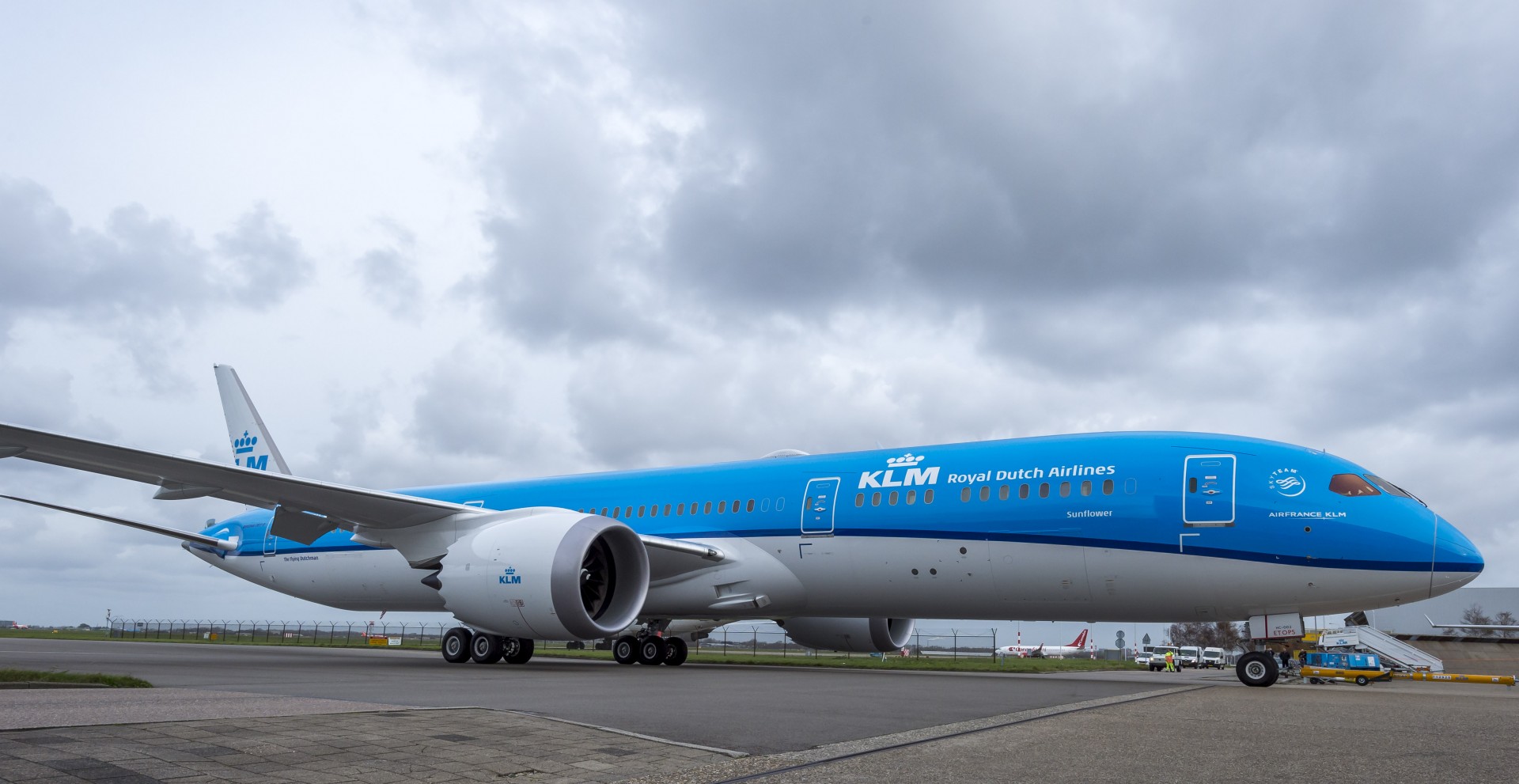
LNA analyzes in two-part articles why the picture will likely change for the widebody market in the 2020s. In the first part, we will take a historical detour to analyze why twin-aisle fleets are still so fragmented nowadays.
Summary
- Range going hand in hand with aircraft size;
- Change in the 1990s;
- Superjumbo gamble backfires;
- Full widebody fleet streamlining becomes a reality.
Pontifications: New GE Aviation CEO will face big challenges

By Scott Hamilton
June 1, 2020, © Leeham News: The new chief executive officer for GE Aviation (GEA) will face huge challenges when he or she succeeds David Joyce when he retires this year, say industry sources. Joyce was named CEO in 2008.
Like other sectors of commercial aviation, the COVID-19 crisis hit GEA hard.
Initially, the workforce was cut by 10% in March. This was deepened to 25% in May. Non-essential spending was cut. A hiring freeze was implemented and other cost-cutting measures were put in place.
Summary
- Demand for new airplanes tanked. The Boeing 737 MAX, powered by CFM LEAP engines, has been grounded since March 2019. No return to service is in sight. (GE is a 50% partner in CFM International, which makes the LEAP.)
- LEAP engines on the 737 and the competing Airbus A320neo family fall way short of on-wing targets. Shop visits, under warranty, add to GE’s cost basis.
- The Boeing 777-9, powered by the GE9X, is already a year late. A redesign of some critical parts of the engine was required.
- COVID also decimates the engine aftermarket business, which is core to the OEM business model.
Bjorn’s Corner: Do I get COVID in airline cabins? Part 4.

By Bjorn Fehrm
May 29, 2020, ©. Leeham News: In our Corner series about flying during the COVID-19 pandemic, we go deeper into the cabin airflow and procedures around the flight.
The riskiest phase of the flight is not when you sit down. The cabin airflow then transports the viruses away from your breathing. It’s the phases before and after the flight that are the danger zones.
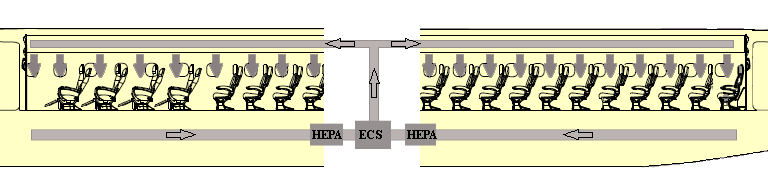
Figure 1. The airflow in a passenger jet. Source: Leeham Co.
What’s the gain of flying a smaller single-aisle during COVID-19 recovery?
By Bjorn Fehrm
Subscription Required
Introduction
May 28, 2020, © Leeham News: As flying recommences after country lockdowns, the fill factors for the flights will be low for an extended period.
Airlines and the OEMs are anticipating the low load factors. For instance, Delta has not deferred any Airbus A220 deliveries but is postponing deliveries of larger aircraft. How much of an advantage is a smaller aircraft when opening up the traffic again?
We compare the operational costs of the Airbus alternatives. The cost of flying the A220-300 is compared with the A320neo.
 Summary:
- The A220-300 is about 25 seats smaller than the A320neo. It’s smaller airframe makes for lower fuel costs and airway/landing fees.
- There are savings on the crew side as well, as both flight and cabin crew costs less.
- Finally, modern systems, a composite wing, and a fuselage made of advanced materials promise lower maintenance costs than the A320neo.
HOTR: LATAM files bankruptcy, latest COVID airline casualty; 1,100 aircraft involved
By the Leeham News Staff
May 26, 2020, © Leeham News: LATAM, the largest airline company in South America, filed for Chapter 11 bankruptcy today in New York.
LATAM operates more than 300 aircraft. This filing means more than 1,100 worldwide were operated by airlines seeking bankruptcy or administrative protections. The UK’s Flybe was already failing before COVID effectively shut down UK air travel.
Many others teeter on the edge, saved for the moment by government bailouts.
Below is LNA’s latest tally of aircraft.
Mitsubishi SpaceJet retreat is the best news for Embraer in months
Subscription Required
By Scott Hamilton
Analysis
May 25, 2020, © Leeham News: Mitsubishi Heavy Industries (MHI) surprising retreat from its SpaceJet regional airliner program is the best news in months for beleaguered Embraer.
This takes pressure off the Brazilian manufacturer and gives it time to regroup after Boeing jilted it at the alter by walking away from a proposed joint venture.

Going into storage: four Mitsubishi MRJ90s at Moses Lake (WA). Photo: Mitsubishi.
MHI’s actions leave Embraer with a monopoly in the 76-100 seat arena vs new airplanes. The M90 SpaceJet is not a viable competitor to the E175-E1 or the struggling E175-E2. Embraer’s competition will be its own used jets, plus used Bombardier CRJ-700/900s.
Summary
- Closing US operations entirely. Closing the recently opened engineering center in Montreal
- Continued operation of the CRJ product support center in Montreal or relocation to Nagoya uncertain.
- Major cost-cutting drive.
- MHI wants to certify M90, then consider whether to proceed with M100.
- M100 has MOUs for 495 aircraft.
- MRJ90 was not certifiable due to design deficiencies.
- Redesigned M90 meets certification requirements.
- M90 is economically uncompetitive with E-Jet.
- COVID-19 upends entire airline industry, casting doubt in MHI’s commitment to SpaceJet future.
Pontifications: Aircraft values, lease rates plummet
By Scott Hamilton
May 25, 2020, © Leeham News: Aircraft lease rates continue to plummet as the virus crisis infects the airline industry.
In an update of its periodic look at rates, the UK advisory firm ISHKA last week looked at 5-year old aircraft. Monthly Rates plunged as much at 26%. Aircraft values dropped as much as 15% (22% for an ATR-72).
Since Jan. 1, the Boeing 777-200F lost only 2% of its value but lease rates dropped 11%, despite high demand for cargo airplanes now. The Airbus A350-900 lost 5% of its value but lease rates were off 17%.
A five year old Boeing 787-8, on which pricing was under pressure before COVID decimated the airline industry beginning in March, now can be leased for $575,000/mo, ISHKA says.
The Airbus A320/321ceo and Boeing 737-800 also show sharp value and lease rate declines.
Bjorn’s Corner: Do I get COVID in airline cabins? Part 3.
May 22, 2020, ©. Leeham News: In our Corner series about flying during the COVID-19 pandemic, we look closer at the available research around passengers that fly with virus infections and if these spread to other passengers during a flight.
How much do we know and what are guesses?

Figure 1.
Better to bring capacity back with a 777-9 or 787-10 if we fly 777-300ER today?
By Bjorn Fehrm
Subscription Required
Introduction
May 21, 2020, © Leeham News: We looked at the economics of extending the lease of a Boeing 777-300ER or taking an ordered 777-9 here.
If traffic post-COVID-19 on the routes we fly stays down for long, should we change the order to a 787-10? What are the trades between staying with the 777-300ER, taking the 777-9, or stepping down to a 787-10?
We use our airliner economic model to find out.

Summary:
- The 787-10 is the safe choice if the fill level for our routes will stay below its passenger capacity for a longer period.
- This choice is valid for a JFK to Heathrow route. The 787-10 has a shorter range than the 777-300ER and 777-9, so a 787-10 alternative is only possible for routes within its capacity.
Lessor exposure to Airbus, Boeing wide-bodies
Subscription Required
By Scott Hamilton
May 18, 2020, © Leeham News: As airlines park or retire thousands of aircraft, lessors with wide-body airplanes are most at risk.
Single-aisle airplanes are easier to re-lease and more in demand when traffic recovers. Reconfiguration and maintenance costs, if required, are  reasonable by aviation standards. Cabin reconfiguration may run up to $1m. Airframe and engine MRO costs for Airbus A320s and Boeing 737s typically are in the low millions, depending on condition.
MRO and reconfigurations costs for wide-body airplanes, on the other hand, can cost more than a new A320 or 737. GE Aviation GE90s on Boeing 777-200LRs, -300s and -300ERs are notoriously expensive. MRO for Rolls-Royce wide-body engines is costly under RR’s contract packages.
Reconfiguration costs for A330s, 777s and A380s can run up to $30m, depending on the initial operator and who the second (or third) one will be. Therefore, HiFly did not reconfigure the ex-Singapore Airlines Airbus A380 it acquired after SQ retired the airplane.
LNA analyzed the number of wide-bodies owned by lessors. There are more than 670 Airbuses and more than 600 Boeings.