
Leeham News and Analysis
There's more to real news than a news release.


Podcast: 10 Minutes About China’s Commercial Aviation Industry
Jan. 19, 2021, © Leeham News: Today’s edition is 10 Minutes About China’s commercial aviation industry. 
China has one airliner in service, a second in flight testing and a third on the drawing board. Production is still a challenge.
We discuss how viable the airliners are and a bit about production–all in 10 minutes.
HOTR: Some predictions for Airbus and Boeing
Jan. 14, 2021, © Leeham News: Making predictions is always a hazardous business.
Some predictions take years to resolve. The outcome of others come sooner than later. If you’re right, you look sage. If you’re wrong, you look like an idiot.
But HOTR is going to take a stab at it anyway.
Bjorn’s Corner: The challenges of hydrogen. Part 19. Hydrogen airliner weight shift

By Bjorn Fehrm
January 8, 2021, ©. Leeham News: In our Corner before Christmas we discussed the hydrogen tank placement at the rear of the aircraft for Airbus’ ZEROe concept turbofan aircraft.
We now calculate how the weight transfer when emptying the tanks in the rear affects the ZEROe’s efficiency.
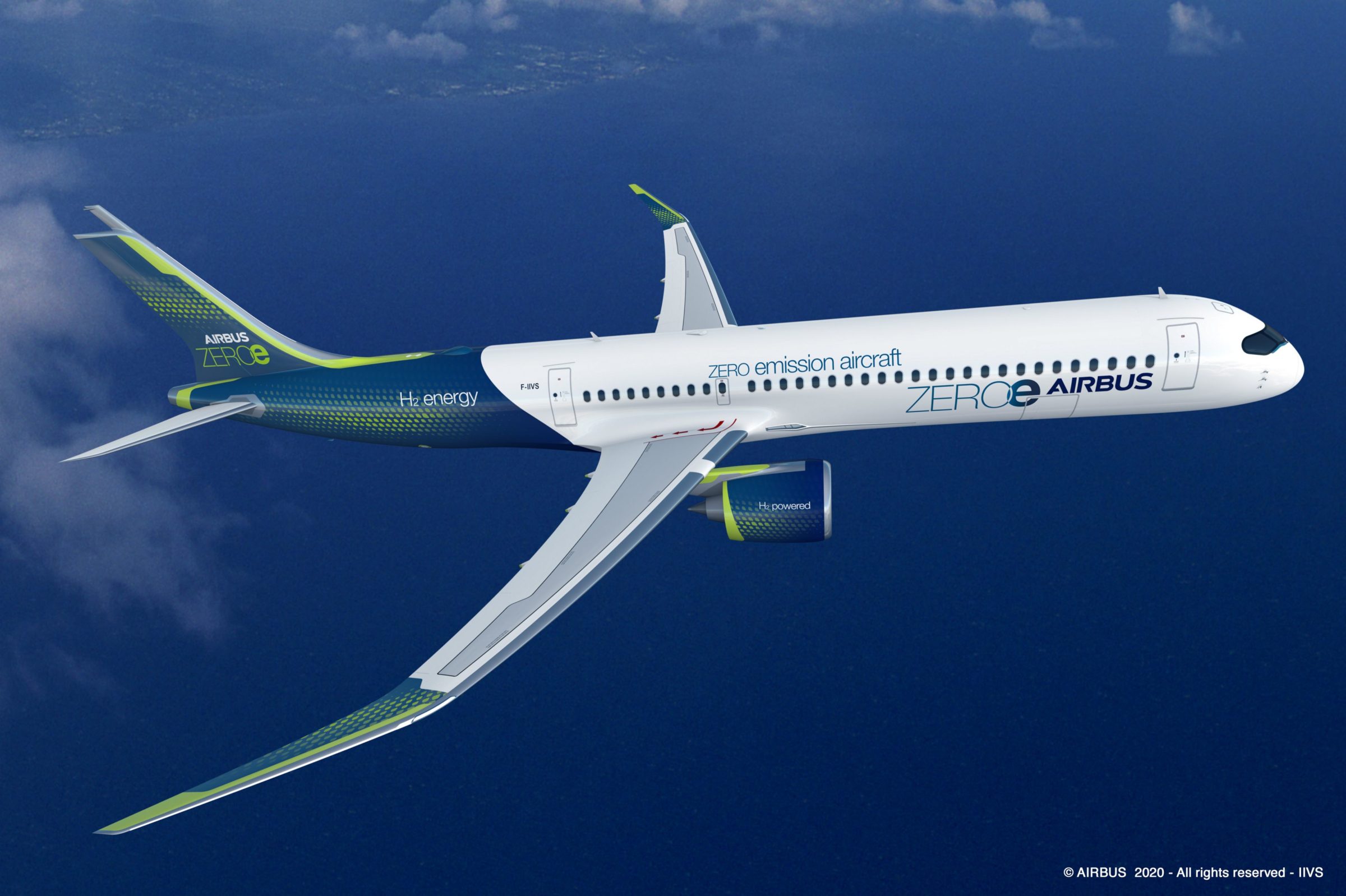
Figure 1. Airbus ZEROe hydrogen turbofan airliner. Source: Airbus.
Outlook 2021: Boeing needs boring, Airbus looks for recovery
Subscription Required
By Scott Hamilton and Vincent Valery
Introduction
Jan. 5, 2021, © Leeham News: What’s in store for Airbus and Boeing this year?
Boeing needs a boring year.
 Airbus is clearly better positioned than Boeing.
Twenty-twenty one is a year of recovery for Boeing. It must dig out from a very deep hole.
Airbus reported that it hit cash break-even in the third quarter. But the company is not out of the woods yet.
Everything depends on something largely out of their control: how quickly the airline industry recovers from the COVID pandemic.
Summary
- Boeing hopes to deliver about half of the 450 stored MAXes this year.
- Low-rate production inches up for the 737.
- Widebody sales dried up for Airbus and Boeing.
Pontifications: Outlook 2021 Series begins today

By Scott Hamilton
Jan. 4, 2021, © Leeham News: Beginning today through next week, Leeham News presents its annual Outlook series for the coming year.
We’ve been doing this for years. In recent years, the Outlook reflected continued growth in commercial aviation. The industry had the longest upward tick in the more than three decades I’ve been involved in the sector.
Not this year. As I wrote before the Christmas-New Year’s holiday period, 2020 was the worst year for commercial aviation I’ve ever seen in 41 years.
This year is the beginning of the end of the COVID crisis. Yes, the vaccines began distribution in December, but large spikes in COVID cases began simultaneously and are predicted to climb higher through the first quarter.
Over the coming days, as LNA provides its Outlook for 2021, readers will see what we believe will happen.
US to tax fuselage, wings, tail imported for Airbus’ Mobile A320 assembly line
Dec. 31, 2020, © Leeham News: Airbus’ A320 Mobile (AL) plant is no longer exempt from tariffs applied by the US Trade Representative in the 16-year long trade war with the European Union.

The fuselage, wings and tail components for the Airbus A320/321 final assembly in Mobile (AL) will be taxed by the US, effective Jan. 12. These have been exempt up to now. Photo source: Airbus.
Effective Jan. 12, the US will slap a 15% tax on fuselage, wing and tail components shipped from France and Germany to Mobile for final assembly on A320s and A321s.
This is a setback in what appeared to be progress in resolving at long last the trade war over subsidies to Airbus deemed illegal by the World Trade Organization.
The US also will apply tariffs on helicopter parts imported from France and Germany for Airbus assembly sites in Mississippi and other US locations.
Podcast: 10 Minutes About Future Workforce Requirements
Dec. 30, 2020, © Leeham News: How many airline workers and aerospace manufacturing-supply chain workers have been laid off, voluntarily or involuntarily, in the pandemic?
Even before the pandemic, airlines faced an aging pilot workforce and regional airlines had difficulties finding and retaining pilots. The aging pilots get older during the layoffs. What kind of shortages will there be as the industry recovers over the next few years?
Kathryn Creedy, who writes for Leeham News and is editor of her own on-line newsletter, Future Aviation/Aerospace Workforce News, answers these and more questions in this episode of 10 Minutes About.
HOTR: Alaska Air still have A320neos on order; working with Airbus on best path forward
Dec. 29, 2020, © Leeham News: Stories and headlines shouted that this month’s Boeing order by Alaska Airlines adding 23 orders and 15 options to an existing agreement meant the death knell for the Airbus fleet.
Alaska indeed announced that all the A319s and A320s inherited from its acquisition of Virgin America will leave the fleet by 2024. But 10 Airbus A321neos remain at least through their lease terms in 2029.
The airline now has 68 Boeing 737 MAX 9s on order and 52 on option.
This is exactly as LNA suggested several times: rotate out the smaller Airbuses as leases expire and keep the larger A321neos.
COVID-19 accelerated the retirement of the smaller Airbus family members by a couple of years. But it never made sense to keep them in lieu of the 737-9 once Alaska committed to this plane several years ago.
But what of the old Virgin America order for 30 A320neos? These are still on the books.
Bjorn’s Corner: The challenges of hydrogen. Part 18. Airliner hydrogen tank
By Bjorn Fehrm
December 18, 2020, ©. Leeham News: After discussing the risk-reducing research programs we need to do before a program launch in 2027, we focus the next Corners on the hydrogen airliner’s biggest problem, the liquid hydrogen tank.
In this Corner, we start with the placement and discuss how it affects aircraft performance.

Figure 1. Airbus ZEROe turbofan airliner concept. Source: Airbus.
The A350, Part 1: Intro and A350-800
Subscription Required
By Vincent Valery
Introduction
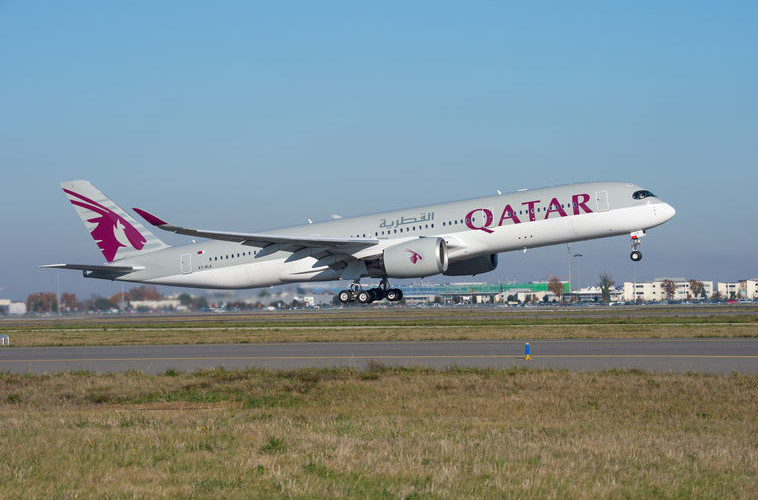
Dec. 17, 2020, © Leeham News: After running a series on the Dreamliner, LNA will now start a series on Airbus’ latest-generation twin-aisle aircraft, the A350. Airbus should deliver its 400th A350 this month.
After a delayed ramp-up to 10 units per month, Airbus had to cut the A350 production rate to five per month after the COVID-19 pandemic. The European OEM might have to follow Boeing’s footsteps and reduce twin-aisle production rates further.
The A350 program has an official backlog of 532 orders: 415 for the -900 and 117 for -1000. Once passenger traffic recovers, Airbus should ramp production back up of its best-selling twin-aisle aircraft.
Despite its success, the A350 program wasn’t without hiccups. There were several and sizable iterations before Airbus finalized the A350 platform, and the -800 variant is non-existent but not officially canceled.
Summary
- A few iterations before launch;
- Development without significant issues;
- An in-favor aircraft family;
- The aborted A350-800.