
Leeham News and Analysis
There's more to real news than a news release.


Iran Air, Volga Dnepr deals help Boeing production gaps but don’t solve them
Subscription Required
Introduction
 June 24, 2016, (c) Leeham Co.: Boeing’s recent deal with Iran Air for 100 737s, 777s and 747s and its indication that a Memorandum of Understanding with Volga Dnepr may be firmed up will help fill production gaps on the 777 Classic and 747-8 lines. But these transactions won’t fully fill the gaps.
Boeing declined to detail the breakdown of its order–which is still subject to US government approval–but Reuters and The Wall Street Journal obtained the detailed list.
The Volga Dnepr MOU was announced last year at the Paris Air Show for up to 20 747-8Fs. This month, news emerged that this MOU appears to be firming up for 10 plus options or commitments. This contract may be announced at the Farnborough Air Show.
Summary
- Iran Air deal includes four 747-8s and 15 777-300ERs. Helpful, but not enough to fill the production gaps.
- Volga’s firming of 10 orders is helpful for the 747-8, but even at a reduced production rate of six airplanes per year, a significant gap remains.
Mid-Market airplane comes before A320, 737 replacement: Pratt & Whitney exec
Subscription Required
Introduction
June 16, 2016, © Leeham Co.: A middle of the market airplane will come before a replacement for the Airbus A320 and Boeing 737, predicts Alan Epstein, vice
Alan Epstein, VP technology and environment, Pratt & Whitney.
president of technology and the environment for Pratt & Whitney.
“The challenge to the business of the narrow-bodies is the A320s and the 737s are so learned-out that Boeing and Airbus are so efficient at building those airplanes, that their inherent cost is so low, it’s extremely difficult to move into that market,” Epstein said. “Because the learning curve, you need incredibly deep pockets and you’re going to be negative for a long time.
“I think that also applies to Airbus and Boeing,” Epstein said, referring to the prospect of a new single-aisle aircraft.
Summary
- New single aisle airplane would be a “white elephant” for 10 years.
- Engines need to be at least 10% more efficient than today’s GTF and LEAP for a new single-aisle aircraft.
- Middle-Market airplane likely to come first.
Slowing economies begin to impact Airbus, Boeing
Subscription Required
Introduction

LatAm Airbus A350. LatAm may defer some A350s and/or Boeing 787s. Photo: Flickr via Google images.
June 13, 2016, © Leeham Co.: Signs are becoming more frequent that airlines are facing slowing economies around the globe, with impacts on existing orders in the backlog.
Last week JetBlue said it is trimming growth on rising fuel costs and softening revenue. LatAm also said last week that it plans to trim some Airbus A350 and Boeing 787 orders amid slumping traffic in Brazil. Delta Air Lines previously said it will defer four A350s and trimming growth due to slowing economy.
Summary
- Wide-body sales slowing this year.
- 787 Surplus developed.
- A330neo sales stall.
- A350-2000 on hold.
- 777 Classic sales stall.
- Cargo demand still anemic, says IATA.
UTAS sees increasing electronic architecture in future airplanes
Subscription Required
Introduction
 June 9, 2016, © Leeham Co.: The debate continues whether the next new, clean-sheet airplane will be a Middle of the Market aircraft (MOMA) or replacements for the Airbus A320 and Boeing 737 families.
Along with he studies of new airplanes are those undertaken by suppliers. Electric Systems, a unit of United Technologies Aerosystems (UTAS), is working with the OEMs to determine what level of electric systems will be used in the new aircraft, whatever is selected to go next.
Summary
- Electric systems on the Boeing 787 are up to 80% more efficient than those on the Boeing 777 Classic.
- The 777X retains the Classic systems or commonality.
- Benefits decline the shorter the flight.
Airbus stepping up innovation
By Bjorn Fehrm
Subscription required
Introduction
June 6, 2016, ©. Leeham Co: In January last year I had a discussion with Airbus CEO Fabrice Bregier regarding the innovation level at Airbus. The background to the discussion was that Airbus was trailing its direct competitor, Boeing Commercial Airplanes, in innovations since the early 2000s.
Airbus started life as a more innovative company than Boeing. It was using new technology in an aggressive way to gain product advantages on the incumbent Boeing. Examples are the universal use of Fly-By-Wire (FBW) and the standardization on a common cockpit layout for all its aircraft, whether single or dual aisle, Figure 1.

Figure 1, Airbus A320 cockpit laying the ground for a common cockpit standard. Source: Wikipedia.
The FBW and common cockpit enabled customer pilots to cover a wider range of aircraft with minimal training. Airbus also led the aerodynamic development with high aspect ratio wings for its A320 and A330/340 series aircraft.
Somewhere during the problems with the A380, the creative and innovative spirit got caught in the aim to unify the group, to make sure that the “I make it my way” initiatives stopped in the different national industries that made up Airbus.
Airbus changing production to be more competitive
By Bjorn Fehrm
Subscription required
Introduction
June 1, 2016, ©. Leeham Co: With the large aircraft development programs being on the way to fade out and give way to incremental improvement programs, Airbus is shifting its focus onto making its production more competitive.
The revenue and profitability of Airbus commercial aircraft depends on up to 90% on delivered airliners. With the pricing determined by the market, the production costs are virtually determining Airbus’ bottom line.

Figure 1. The forward part of an A350 loaded into Station 50 in the Final Assembly line. Source: Airbus.
The classical Airbus production system was designed to satisfy industrial-political rather rational production criteria, with each participating national aeronautical industry vigorously carving out its piece of the production pie. The result was a production system that had non-optimal efficiencies.
With the coming 5-10 years being a period of incremental development amid a further ramp up of production, the time has now come to focus the Airbus production system and to change this to an efficient and streamlined operation.
New KC-46A delay means more charges probable
Subscription Required
Introduction
May 30, 2016, © Leeham Co.: It’s the classic maneuver to bury bad news: Boeing

Boeing KC-46A. Source: National Defense Magazine via Google images.
announced on Friday, the start of the three-day Memorial Day weekend that its KC-46A tanker will be delayed yet again. Only 16 days earlier, Boeing CEO Dennis Muilenburg said the tanker was on time under a schedule that had been revised previously.
That wasn’t all, according to the announcement. Even when the tankers are delivered, the wing pod refueling systems won’t be operational. (The Boeing statement is below the jump.)
If all this has a familiar ring, it should.
The previous version of the KC-46A, the KC-767 International Tanker, was delayed four years in part because of flutter issues with the pod refueling systems.
Only eight of these tankers were built: four for the Italians and four for the Japanese. Boeing took huge write-offs for these tankers.
Summary
- Will the latest delay be the last?
- Boeing is building tankers despite the need for rework and some internal design changes.
- Are we facing the prospect of a new set of “Terrible Teens”?
- Another write-off is probable-and it may not be the last.
- Will the full USAF tanker procurement yield a profit on the sale?
Dissecting Wide-Body deliveries through 2030
Subscription Required.
Introduction
May 26, 2016, © Leeham Co.: A softening of trans-Atlantic air traffic, with declining yields and passenger demand, raises anew concerns that there is an oversupply and over-ordering of twin-aisle aircraft.
Air Lease Corp. addressed this concern at its May 19 investors day, arguing that growth plus retirements over the next 25 years more than supports the orders.
ALC, which is headed by Steve Udvar-Hazy and John Plueger, considered two of the leaders of the lessor industry, note that there is an average of about 150 wide-bodies approaching 25 years in age each year for the next 20 years. Coupled with long-haul traffic growth, ALC—which has a modest number of wide-body orders—is comfortable with the future supply-demand.
We’ve dissected the known delivery dates of wide-bodies at Airbus and Boeing, using the Ascend data base as of January. Wide-body orders have been announced subsequently, but not all have been firmed up and the total number won’t materially affect the trend lines.

Figure 1. Source: Air Lease Corp. Click on image to enlarge.
Summary
- We look at announced production rates by 2020 of Airbus and Boeing. We don’t include our own forecasts.
- We look at the defined delivery dates of the A330, A350, A380, 747-8, 777 and 787. These are all models, including ceo/neo and Classic/X.
- We look at factors that indicate a softening of wide-body demand across the Atlantic.
How good is a MAX 7X and why would it replace the original? Part 4
By Bjorn Fehrm
Subscription required
Introduction
May 23, 2016, ©. Leeham Co:In Part 1 to Part 3 of this article series,we looked into the reasons behind that Boeing is considering changing the 737-7 MAX into a slightly larger 737-7X.
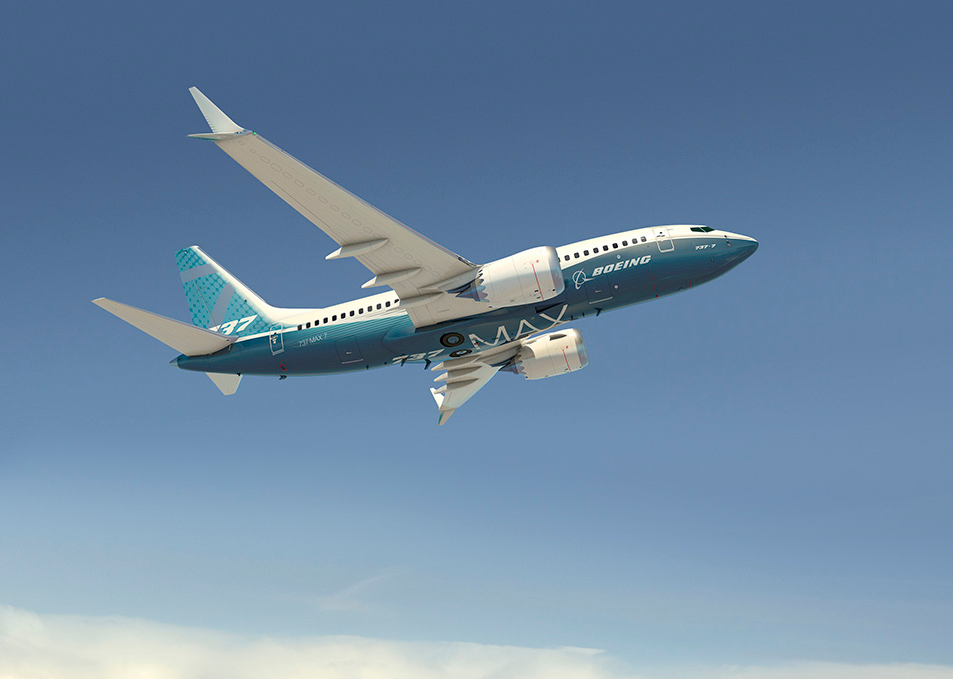
Figure 1. Boeing’s 737 MAX 7. Source: Boeing.
When an aircraft gets larger, its operating costs increase, everything else being equal. At the same time, it can take more passengers. This will increase the aircraft’s revenue generating capability, assuming the network can generate the traffic level needed.
To understand the difference in revenue capability for the 7 and 7X we will now develop their Direct Operating Cost (DOC) and compare these with the revenue generation capability of the aircraft. This gives the margin capability and one can establish where the cross over point would be between 737-7 and 7X with respect to margin for the airline.
Summary
- We develop the Direct Operating Costs (DOC) for the 737-7 and -7X.
- We also develop the revenue streams of the aircraft over typical missions.
- When compared, the margin of the aircraft will result and it will be possible to define the extra passenger count needed for the 7X to deliver the same margin as the presently defined 7 MAX.
- We then can establish the revenue upside potential for a 737-7X over the 7.