
Leeham News and Analysis
There's more to real news than a news release.



Airbus to tout economy “Choice” at Hamburg interiors show
April 8, 2015: Airbus will unveil a new concept at the international Hamburg interiors convention next week call “Choice” for the economy cabin.
The concept is intended to further segment the traveling public demand and increase revenue for airlines.

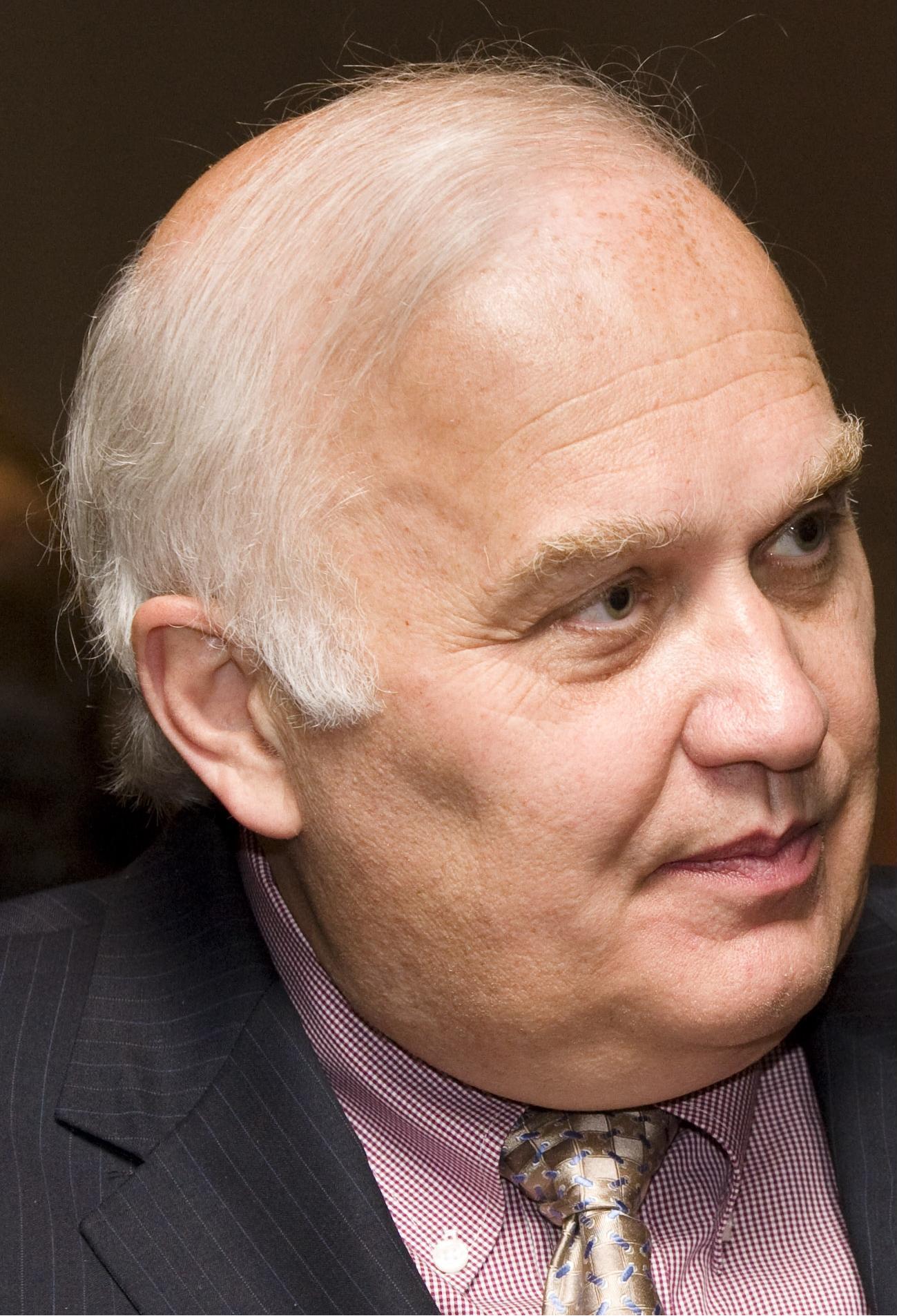
Chris Emerson, SVP-Marketing, Airbus. Photo: Airbus.
While the concept isn’t entirely new—it’s a four-class configuration, including business class, and some airlines are moving in this direction already—Airbus is formalizing the marketing concept, which officials believe give it a competitive advantage over Boeing’s wide-body products.
The Choice concept includes Budget Economy, Comfort Economy, Premium Economy and Business Class.
Christopher Emerson, Senior Vice President-Marketing, said that 10% of Airbus operators use maximum capacity in the Airbus wide-body fleet vs 60% for Boeing’s wide-bodies. This gives Airbus operators flexibility to configure cabins in a way to cater to different passenger demands and maximize revenue, he said. Read more
European airline industry: the restructuring patient
By Bjorn Fehrm
Introduction
April 7, 2015: There is not a month going by without a strike at some of the European airlines, big or small. The strikes are the tip of an iceberg, which is called “restructuring”; “restructuring for profitability,” “for survival” and for “having a future.”
European airlines are the most unprofitable next to African airlines, according to International Civil Aviation Organization (ICAO). The collected profits from all European airlines are less than one third of the profits in North America. The strikes are called from unions that are fighting managements as these try to change the fundamental cost structure of the airline to be able to compete, not only with Europe internal competitions from LCCs eating away on domestic traffic but now also from Gulf carriers taking away international traffic at an alarming rate. Read more
2030 decade airplanes need new shapes for better efficiency
Subscription Required.
Now open to all readers.
Introduction
April 6, 2015, c. Leeham Co. The next 15 years may well be the last new airplane programs of major airliners that look like today’s tube-and-wing aircraft because demands for new efficiency will require go beyond what engines can do within a reasonable size, says Alan Epstein, VP of technology and environment at Pratt & Whitney.
- Part 1 of our interview with Alan Epstein looked at the next new airplane, the Middle of the Market aircraft (MOM). Today’s Part 2 looks beyond MOM (and it’s not DAD).
Major changes to the airframe will have to provide added efficiency gains in combination with new and evolving technology from today’s engines.
The next new airplane, the so-called Middle of the Market (MOM) aircraft, will look like today’s airplanes. The next plane after that, the replacements for the Airbus A320 and Boeing 737 families, will probably be the last iterations of the planes of today. After that, new designs are likely to emerge, Epstein says.
Summary
- Tomorrow’s airplanes need to revise the fuselage design to increase efficiency.
- Airplanes after 2030 may look different than the tube-and-wing configurations of the past decades.
- Four engine airplanes may make a return.
Pontifications: Meet the “A320neo MAX 195”
By Scott Hamilton
April 6, 2015: There is a saying in America: keeping up with the Joneses.
This means that if your neighbor buys something, you have to go buy something similar to “keep up.”
In the case of commercial aviation, Keeping Up with the Jones has been an international past time for decades. Boeing developed the 247. Douglas developed the DC-2. Douglas developed the DC-4. Lockheed developed the Constellation. The DC-6 begot an improved Connie which prompted the DC-7 which in turn prompted the 1649 Connie. Boeing developed the 707 and Douglas the DC-8. And so it goes today, with the tit-for-tat between Airbus and Boeing.
So the latest: Boeing 737 Max 200, meet the Airbus “A320 Max 195.” Read more
Next Gen turboprop R&D continues at Pratt & Whitney
Subscription Required
Introduction

Maria Della Posta, SVP Sales and Marketing, Pratt & Whitney Canada
April 5, 2015, c. Leeham Co. Pratt & Whitney Canada (PWC) continues to develop the next generation turbo prop engine despite little interest from Bombardier for a replacement for its slow-selling Q400 or from Airbus, 50% owner of ATR, dominant producer of this type of aircraft.
Maria Della Posta, SVP of sales and marketing, said PWC is confident demand will prevail over the current lack of interest to see a new airplane program launched as early as 2016 or 2017–though she hedges that this could slip a year or two.
Summary
- In the meantime, PWC continues to undertake Performance Improvement Packages (PIPs) for its ubiquitous PW100 series that is now in its 38th iteration.
- Emerging market ambitions could create new opportunities for PWC to put its next engine on new entrant turbo prop producers.
- Airlines seek a new, larger turbo prop than the Q400 and ATR 72.
Bjorn’s Corner: Lighter fuselage materials and what they bring
April 02, 2015; There is different information whether Boeing will adopt new Aluminum Lithium based alloys for the fuselage of the up and coming 777X, our latest info is that this is not yet decided.
In this corner we will look at what is at stake should Boeing go the route of new materials or not. It will discuss what is to consider when choosing materials like Aluminium Lithium (AlLi) or Carbon Fiber Reinforced Plastic (CFRP) for aircraft structures, especially for fuselage structures which has many conflicting requirements.
We will see that aircraft fuselages are tricky to make light and that a stronger material not necessarily means weight gains.
Pratt & Whitney looks to MOM and beyond-Part 1
Subscription Required.
Introduction
April 2, 2015, c. Leeham Co.: Even as Pratt & Whitney prepares for the entry-into-service of its new
Alan Epstein, vice president of technology and environment, Pratt & Whitney
Geared Turbo Fan engine on the Airbus A320neo, it’s looking ahead to the most likely all new airplane that could be launched as early as 2018 with an EIS in 2025: the Middle of the Market (MOM) airplane, also most popularly known the as Boeing 757 replacement.
Except that this new airplane really isn’t a 757 replacement, but one that is more accurately a replacement for the Boeing 767-200 or the Airbus A300: a twin aisle, 250 passenger airplane with 4,000nm-5,000nm range.
Alan Epstein, vice president of technology and environment for Pratt & Whitney, believe a derivative of the GTF will be on this new airplane.
Summary
- The next new airplane will be lighter and capable of using smaller engines than those used on the 767-200 and A300.
- The MOM will look much like today’s tube-and-wing airplanes.
- The GTF by then will be 8%-10% more efficient than today’s GTF.
- Geared engines will become more common.
Pratt & Whitney sees long-term aviation growth, airline profits
Paul Adams, president of Pratt & Whitney. Source: UTC.
April 2, 2015: Paul Adams, president of Pratt & Whitney, provided an “state of the business” of PW during the second day of the Media Days. We follow our usual format of recapping his comments in paraphrased form.
- We have been in a significant investment phase over the last three years. The biggest is the GTF, We are transition from development to entry into service, first with the A320neo and then the Bombardier CSeries and then the other programs.
- We’ll be driving to increase the aftermarket service.
- 2014 was a transformational year, certifying nine engines (GTF and non-commercial engines). 2015 will be an extremely busy year with flight testing with 10 airframers on four continents.
- The health of commercial aviation is healthy and will continue well into the future. This is driven by urbanization and that only 17% of world’s population has been on an airplane.
- Oil cost has helped make the airlines profitable and so has consolidation.