
Leeham News and Analysis
There's more to real news than a news release.


Pontifications: Meet the “A320neo MAX 195”
By Scott Hamilton
April 6, 2015: There is a saying in America: keeping up with the Joneses.
This means that if your neighbor buys something, you have to go buy something similar to “keep up.”
In the case of commercial aviation, Keeping Up with the Jones has been an international past time for decades. Boeing developed the 247. Douglas developed the DC-2. Douglas developed the DC-4. Lockheed developed the Constellation. The DC-6 begot an improved Connie which prompted the DC-7 which in turn prompted the 1649 Connie. Boeing developed the 707 and Douglas the DC-8. And so it goes today, with the tit-for-tat between Airbus and Boeing.
So the latest: Boeing 737 Max 200, meet the Airbus “A320 Max 195.” Read more
Bjorn’s Corner: Lighter fuselage materials and what they bring
April 02, 2015; There is different information whether Boeing will adopt new Aluminum Lithium based alloys for the fuselage of the up and coming 777X, our latest info is that this is not yet decided.
In this corner we will look at what is at stake should Boeing go the route of new materials or not. It will discuss what is to consider when choosing materials like Aluminium Lithium (AlLi) or Carbon Fiber Reinforced Plastic (CFRP) for aircraft structures, especially for fuselage structures which has many conflicting requirements.
We will see that aircraft fuselages are tricky to make light and that a stronger material not necessarily means weight gains.
Pratt & Whitney looks to MOM and beyond-Part 1
Subscription Required.
Introduction
April 2, 2015, c. Leeham Co.: Even as Pratt & Whitney prepares for the entry-into-service of its new
Alan Epstein, vice president of technology and environment, Pratt & Whitney
Geared Turbo Fan engine on the Airbus A320neo, it’s looking ahead to the most likely all new airplane that could be launched as early as 2018 with an EIS in 2025: the Middle of the Market (MOM) airplane, also most popularly known the as Boeing 757 replacement.
Except that this new airplane really isn’t a 757 replacement, but one that is more accurately a replacement for the Boeing 767-200 or the Airbus A300: a twin aisle, 250 passenger airplane with 4,000nm-5,000nm range.
Alan Epstein, vice president of technology and environment for Pratt & Whitney, believe a derivative of the GTF will be on this new airplane.
Summary
- The next new airplane will be lighter and capable of using smaller engines than those used on the 767-200 and A300.
- The MOM will look much like today’s tube-and-wing airplanes.
- The GTF by then will be 8%-10% more efficient than today’s GTF.
- Geared engines will become more common.
Pratt & Whitney: material considerations in next generation of engines
April 1, 2015:
- Panel discussion on Manufacturing and Product Technology at the Pratt & Whitney Media Days.
Ed Colvin (EC), VP, New Product Development and Introduction, Alcoa
Lynn Gambrill (LG), PW Chief Engineer, Manufacturing Engineering and Global Services.
Frank Preli (FP), PW Chief Engineer, Materials and Processes Engineering.
Jimmy Kenyon (JK), PW next-generation fighter engine general manager.
JK: We are seeing years of investment and technology starting to deliver new products and technology to the market (referring to the GTF): double digit fuel efficiency, 75% noise reduction. 20 years of technology investment. There are advancements in the engine core. At same time ramping up F35 engine. This is the world’s most powerful fighter engine but at the same time can adapt to vertical takeoff and landing. Read more
Pratt & Whitney at inflection point
April 1, 2015:
- We’re at the Pratt & Whitney Media Days today and tomorrow. We’ll be posting running information in our usual format of paraphrased synopses for such events.
This is PW’s 90th year.
Panel Discussion: “Big Data”
Lynn Fraga (LF), analytics manager in PW Services Group.
Larry Volz (LV), VP and chief information officer.
Matthew Bromberg (MB), president of PW aftermarket unit, providing MRO services, parts customer support.
MB: Big Data is a buzzword in the industry that has mixed connotations and emotions. PW has been in data monitoring business for decades. 13,000 engines have monitoring systems. We are accelerating and doubling down on a challenging path going forward. Read more
Bombardier CS300 analysis vs A319neo, 737-7
By Bjorn Fehrm
Subscription required
Introduction
March 29, 2015, c. Leeham Co: Bombardier’s big bet in the aeronautics sector, CSeries, is well into flight testing, now more than half way toward the 2,400 hours required by Transport Canada before certification can be granted. The first aircraft to be certified will be the smaller 110 seat CS100 but the market is most interested in the larger 135 seat CS300, which has 63% of present orders and commitments, Figure 1.
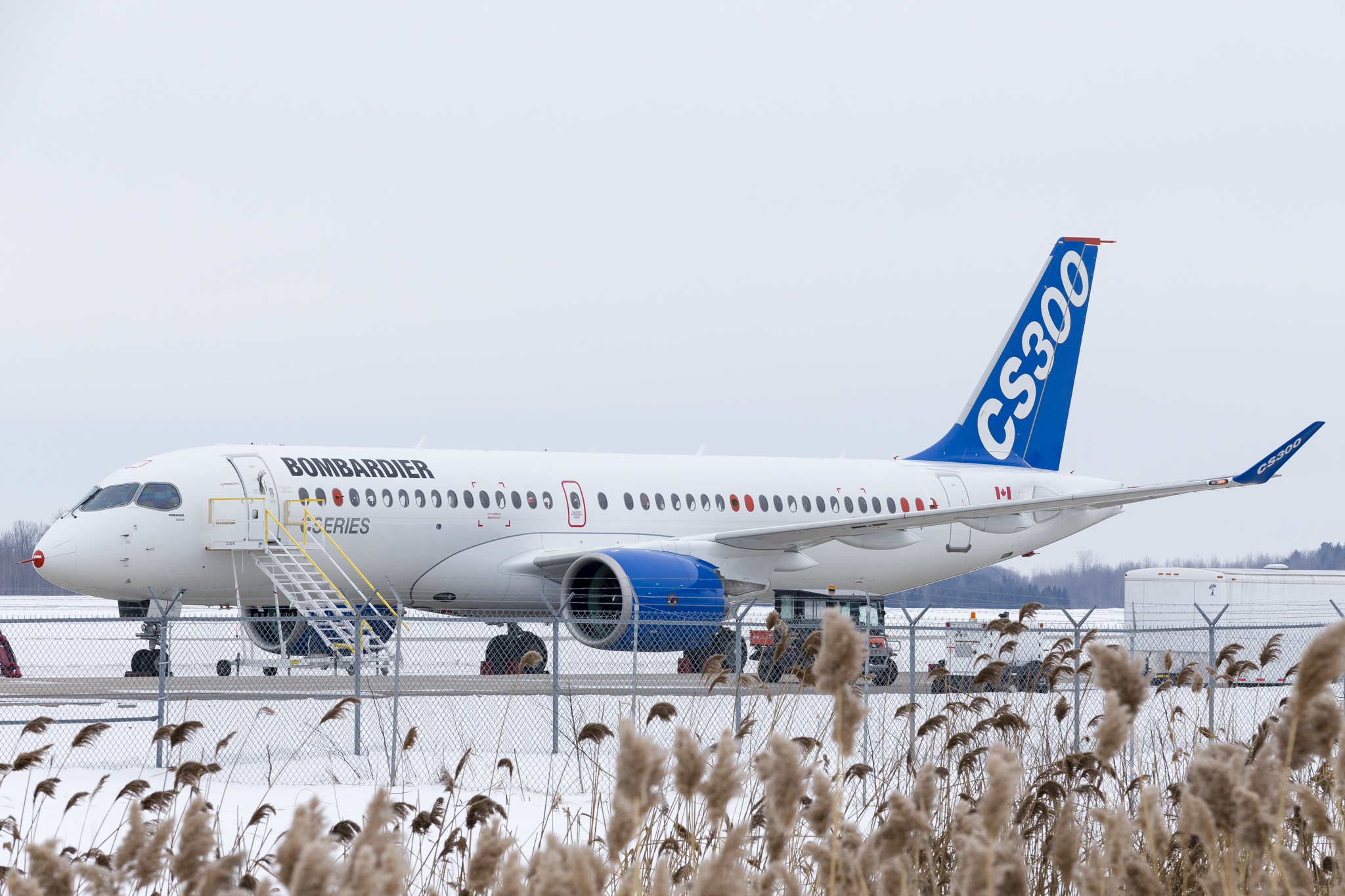
Figure 1. Cseries largest model, CS300. Source: Bombardier.
Bombardier’s new CEO, Alan Bellemare, told reporters last week that the CS100 would be certified during 2015 with entry into service slipping into 2016. The CS300, which is a direct challenger to Airbus’ A319neo and Boeing’s 737-7, should follow six months after CS100. With the CS300 in flight testing and going into service next summer, we decided to have a deeper look at CS300 and its competitors.
Summary
- A319 and 737-7 are shrinks of the market’s preferred models, A320 and 737-8, and as such not the most efficient models.
- The CS300 is the series center-point and it shows. The modern design beats the Airbus and Boeing designs on most counts.
- Part of the modern concepts in CSeries is the well-conceived Pratt & Whitney PW1000G geared turbofan.
- PW’s 73 in fan version of the PW1000G for CSeries is slightly less efficient that the 81 in version for A319neo but CS300 lower weight makes sure this is more than compensated for.
Challenges working against A330ceo production goal
Subscription Required
Introduction
March 23, 2015, c. Leeham Co. Airbus faces a production gap for the A330ceo and has twice announced reductions in the rate: first, from 10/mo to 9/mo in 4Q2015 and then again to 6/mo in 1Q2016.
Despite confidence expressed by John Leahy, chief operating officer-customers, that rate six will be maintained going into production of the successor A330neo, we think the production gap is great enough that another rate cut might be necessary.
Summary
- Filling the production gap depends in part on converting options and letters of intent into firm orders and obtaining a significant number of firm orders between now and when the A330neo enters service in 2018.
- We see a need for more than 100 orders between now and 2018.
- The A330 Regional has yet to land a single order, but an Airbus official says don’t count it out.
Leahy gets lifetime achievement award; CSeries could be delayed again
March 23, 2015: John Leahy, Aviation Week Lifetime Achievement Award: John Leahy, the chief operating officer-commercial for Airbus, received the Lifetime Achievement Award from Aviation Week. It’s a well-deserved award.

John Leahy. Airbus photo.
As the AvWeek write up details, Leahy has been instrumental in bringing Airbus to the market position it is today. We’ve known Leahy nearly the entire time he’s been at Airbus. He’s one of those love-him or hate-him kind of guys (or, in my case, like-him). Whether loved or hated, his industry accomplishments deserve respect and admiration. Joe Sutter, who is still around in his 90s as a consultant to Boeing, would be Boeing’s counter-part for the impact of his influence on the industry. We certainly can’t think of a Boeing salesman or any other contemporary in the front office who would match Leahy’s tenure and influence. In his day, Bill Allen, the long-time CEO, certainly would qualify.