
Leeham News and Analysis
There's more to real news than a news release.


An uneven financial recovery among OEMs and Suppliers
Subscription Required
By Vincent Valery
Introduction
March 27, 2023, © Leeham News: In an article last year, LNA highlighted the divergence in the post-Covid-19 recovery among OEMs and select Tier 1 suppliers. Airbus had higher profits than before the Covid-19 pandemic, while all others lagged. Revenues were well below 2019 levels.
Commercial Aviation OEMs were severely impacted last year by supply chain disruptions. Airbus and Boeing ramped up production significantly slower than envisioned on all programs. The war in Ukraine and tighter financial conditions are complicating the situation further.
LNA collected financial information on the big three aircraft manufacturers and 10 major commercial aircraft suppliers to assess how quickly they recovered. There will also be an analysis of the numerous charges Airbus and Boeing have taken since 1999 through 2022.
Summary
- Significant differences among the three major aircraft OEMs;
- One engine OEM lagging;
- Some OEM suppliers are struggling financially;
- Twelve-digit accumulated charges at Airbus and Boeing combined.
The Airbus A220-500, a deep-dive analysis, Part 2
Subscription required
By Bjorn Fehrm
Jan. 23, 2023, © Leeham News: Following Thursday’s article about an up-and-coming Airbus A220-500, we now look at the operational cost for the A220-500 and compare it with the A320neo it should replace.
We put the data we discussed in Thursday’s article in our Aircraft Performance and Cost model, fly the aircraft on a typical single-aisle mission and look at the results.

Figure 1. A rendering of an A220-500 that takes 157 passengers. Source; Leeham Co.
Summary:
- The A220-500 would be a viable replacement for an A320neo.
- With the changes/improvements we discussed, it beats the A320neo on operational costs. The differences are not of the speculated level, however.
The Airbus A220-500, a deep-dive analysis
Subscription required
By Bjorn Fehrm
Jan. 20, 2023, © Leeham News: It’s a question “of when, not if” there will be an A220-500, we conclude in Tuesday’s article.
We have known about the -500 since the Bombardier days. A longer CS300 was part of the original concepts when the CS100 and CS300 were developed to safeguard that no decision on the smaller variants precluded a larger variant.
As Airbus A321 grows its share of the A320 lines’ output, an A220-500 makes sense, but only when the two A220 final assembly lines in Mirabel and Mobile can produce enough A220s to satisfy demand.
What would be the characteristics of an A220-500? We use our aircraft design and performance model to determine what is possible.
Figure 1. A rendering of an A220-500 that takes 157 passengers. Source: Leeham Co.
Summary:
- The Airbus A220 has the base capabilities for a stretch to an A220-500.
- Some changes/improvements are needed, but these are limited to detailed changes beyond a fuselage stretch.
Pontifications: A lost decade for new airplanes

By Scott Hamilton
Subscription Required
Dec. 5, 2022, © Leeham News: In September 2020, LNA wrote that commercial aviation was facing a “lost decade.”
The impetus for this prediction was the COVID-19 pandemic crisis.
“Commercial aviation is facing a lost decade due to COVID,” we wrote. “Yes, most forecasts target 2024-2025 as returning to 2019 passenger traffic and aircraft production levels. However, LNA in July published its own analysis indicating full recovery may not occur until 2028.”
Nobody predicted that effective vaccines would emerge as quickly as they did. Drug makers in the US and Europe moved heaven and earth to produce vaccines to fight COVID-19. These have been, by and large, extremely effective. (I’ve had two shots and three boosters and have not caught COVID, despite being at one major conference with 13,000 people.)
China created its own vaccine, which failed to stem the tide there. President Xi quickly adopted total lockdowns at the first sign of outbreaks. Despite this, China is now setting records for new infections. Commercial aviation recovery there remains underperforming. China’s performance illustrates the underlying reasoning we had in concluding commercial aviation was facing a lost decade.
This sector still faces a lost decade, though for some fundamentally different reasons.
UPDATE: Calhoun upbeat on cash flow despite fifth consecutive quarterly loss
By Bryan Corliss
Oct. 26, 2022, (c) Leeham News: The Boeing Co. posted a loss from operations of nearly $2.8 billion for the third quarter, citing losses on fixed-price defense development programs that offset an overall 4% growth in revenues.
 The consensus of Wall Street analysts earlier this week was that Boeing would announce profits of 13 cents a share and would break a streak of four consecutive losing quarters. Instead, Boeing posted a loss of $5.49 a share.
However, in a conference call with stock analysts later in the morning, Calhoun was upbeat, emphasizing Boeing’s positive operating cash flow of nearly $3.2 billion for the quarter.
“This quarter was a big one for us,” he said. “We hit a marker … to generate positive cash flow.”
Boeing booked losses of roughly $1.95 billion on two defense programs, CFO Brian West said: KC-46 tankers and new Air Force One presidential transports. Both are fixed-price contracts for commercial jet conversions that forced Boeing to eat any cost overruns.
“We aren’t embarrassed by them,” Calhoun said. “They are what they are.”
But in an interview with CNBC’s Phillip LeBeau Wednesday, Calhoun said Boeing will not do fixed-price defense contracts in the future. “That is not our intent.”
Summary:
- BCA: 737 and 787 deliveries resume; engines in short supply
BDS: ‘Labor instability’ hurts key programs
Calhoun: Boeing ‘supports China’ but is re-marketing planes
Read more
Engine Development. Part 10. Next generation engines
Subscription Required
By Bjorn Fehrm
Introduction
October 20, 2022, © Leeham News: We finish our series about engine development by looking at the next-generation engines and future trends in airliner engine development.
We limit this look forward to engines that burn Jet fuel (Jet-A1 or SAF) as green propulsion solutions are a vast field and justify their own series. We will pick this up at a future date.
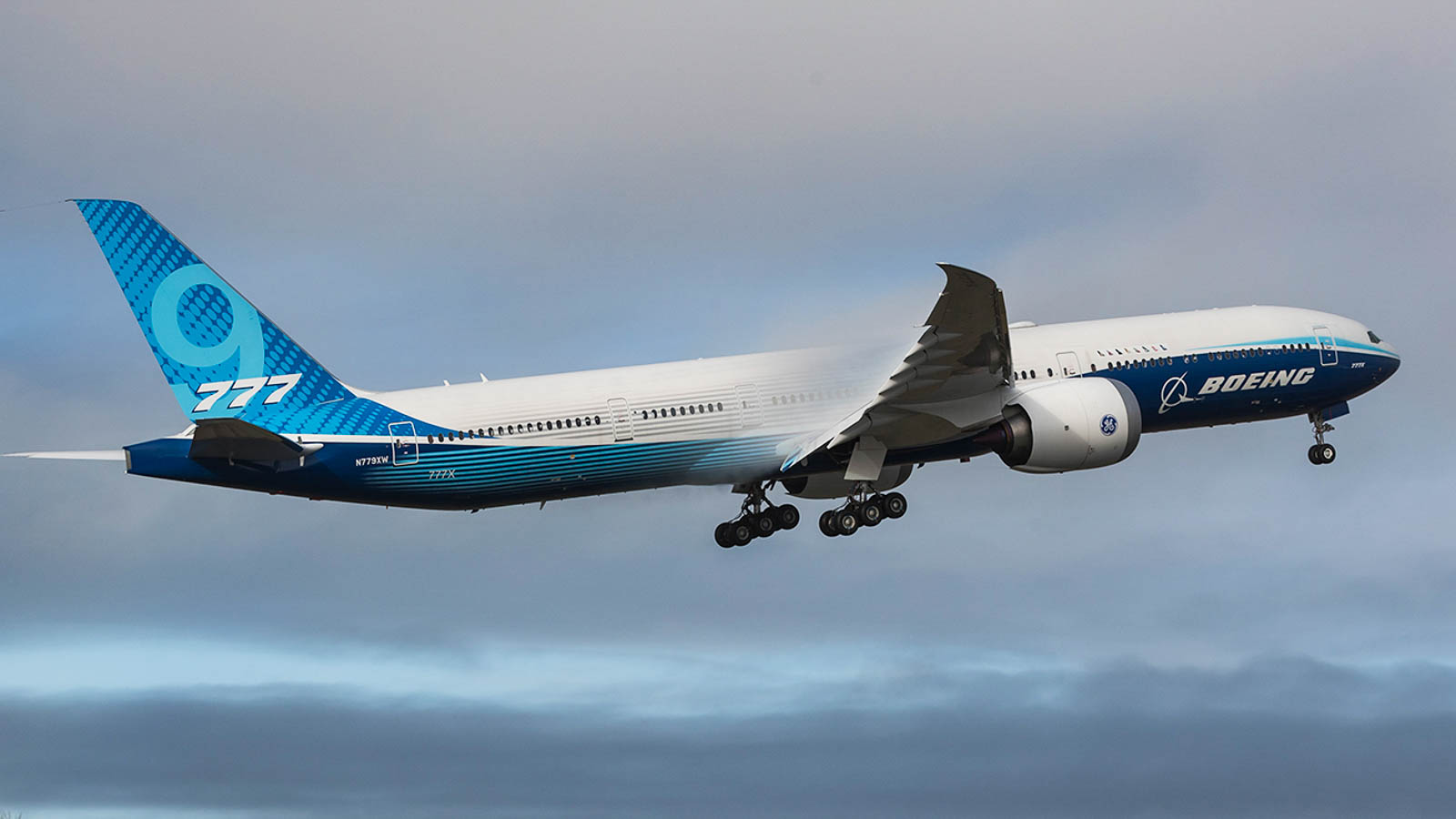
The Boeing 777-9, the first airliner with next-generation engines. Source: Boeing.
Summary
- The major reduction in fuel consumption and, thus, CO2 emissions will come from new engines.
- The technologies to drive fuel consumption down a further 15% are there.
Engine Development. Part 9. Gearbox or not?
Subscription Required
By Bjorn Fehrm
Introduction
October 13, 2022, © Leeham News: In our series, we look at the development of the latest single-aisle engines. Should these be geared? What do you gain and risk with a geared design? Is this a new development, or has it been around for a long time?
We examine the development of single-aisle engines since 2000, their fuel efficiency, and operational reliability.
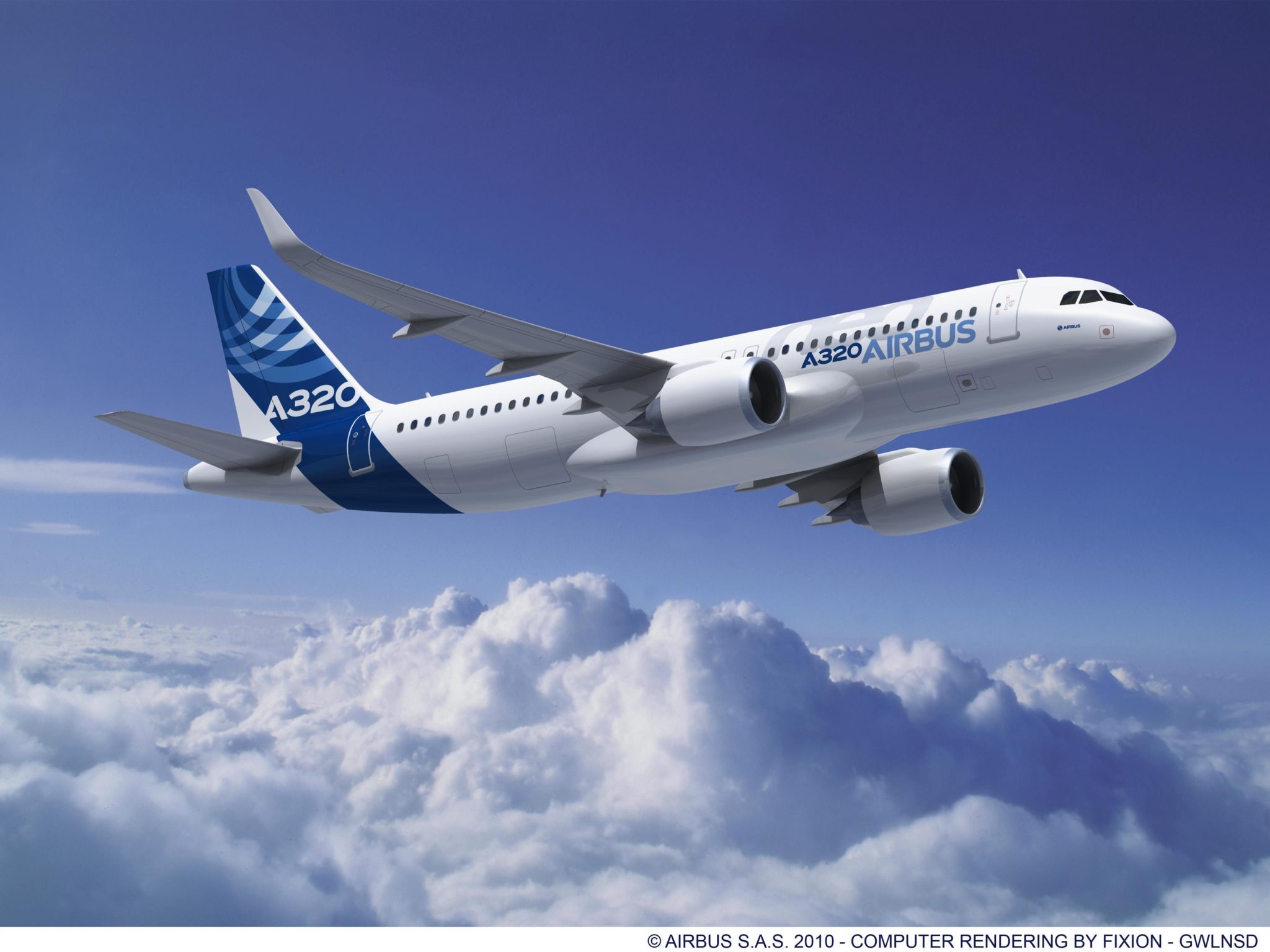
Summary
- A geared design fixes some fundamental problems in a two-shaft turbofan.
- CFM proves you could just as well further develop what you have.
Engine Development. Part 8. Throttle push or not?
Subscription Required
By Bjorn Fehrm
Introduction
October 6, 2022, © Leeham News: The early years of 2000 saw new engine programs launched for the new Boeing 787 Dreamliner and Airbus response, the A350.
Substantial differences in the life of these aircraft programs made the engine programs develop differently. It was about throttle push or not.
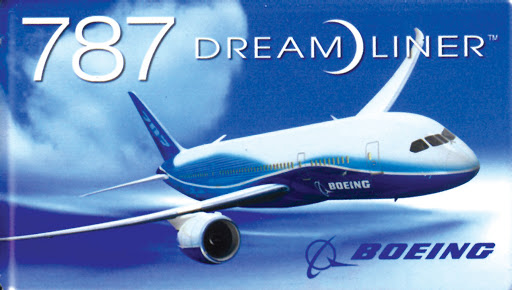
Summary
- The Dreamliner engines changed as the 787 programs went through many stages.
- The Airbus A350 program was a standard program in comparison.
Engine Development. Part 7. Engine reliability changes the aircraft market
Subscription Required
By Bjorn Fehrm
Introduction
September 29, 2022, © Leeham News: The 1970s saw the introduction of the High Bypass engine for the medium/long range Boeing 747, Douglas DC-10, and Lockheed Tristar, with Airbus A300 employing an updated variant of the DC-10 engine for medium range missions.
In the following decades, these engines introduced improved technology and matured into new levels of reliability. With the increase in reliability came changes in how long-range aircraft were designed.
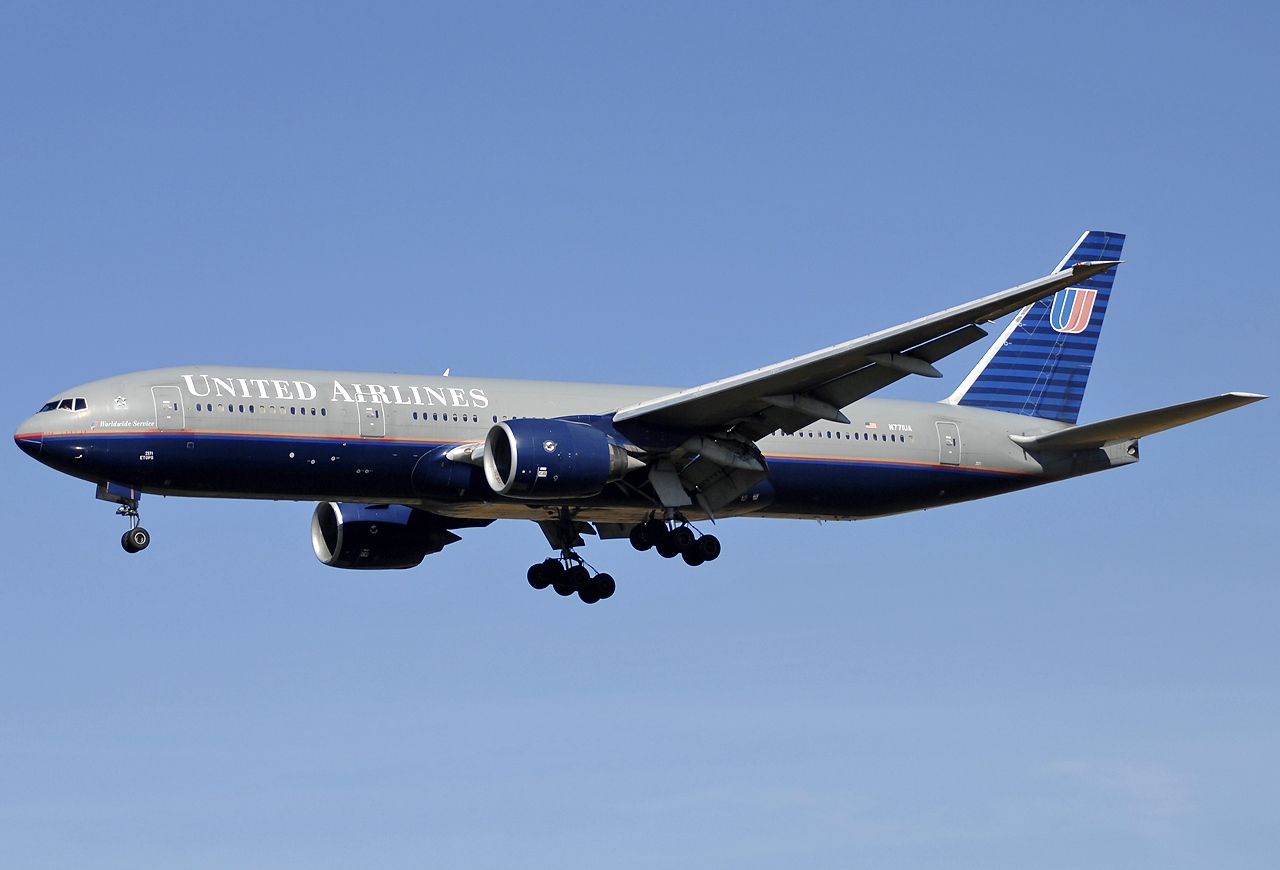
Figure 1. The Boeing 777-200 was introduced by United Airlines in 1995. Source: Wikipedia.
Summary
- The engine development after the introduction of the high bypass turbofans in the 1970s focused on reliability and higher efficiency rather than new design principles.
- The change in reliability made the two-engined long-range aircraft the winner over three and four-engine aircraft.
Engine Development. Part 6. High Bypass goes mainstream
Subscription Required
By Bjorn Fehrm
Introduction
September 22, 2022, © Leeham News: With the introduction of the High Bypass engine for the Boeing 747, Douglas DC-10, and Lockheed Tristar, it was obvious Pratt & Whitney’s low bypass engines on the Boeing 707, 727, 737, and Douglas DC-8, -9 should be attacked with a new High Bypass engine in this thrust class.
French Snecma and GE teamed up to break Pratt & Whitney’s monopoly of the jet engine market outside the widebodies. The CFM56 was born.
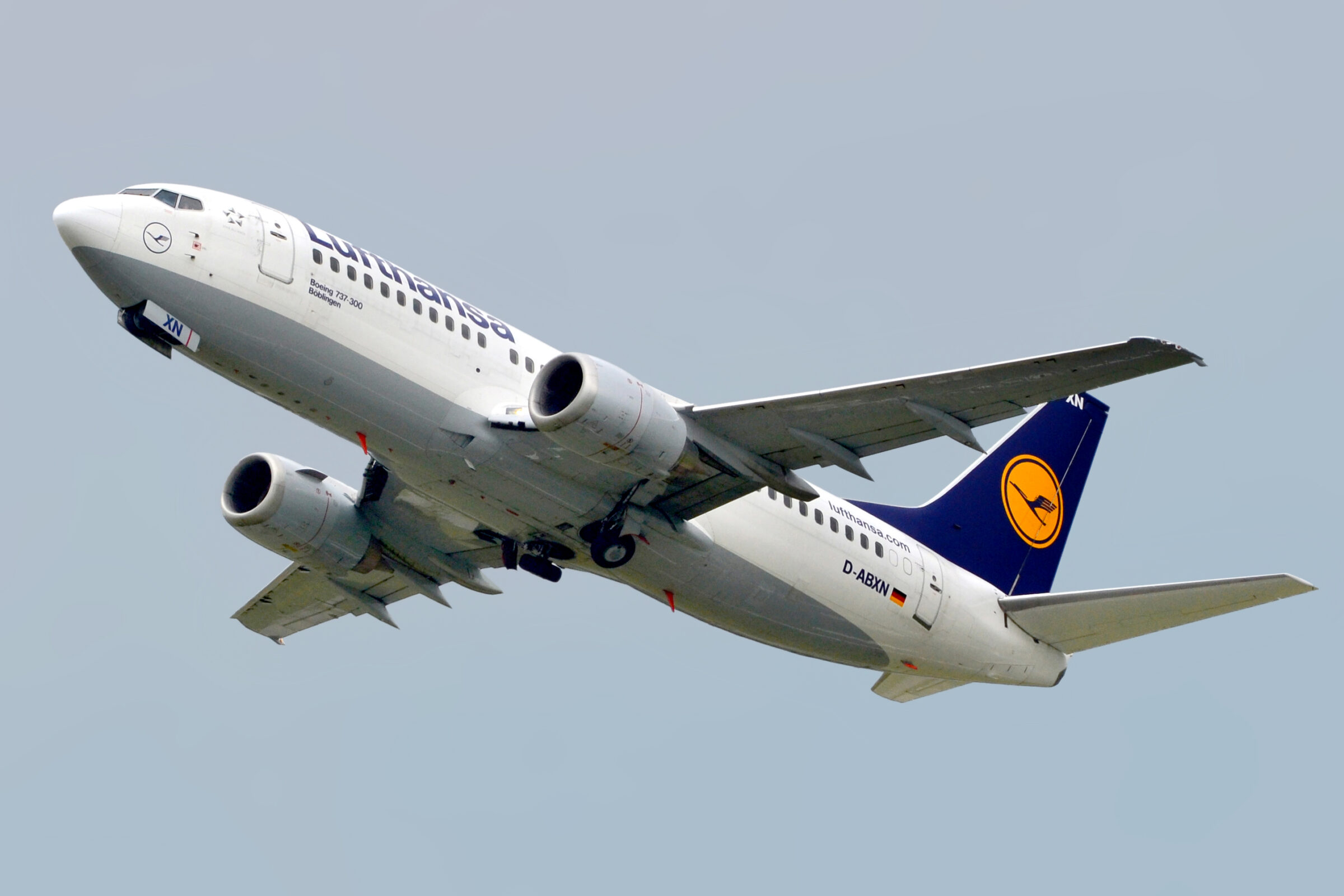
Figure 1. The Boeing 737-300, the breakthrough for the CFM56 engine. Source; Wikipedia.
Summary
- With an exclusive fit on the Boeing 737 and a 10-year introduction advantage on the A320, the CFM56 has dominated over the competing IAE V2500.
- The CFM56 is the world’s most produced jet engine, with over 32,000 engines produced to date.