
Leeham News and Analysis
There's more to real news than a news release.



Pratt & Whitney: material considerations in next generation of engines
April 1, 2015:
- Panel discussion on Manufacturing and Product Technology at the Pratt & Whitney Media Days.
Ed Colvin (EC), VP, New Product Development and Introduction, Alcoa
Lynn Gambrill (LG), PW Chief Engineer, Manufacturing Engineering and Global Services.
Frank Preli (FP), PW Chief Engineer, Materials and Processes Engineering.
Jimmy Kenyon (JK), PW next-generation fighter engine general manager.
JK: We are seeing years of investment and technology starting to deliver new products and technology to the market (referring to the GTF): double digit fuel efficiency, 75% noise reduction. 20 years of technology investment. There are advancements in the engine core. At same time ramping up F35 engine. This is the world’s most powerful fighter engine but at the same time can adapt to vertical takeoff and landing. Read more
Pratt & Whitney at inflection point
April 1, 2015:
- We’re at the Pratt & Whitney Media Days today and tomorrow. We’ll be posting running information in our usual format of paraphrased synopses for such events.
This is PW’s 90th year.
Panel Discussion: “Big Data”
Lynn Fraga (LF), analytics manager in PW Services Group.
Larry Volz (LV), VP and chief information officer.
Matthew Bromberg (MB), president of PW aftermarket unit, providing MRO services, parts customer support.
MB: Big Data is a buzzword in the industry that has mixed connotations and emotions. PW has been in data monitoring business for decades. 13,000 engines have monitoring systems. We are accelerating and doubling down on a challenging path going forward. Read more
Pontifications: Remote control of airliners a bad idea
By Scott Hamilton
March 30, 2015: In the aftermath of what a French prosecutor said was the apparent suicide-mass murder of 150 people on Germanwings 9525, there have been some calls for and questions of creating a system of allowing ground controllers to assume command of airborne airliners in the event rogue pilot situation develops.
This is a bad idea. Read more
Bombardier CS300 analysis vs A319neo, 737-7
By Bjorn Fehrm
Subscription required
Introduction
March 29, 2015, c. Leeham Co: Bombardier’s big bet in the aeronautics sector, CSeries, is well into flight testing, now more than half way toward the 2,400 hours required by Transport Canada before certification can be granted. The first aircraft to be certified will be the smaller 110 seat CS100 but the market is most interested in the larger 135 seat CS300, which has 63% of present orders and commitments, Figure 1.
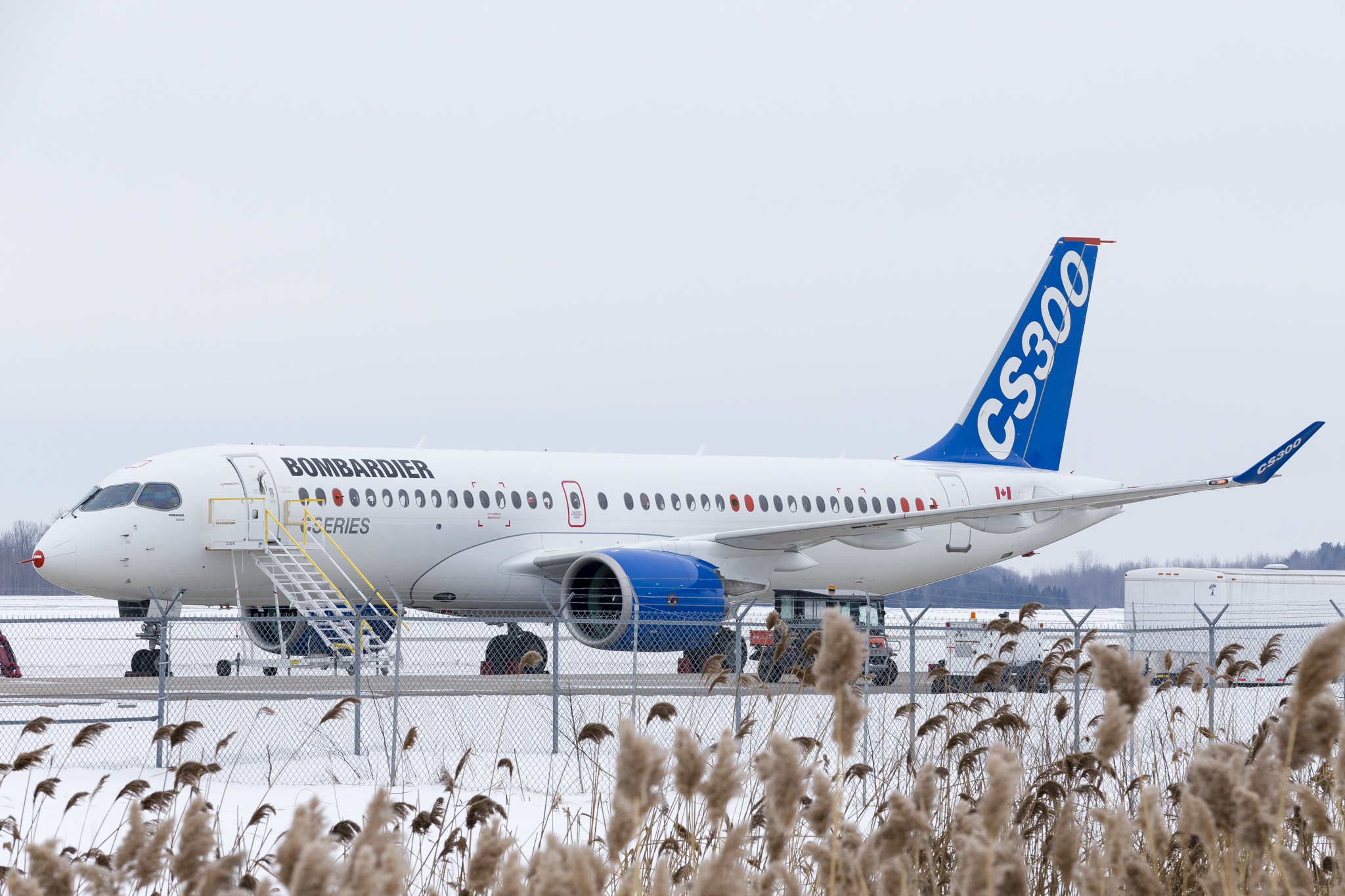
Figure 1. Cseries largest model, CS300. Source: Bombardier.
Bombardier’s new CEO, Alan Bellemare, told reporters last week that the CS100 would be certified during 2015 with entry into service slipping into 2016. The CS300, which is a direct challenger to Airbus’ A319neo and Boeing’s 737-7, should follow six months after CS100. With the CS300 in flight testing and going into service next summer, we decided to have a deeper look at CS300 and its competitors.
Summary
- A319 and 737-7 are shrinks of the market’s preferred models, A320 and 737-8, and as such not the most efficient models.
- The CS300 is the series center-point and it shows. The modern design beats the Airbus and Boeing designs on most counts.
- Part of the modern concepts in CSeries is the well-conceived Pratt & Whitney PW1000G geared turbofan.
- PW’s 73 in fan version of the PW1000G for CSeries is slightly less efficient that the 81 in version for A319neo but CS300 lower weight makes sure this is more than compensated for.
Bjorn’s Corner: Two in cockpit makes sense

By Bjorn Fehrm
March 27, 2015; As we informed yesterday, the Germanwing’s co-pilot had a pause in his training at Lufthansa’s pilot school in Bremen during 2009. Further details have since been revealed by, among others, the Dusseldorf’s prosecutors office. The leave for Andreas Lubitz, the co-pilot that flew 4U9525 to ground, due to sickness, from pilot training in 2009 was a long one; sources talk about 18 months.
Germanwings; co-pilot deliberately crashed aircraft, had burnout during training.
March 26, 2015, update 3: The Marseilles prosecutor Brice Robin confirmed mid-day that the co-pilot, Andreas Lubitz 28, from Montabaur Germany, deliberately put the autopilot on descent in an act to crash the aircraft.
The prosecutors office has a full transcript of the Flight Voice Recorder’s recording on what happened in and around the cockpit of 4U9525 until impact with ground. He says the co-pilot’ breathing could be heard on the recording at all times but he did not say anything. He was therefore alive at the impact with ground. Read more
Update (3), Germanwings: Authorities confirms co-pilot deliberately crashed aircraft.
Update March 26, 2015: The Marseilles prosecutor Brice Robin has confirmed that the co-pilot, Andreas Lubitz 28, from Montabaur Germany, put the autopilot on descent and was alive at the impact with ground, the accident is now turning from an involuntary to voluntary manslaughter investigation says the prosecutor.
He further revealed that the co-pilots breath can be heard on the tape as can the calls from ATC and the Captains efforts to enter the cockpit. The autopilots “Pull Up, Pull Up” can also be heard as the ground proximity warning triggered. Passengers screaming just before impact can also be heard. The co-pilot did not say anything but his breath is heard until impact. Research has failed to show any terrorist connections for Andreas Lubitz says Robin.
French news is now analyzing possible reasons for this act by the co-pilot pictured here in front of Golden Gate bridge:

Flightradar24 has a private receiver network for the aircraft’s intelligent transponder of type ADS-B. They now confirm that the aircraft’s autopilot was manually changed from 38,000 to 96 ft at 09:30:55 UTC.
March 25, 2015: In a breathtaking, stunning revelation, the New York Times reported today that an investigator of the Germanwings accident says the Cockpit Voice Recorder indicates one pilot was out of the cockpit and was unable to get back in.
The pilot can be heard initially knocking on the door to gain reentry, then pounding on the door and yelling to the other pilot. No response.
The scene is horrific to contemplate: the passengers must have heard the locked-out pilot and became increasingly alarmed as the plane descended from 38,000 ft to impact at around 6,000 ft.
This scenario immediately raises two possibilities: an intentional act by the pilot remaining in the cockpit; or an incapacitating medical emergency occurred.
We spoke with John Cox of Safety Operating Systems and a former Airbus A320 captain to discuss this latest news. Cox is also a safety analyst for the NBC network in the US.