
Leeham News and Analysis
There's more to real news than a news release.



Half time 2014 for Boeing and Airbus
The major OEM’s have published their half time 2014 results and we can make an analysis of their half year results together with orders / deliveries and the state of their product lines. We compare Boeing and Airbus on the high end and in a follow up article Embraer and Bombardier on the low end. To make orders and deliveries comparable we include the month of July as the OEMs collected business to be announced at Farnborough mid July.
Boeing had a strong first half 2014. Boeing Commercial Airplanes (BCA) business is now past the initial problems on the 787 program and delivered 48 units January to June 2014 (8 per month) which is the same numbers as for the 777 program. The 737 is now at rate 40 per month with a first half total of 239 deliveries. The 747-8 is at rate 1 with only 6 deliveries and the 767 has stopped as a commercial program with only 1 delivery during the first half year. The commercial deliveries of 342 aircraft drove a 4% increase in company overall revenue and a 5% increase in earnings compared to first half 2013 (both non-GAAP i.e. the core business performance), this despite a Defense, Space and Security side which was down 5% on revenue and down 15% on earnings.
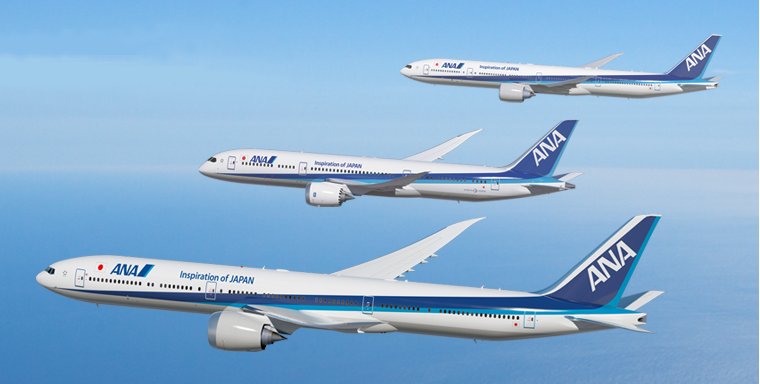
777-9X, 787-9 and 777-300ER in ANA colors
The troubled unit is Boeing Military Aircraft (BMA) which is struggling with its 767 tanker program (KC46A charged BMA with $187 million and BCA with $238 million due to increased development costs) and it is also fighting to not have its major military airplane program, the F18, stop 3 years from now from lack of orders. The military aircraft order drought contrasts with BCA where first half orders was 783 aircraft, mainly 737 but also 777X, where Emirates and Qatar confirmed their orders for 200 777X. Read more
Can the A350-800 rise out of its own ashes, like the Phoenix?
The announcement last week that Hawaiian Airlines swapped its order for six Airbus A350-800s for the A330-800neo isn’t a particular surprise, although we thought HA might issue an RFP and open the competition for Boeing.
That it did not may speak as much as to lack of the Boeing 787’s availability as anything else. But Airbus had some advantages going into a replacement for the A358: HA already operates a fleet of A330-200(ceos), so there is commonality between the neo and the ceo, minimal integration costs and the likelihood of additional Airbus incentives to keep HA in the Airbus family.
Airbus Group, first half results 2014
Airbus Group (before EADS) reported 1H 2014 results yesterday against the backdrop of an eye-catching cancellation (Skymark A380). Overall it was a report which showed solid progress in making the former EADS a homogenous, modern industrial group managed by market realities and not involved government’s politics.
Much has been achieved since the same occasion last year when then EADS announced the name change to Airbus Group and the merging of its Defense and Space side into one tighter knit division. These changes reflected market realities; civil aerospace is growing year over year whereas Defense budgets are shrinking. The yesterday announced group numbers shows gains in revenue and profitability (+6% each when EBIT is cleaned from sale of ex. Paris HQ) underlining solid progress in the undertaken structural changes. Read more
An alternative air show
The Farnborough Air Show got all the headlines this month, but we went to a small air show in Everett (WA), right at Paine Field, where Boeing dominates.
The Historic Flight Foundation is the brainchild of John Sessions, who has put together a private collection of all-airworthy airplanes. It’s also near by the Paul Allen (yes, the Microsoft Paul Allen) collection of airworthy airplanes at the Flying Heritage Museum and across the field from the restoration center of the Museum of Flight, which is at Boeing Field.
Bombardier woes go beyond CSeries
The news last week that Bombardier reorganized its business units, laid off another 1,800 employees and saw the retirement of Guy Hachey, president and CEO of the aerospace division, was viewed by some media and observers as an indictment of the CSeries program. While it’s certainly true that delays in the program weigh heavily on BBD, the problems don’t stop with CSeries.
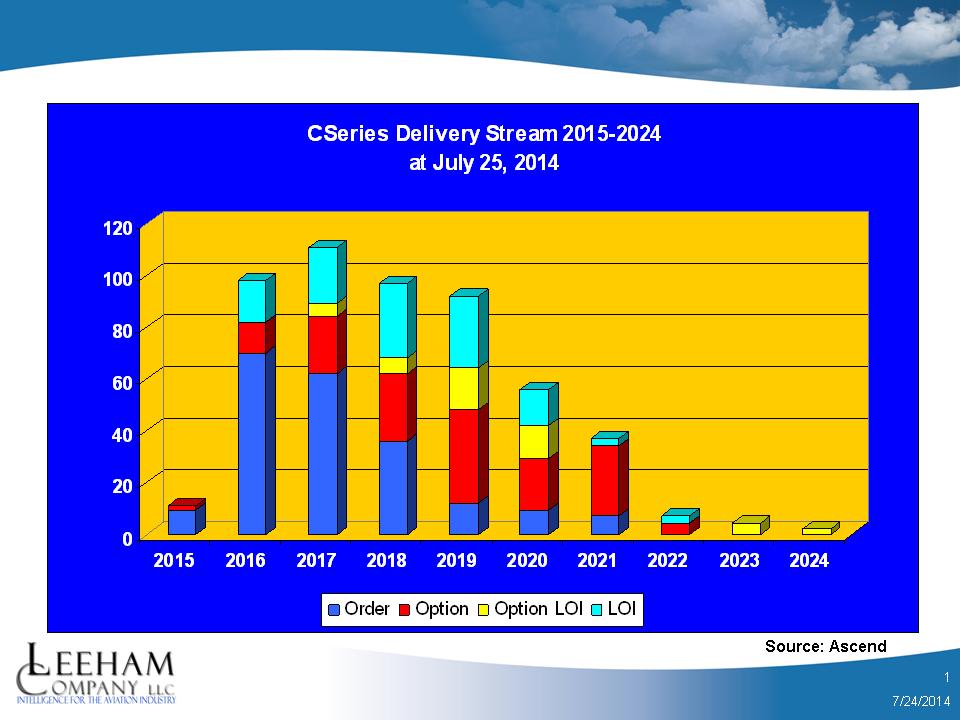
Bombardier has 203 firm orders and 310 commitments for CSeries. This delivery stream doesn’t include any potential rescheduling as a result of the grounding of the Flight Test fleet from May as a result of the engine incident.
Slow sales of the CRJ, Q400 and business jets–as well as program development issues with a new corporate jet–all combined to drag down financial performance and bleed cash. Bombardier doesn’t have the balance sheet strength of Boeing or Airbus, nor strong sales of other airplane family members, to weather the challenges of new airplane development programs.
Farnborough does little to relieve 777 Classic, A330ceo production gap issues
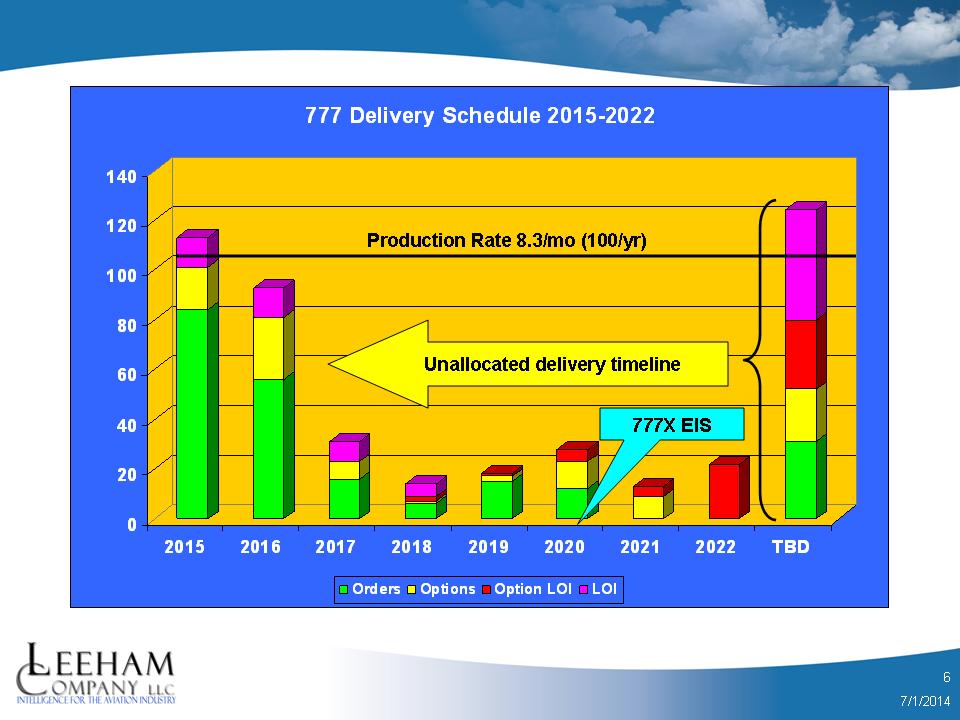
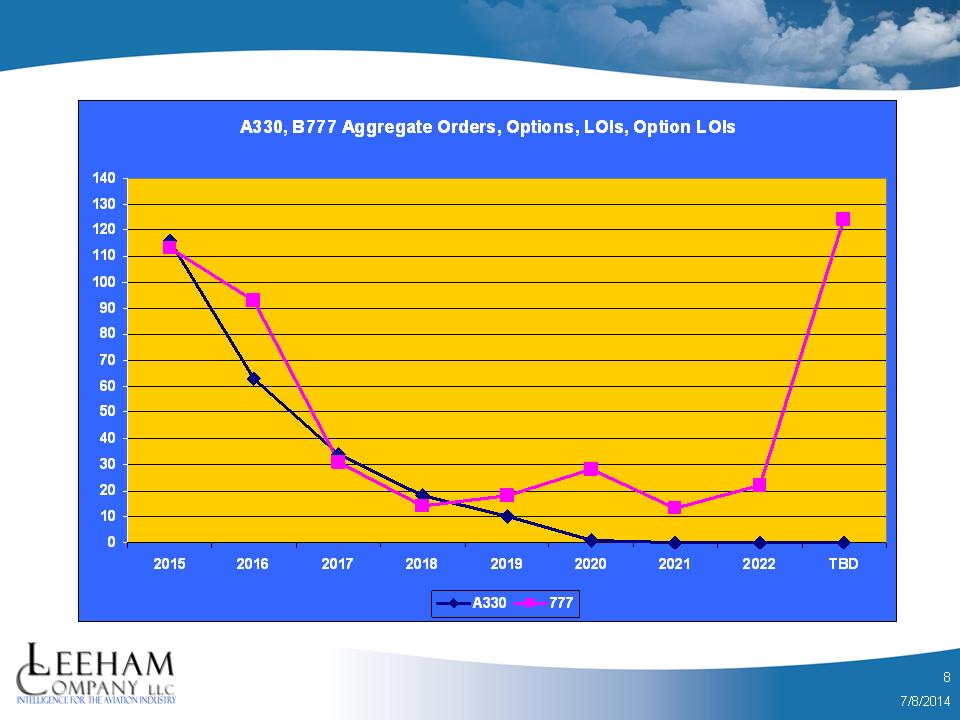
The orders and commitments announced by Airbus and Boeing at the Farnborough Air Show last week for the A330ceo, the A330neo, the Boeing 777-200LRF and the 777-300ER will help fill the looming production gaps for the two airplanes, but work by both OEMs still needs to be done.
See the production gaps, before the orders and commitments were announced, by clicking the following links:
Airbus A330 delivery schedule, 2015-2020

Analysts split on Boeing 2Q earnings
Aerospace analysts split in their reaction to Boeing’s second quarter earnings. Many were upbeat on the commercial aircraft results, while others didn’t like the higher-than-expected, continued deferred expenses for the 787 program and a big charge on the KC-46A program.
Bloomberg News was quick to point to the KC-46A program charge and the implications that this is yet another costly new airplane program for Boeing.
Traders didn’t like the news, either, with stock falling more than $3 despite higher profits for the period and higher profit guidance going forward.
The Bloomberg article cites several analysts who didn’t like elements of the earnings report.
Here are initial notes, pre-earnings call, based on the press release:
GE analysis post Farnborough
Our wrap up of Farnborough would be incomplete without looking closer at the world’s leading engine supplier, GE Aviation, which together with partners (like SAFRAN in CFM joint venture) garnered more than $36 Billion in orders and commitments during the show. This figure was only significantly bettered by Airbus ($75 Billion) and it came close to Boeing’s $40 Billion. With such level of business the claim by GE Aviation CEO, David Joyce, that the Airbus A330neo engine business was not the right thing for GE as they have more business than then they know what to do with, was certainly no case of “sour grapes”. Read more
68 Comments
Posted on July 28, 2014 by Bjorn Fehrm
Airbus, Airlines, Boeing, Bombardier, CFM, Comac, CSeries, Embraer, Farnborough Air Show, GE Aviation, Leeham News and Comment, Pratt & Whitney, Rolls-Royce, Uncategorized
737 MAX, 777, 777-300ER, 777X, 787, A320NEO, A330neo, Airbus, Boeing, Bombardier, CFM, Embraer, Pratt & Whitney, Rolls-Royce