
Leeham News and Analysis
There's more to real news than a news release.


The A380 investors day jinx
- July 15, 2016, © Leeham Co., Farnborough Air Show: At an event like this, we pick up all sorts of snippets that don’t fit into any given story. So here’s a compilation of our Odds and Ends to wrap up our dedicated coverage of the 2016 Farnborough Air Show.
 A380 and investors meeting: The Airbus A380 has been a sensitive topic for investors. Historically stock prices took a major hit when negative news about the A380 emerged. During an investors day in December 2014, one of the executives slipped that the program could be terminated. The stock took an immediate dive and other executives had to clean up the first one’s comments.
Airbus also holds an investors day during the Paris and Farnborough air shows. The latter’s was scheduled on Wednesday. The night before, the French newspaper La Tribune broke news that the production rate of the A380 will be reduced from 20/yr in 2017 to just 12/yr in 2018. Airbus scrambled to catch up to the story Tuesday night in advance of the Wednesday investors day.
The production breaks even at 20 but not at 12. Yet the stock opened down slightly and remained flat during the rest of the day before closing up slightly.
The jinx may be over, but perhaps Airbus either has to fix the A380 program or cancel its investors days.
AirAsia: More and more congestion for Asian airports
By Bjorn Fehrm
July 13, 2016, ©. Leeham Co, Farnborough Air Show: AirAsia Group Chief Executive Tony Fernandes said yesterday that increased congestion the group has seen for several of the airports AirAsia operates to in the Asian market motivated an order for 100 Airbus A321neos.
“We are slot constrained on several of our destinations and when we can’t get any more slots from an airport, it’s better to take-off with the 50 more passengers that an A321neo offers rather than the 180 seat our standard A320 have,” said Fernandes.
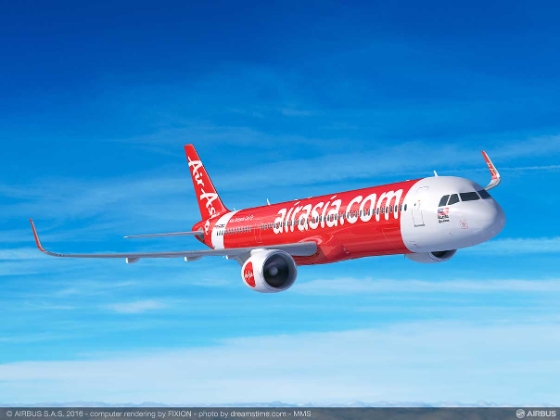
AirAsia Airbus A321 as ordered yesterday at Farnborough Airshow. Source: Airbus
“The congestion has grown to the point where it will no longer be optimal for AirAsia to only operate with our standard-size aircraft, our fleet of 200 A320ceos with 180 seats, which will be gradually replaced in coming years by our order for 304 A320neos with the same seating,” Fernandes said. Read more
Rolls Royce, Microsoft and Singapore Airlines: Time to analyze all that data
By Bjorn Fehrm
Introduction
July 12, 2016, ©. Leeham Co. Farnborough Air Show: Rolls Royce announced a strategic agreement for big Data analysis with Microsoft at yesterday’s Farnborough Air show. Rolls-Royce for years has been monitoring the health of their operational engines run under TotaICare services agreements. This monitoring has been performed on rather modest data samples from the aircraft’s engines.
It is now time to analyze all the information available from the engines and the airframe to gain further operational advantages like lower fuel burn, higher in service reliability or lower maintenance costs. We are then talking about data volumes in another ball-park than what has been captured and analyzed under TotalCare so far.
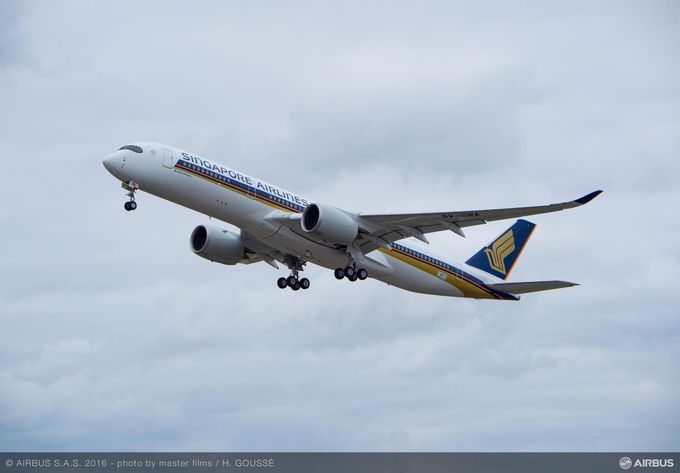
Singapore Airlines Airbus A350-900 with Rolls-Royce engines. Source: Airbus
“Engine data monitoring has primarily been done up until now to ensure reliable operation and to recognize developing problems in their infancy,” says Rolls-Royce Senior Vice President Service Tom Palmer. “With the help of Microsoft and their world wide Azure cloud computing platform, we can now take engine and airframe operations analysis to the next level. This will ensure that we further reduce our customers fuel consumption and provide them with a more cost effective maintenance program. We will take the digitization of engine and aircraft operations to the next level.” Read more
Bombardier sees more C Series orders this year
Our coverage of the Farnborough Air Show begins today with an interview with Fred Comer, president of Bombardier Commercial Aircraft. There will be paywall and freewall posts throughout the FIA16 this week.
Subscription Required
Introduction
July 10, 2016, © Leeham Co., Farnborough Air Show: Winning major orders from Air

Fred Comer, president of Bombardier Commercial Aircraft.
Canada and Delta Air Lines earlier this year and the entry into service of the CS100 this Friday with launch customer Swiss International Air should give Bombardier’s bet-the-company gamble a boost for more orders this year.
This is the prediction by Fred Comer, president of Bombardier Commercial Aircraft.
During an interview with LNC on a media demo flight of the CS100 at the Farnborough Air Show, Comer said the smaller BBD can compete with the behemoths Airbus and Boeing for orders in the 125-150 seat sector.
Summary
Comer says:
- Boeing’s prospective 737-7.5 still won’t be competitive.
- The CS100 is better than the Embraer EJet-E2.
- Embraer’s complaints of unfair competition because of Canadian government investment are unfounded.
Read more
Bjorn’s Corner: Over the oceans, use FANS

By Bjorn Fehrm
08 July 2016, ©. Leeham Co: We have over the last Corners described the future Air Traffic Management systems as a combination of ADS-B and Controller-Pilot Data Link Communications, CPDLC.
What to do when there are no ground stations that can receive the ADS-B broadcast of the aircraft’s position and where it’s going? Or the aircraft’s VHF based CPDLC?
We now talk about crossing the large waters where there are no ground stations for neither ADS-B signals nor VHF communications, whether by voice or data.

Figure 1. North Atlantic Tracks (NAT) going eastbound. Source: Nav Canada
The solutions over these Oceanic areas have to be based on the aircraft following predetermined tracks, Figure 1, and continuously issuing position reports to ground controllers that keep the aircraft separated along the tracks based on the reports. We now cover how this has been done historically and the way forward.
IATA, Lufthansa cargo reports are discouraging
July 6, 2016, © Leeham Co.: Going into the Farnborough Air Show (#FIA16 on Twitter) next week, ominous signs continue to emerge about the health of the air cargo

Photo via Google images.
industry.
The International Air Transport Assn. (IATA) Wednesday said yields and traffic remain under pressure. Freight tonne kilometers fell 0.9% year-over-year, IATA reported.
“Yields remained pressured as freight capacity measured in available freight tonne kilometers (AFTKs) increased by 4.9% year-on-year,” IATA said. “reight demand decreased or flat lined in May across all regions with the exception of Europe and the Middle East. These regions recorded growth in air cargo volumes of 4.5% and 3.2%, respectively, in May, compared to the same period last year.”
Lufthansa Cargo saw yields in a “landside” drop, according to a Bloomberg report.
Bjorn’s Corner: When it gets tough, use PBN
By Bjorn Fehrm
1 July 2016, ©. Leeham Co: Over several Corners we have described how the introduction of ADS-B and GPS will revolutionize air navigation and the ease with which bad weather take-off and landing procedures can be defined, with minimal requirements for installations on the ground.
The GPS system enables accurate enough navigation systems if extra correction systems augment the GPS signal. They then enable ILS-like landing capabilities on virtually any airport without requiring special ground installations.
There are situations where the capabilities of augmented GPS systems are not good enough. When local terrain requires that approach or departure procedures to and from an airport be flown in a narrow corridor with curved paths, we need to step up to Performance Based Navigation.

Figure 1. Airports in difficult terrain require Performance Based Navigation. Source: Wikipedia
We will now go through what Performance Based Navigation is and how it differs from the GPS- based RNAV navigation we have described so far and when it will be used.
Southwest’s MAX deferral
- Bloomberg News reports that Boeing is mulling a 777-10. We hinted at this last July with the large GE9X development. See our Paywall Farnborough preview this coming Monday for more information.
Subscription Required
Introduction
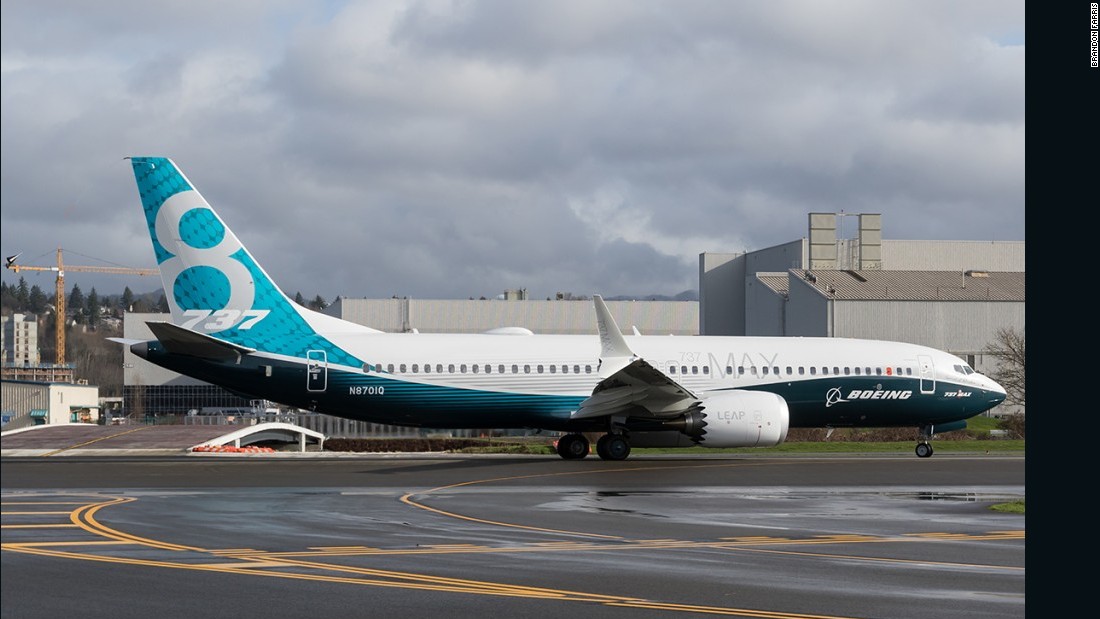
Southwest Airlines deferred 67 Boeing 737 MAX deliveries and some viewed this as a negative for the program. Photo via Google images.
June 29, 2016, © Leeham Co.: News last week that Southwest Airlines deferred 67 Boeing 737 MAX deliveries three year caused some to conclude that this is a harbinger of bad news for Boeing and the MAX program.
LNC disagrees with this conclusion.
Summary
- Southwest says it’s about not having a “subset” fleet of the 737 Classic when the MAX enters service.
- The airline also says it needs to spend more on technology, an area where WN has long lagged its competitors.
- Accelerated retirement of the 737-300/500 is a key reason for the fleet planning changes.
- Long-standing fatigue issues with the Classic remain a problem.
Analysts opine on Airbus, Boeing, Iran and Brexit
Click on image to enlarge.
June 24, 2016: Brexit continues to creep into US analyst reports for the potential impact of companies doing business in the United Kingdom.
But there are other issues as well. Highlights this week:
- Spirit Aerosystem is a supplier to Airbus and Boeing. Deliveries to Airbus for the A350 continue despite program delays. Negotiations continue with Boeing over new contract terms. (Buckingham.)
- Don’t freak out over the Southwest Airlines deferral of Boeing 737 MAX. (Credit Suisse.)
- The Iran deal isn’t a big deal yet for Boeing. (Goldman Sachs.)
- Brexit may benefit B/E Aerospace. (JP Morgan.)
- US trans-Atlantic airlines likely will be hurt by Brexit but purely US domestic carriers are fine. (Morgan Stanley.)
Brexit special: analyst reaction

Source unknown. Via Twitter.
June 27, 2016: Aerospace and airline analysts are reacting to Thursday’s vote in Britain to leave the European Union. Below is a synopsis of some of the analyst notes we receive.
Credit Suisse
We are forwarding the analysis our European Transports team put out this morning on Brexit and have a few observations as it relates to US Airlines.
- GBP Exposure: For the US network carriers (UAL, DAL, AAL), GBP exposure averages ~2-3% of total revenues with overall UK exposed revenues ranging 4-6%.
- Impact to High Yield Transatlantic Traffic Primary Concern: For US network carriers, we see the primary concerns post-Brexit on the demand implications on the Transatlantic. Last week IAG issued a profit warning which worries us on corporate demand weakness. Given scheduled seat growth in the Transatlantic continues to outpace demand (H2 seat growth US-EU scheduled at 8.6%), capacity cuts are needed to stabilize pricing particularly since UK GDP is likely to slow even further. We look to Q2 earnings calls next month for additional color from carriers.
- AAL Viewed Most at Risk Given Partnership with IAG, but Our Team Believes IAG is Least at Risk [among EU airlines] from Future UK-EU Air Service Negotiations: Our European analyst believes IAG’s airlines would see limited effect from the UK exiting the EU Open Skies agreement as long as renegotiated UK-EU bilaterals do not limit service levels. This suggests that AAL’s relative underperformance was overdone on Friday; however, we expect Brexit-related uncertainty to continue to weigh on network carriers, and reiterate our confidence in domestic carriers (Outperform on LUV & SAVE).