
Leeham News and Analysis
There's more to real news than a news release.


Aviation Partners Boeing: next step–scimitar for 757, 767
Subscription Required
Introduction
April 14, 2015: Several airlines operate the Boeing 757 across the Atlantic on “thin” routes but sometimes have to do refueling tech stops when high westerly winds

Aviation Partners Boeing plans the Split Scimitar Winglet (SSW) for the Boeing 757 and 767. Officials plan to seek board approval on the 757 SSW this year, the 767 next year. Source: Aviation Partners Boeing. Click on image to enlarge.
occur.
The 757s are aging, with engine maintenance, repair and overhaul costs increasing under the tightly-controlled contract with Rolls-Royce and Pratt & Whitney.
Some airlines want a “757 replacement.” Boeing and Airbus don’t see a market for “just” a 757 replacement and argue the 737-900ER/9 and A321neo/LR are the replacements. Even these fall somewhat short.
Industry observers and pontificators nonetheless are obsessed with a “757 replacement” (except us—we’ve redefined the replacement as one needed for the 225/5000 Sector [225-250 seats, 5,000 miles] and concluded an airplane very similar to the 767-200 is needed).

Patrick La Moria, EVP and chief commercial officer, Aviation Partners Boeing.
While all this debate is going on, Aviation Partners Boeing (APB) is close to seeking board approval to offer a scimitar option for the 757 that will improve efficiency by about another 1.5%. A scimitar for the Boeing 767 may not be far behind.
Summary
- Scimitars and the increased range will eliminate some “tech” stop for fuel.
- Field performance will be better.
- Low fuel prices and prospect of scimitars (as well as lack of availability of new airplanes) may lead to longer retention of 757s and 767s.
Boeing 4Q cash flow increase stemmed from huge accelerated customer advances: UBS
April 13, 2015: Boeing surprised aerospace analysts at the year end earnings call with far higher cash flow than had been expected.
Analysts beat up Boeing pretty badly on the 3Q2014 earnings call and were taken aback by the dramatic upswing in the fourth quarter.
We began to hear as early as January that Boeing achieved the marked improvement by getting accelerated advances from customers who had placed commercial airplane orders, resulting in the dramatic upswing. The reason was to respond to the beating Boeing took on the third quarter earnings call, several Wall Street analysts told us.
In advance of the first quarter earnings call April 22, UBS aerospace analyst David Strauss issued a detailed report about Boeing’s Free Cash Flow (FCF) that outlines just how dramatically Boeing pulled forward customer advances.
Below are selected excerpts from the April 13 note. Read more
Pontifications: Wizz could be first face-off of 737 MAX 200 vs “A320neo 195”
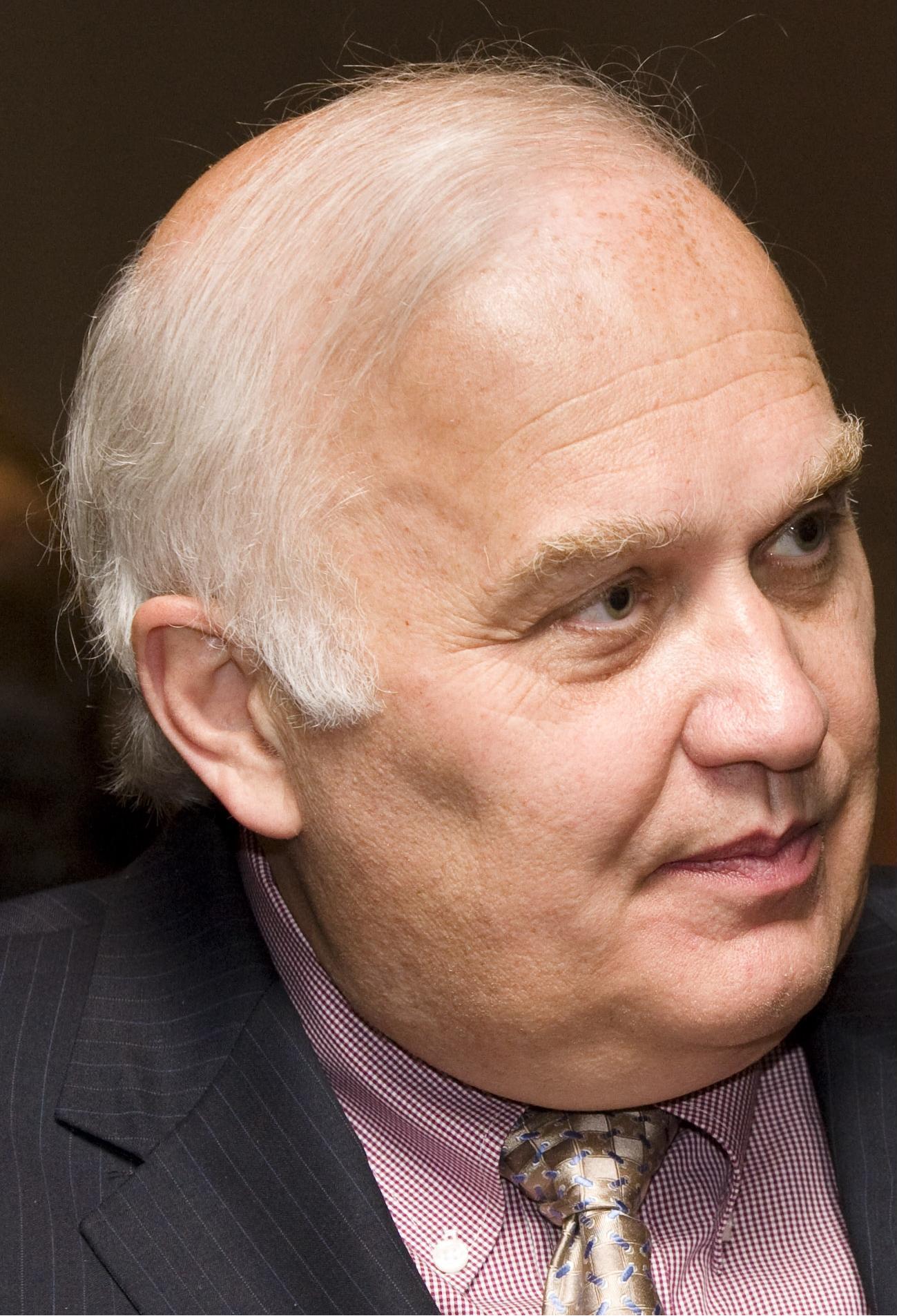
By Scott Hamilton
April 13, 2015: A campaign that began last year between Airbus and Boeing for a large order of 100 airplanes at Europe’s Low Cost Carrier, Wizz Air, could be the first face off between the “A320neo 195” (our name) and the 737 MAX 200 (Boeing’s name).
Note I said “could be.” I know Boeing is offering the MAX 200. I know Airbus is offering the A320neo. What I don’t know is if Airbus is offering the A320 195.
We first discussed the A320neo 195 last week, after a tip off by Mary Kirby of Runway Girl Network.
Wizz Air, of Hungary, currently operates only A320s and A321s. The competition is for 100 aircraft of the re-engined generation. This is a hot contest, with Boeing looking not only to flip Wizz from the A320 to the 737 but also to get a second customer for the MAX 200. Ryanair was the launch customer for the airplane last year, but no new orders have been landed since. Boeing touts the MAX 200 as the perfect solution for LCCs.
The contest is hot enough that our Market Intelligence indicates the pricing is already comfortably below $40m.
Airbus hasn’t announced a marketing name for its high-density version of the 195-seat A320neo, which last month won regulatory approval of the 195-seat concept. This is at 27-inch seat pitch. The MAX 200, which Ryanair said it will configure for 197 seats, will have a mixture of 30-inch and 29-inch pitch. Airbus believes galley cart requirements means Ryanair will have to go to 194 seats. Read more
Boeing MOM airliner; market coverage
By Bjorn Fehrm
Subscription required.
Introduction
12 April, 2015: In our study of the options for Boeing’s market study called Middle of the Market (MOM), we could conclude that the most likely aircraft to cover their 200-250 seat 4750nm range requirement would be a seven abreast twin aisle aircraft using their patented new oval construction, thereby saving weight and drag.
After finishing the series, Readers requested that we conclude the work by showing what market segment a family of such airliners would cover and how they would relate to the Boeing 787-8. As it is pretty straight forward to see with our aircraft performance model how much of a range of aircraft variants one can make from one base development of aircraft and engine, we decided to fulfill the wish from our Readers.
We have therefore looked at how far the concept MOM airliner could be stretched and what segment in the market would be covered by it. We also studied how much such a family would encroach on Boeing’s 787 Dreamliner market.
Summary
- A base design such as our proposed MOM dual aisle airliner can typically cover a market of 30-40 seat increments per model.
- Limiting factors are the base models wing area and span, together with engine sizing. Much depends on the engine’s stretch capability.
- A MOM airliner family would compete with the 787-8 for short- and mid-haul traffic, there presenting a more economical alternative. The Dreamliner would have long-haul for itself.
Airbus to tout economy “Choice” at Hamburg interiors show
April 8, 2015: Airbus will unveil a new concept at the international Hamburg interiors convention next week call “Choice” for the economy cabin.
The concept is intended to further segment the traveling public demand and increase revenue for airlines.

Chris Emerson, SVP-Marketing, Airbus. Photo: Airbus.
While the concept isn’t entirely new—it’s a four-class configuration, including business class, and some airlines are moving in this direction already—Airbus is formalizing the marketing concept, which officials believe give it a competitive advantage over Boeing’s wide-body products.
The Choice concept includes Budget Economy, Comfort Economy, Premium Economy and Business Class.
Christopher Emerson, Senior Vice President-Marketing, said that 10% of Airbus operators use maximum capacity in the Airbus wide-body fleet vs 60% for Boeing’s wide-bodies. This gives Airbus operators flexibility to configure cabins in a way to cater to different passenger demands and maximize revenue, he said. Read more
2030 decade airplanes need new shapes for better efficiency
Subscription Required.
Now open to all readers.
Introduction
April 6, 2015, c. Leeham Co. The next 15 years may well be the last new airplane programs of major airliners that look like today’s tube-and-wing aircraft because demands for new efficiency will require go beyond what engines can do within a reasonable size, says Alan Epstein, VP of technology and environment at Pratt & Whitney.
- Part 1 of our interview with Alan Epstein looked at the next new airplane, the Middle of the Market aircraft (MOM). Today’s Part 2 looks beyond MOM (and it’s not DAD).
Major changes to the airframe will have to provide added efficiency gains in combination with new and evolving technology from today’s engines.
The next new airplane, the so-called Middle of the Market (MOM) aircraft, will look like today’s airplanes. The next plane after that, the replacements for the Airbus A320 and Boeing 737 families, will probably be the last iterations of the planes of today. After that, new designs are likely to emerge, Epstein says.
Summary
- Tomorrow’s airplanes need to revise the fuselage design to increase efficiency.
- Airplanes after 2030 may look different than the tube-and-wing configurations of the past decades.
- Four engine airplanes may make a return.
Pontifications: Meet the “A320neo MAX 195”
By Scott Hamilton
April 6, 2015: There is a saying in America: keeping up with the Joneses.
This means that if your neighbor buys something, you have to go buy something similar to “keep up.”
In the case of commercial aviation, Keeping Up with the Jones has been an international past time for decades. Boeing developed the 247. Douglas developed the DC-2. Douglas developed the DC-4. Lockheed developed the Constellation. The DC-6 begot an improved Connie which prompted the DC-7 which in turn prompted the 1649 Connie. Boeing developed the 707 and Douglas the DC-8. And so it goes today, with the tit-for-tat between Airbus and Boeing.
So the latest: Boeing 737 Max 200, meet the Airbus “A320 Max 195.” Read more
Bjorn’s Corner: Lighter fuselage materials and what they bring
April 02, 2015; There is different information whether Boeing will adopt new Aluminum Lithium based alloys for the fuselage of the up and coming 777X, our latest info is that this is not yet decided.
In this corner we will look at what is at stake should Boeing go the route of new materials or not. It will discuss what is to consider when choosing materials like Aluminium Lithium (AlLi) or Carbon Fiber Reinforced Plastic (CFRP) for aircraft structures, especially for fuselage structures which has many conflicting requirements.
We will see that aircraft fuselages are tricky to make light and that a stronger material not necessarily means weight gains.
Pratt & Whitney looks to MOM and beyond-Part 1
Subscription Required.
Introduction
April 2, 2015, c. Leeham Co.: Even as Pratt & Whitney prepares for the entry-into-service of its new
Alan Epstein, vice president of technology and environment, Pratt & Whitney
Geared Turbo Fan engine on the Airbus A320neo, it’s looking ahead to the most likely all new airplane that could be launched as early as 2018 with an EIS in 2025: the Middle of the Market (MOM) airplane, also most popularly known the as Boeing 757 replacement.
Except that this new airplane really isn’t a 757 replacement, but one that is more accurately a replacement for the Boeing 767-200 or the Airbus A300: a twin aisle, 250 passenger airplane with 4,000nm-5,000nm range.
Alan Epstein, vice president of technology and environment for Pratt & Whitney, believe a derivative of the GTF will be on this new airplane.
Summary
- The next new airplane will be lighter and capable of using smaller engines than those used on the 767-200 and A300.
- The MOM will look much like today’s tube-and-wing airplanes.
- The GTF by then will be 8%-10% more efficient than today’s GTF.
- Geared engines will become more common.