
Leeham News and Analysis
There's more to real news than a news release.



India’s airlines order huge numbers of airplanes
April 5, 2018, © Leeham News: India is one of the fastest-growing aviation markets in the world, with airlines there ordering a massive number of airplanes for their size.
- Jet Airways announced a firm order for 75 Boeing 737 MAXes after this article was written.

Airbus and Boeing are selling hundreds of airplanes to India’s fast-growing airlines.
The most prominent airlines have nearly 1,000 airplanes on order. The leading, and most profitable, low-cost carrier, Indigo, is now considering ordering up to 50 twin-aisle aircraft for its first foray into long-haul, LCC service, in competition with the perennial loser, Air India.
It’s also one of the most challenging aviation environments. The government has policies that make it difficult for carriers to operate efficiently.
There have been a number of airline start-ups that make competition fierce. There have been a lot of airline failures.
Operational costs of a Long-Haul LCC
By Bjorn Fehrm
Subscription Required
Introduction
April 05, 2018, © Leeham News.: In an article yesterday we described the different costs types for a Long-Haul LCC. We also explained the different parts of the Operational costs for the airline’s aircraft operations.
We will look at the size of these Operational costs in Part 3 of the article series. In this article, we use our aircraft performance model to develop these costs for the LCC’s aircraft.
 Summary:
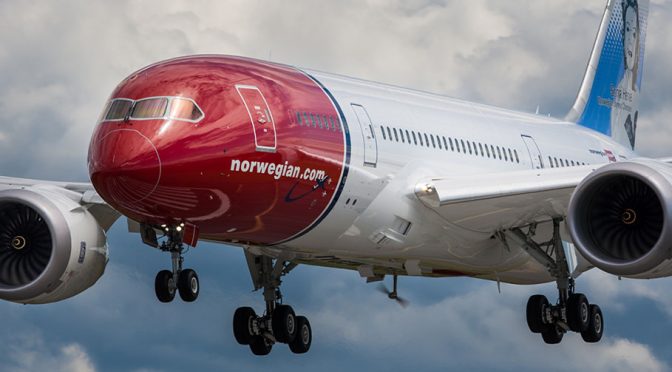
- The smaller Boeing 737 MAX 8 is surprisingly cost competitive with the larger and more capable Airbus A321LR, A330-900 and Boeing 787-9 on our selected route.
- The low trip and seat costs of the MAX 8 can only be used on transatlantic routes like our New York – London route. Any further into the US or Europe and the MAX 8 runs out of range.
China proposes tariffs on Boeing planes, but it’s less than meets the eye
April 4, 2018, © Leeham News: The Trump Administration’s ill-conceived proposed tariffs on aircraft parts made and imported from China prompted what on the surface appears to be a hit back at Boeing, but which in reality seems more fluff than substance.
Jon Ostrower broke the news yesterday about the list of aircraft components Trump proposes tariffs on. Since Boeing uses China for some of its aircraft components, the tariffs would hurt Boeing.
China today proposed 25% tariffs on Boeing airplanes—but excludes the MAX 8 by weight. (The MAX 7 may be included, with between 10-20 announced ordered by two Chinese airlines).
According to Airfinance Journal Fleet Tracker, there are only 19 737-800s remaining on order for delivery this year through 2021. This doesn’t include any Unidentified orders.
Eight -800s are scheduled for delivery this year, six in 2019, two in 2020 and three in 2021.
US aerospace analysts are unimpressed. The following is a synopsis of their reaction.
Is Long-Haul LCC viable? Part 2
By Bjorn Fehrm
April 04, 2018, © Leeham News.: In the first article about Long-Haul LCC and if it’s a viable business, we looked at ticket pricing strategy used by airlines to maximize revenue on a route. Now we look at the cost side of the equation.
The cost level for a Long-Haul LCC is of utmost importance. A lower cost level than the Legacy carriers flying the same routes is the only way the company can compete. It’s seldom it offers origins or destinations not offered by other airlines. Its mission is to offer a popular air transport service at a lower cost.
Don’t look for commercial BWB airplane any time soon, says Boeing’s future airplanes head
April 3, 2018, © Leeham News: New airplanes for the foreseeable future are unlikely to look radically different than the tube-and-wing configuration that’s been around since the dawn of manned flight.
Yes, there are unmanned aerial vehicles (UAVs) that look very different. Yes, there are the B-2 and B-21 bombers that are flying wings.

Scaled Blended Wing Body airplane. Source: NASA.
And, yes, there is the Blended Wing Body concept that was created by McDonnell Douglas and tested, in scaled-size models, by Boeing, which acquired MDC in 1997.
But don’t expect to see a BWB either as a freighter or as a passenger airplane any time soon, says Boeing’s VP of Product Development and Future Airplane Development.
Boeing’s strategy to de-risk design, production
Subscription Required
Introduction
April 2, 2018, © Leeham News: Boeing’s painful experience the with the development, design, production and grounding of the 787—costing billions of dollars in overruns and penalties with a delay of nearly four years—led to a major effort to de-risk future airplane development.
The 787 experience led to a pause that resulted in pursuing derivatives of the 737 MAX and 777X instead of developing new airplanes to replace these aging platforms and leap ahead of Airbus.
Now, poised to launch its first all-new airplane program in 15 years, Boeing continues to de-risk its production.
Summary
- De-risking production means diversifying supplier base, bringing work in-house.
- De-risking is changing the fundamental design-production nexus.
- De-risking is innovating and cutting costs to meet new competition.

The Southeast Aerospace and Defence Conference will examine the transformation in production. Click here for more information.
Pontifications: The Airbus-Boeing chess game

By Scott Hamilton
April 2, 2018, © Leeham News.: While Boeing edges toward a decision whether to launch the New Midrange Aircraft, the NMA or 797 as it’s known, Airbus ponders how to respond—either pre-emptively or after Boeing’s move.
Responding with an A321neo Plus is widely known, but it’s also logical the Airbus would look at enhancements for the A320neo. Less likely but probably studied are also enhancements to the A319neo. Studies, after all, pre-date the agreement last fall with Bombardier to acquire 50.01% of the C Series program and Airbus clearly understood that the present A319neo is as unattractive as was the original design of the Boeing 737-7.
Embraer gears up for E2 delivery; a look at the 100-150 seat sector demand
March 31, 2018 © Leeham News: The first Embraer E2 jet will be delivered April 4, to Norway’s Wideroe Airlines.
The E190-E2 seats 114 passengers in one-class, 29-inch pitch and 106 at 31-inch pitch, putting it at the low end of the 100-150 seat sector that is often maligned as a Bermuda Triangle for airplanes of this size.
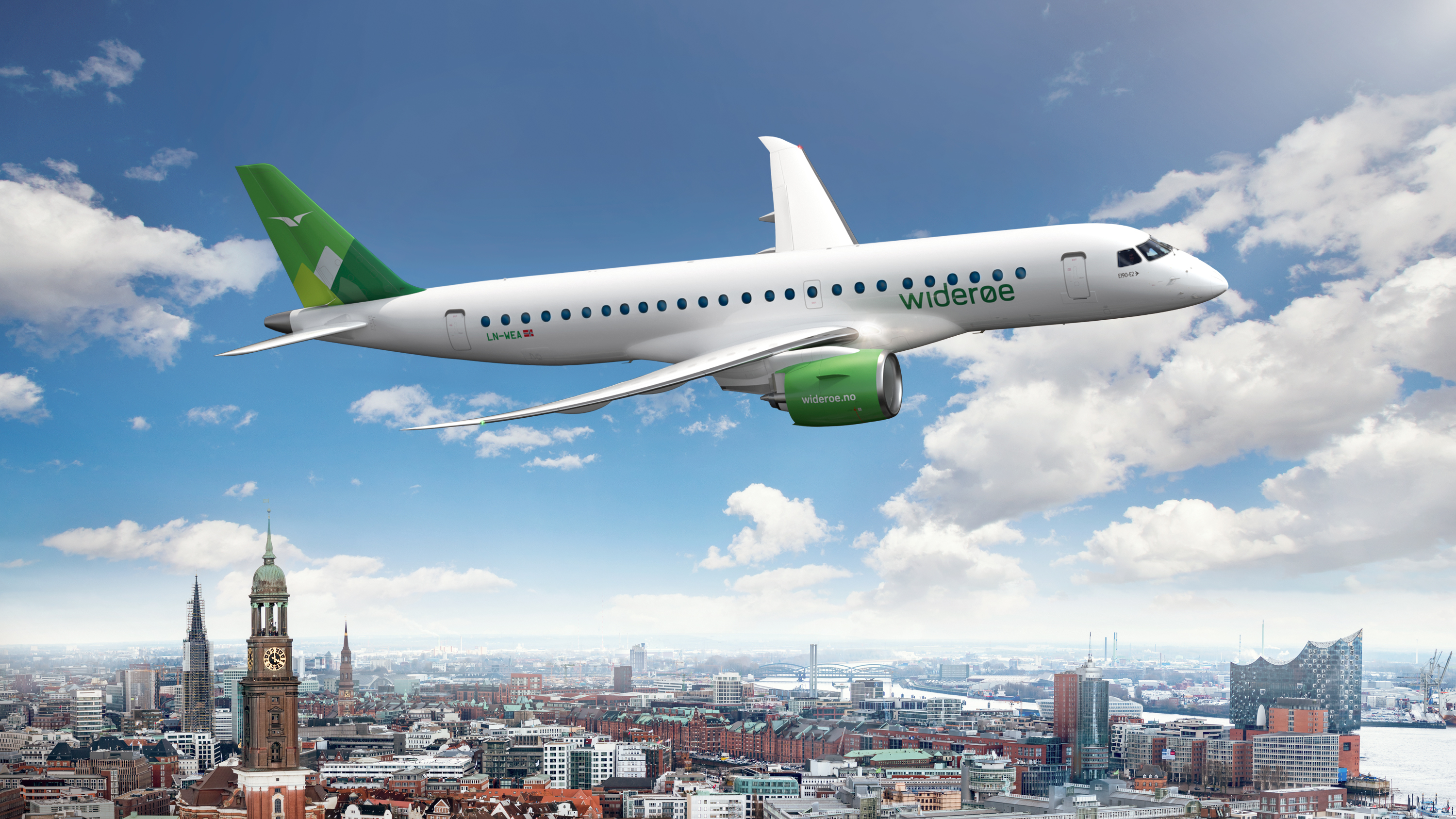
Wideroe of Norway takes delivery of the firzst Embraer 190-E2 April 4. Photo: Embraer
The E190-E2 competes with the Bombardier CS100, a 110-seat airplane in one-class. Neither Airbus nor Boeing have a competing product. Each offers a larger airplane in the 125-150 sector, the A319neo and 737-7 MAX respectively. Embraer and Bombardier offer the E195-E2 and CS300 in this sub-sector.
Bjorn’s Corner: Aircraft lift, Part 2
March 30, 2018, ©. Leeham News: In the last Corner, we described how lift is produced on the aircraft’s wings. Now we continue with studying the lift a bit further.
We explore the effect of angle of attack on lift for a wing and the resulting pressure distribution.
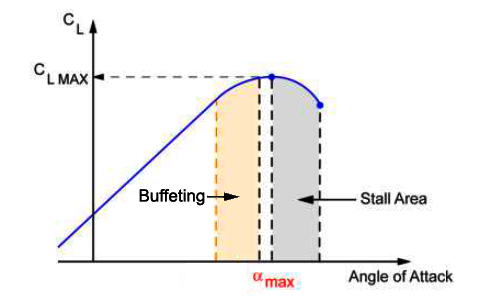
Figure 1. Lift of wing when the angle of attack varies. Source: Leeham Co.
Is Airbus’ A330-800 the longest range widebody under 300 seats?
By Bjorn Fehrm
Subscription Required
Introduction
March 29, 2018, © Leeham News: Boeing’s 787-9 has opened new ultra-long routes such as Qantas’ first flight from Perth in Australia to London Heathrow last weekend (a 7,900nm, 17-hours flight). The 787-9 has been the undisputed long-haul star under 300 seats, with Airbus A350-900ULR underbidding the Boeing 777-200LR’s fuel burn for over 300 seats ultra-long haul flying.
But the competition for below 300 seat ULR alternatives will change in two years. Airbus A330-800 is then available in its 251t version. It will fly longer than the 787-9, according to Airbus.
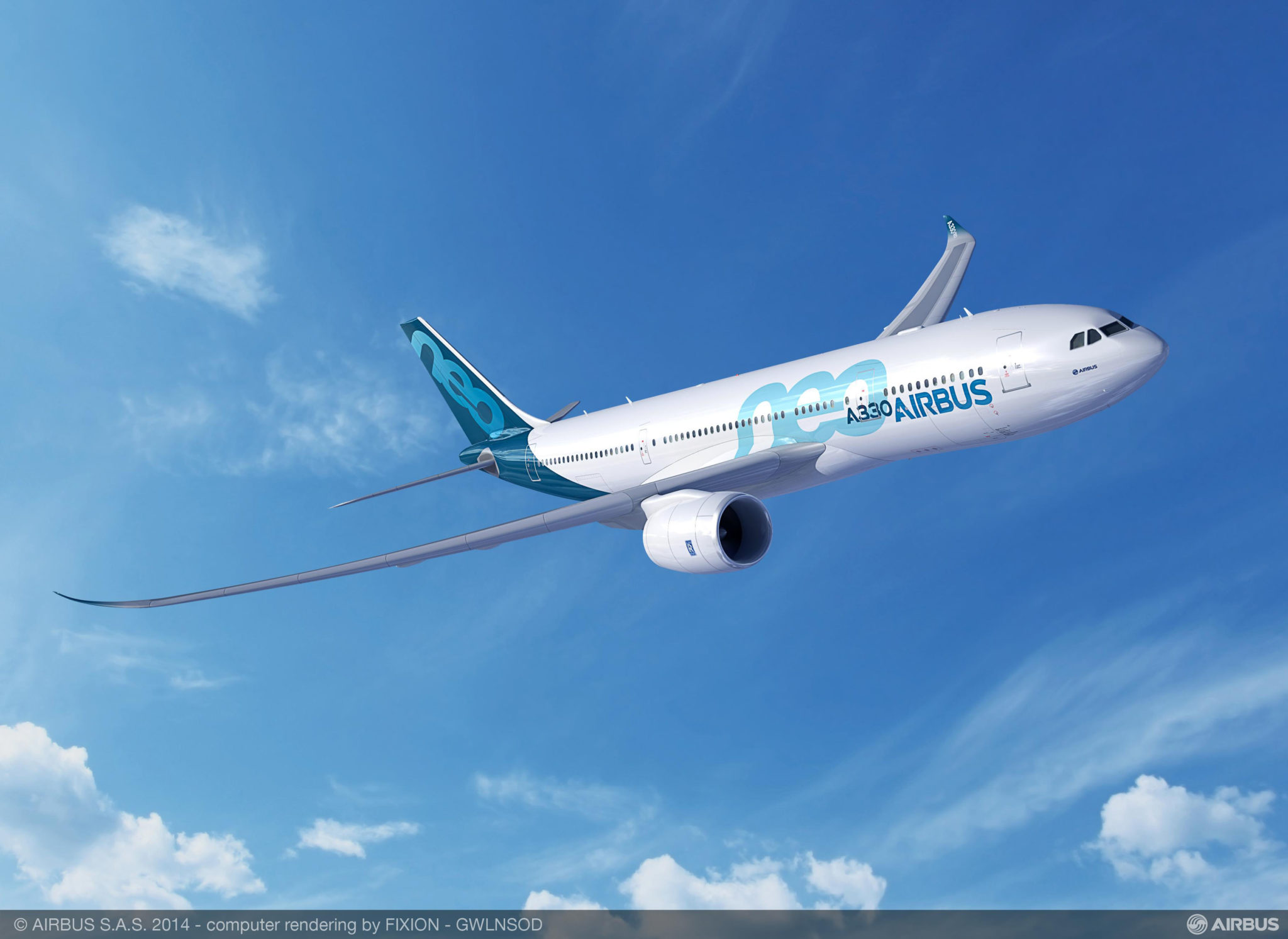 The range of 7,635nm given by Boeing for the 787-9 and 8,150nm by Airbus for the A330-800 is not using the same seating and fuel reserve rules. We use our performance model to weed out the differences, to make an apples-to-apples comparison of the 787-9 and A330-800 as ULR aircraft.
Summary:
- The choice between the 787-9 or A330-800 for Ultra Long-haul Routes (ULR) will depend on the passenger loads which can be expected.
- For thin routes, the A330-800 will be the cheaper aircraft to operate.
- It will also fly longer on thin routes, as its large tanks mean passenger capacity can be traded for more fuel further than for a 787-9.
- When the 787-9 can be filled, it’s the choice with the better seat-mile cost, as it should; it’s the larger aircraft, spreading fixed costs over more paying passengers.