
Leeham News and Analysis
There's more to real news than a news release.



Boeing’s Conner steps down, successor named from GE Aviation

Kevin McAllister, the new president and CEO of Boeing Commercial Airplanes. Boeing photo.
Nov. 21, 2016: Boeing today announced that Ray Conner will retire as CEO of Boeing Commercial Airplanes well ahead of his Dec. 31, 2017, contract date.
Kevin McAllister of GE Aviation Services was named as his successor.
Boeing said Stan Deal was named president and CEO of Boeing Global Services, a new business unit “to be formed from the customer services groups within the company’s existing commercial airplanes and defense, space and security business units.”
Conner’s message to employees is below.
Pontifications: Airbus, Boeing still can sell planes to Iran Air
By Scott Hamilton
Nov. 21, 2016, © Leeham Co.: The vote last week by the US House of Representatives to block Airbus and Boeing from selling airplanes to Iran Air doesn’t do this, even if the US Senate goes along and if President Obama changed his mind to veto the legislation and signed the bill instead.
The House bill only prevents US-sourced financing.
Is a Boom SST good business for Virgin Atlantic?
By Bjorn Fehrm
Subscription required
Introduction
November 21, 2016, ©. Leeham Co: The emergence of Boom Technology and Virgin Atlantic’s plans to offer supersonic business class passenger traffic over the Atlantic is intriguing.
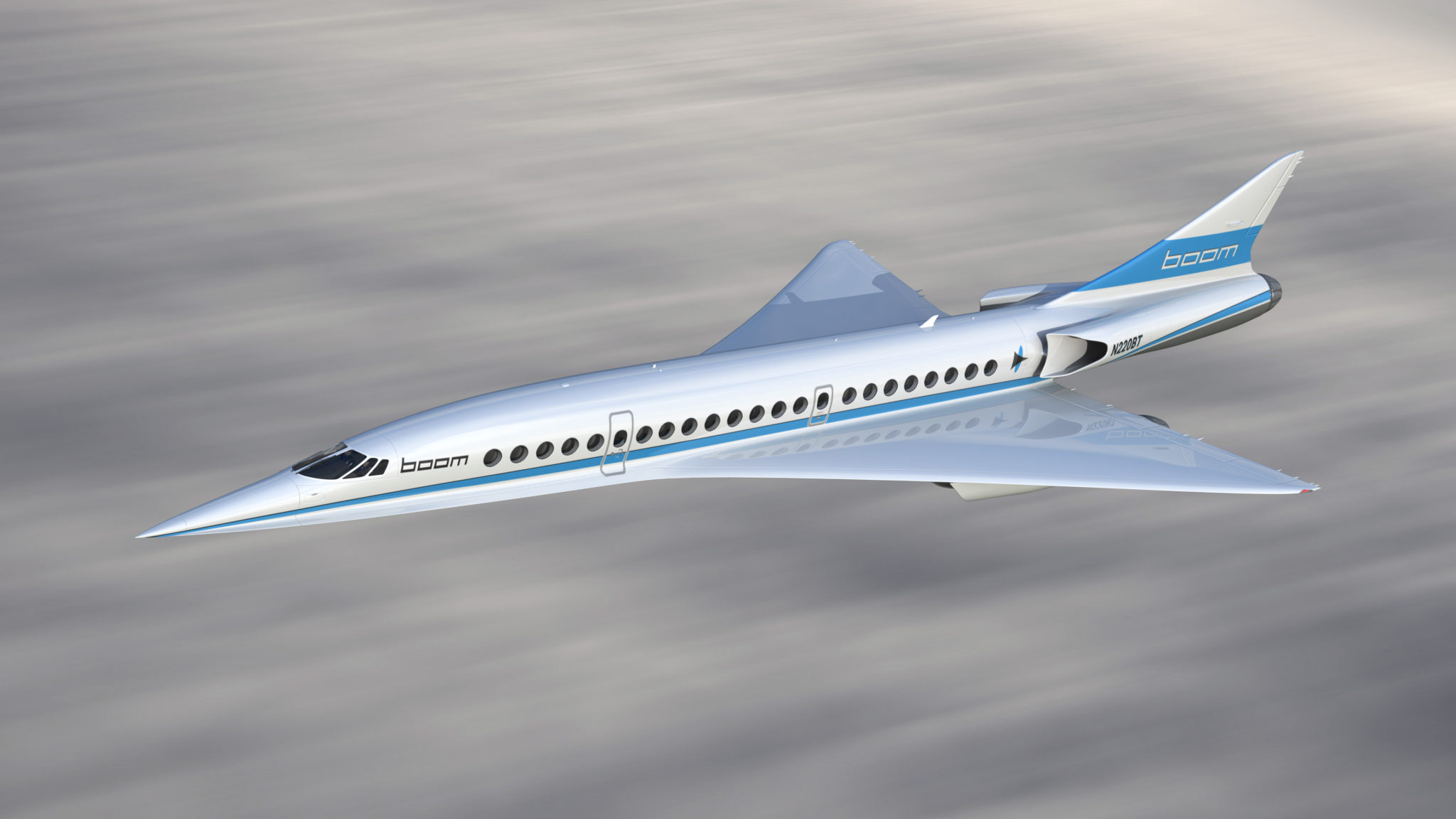
Figure 1. Boom Technologies Boom Mach 2.2 airliner with 45 seater. Source: Boom
Enough of the business plans and data around the aircraft are known to enable us to do a first economic analysis.
There will have to be a lot of assumptions in such an analysis but having modeled around 100 different airliner types economics’, we have some data to base our assumptions on.
We think the accuracy will be enough to get a first feel if the Virgin Atlantic venture is tight on margin or a slam dunk (should it become reality).
Summary:
- The operating costs of a supersonic airliner will center on fuel and maintenance.
- These costs will be considerably higher than for a normal widebody airliner.
- The Virgin Atlantic venture targets the higher yield of a business passenger to cater for these costs.
- We check if this is true and if a SST venture is good use of invested capital.
Bjorn’s Corner: Turbofan engine challenges, Part 4

By Bjorn Fehrm
November 18, 2016, ©. Leeham Co: In our series on modern turbofan airliner engines, we will now go deeper into the compressor part. Last week, we covered the fundamentals of compressors. As compressors and turbines use the same principles, we also covered the fundamental working principles of turbines.
We also described that compressors are temperamental parts, which can protest to wrong handling with violent “burps” (burst stalls with the combustion gases going out the front of the engine) or end up in a rotating stall where it simply stops working.

Figure 1. Stylistic cross section of a two shaft turbofan with both axial and radial compressor. Source: GasTurb.
Turbines, on the other hand, are your robust companions. Aerodynamically they just work, albeit more or less efficiently dependent on what one asks them to do (mechanically it can be very different; we recently saw a turbine disintegrate with large consequences on an American Airlines Boeing 767 in Chicago). More on the turbines later.
In the GasTurb cross section of a two shaft turbofan in Figure 1, the engine has both an axial and a radial compressor. We will consider why engine designers combine these two for certain engine types. Read more
Airbus, Boeing deferrals may indicate slowing global economy
Subscription Required
Introduction
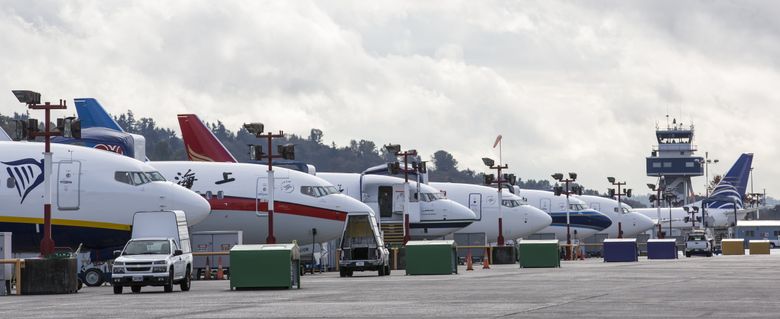
Boeing 737 flightline at Boeing Field: 737s awaiting delivery. Seattle Times photo via Google images.
Nov. 17, 2016, © Leeham Co.: The deferral by United Airlines of 65 Boeing 737-700s announced Tuesday caused some observers to conclude this has a negative impact on the manufacturer, but this may well overlook a larger issue.
UAL is the latest “quality” airline to announce deferrals to reschedule capital expenditures or because of not needing the aircraft now.
Softening yields, particularly among US airlines, indicate over-capacity despite load factors of 85% or more, say industry observers.
While the backlogs of Boeing and Airbus remain solid today, do the actions of several major airlines indicate the leading edge of a global economy that’s beginning to soften?
Summary
Will Boom succeed where Concorde failed?
By Bjorn Fehrm
November 17, 2016, ©. Leeham Co: Boom Technology plans to do a 45-seat airliner for supersonic passenger traffic with service entry by 2023. Richard Branson’s Virgin Atlantic has already placed an optional order for 10 units of the aircraft.
The idea is to fly 45 business class passengers between New York and London in 3 hours and 25 minutes. This means the Boom Super Sonic Transport shall be 10% faster than the Aerospatiale/BAC Concorde.
Figure 1. Boom Technologies Boom Mach 2.2 airliner with 45 seaters. Source: Boom.
What makes the Boom SST succeed where the Concorde failed?
We will look at the challenges that Concorde had and see how Boom SST plans to attack them. We will also discuss what the chances are that Boom SST can master these challenges. Read more
Boeing stock sell-off on United news appears misplaced
Nov. 16, 2016, © Leeham Co.: The market sell off yesterday of Boeing stock appeared on the surface to be a reaction to the news that United Airlines is deferring 61 737-700s and switching these to four larger 737-800s and the balance to either the 737-8 or 737-9.
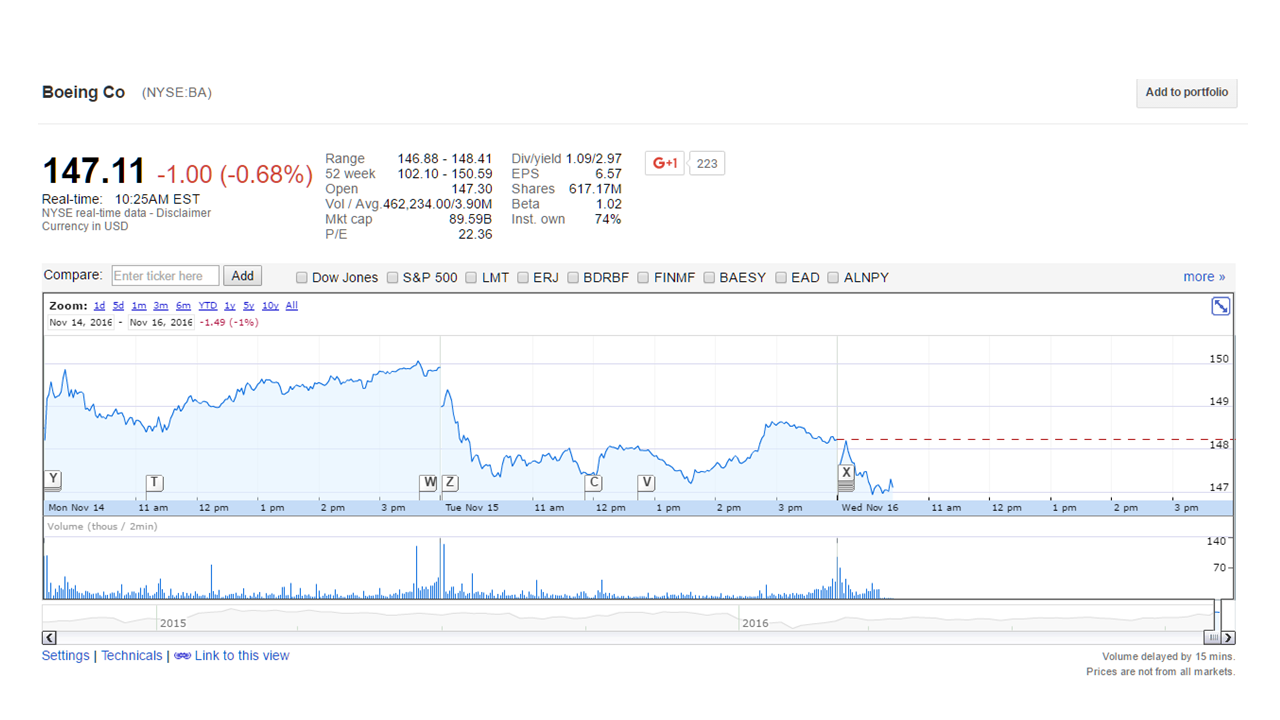
Figure 1. Boeing stock traded down on news that United Airlines is deferring 65 737s. The price stayed flat through early today. But stock for Spirit Aerosystems, which makes the 737 fuselages, recovered after a short dip (Figure 2). This suggests the Boeing sell-off was for other reasons. Click on image to enlarge.
Boeing’s stock today remains flat-to-down slightly.
An odd thing happened concurrent to Boeing’s stock decline.
After a short dip, stock of Spirit Aerosystems recovered to the level before the UAL news and remained there through the time of this writing. Spirit makes the 737 fuselages. If Boeing’s stock was hit by the United decision, then logic suggests Spirit’s stock should have been, too.
This suggests the Boeing’s sell off has other reasons.
Pontifications: Leahy’s retirement from Airbus
By Scott Hamilton
Nov. 14, 2016, © Leeham Co.: News emerged last week that Airbus super-salesman John Leahy has a new deputy, Kiran Rao.
A new title for Rao wasn’t revealed in the Bloomberg story. He currently is EVP-Strategy and Marketing, so he already was right up there behind Leahy.
But the report, which is presumed true (Bloomberg has a good track record on this sort of thing) is pretty clear indication that the 66-year old Leahy is soon to retire and Rao is almost certainly his successor.
Leahy is Chief Operating Officer-Customers for Airbus Commercial.
CSeries out of London City Airport, Part 2. UPDATED 2017.01.24
By Bjorn Fehrm
Subscription required.
Introduction
This article, which was published on the 14 November, has been updated with new information from Bombardier. The range of the CS100 from London City airport has increased due to improved performance from the aircraft and a new engine version with more thrust, the PW1535G engine.
November 14, 2016, ©. Leeham Co: In the last article about operating the Bombardier (BBD) CS100 from London City Airport (LCY), we could see that the runway is about half the length of an international airport’s runways. This will have a significant impact on the Take Off Weight (TOW) that can be used when commencing a route from London City.
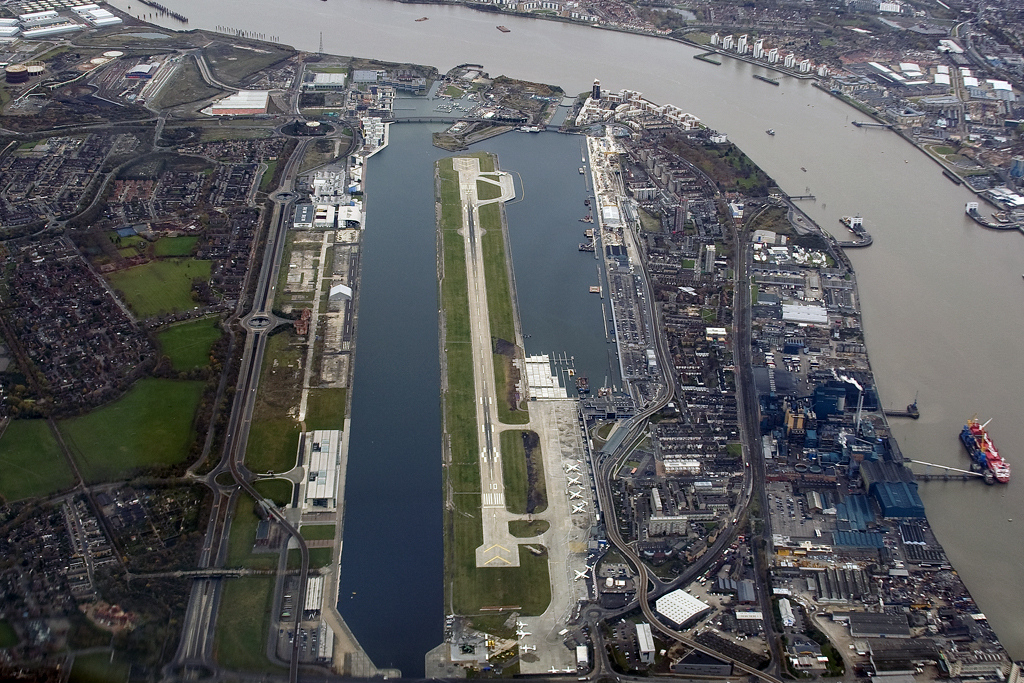
Figure 1. London City airport, housed in the docklands of London’s east end. Source: Wikipedia.
The manufacturers have data in their aircraft brochures that state that one should be able to takeoff with e.g. the CS100 at Maximum Take Off Weight (MTOW) from a runway which is 1,463m/4,800ft long. London City Airport’s runway is 1,508m/4950ft long, so then things should be fine?
No, the figures from the OEMs is the planning figure for actual runway used and London City airports usable take-off Runway is given as 3,934ft. In addition there is 394ft stopping distance available.
To understand how this can be used required a bit of information that we did not have at the time of writing the original article. Some of the information we used was not up to date and we did not use the strongest engine available (PW1535G) when analyzing if an operator could fly direct between New York from London City.
Bombardier came to our help and we have now been able to update the data with which to feed our performance model. This shows among other things that it’s possible to operate a direct connection between London City airport and New York, given that the number of passengers (the payload) is restricted to around 50 passengers or below.
We have revisited the two cases, SWISS European operations from London City and how would a direct operation London-New York work. You find the updated article below.
Summary:
- London City Airport puts special requirements on the aircraft serving it.
- It puts stringent requirement for takeoff and approach/landing.
- We use new information and our performance model to present what routes can be served with a CS100 from the London City Airport.