
Leeham News and Analysis
There's more to real news than a news release.


Sunset of the Quads, Part 4.
Subscription Required
By Bjorn Fehrm
Introduction
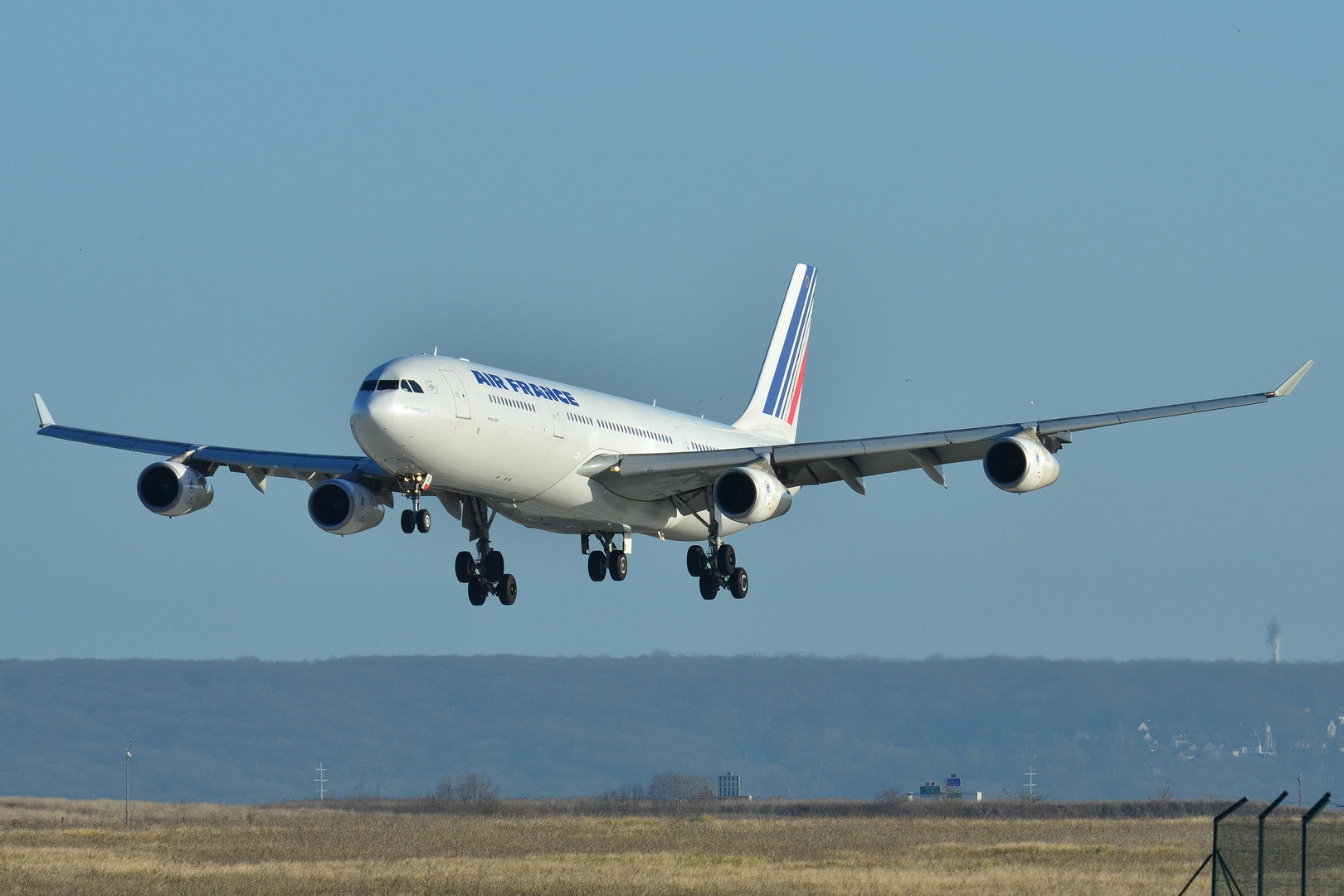
August 27, 2020, © Leeham News: After presenting Boeing’s and Airbus’ first 300 seater long-range widebodies, the 777-200ER and A340-300 in Part 3, we now fly them both on the route Paris to San Fransisco to understand their economics.
The A340-300 was first on the market, but when the 777-200ER arrived amid changed ETOPS rules, the four holer found the twin a difficult competitor. We use our airliner performance model to understand why.
Summary
- The A340-300 has about the same payload-range performance as the later introduced 777-200ER.
- Its economics is competitive with the 777-200ER, yet sales dried up when the 777-200ER became available. We explain why.
R&D spending at Boeing plunges; Airbus yet to kick in
Subscription Required
By Scott Hamilton
Introduction
Aug. 24, 2020, © Leeham News: Research and development spending at Boeing Commercial Airplanes declined 21% in the first half this year compared with 2019.
From 2017 through 2019, BCA’s R&D spending declined 13%.
During the first half this year, Airbus Commercial airplanes R&D spending declined 1%. From 2017-2019, R&D spending increased 31%.
Boeing’s decline in 2019 vs 2018 and the first half of 2020 vs 2019 clearly reflects the grounding of the 737 MAX.
The flat spending in 2017-2018 reflects Boeing’s corporate approach of keeping R&D spending level while returning 100% of free cash flow to shareholders.
Airbus, on the other hand, was aggressively pursuing green aviation R&D, driven by a European Union that is more dedicated to green aviation than the USA is.
Summary
- COVID-19 related R&D spending cuts may not be fully seen until the third quarter.
- Boeing suspended R&D spending on the New Midmarket Airplane in January. Coupled with MAX grounding pressure, Boeing’s spending was already depressed.
- Airbus said it was suspending all R&D except for the A321XLR after the global COVID devastation on air passenger demand.
- Airbus historically outspends Boeing in R&D.
Sunset of the Quads, Part 3
Subscription Required
By Vincent Valery
Introduction
Aug. 20, 2020, © Leeham News: Last week, we compared the economics of the 747-400 and the A380 on the Los Angeles to Sydney route. We now turn our attention to Airbus’ first long-range aircraft, the A340-300, on a Europe to US West Coast mission.
Summary
- A340 launch and development;
- Competing aircraft;
- Satisfactory commercial success;
- A thin long-haul route.
Sunset of the Quads, Part 2
Subscription Required
By Bjorn Fehrm
Introduction
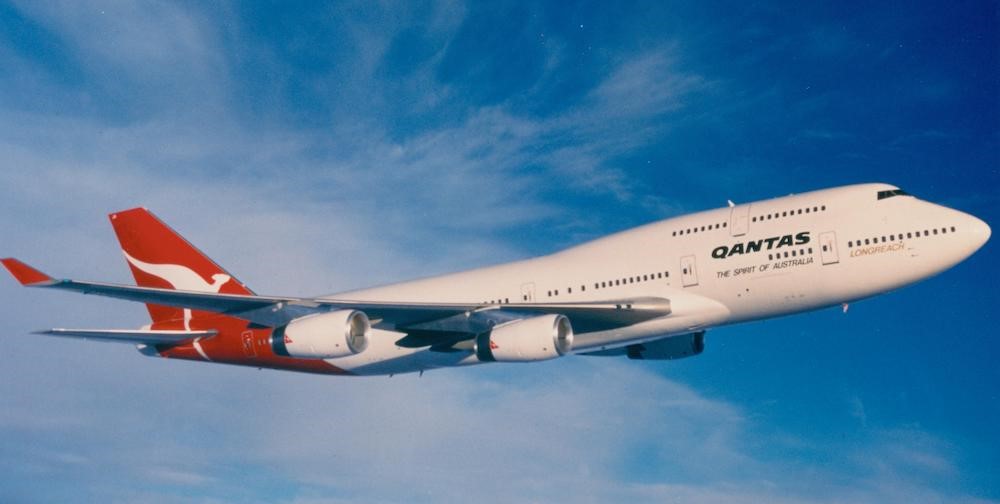
August 12, 2020, © Leeham News: We deepen our look at the Queen of the Skies and it’s best selling version, the 747-400.
We go through what made it the great aircraft it was and why Qantas replaced it on its trunk routes to the US West coast.
We pick Los Angeles to Sydney as the benchmark route, a route on the range limit for the 747-400, and check how it stacks up economically versus the A380, its replacement.
Summary
- The 747-400 reigned the skies for 15 years, combining a trans-Pacific range with a good passenger and cargo capacity.
- Once Boeing introduced the 777-300ER and Airbus the A380, the 747-400’s ruling of the skies was over. It trailed in both capacity and efficiency.
- It continued in operation until today with many airlines, still a useful aircraft for long and dense routes as long as the fuel prices stayed low.
A lingering shakeup in European skies
Subscription Required
By Vincent Valery
Introduction
Aug. 11, 2020, © Leeham News: There is a shake-up still to come for European airlines.
LNA wrote in early March about the financial vulnerability of several European airlines as the COVID-19 outbreak was intensifying. The article was released before European countries closed their borders, and the US banned inbound travel for non-residents from the old continent.
Fast forward five months, and the airline industry is in its gravest crisis since World War II. After bouncing from the lows in April and May, a passenger traffic recovery remains elusive. Some European countries are re-implementing travel restrictions as new (for now localized) outbreaks emerge.
Despite the unprecedented slump in passenger traffic, Flybe is the only sizable European carrier to have ceased operations since the beginning of the COVID-19 outbreak. Several smaller carriers declared bankruptcies or ceased operations.
LNA analyzes why some carriers went under while others did not, and assesses how various market segments might recover.
Summary
- Numerous airlines too interconnected to fail;
- The worst-case comes true for European regional airlines;
- Some unlikely (relative) winners and losers;
- A treacherous road to recovery.
US Regional Consolidation Began Before Covid
Second in a Series on the Future of Regionals
Subscription Required
Introduction
By Kathryn B. Creedy
Aug. 6, 2020, (c) Leeham News: Many might assume the recent loss of three regionals – Compass, Trans States and ExpressJet – is Covid related.
 What is actually happening is the long-anticipated consolidation of the regional airline industry coupled with fleet restructuring and the most recent fallout of the pilot shortage crisis that began in 2013.
Reducing the number of regional partners also streamlines the inherent inefficiencies of the regional/major model.
Summary
- Regional airline industry is volatile.
- Mainline-regional model broken for many years.
- Rising costs eliminate some advantages.
Sunset of the Quads, Part 1
Subscription Required
By Vincent Valery
Introduction
July 30, 2020, © Leeham News: British Airways announced two weeks ago that it would immediately retire its entire Boeing 747 fleet. Several other operators announced accelerated retirements of their Queen of the Skies fleets. There are now fewer than 100 747s left in passenger service.
While less publicized, airlines have also been accelerating the retirement of their Airbus A340 fleets. Lufthansa put its 10 remaining A340-600s into long-term storage.
So far, Air France is the only airline to have permanently retired its A380 fleet, initially scheduled for 2022. However, Emirates and China Southern are the only airlines currently operating the Superjumbo in passenger service. All but a handful of A380s are in storage, with some airlines not intending to bring them back into service for several years.

Credit: Qantas
The slump in passenger traffic caused by the COVID-19 outbreak accelerates the sunset process of the markets operated by quad-engined aircraft. What did the quads bring that was desirable and what changed? Are quad engine aircraft gone for all times?
We look into these questions in this article series, and we start with the Queen of the Skies, and we focus its best selling variant, the 747-400.
Summary
- Shrinking quad-engine jet fleet;
- Flying an A340 or 747 will be rare;
- Uncertain future for A380;
- 747-400 commercial success;
- An ultra-long-range route.
Looking ahead for 2020 and 2030 decades: ATR & De Havilland Canada
Subscription Required
Seventh and final in a series.
By Judson Rollins
Introduction
Jet manufacturers typically introduce a new airplane every 15 years or so.
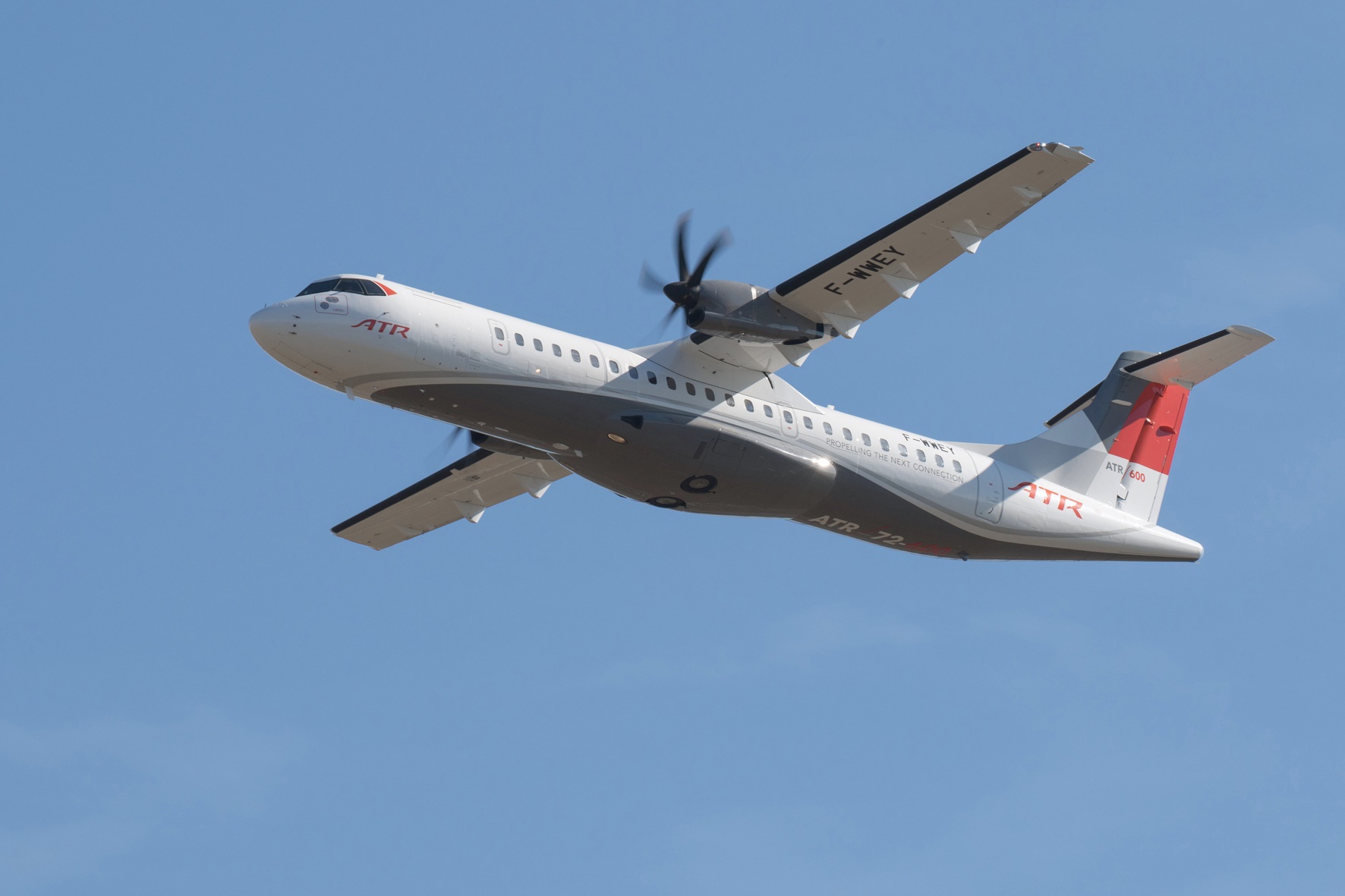
Commercial turboprops have not innovated to nearly the same extent as jets, with rival manufacturers ATR and De Havilland Canada (and predecessor Bombardier) having produced nearly 95% of the world’s in-service fleet. Although order volume has slowed in recent years, more than 300 aircraft are still on order.
Both manufacturers sell aircraft based on 30+ year old designs. However, the market’s size is probably capped because of turboprops’ relatively low cruise altitude and speed, making them limited alternatives to regional jets beyond roughly 500nm. This limits the return on investment from a clean-sheet design, either from aerodynamic improvements or the use of carbon composites.
Emerging threats lie on the horizon as China’s Xian MA700 nears its first flight and Embraer deliberates re-entering the market with a new design. Given sufficient market acceptance, either would constitute a significant threat not only to ATR and DHC, but potentially also the smaller end of the regional jet market.
 Summary
- ATR has a commanding share of the market; access to Airbus resources adds to ATR’s ability to win future business.
- DHC’s dwindling order book and high production costs limit its ability to compete.
- Old designs leave the turboprop space ripe for disruption; Embraer may re-enter the market with a clean-sheet design.
Looking ahead for 2020 and 2030 decades: Mitsubishi
Sixth in a Series
Subscription Required
By Scott Hamilton
July 23, 2020, © Leeham News: The Mitsubishi Aircraft (MITAC) SpaceJet program is in limbo.
MITAC parent Mitsubishi Heavy Industries (MHI) suspended development of the M100 SpaceJet in the wake of the COVID-19 crisis. Customers are suppliers are in the dark about this program’s future.
MHI continues to complete certification of the M90 SpaceJet, which is simply the rebranded MRJ90. But, as LNA previously wrote, the M90 is at an economic disadvantage to the competing Embraer E-Jets.
The planned entry-into-service for the M90 is next year. However, certification process by the Japanese regulator is slow. The impact by COVID on the certification process and EIS remains to be seen.
Summary
- M100 program on hold at least until next year.
- What’s next for MHI?
- Strengths, Weaknesses, Opportunities and Threats
Restoring capacity with the A330ceo or A330neo, Part 6, Wrapup.
Subscription Required
By Bjorn Fehrm
Introduction
July 23, 2020, © Leeham News: Over the last four weeks, we analyzed the venerable Airbus A330, to see if the present low fuel and lease prices make the recent A330neo version less attractive than an older ceo version.
As airlines are cash injection driven in the present COVID-19 crisis, taking delivery of a new aircraft and then do a sell, lease back deal injects fresh cash to the airline. The order deposit and the Pre-Delivery-Payments, PDPs, then flows back to the airline. This is why we see airlines take new aircraft despite not really needing them right now.
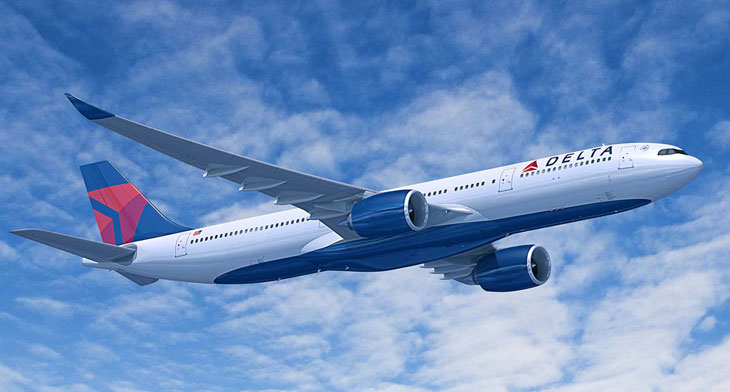
The A330 has seen phenomenal growth in capability as the Gross Weight has gone from 212t to 251t over the years. We now wrap the series by looking if there is potential for another stretch in the A330? Could it grow to a true Pacific-Ocean crosser, and if so, what changes should be made?
 Summary
- The A330neo now has a 251t Maximum TakeOff Weight (MTOW). Is this enough or could the aircraft gain from another MTOW hike?
- We go through the gains and the areas that need changing should the business case be there to stretch the payload-range curve further for the A330neo.