
Leeham News and Analysis
There's more to real news than a news release.


Airlines need OEM choices: Air Canada
Special to Leeham News
By Olivier Bonnassies
Airfinance Journal
April 16, 2018, (c) Airfinance Journal, Montreal: The commercial aircraft manufacturing industry could head into a scenario with two major alliances: Airbus/Bombardier rivaling Boeing/Embraer, but for Air Canada, airlines need to have choices.

Calin Rovinescu, president of Air Canada. Photo via Google images.
“This is a terrific double-edge sword. Airlines definitively need to have choice,” said Calin Ravinescu, Air Canada president and chief executive officer at the Innovation Aerospace Forum in Montreal.
Ravinescu says the idea of a single source supply is not acceptable for maintenance prospective and from a customer service prospective.
“I am totally against any notion of single sourcing, or any component in any aircraft in any circumstances. Just like our customers, airlines expect competition is the aerospace and the aircraft space.
Déjà vu all over again
Subscription Required
Introduction
 April 16, 2018, © Leeham News: There’s high turnover in the executive ranks. Major delivery delays cause disruption and unhappy customers. Airlines are cancelling and switching orders. Product strategy is challenged. Your competitor is taking advantage and making significant inroads.
If this sounds familiar, it is.
It’s déjà vu all over again.
Pontifications: Shooting yourself in your feet

By Scott Hamilton
April 16, 2018, © Leeham News: Airbus’ new top sales chief, Eric Schulz, was candid about losing American and Hawaiian airlines wide-body orders, according to a report from Flightglobal from the Airbus annual meeting.
In reference to Hawaiian’s switch of an A330-800 order to the 787-9, he admits: “Maybe we did not see the danger coming…we may have made the conclusion a bit too early that the best solution was to stick with us – which I think it was,” Flightglobal wrote.
American’s loss, Schulz told Flightglobal, was for a different reason: American was “already very heavily engaged” with the 787, adding: “I knew exactly where our competitors had to go in terms of pricing. I’m certain American did a good deal.”
I thought American and Hawaiian were predictable outcomes. But Airbus’ problem went beyond not seeing the “danger.”
Leveraged Go Air plans major expansion
April 13, 2018, © Leeham News: Go Air of India is the fourth-ranked low-cost carrier by market share, with big ambitions.
The airline had only 32 airplanes at the end of last year but had more than 140 on order as of last month, presaging expansion domestically and internationally.
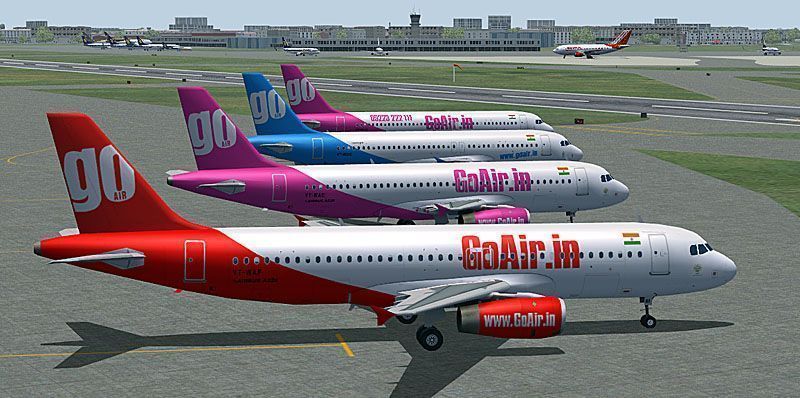
Image via Google.
This compares with rival Indigo Airlines, the leading LCC, with a current fleet of 153 aircraft and orders for 380; Jet Airways (115 and 75) and SpiceJet (57 and 155). Subsequent to the end of last year, Jet place an order for 75 more 737 MAXes.
Narrowbody and Widebody engine developments
By Bjorn Fehrm
Subscription Required
Introduction
April 12, 2018, © Leeham News: In an article yesterday about Long-Haul LCC costs we observed how the new Narrowbody engines are catching up to the fuel efficiencies of the Widebody engines.
Traditionally the Widebody engines were the efficiency leaders. The Narrowbody companions were designed to be durable rather than efficient.
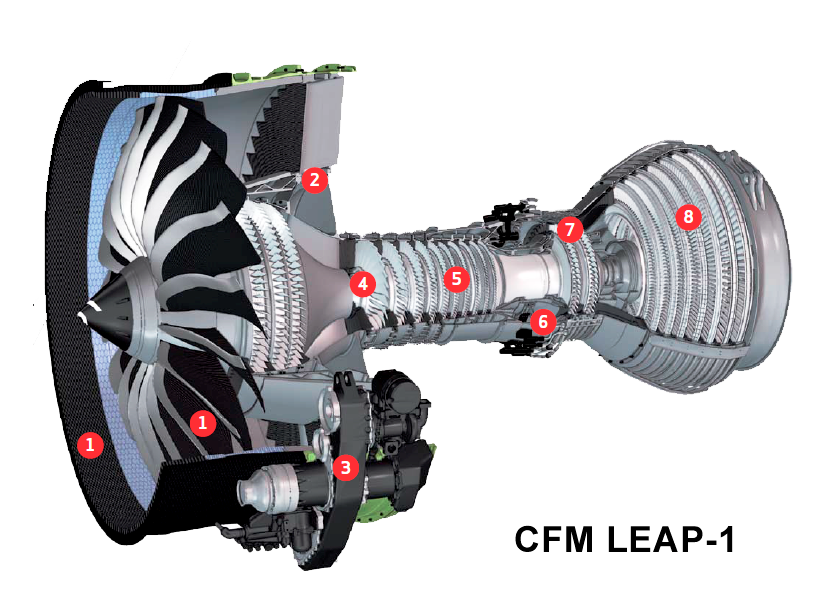
Figure 1. Cut through of the Narrowbody LEAP engine. Source: CFM
We use the engine modelling software GasTurb to understand why this catching up of the Narrowbody engines has happened.
Summary:
- The new Narrowbody engines for Airbus’ A320 series and Boeing’s 737 MAX are close in specific fuel consumption to the new Widebody engines.
- We use the GasTurb engine modelling software to find the root cause of this change.
Is Long-Haul LCC viable? Part 3
By Bjorn Fehrm
April 11, 2018, © Leeham News: In the second article if Long-Haul LCC is a viable business, we described the cost items which have to be part of a Revenue versus Cost analysis.
In a subsequent article, we used our performance model to develop the typical costs for the aircraft types we study. We now look at these typical costs, discuss their background and relative importance. Read more
American A330neo loss casts shadow over sales prospects
Subscription Required
Introduction
April 9, 2018, © Leeham News: Even as Airbus touted the new 251t A330-800 and optimism that aging A330-200s will kick start a replacement cycle in 2020-21, the
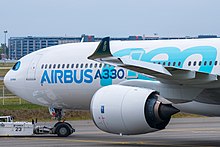
Airbus A330neo. Photo via Google images.
concurrent loss of a campaign to sell the model to American Airlines casts a shadow over the model and the entire program.
Airbus had just come off the cancellation of the only A330-800 order, by Hawaiian Airlines, which flipped to the Boeing 787-9. As the sole customer for six A330-800s, the cancellation was expected.
Airbus hoped that an American order, for 20 -800s, would prove to be the endorsement of the program that was needed to spur worldwide sales.
Boeing was just as adamant that, like Hawaiian, American order the 787. In this case, Boeing had the leg up: the 787 was already in AA’s fleet (37 of 42 previous orders were already delivered). American wanted to simplify its fleet, not add another type. And airline officials were skeptical of the -800 for the very reason Airbus was so in need of AA’s order.
Summary
- American’s order would have been the boost needed for the A330neo program.
- It would have been an endorsement of the A330-800.
- The 251t, 8,150nm version of the -800 makes a good, niche long-haul airplane.
India’s airlines order huge numbers of airplanes
April 5, 2018, © Leeham News: India is one of the fastest-growing aviation markets in the world, with airlines there ordering a massive number of airplanes for their size.
- Jet Airways announced a firm order for 75 Boeing 737 MAXes after this article was written.
Airbus and Boeing are selling hundreds of airplanes to India’s fast-growing airlines.
The most prominent airlines have nearly 1,000 airplanes on order. The leading, and most profitable, low-cost carrier, Indigo, is now considering ordering up to 50 twin-aisle aircraft for its first foray into long-haul, LCC service, in competition with the perennial loser, Air India.
It’s also one of the most challenging aviation environments. The government has policies that make it difficult for carriers to operate efficiently.
There have been a number of airline start-ups that make competition fierce. There have been a lot of airline failures.
Operational costs of a Long-Haul LCC
By Bjorn Fehrm
Subscription Required
Introduction
April 05, 2018, © Leeham News.: In an article yesterday we described the different costs types for a Long-Haul LCC. We also explained the different parts of the Operational costs for the airline’s aircraft operations.
We will look at the size of these Operational costs in Part 3 of the article series. In this article, we use our aircraft performance model to develop these costs for the LCC’s aircraft.
 Summary:
- The smaller Boeing 737 MAX 8 is surprisingly cost competitive with the larger and more capable Airbus A321LR, A330-900 and Boeing 787-9 on our selected route.
- The low trip and seat costs of the MAX 8 can only be used on transatlantic routes like our New York – London route. Any further into the US or Europe and the MAX 8 runs out of range.
China proposes tariffs on Boeing planes, but it’s less than meets the eye
April 4, 2018, © Leeham News: The Trump Administration’s ill-conceived proposed tariffs on aircraft parts made and imported from China prompted what on the surface appears to be a hit back at Boeing, but which in reality seems more fluff than substance.
Jon Ostrower broke the news yesterday about the list of aircraft components Trump proposes tariffs on. Since Boeing uses China for some of its aircraft components, the tariffs would hurt Boeing.
China today proposed 25% tariffs on Boeing airplanes—but excludes the MAX 8 by weight. (The MAX 7 may be included, with between 10-20 announced ordered by two Chinese airlines).
According to Airfinance Journal Fleet Tracker, there are only 19 737-800s remaining on order for delivery this year through 2021. This doesn’t include any Unidentified orders.
Eight -800s are scheduled for delivery this year, six in 2019, two in 2020 and three in 2021.
US aerospace analysts are unimpressed. The following is a synopsis of their reaction.