
Leeham News and Analysis
There's more to real news than a news release.


How competitive is A330neo? Part 2.
By Bjorn Fehrm
Subscription Required
Introduction
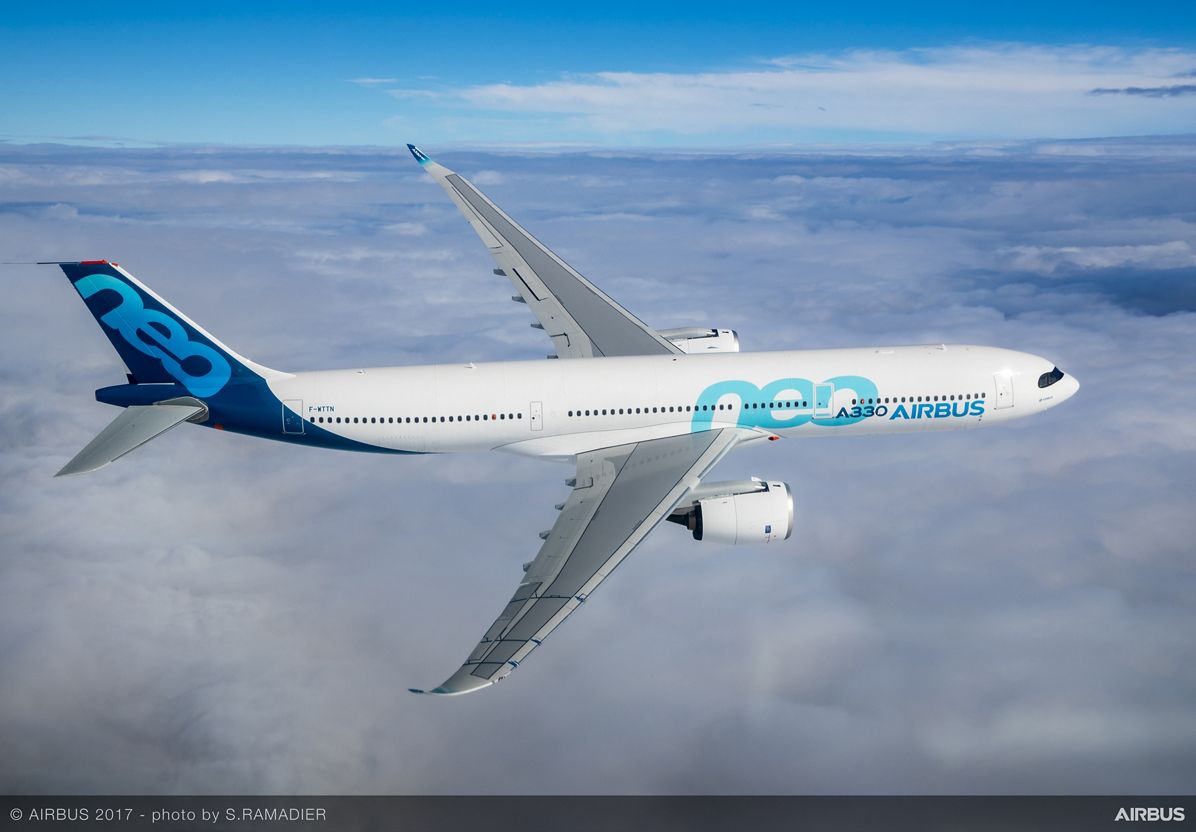
May 31, 2018, © Leeham News: We continue our analysis why the Airbus A330neo has lost to Boeing’s 787-9 in recent sales campaigns. In the first part of the series, we analyzed the key data of the aircraft, including their weight, drag characteristics and payload capacity.
Now we continue with flying the aircraft over typical routes with our performance model. What’s the route capacity of the of the aircraft and how about their fuel consumption?
Summary:
- The equalized range difference between the aircraft boils down to a maximum of 15-hour routes for the A330-900 versus 17 hours for the 787-9.
- There is also a difference in fuel efficiency between the types.
India outlook for Airbus, Boeing: Optimistic at first sight, but what lies beneath?
Special to Leeham News and Comment.
May 30, 2018, © Leeham News: As one of the fastest growing airline markets in the world, India represents a large and growing part of the Airbus and Boeing order books. Although the absolute numbers seem unwieldy at first glance, a closer look at the data show that the country’s aircraft orders may actually make sense given population and consumer trends.

Photo via Google images.
Indian-domiciled airlines operate 562 aircraft of 37 seats or more, with an average age of less than eight years. DGCA rules were recently changed to allow passenger aircraft up to 18 years old to be flown commercially, which points to a relatively low replacement need over the next decade.
Meanwhile, India’s order book comprises 978 aircraft, a 74% increase if no replacements were needed. From a seat capacity perspective, that figure is 73% before replacement demand using assumed operator-specific LOPAs for MAX and neo.
Pontifications: Honoring John McCain

By Scott Hamilton
May 28, 2018, © Leeham News: Today is Memorial Day in the USA, the holiday which honors US Armed Forces who died in active military service.
It seems fitting today to think about US Sen. John McCain (R-AZ), who is dying of the same brain cancer that took the life of Sen. Edward Kennedy.
Bjorn’s Corner: Aircraft stability, Part 7

By Bjorn Fehrm
May 25, 2018, ©. Leeham News: In the last Corner we discussed the autopilots one finds in Airliners and high-end Business jets. We looked at how the autopilot was part of the larger Automatic Flight Control System (AFCS) in Bombardier’s CSeries.
To understand how such an advanced system works, we need to go through the different parts of the system and understand their role when the aircraft is flown by the autopilot. We will start with the Flight Management System (FMS) this week.

Figure 1. The flight deck part of a classical FMS (Flight Management System). Source: Esterline.
How competitive is Airbus’ A330neo?
By Bjorn Fehrm
Subscription Required
Introduction
May 24, 2018, © Leeham News: Boeing’s 787-9 has won some important fights against the Airbus A330neo. After Hawaiian Airlines, American Airlines and a possible loss at United, one asks: Is the A330-900 not competitive against a 787-9? The aircraft are similar in size and use the same engines.
We take a deeper look at the A330-900 compared with the 787-9 to understand what’s behind this trend.
Summary:
- The A330-900 and 787-9 are virtually identical in size.
- They are also aerodynamically closely matched.
- Their primary difference is the method of construction, with the Carbon Fiber structure of the 787 giving a lower empty weight.
Embraer skyline has serious challenges
Subscription Required
Introduction
May 21, 2018, © Leeham News: As Boeing and Embraer continue merger discussions for the latter’s commercial airplanes unit, the EJet skyline has some serious challenges.
The only order for the E175-E2 is a conditional sale.
 Lessors account for half the orders of the E195-E2 and most of the E190-E2 deals.
More than half the orders for the E190-E1 may be canceled.
The data, from the Airfinance Journal Fleet Tracker, is as of April 15 and doesn’t include options, MOUs or LOIs. The firm order from American Airlines, for 15 E175-E1s, announced after this date, has been added by LNC.
Summary
- Slow sales hamper the backlog.
- The E2 hasn’t taken off as expected.
- The E175-E1 remains the staple of the six-member family.
Read more
Pontifications: An in-depth assessment that people matter at Airbus
By Scott Hamilton
May 21, 2018, © Leeham News: In February, consultant Richard Aboulafia colorfully said Airbus was plagued by “decapitation” of its executive ranks as retirements and resignations came one after another after another.
In April, LNC raised the prospect of déjà vu all over again, discussing the Airbus departures and product turmoil beginning in 2016, recalling another one 2006 and comparing it with Boeing’s era of upheaval from 2007.
Last week, industry leader Steve Udvar-Hazy remarked at the 38th annual Airfinance Journal conference in Miami that “Airbus has its hands full with senior management leaving. Airbus has got to refocus to maintain market share.”
One day later, Carter Copeland of the Melius Research firm published a note devoted to the upheaval at Airbus.
I found the note to be of particular interest.
With Copeland’s permission, the entire note is reprinted below.
Boeing 777-9 or Airbus A350-1000 for the Gulf carriers?
By Bjorn Fehrm
Subscription Required
Introduction
May 17, 2018, © Leeham News: The recent agreement between the US and the Gulf carriers limits the expansion of the carriers on the US market. As the premier long-range destination area from the Gulf is the US market, this will influence the lift needed by the three.
All three carriers, Emirates, Qatar Airways (Qatar) and Etihad, have decided on the 777-9 as the mainstay for their long-haul needs. With the change, the question arises, will Qatar increase the buy of the A350-1000 instead of taking the 777-9 and will any of the others reconsider?
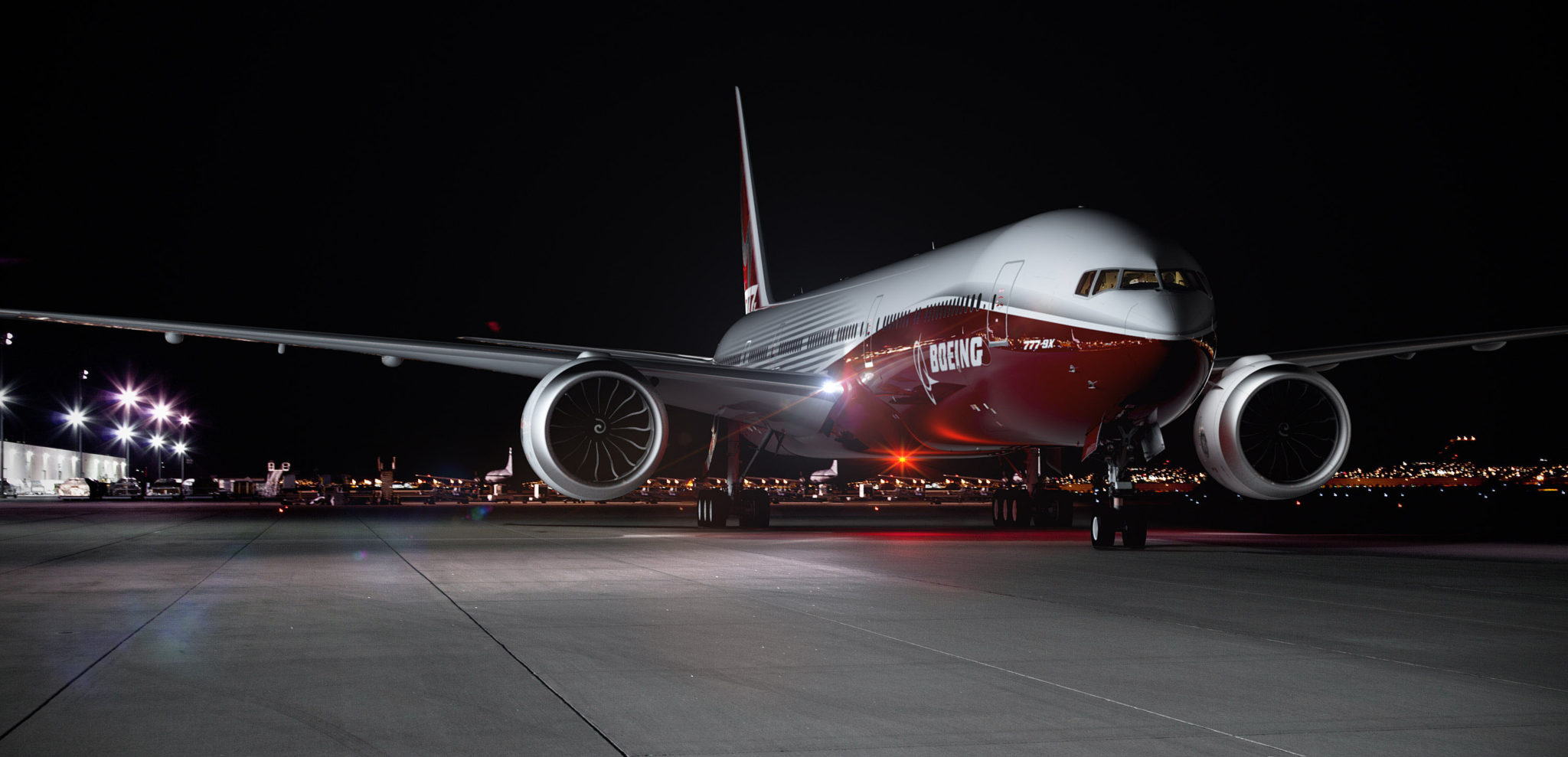 To understand what’s involved we compare the capacity and the costs of the 777-9 and A350-1000. How large is the difference? Is the A350 the better choice if the extreme long-haul capacity needs decline?
Summary:
- The maximum range and per seat costs of the 777-9 and A350-1000 are close when compared apples to apples.
- The advantage for the 777-9 at full aircraft disappears quickly as load factors decline.
- If the needed capacity of the long-haul US routes declines, the 777-9 can be too much aircraft for the Gulf carriers.
Read more
GTF better, says one airline; engine OEMs need 12-18 months to solve issues, says lessor
May 16, 2018, © Leeham News: Pratt & Whitney has a long way to go to fix all its problems on the Geared Turbo Fan engine, but one airline customer says the situation is getting better.
Ted Christie, CFO of Spirit Airlines, said all five A320neos it’s received are now operating. These famously were pictured parked and months at the D/FW International Airport with covers on the engines.
The fuel burn is better than the advertised 15% reduction, Christie said, without specifying how much better. Industry scuttlebutt indicates the GTF is 1%-2% better than advertised.
Christie made his remarks yesterday at the 38th annual Airfinance Journal conference in Miami.
A330neo sales off to slow start: Air Lease Corp
May 16, 2018, © Leeham News: There is “intense” price competition between Airbus and Boeing on the A330neo and 787, says an industry leader.
Sales of the A330neo are “off to a slow start,” says Steven Udvar-Hazy, executive chairman of Air Lease Corp. Hazy expressed confidence in the neo, which ALC has ordered, seeing it as a “natural replacement” for the aging A330ceo, the Airbus A340 and the Boeing 767.
Hazy made his remarks at the 38th annual Airfinance Journal conference yesterday in Miami.