
Leeham News and Analysis
There's more to real news than a news release.


ANA CEO opens ISTAT Asia 2016
By Bjorn Fehrm in Tokyo
May 18, 2016, ©. Leeham Co: The CEO of All Nippon Airways (ANA) Osamu Shinobe opened the 2016 International Society of Transport Aircraft Trading (ISTAT) conference in Tokyo today, in front of some 700 delegates. Shinobe presented an overview of the airline’s recent success and its future plans. This includes the plans for use of the three Airbus A380 that the airline bought in January this year.
ANA is Japan’s most successful carrier in recent years, leading the incumbent Japan Airlines in revenue and profits since 2010. The airline had its historical base in a large domestic market share but has been complementing that with an aggressive international expansion in recent years.
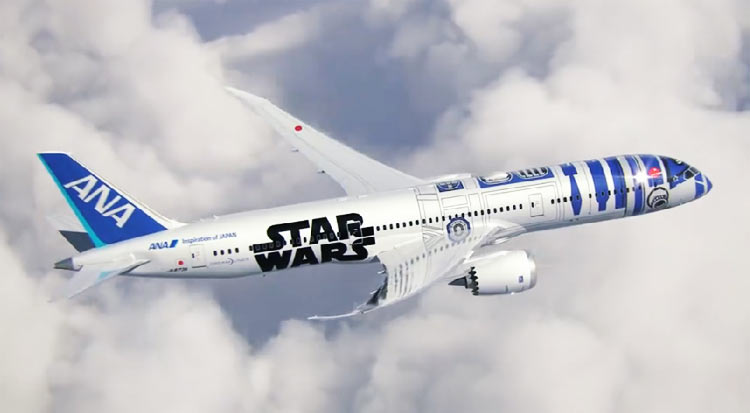
All Nippon Airways Boeing 787 in special Starwars livery. Source: ANA
Its landmark buy of Boeing 787 Dreamliners shall be seen in this context. The 787, for which ANA was the launch customer, is the kingpin in ANA’s expansion plans, where an expanding international network shall feed the established domestic network. Read more
Bjorn’s Corner: Landing after navigation, Part 2

By Bjorn Fehrm
13 May 2016, © Leeham Co: Last week we started to describe what is necessary to make a precision approach after a flight. We described the rather elaborate installations needed for the classical precision approach with an ILS system. It requires two transmitters and large antennae installations for each runway.
We will now describe the system which will replace ILS as worldwide instrument landing system, an augmented Global Navigation Satellite System (GNSS), where GPS is the variant provided by the US Department of Defence, Figure 1. Other GNSS are Russia’s GLONASS and Europe’s Galilleo.

Figure 1. The GPS system consists of up to 24 satellites which deliver position, velocity and time. Source: Wikipedia.
The problem with a non-augmented GPS is the precision. Classically the accuracy was worst case any where in the World around 100m horizontally and 150m vertically, but that was when the US military deliberately reduced the accuracy for civil use (Selective Availability). Today this deliberate reduction has stopped and the accuracy is 25m horizontally and 43m vertically worst case.
This is not enough for a precision approach. We will now describe what is done to bring the accuracy to a level where precision approaches can be flown with GPS. Read more
Analysts skeptical going into Boeing investors day
Subscription Required
Introduction
 May 12, 2016, © Leeham Co.: Boeing executives faced skeptical aerospace analysts at its annual investors day yesterday in Seattle.
Presentations by Dennis Muilenburg, CEO of The Boeing Co., Chairman, President and Chief Executive Officer, CFO Greg Smith, Ray Conner, CEO of Boeing Commercial Airplanes, and Leanne Caret, CEO of Boeing’s defense unit, didn’t appear to have any immediate impact on the stock price for those listening in on the webcast. Stock was flat during the day. Notes from the analysts attending in person won’t be issued for a day or two.
We met with seven analysts on Tuesday, before and after their tour of the Everett (WA) wide-body plant facility to gauge their points of interest going into the investors day yesterday. We also talked with some of them on Wednesday after the presentations.
Summary
- Skepticism was high over how Boeing believes it can recover the $29bn in deferred production costs on the 787 program. CFO Smith addressed this during his Wednesday presentation.
- Boeing finally conceded the 777 Classic production rate will come down, to 5.5/mo by 2018. Officials initially claimed the rate would remain at 8.3/mo to the entry-into-service of the 777X, later lowering to 7/mo from next year.
- There is a belief that Boeing’s product strategy is now on the defensive to Airbus. BCA CEO Conner believes otherwise.
Boeing investors day: Conner: today’s hard decisions assure future
May 11, 2016: Decisions Boeing has made today have been hard, but assure Boeing will be around another 100 years, says Ray Conner, CEO of Boeing Commercial Airplanes. “We compete every day with aggressive competitors.”
Note: Boeing is holding its annual investors’ day (really a half-day) today, with presentations by: Dennis Muilenburg , Chairman, President and ChiefExecutive Officer, Greg Smith , Chief Financial Officer and Executive Vice President of Corporate Development & Strategy, Ray Conner , Vice Chairman and Commercial Airplanes President and Chief Executive Officer and Leanne Caret , Executive Vice President and Defense Space & Security President and Chief Executive Officer. We’ll report on the presentations by Muilenburg, Smith and Conner, but not the DSS unit.
Conner sees continued growth in aircraft demand. Boeing’s backlog continues to grow, but Boeing also continues to monitor global conditions. But compared with 2001 after 9/11, Boeing’s backlog is more diverse in the world and among the type of customers. Deferrals, cancellations and skyline adjustments are “way, way below historical averages.”
Airbus, Boeing split YTD orders leads
May 10, 2016: Airbus and Boeing split the leads for orders year-to-date through April 30 (May 2), following the monthly total released today by Airbus. Airbus led in wide-body orders by a wide margin. Boeing thumped Airbus in narrow-body orders.
Pontifications: Derivatives at Boeing

By Scott Hamilton
May 9, 2016, © Leeham Co.: Last week proved to be significant when the CEO of The Boeing Co. and the head of the 737 MAX program each said the company is looking at revising its smallest member of the family, the MAX 7, and potentially enlarging the biggest member, the MAX 9.
Neither prospect was news. Jon Ostrower of The Wall Street Journal revealed the prospect of what he called the MAX 7.5, a slightly larger airplane than the current MAX 7. The idea of an airplane larger than the MAX 9, based on the MAX 9, was floated when Jim McNerney was still CEO.
What was news is that for the first time, the Boeing CEO and the head of the MAX program went on record essentially admitting the MAX line isn’t well positioned against Airbus after all. Or, on the lower end, to Bombardier.
ATR begins US tour, part owner wants to divorce Airbus
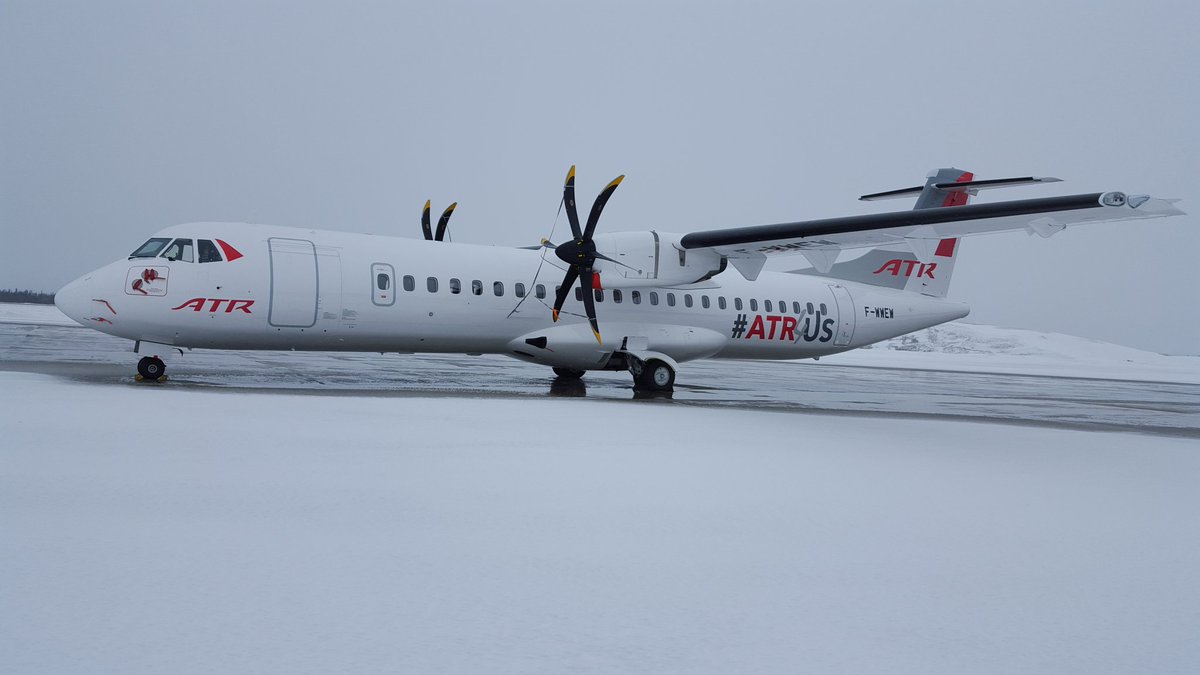
ATR is making a push to sell its turbo-props in the US, which is the last exclusive domain of the Bombardier Q400. Note the new forward door on this ATR-72. The absence of this door, which the Q400 has, was a strike against the ATR in the US. The door now enables jetway boarding. Photo via Twitter.
May 3, 2016, © Leeham Co.: ATR, the maker of the ATR turbo-prop, is beginning a tour of its aircraft in the US, the last uncontested domain for the rival Bombardier Q400.
ATR won orders for its ATR-42/72 in the US decades ago, but largely ceded the market to Bombardier. ATR-42s fly for FedEx, the express package carrier, but no
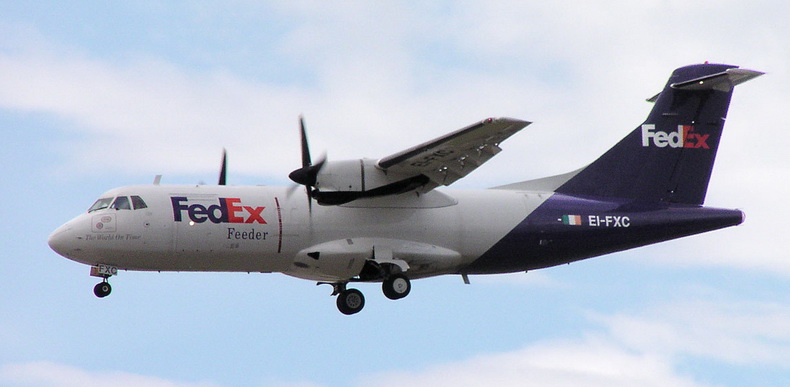
ATR-42 operated for FedEx. No passenger ATRs are operated in the USA. Photo via Google images.
passenger ATRs are in service in the USA.
As the tour gets underway, Finmeccania, a 50% owner of ATR with Airbus owning the other half, wants to assume the latter’s holdings if Airbus doesn’t change its mind over its refusal to green light development of a next generation turbo-prop.
Airbus has for several years refused to grant approval because ATR had between 80% and 90% of the backlog at any given time. Bombardier had the remaining market share backlog. Now that oil prices are low, Airbus doesn’t believe a business case can me made to justify a new development.
Bjorn’s Corner: C Series flight controls
By Bjorn Fehrm
29April 2016, ©. Leeham Co: With the order by Delta Air Lines, the Bombardier C Series has taken the step up to be a viable alternative to Airbus’ and Boeing’s single aisle 130-150 seat aircraft.
In my description of airliners’ flight control and Flight Management Systems (FMS), I have focused on the established mainline single aisle players. Time to change that; C Series has arrived and will stay in the mainline segment.
Why 130 seats as a limit? Because below 130 seats there are a number of additional players (Embraer, Sukhoi, Mitsubishi…) and we can’t describe them all right now.
Now to how Bombardier has implemented the flight controls, autopilot and FMS for the C Series. In fact, we will look at how they have made the C Series cockpit, Figure 1.
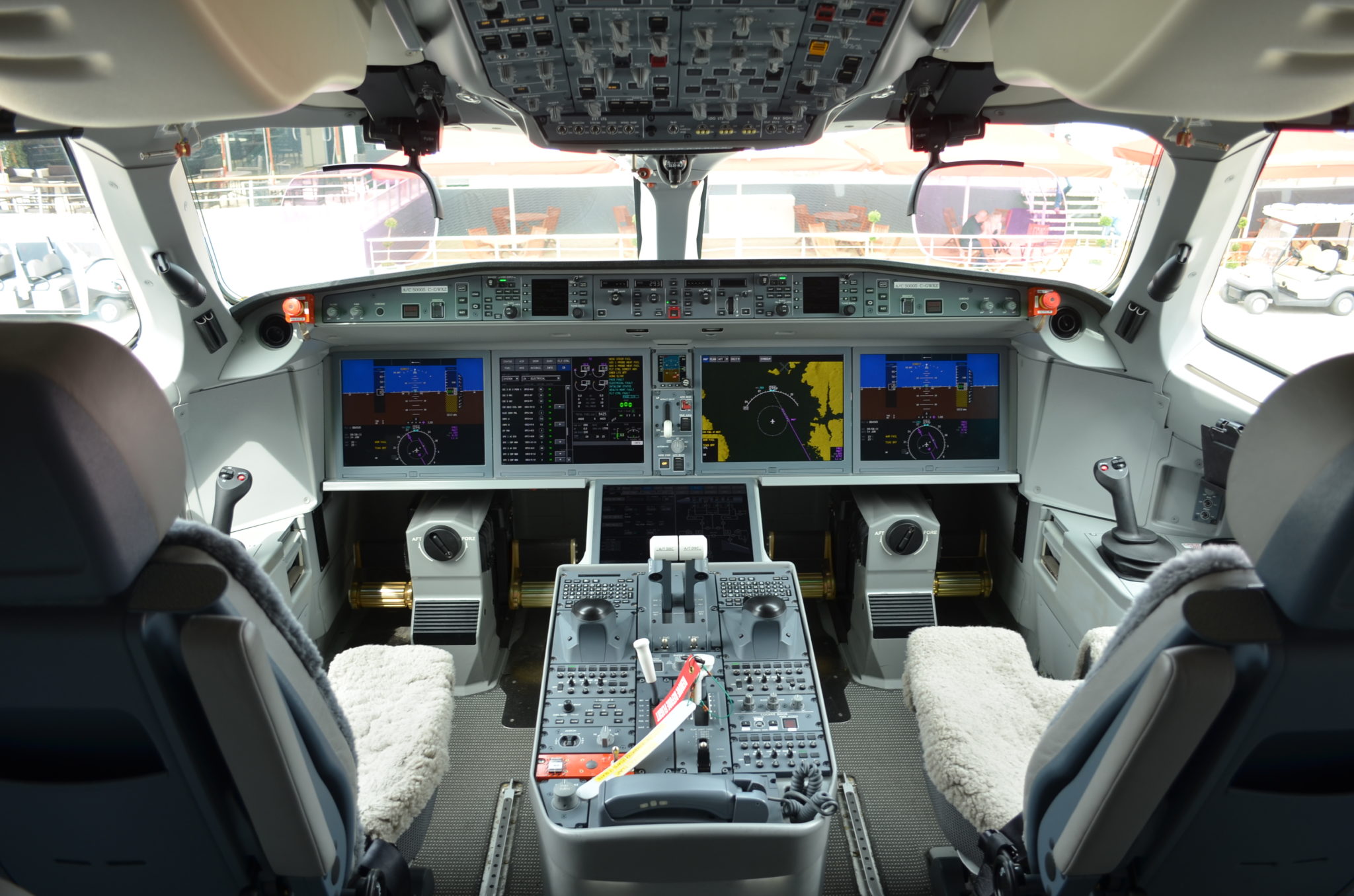
Figure 1. C Series flight deck. Source: Bombardier.
I haven’t flown the C Series yet (working on it!) but I have been able to glean quite a bit over time and spent quite some time in the cockpit with the Bombardier test pilots at the Paris Air Show.
So here is a shot at describing the C Series control philosophies and capabilities and how they mimic/differ from Airbus and Boeing.
Airbus Group 1Q 2016 results: Slow start to the year, guidance maintained.
By Bjorn Fehrm
 28 April 2016, ©. Leeham Co: Airbus Group has had a slow start to 2016. Deliveries of A320neo, A350 and A400M are slowed by problems with engine and cabin suppliers. Only 127 aircraft were delivered out of a total guidance of 670 deliveries for 2016, a mere 18%. Group 1Q 2016 (1Q 2015) revenue were €12.2b (€12.1b) with EBIT of €501m (€651m), down 23% year on year.
The group expects to recover the shortfall in deliveries during the year and to reach guidance levels for revenue and EBIT, except for the troublesome A400M. This time it’s a engine gearbox item which is the culprit. Airbus CFO, Harald Wilhelm, gave a clear warning during the quarterly conference call: the A400M program “risks a significant charge” during the year.
The financial results for the divisions for the quarter were:
- The commercial aircraft division delivered 125 (134) aircraft with revenues €8,668m (€8,565m) and EBIT €407m (€569m).
- Airbus Helicopters delivered 56 (62) helicopters with revenues €1,158m (€1,285m) and EBIT €33m (€52m).
- Airbus Defence and Space revenues were €2,534m (€2,603m) with EBIT €109m (€90m).
Details of the Airbus Group 1Q 2016 results are below.
C Series charge spotlights 787 deferred costs
Subscription Required
May 4, 2016: (c) Leeham Co.: The $500m charge reported last week by Bombardier for 127 recent orders for its C Series resulted in shining the spotlight on Boeing’s deferred production costs for the 787.
As LNC wrote this week, interpretation of the BBD charge was misunderstood. Some press reports yesterday demonstrate it continues to be. We won’t restate what we’ve already written about the true nature of the charge and how it differs from program accounting used by Boeing–this has been well covered by now. The Seattle Times suggested that the per-plane profit required to pay off the $29bn in deferred production and $3bn in tooling costs for the Boeing 787 was greater than generally recognized. The average figure is about 20% higher than the number widely cited by Wall Street.
The most commonly accepted figure to recapture the record-setting deferred production costs and tooling has been $30m per airplane, a figure most Wall Street analysts believe is too high to achieve. But this number appears understated, according to an analysis by The Seattle Times in the wake of Boeing’s first quarter earnings call.
Boeing’s 10Q contains language that appears to confuse the issue somewhat.
“At March 31, 2016, $23,661 [million] of 787 deferred production costs, unamortized tooling and other non- recurring costs are expected to be recovered from units included in the program accounting quantity that have firm orders and $8,757 [million] is expected to be recovered from units included in the program accounting quantity that represent expected future orders.”
This appears to suggest the first tranche of these airplanes results in a need for a $36m per-plane profit and the second tranche requires a per-plane profit of $54m. Charles Bickers, a spokesman for Boeing’s corporate headquarters in Chicago, told LNC that segmenting out the ordered but undelivered aircraft from orders yet to be received but assumed is not the way to look at the issue.
Read more
Leave a Comment
Posted on May 5, 2016 by Scott Hamilton
Airbus, Boeing, Bombardier, Delta Air Lines, Leeham News and Comment, Premium
787, 787-9, A330ceo, A330neo, A350, A350-900, Air Baltic, Air Canada, Airbus, Bank of America Merrill Lynch, Credit Suisse, Delta Air Lines, Dominic Gates, program accounting, Rob Spingarn, Ron Epstein, Seattle Times, unit cost accounting